Mold on Soil on Mogra: Causes, Checks & Fixes
Quick answer
White mold on Mogra's soil surface means the top layer stays wet too long-not a plant disease on firm woody stems. First step: scrape the fuzzy top quarter-inch, let the surface dry, and check whether you are watering on a calendar instead of when the top 2–3 cm of mix is dry. Empty cachepots and improve airflow around the bushy shrub base.
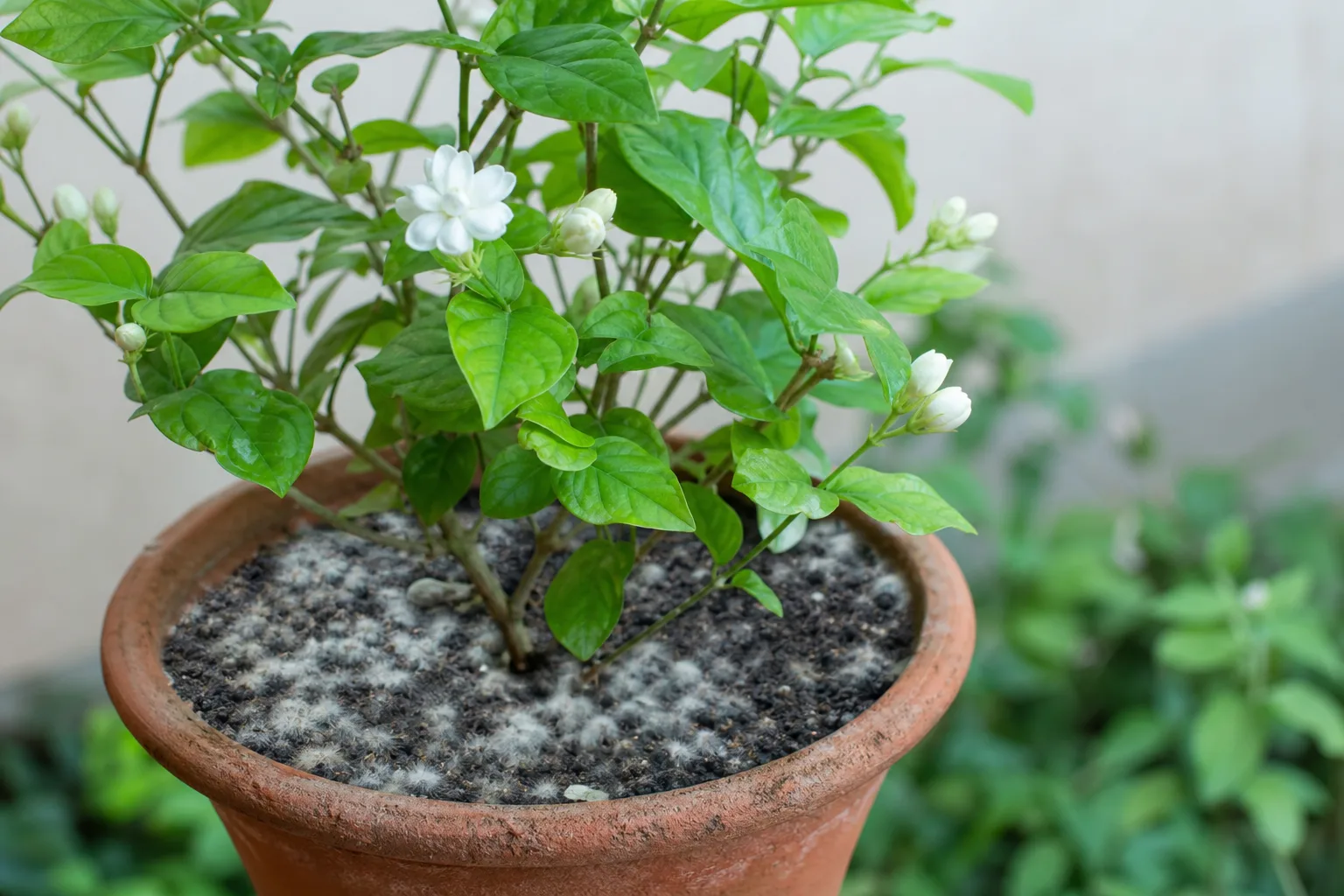
Mold on Soil on Mogra: Causes, Checks & Fixes
This guide covers mold on soil on Mogra. See also the general Mold on Soil guide, watering, and light pages for this plant.
Mold on Soil on Mogra: Causes, Checks & Fixes
Quick answer
White or gray fuzz on the soil surface of Mogra (Jasminum sambac - Arabian jasmine, Mallige, Motia) is almost always harmless saprophytic mold feeding on organic debris in a pot that stays wet on top. It is a moisture signal, not an emergency plant disease-unless woody stems at the crown feel soft, the mix smells sour, or mold returns within a day of scraping.
First step: scrape off the top quarter-inch of moldy mix, let the surface dry, and check your watering rhythm at the top 2–3 cm of soil-not the calendar. On this bushy flowering shrub, surface mold often appears when bloom-season watering fear keeps the top inch soggy while deeper mix still dries unevenly. Empty decorative cachepots, remove fallen petals and pruned leaves from the shrub base, and improve airflow around crowded balcony corners.
Cosmetic mold with firm woody stems clears in one to two weeks once the surface stays dry. Chronic daily mold, fungus gnats, yellow lower leaves, or wilting despite wet soil point to overwatering and possible root rot-not a surface fungus problem alone.
Why mold grows on Mogra’s soil
Saprophytic fungi and constantly moist organic mix
Potting mix is a living ecosystem. Saprophytic fungi feed on decaying organic matter in the soil-they break down peat, bark, and fallen leaf litter into nutrients. The white or gray fuzzy growth you see is the fungus’s mycelium on the surface. It is usually not pathogenic to Mogra when stems are firm; it appears because temperature, humidity, and moisture favor reproduction.
The Missouri Botanical Garden describes J. sambac as needing loose, humusy, evenly moist but well-drained soil. Evenly moist does not mean constantly wet on the surface. When the top inch never dries, saprophytic fungi colonize faster than the plant can use the organic matter-and the same wet conditions that grow mold can suffocate fine roots over time.
Overhead watering, spent petals, and balcony cachepot drainage
Mogra has glossy, waxy leaves-not fuzzy foliage. Overhead watering that splashes mix onto lower leaves is less of a mold driver than debris collecting at the bushy shrub base: spent white petals after evening bloom, pruned twigs, and fallen leaves decay on the soil surface and become fungus food.
Indian balcony culture often pairs a functional nursery pot inside a decorative cachepot with no drainage exit. Water drains into the outer sleeve and keeps the bottom third of mix saturated even when the surface looks pale. A mature bushy Mogra in a tight terrace corner also gets less air movement across the pot rim-slowing surface evaporation during monsoon weeks when ambient humidity is already high.
Growers pushing buds during summer flush sometimes water extra to prevent bud drop, which ironically keeps the surface wet and grows mold while inconsistent depth moisture still aborts buds. UCANR notes J. sambac does not tolerate too much moisture and needs thorough watering followed by dry-down between sessions-surface mold is often the first visible sign that rhythm failed.
What mold on soil looks like on Mogra
Surface fuzz vs. mineral crust vs. green algae
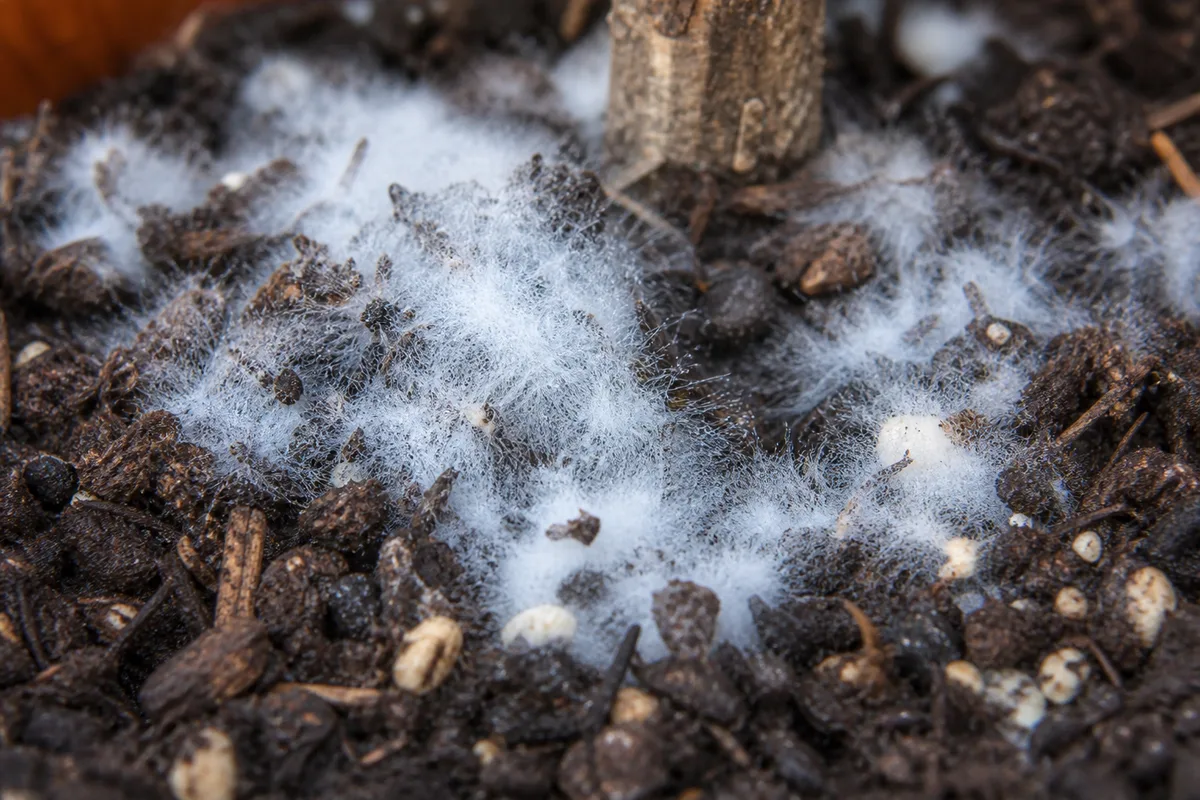
Mold on Soil symptoms on Mogra - compare with healthy tissue on the same plant.
| What you see | Texture and colour | Usually means |
|---|---|---|
| White or gray fluffy fuzz on soil only | Threads or powder; may spread overnight after heavy watering | Saprophytic mold on wet organic surface-cosmetic if stems are firm |
| Flat chalky white or tan crust on rim or soil | Hard, mineral-like; does not grow fuzzy | Salt or hard-water buildup-not fungus; leach pot if crust returns |
| Slick green film on soil in bright sun | Smooth, greenish; needs light plus moisture | Algae on wet surface-improve dry-down and airflow |
| White powder on leaves | Dusty patches on leaf surfaces, not soil | Powdery mildew or pest residue-different problem than soil mold |
On Mogra, cosmetic mold appears as patches on the top quarter-inch of mix, sometimes after monsoon overcast weeks or winter indoor watering when lower light slows evaporation. Firm woody stems, green upper shoots, and healthy bud clusters with only surface fuzz suggest the roots are still breathing. Yellow lower leaves, fungus gnats hovering at the rim, or wilting with wet soil mean look past the mold to root health.
How to confirm the cause
Work through these checks in order before repotting or spraying fungicide. The goal is to separate cosmetic surface mold from chronic overwatering and advancing root failure.
-
Surface moisture and dry-down speed - After your last watering, does the top inch stay dark and cool for more than three to four days? Probe the top 2–3 cm with a finger or skewer. Pale surface with damp depth means you are watering too often for current light and season. See our watering guide for the dry-check framework.
-
Stem and crown firmness - Pinch lower woody stems near the soil line. Firm, green-brown wood with only surface fuzz supports cosmetic mold. Soft, black, or slimy tissue at the crown with sour smell means root rot-escalate past scraping.
-
Pot weight and cachepot water - Lift the pot. Heavy weight days after watering, plus mold, suggests poor drainage or standing water in an outer pot. Empty saucers within 30 minutes and never let the nursery pot sit in a full cachepot sleeve.
-
Recurrence after scraping - If mold returns within 48–72 hours and the surface never looked dry, your watering rhythm is still wrong. Scraping without fixing moisture feeds the cycle.
-
Debris at shrub base - Clear spent petals, fallen leaves, and pruned twigs from the soil surface. Mogra drops flowers overnight; that organic layer molds quickly on wet mix.
-
Co-occurring pests - Small flies at the soil surface point to fungus gnats in the same wet topsoil. Treat drainage and dry-down first; gnats often fade when the surface stays dry ten days.
Confirmation decision table
| Pattern | Likely diagnosis | Next step |
|---|---|---|
| White fuzz only; firm stems; surface dries within 3 days after you cut watering | Cosmetic saprophytic mold | Scrape top layer; switch to 2–3 cm dry check |
| Mold returns daily; surface always damp; no stem softening yet | Chronic overwatering | Pause watering; empty cachepots; see overwatering |
| Mold + gnats + yellow lower leaves | Long-term wet organic topsoil | Dry surface; improve airflow; fungus-gnat guide if adults persist |
| Mold + soft crown + sour smell + wilt despite wet mix | Root rot overlap | Stop watering; inspect roots; root rot guide |
| Chalky crust, no overnight fuzz growth | Mineral buildup | Leach pot; reduce fertilizer salt load-not mold treatment |
First fix for Mogra
Scrape off the top quarter-inch of moldy soil with a spoon or fork, discard it, and top-dress with a thin layer of dry mix matching your normal Mogra soil blend. Do not drench with fungicide for harmless surface mold-extension guidance focuses on drying the surface and removing the top layer, not chemical treatment.
Then pause the next watering until the top 2–3 cm feels dry at depth-not merely pale on the surface. Move the pot slightly away from crowded shelf mates so air reaches the rim. Bottom-water if overhead splashing keeps debris wet: set the nursery pot in a basin until the surface darkens, then lift and drain fully so the top inch is not constantly soaked.
If a decorative cachepot is holding runoff, lift the inner pot out to drain after every soak. One corrected dry-down cycle matters more than repeated scraping on the same wet schedule.
Recovery timeline
Surface mold should not return within one to two weeks once the top layer stays dry between drinks. You should see the scraped area stay clean, pot weight drop predictably before the next watering, and no new fuzzy patches after monsoon weeks if you adjusted frequency.
Mold back within 48 hours means watering rhythm still needs correction-do not scrape again until the surface has dried at least once. New white shoots and firm stems confirm the cosmetic case is resolving. Persistent yellowing, gnats, or wilting after two weeks of dry surface point to root stress-inspect below the soil line.
What not to do
- Do not keep watering on a calendar while mold returns daily-scraping without dry-down repeats the problem.
- Do not drench with fungicide for cosmetic saprophytic mold on firm stems; fix moisture instead.
- Do not assume thirst and water more because you fear bud drop-extra surface moisture grows mold without stabilizing depth moisture for blooms.
- Do not let spent petals and pruned leaves pile at the shrub base-decaying organic matter feeds surface fungi on this bushy jasmine.
- Do not repot into a larger pot to “help drying”-oversized containers stay wet longer on Mogra’s fine root mass.
How to prevent mold on soil next time
Match watering to pot dry-down rate, not the day of the week. Provide adequate light so the mix cycles moisture-indoor plants need appropriate light for healthy transpiration and soil drying. Bottom-water or water at the soil line to keep glossy foliage dry while still soaking the root zone.
Remove fallen petals and leaf litter promptly after each bloom flush. Keep cachepots empty between waterings. Allow the potting media surface to dry between waterings even when deeper mix is appropriate for bloom season.
Summer bloom-season vs. winter semi-rest watering
Mogra’s water appetite shifts with season more than the calendar admits.
Active growth and flowering peak (warm months, balcony sun): Many container Mogra pots need water every two to three days when the top 2–3 cm is dry-sometimes daily on a small terrace pot in peak heat. Bud swell increases transpiration; skipping drinks causes bud drop, but small daily sips that wet only the surface cause mold without hydrating depth. One thorough soak, full drain, then dry-down at depth is the target. The RHS advises moist but well-drained loam for J. sambac-not a permanently soggy top inch.
Winter semi-rest (cooler indoor rooms, shorter days): Reduce frequency toward once every seven to fourteen days for many indoor pots, but only when the top 2–3 cm is dry-sometimes longer in a dim room. Lower light slows evaporation; the same summer schedule keeps the surface wet for a week and grows mold while growth stalls. The RHS recommends watering sparingly in winter for greenhouse-grown J. sambac; the same caution applies to AC-heated flats where mix stays cold and damp.
Monsoon overcast weeks blur the line: rain may wet the surface while the center stays dry-probe depth, do not assume rain replaced a soil check.
When to worry - black slimy crown, sour smell, or daily mold return
Cosmetic mold on firm woody stems is manageable. Treat as urgent when:
- Crown tissue turns black, slimy, or mushy at the soil line-surface scraping will not fix advancing rot
- Mix smells sour like wet compost despite firm-looking upper stems
- Leaves wilt while soil is wet-roots in saturated mix cannot absorb oxygen even though moisture is present
- Mold returns every day for two weeks after you corrected cachepot drainage and switched to dry-check watering
- Yellow lower leaves and fungus gnats persist after ten days of dry surface
For soft crown tissue or sour smell, stop watering, inspect roots, and follow our root rot on Mogra guide before fertilizing or heavy pruning. For chronic wetness without crown failure yet, start with overwatering recovery steps.
Mold vs. fungus gnats on Mogra
Surface mold and fungus gnats are symptoms of the same mistake-organic topsoil that stays damp too long-but they need different confirmation. Mold is visible fuzz; gnats are small flies whose larvae live in wet surface mix. Fixing dry-down and airflow often clears both within one to two weeks.
If gnats remain after the surface stays dry for ten days, the larval population may need targeted treatment-see the dedicated fungus-gnat guide. Do not increase watering because leaves look stressed; wet roots during gnat recovery invite rot.
Related Mogra guides
- Mogra overview - species ID, bloom cycles, and balcony culture
- Watering - 2–3 cm dry check, cachepots, and bloom-season rhythm
- Overwatering - when wet soil yellows leaves and wilts despite moisture
- Fungus gnats - flying insects in the same damp topsoil
- Root rot - soft crown and sour smell escalation
- Bud drop - when moisture swings abort flowers during flush
Related tool
Use the Plant Problem Diagnosis Tool to narrow causes for mold on soil on this plant before changing multiple variables at once.