Mogra Fertilizer Guide: Jasminum sambac NPK & Timing
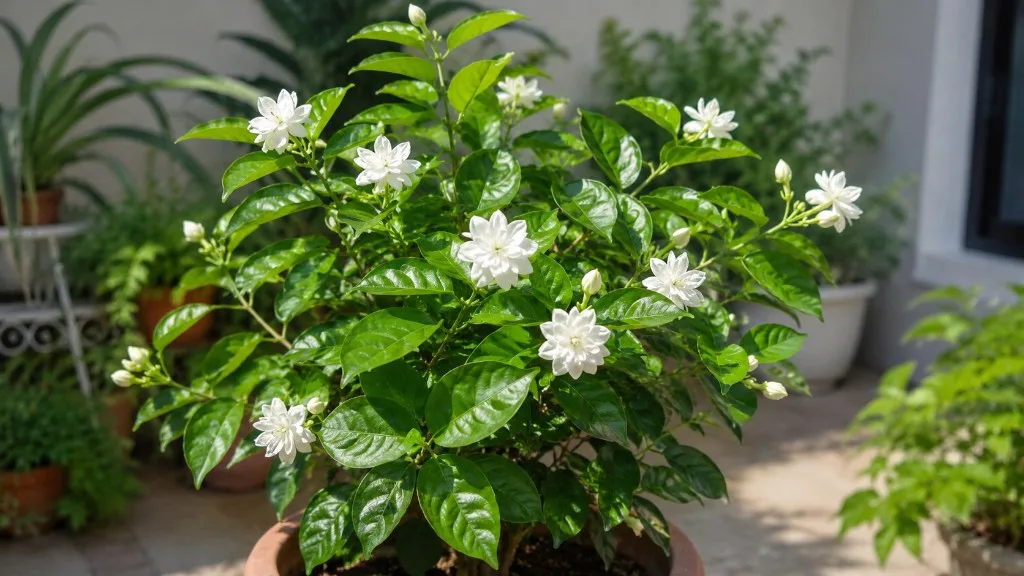
Mogra Fertilizer Guide: Jasminum sambac NPK & Timing
Mogra Fertilizer Guide: Jasminum sambac NPK & Timing
By sai-ananth · Reviewed by LeafyPixels Review Board · Methodology: botanical references, extension resources, and practical container constraints · Last reviewed 2026-06-17
Mogra (Jasminum sambac - Arabian jasmine, Motia, Mallige) is grown for evening fragrance and repeat bloom flushes, not for the deepest green leaves on the block. If your pot looks lush but never sets buds, fertilizer is often part of the story - but rarely the whole story. Light and watering rhythm come first. Once those are in range, Mogra responds to a single, consistent feeding protocol: monthly low-nitrogen liquid fertilizer at half strength during active growth, with a bloom-support switch (higher phosphorus and potassium - rose or tomato feed) when you see bud swell at leaf axils, and a complete pause from late autumn through winter plus any stress event.
This guide is for growers searching mogra fertilizer specifically. The same species appears in our broader jasmine fertilizer guide with multi-species coverage; here the focus is J. sambac repeat-bloom cycling, Indian balcony and terrace context, bud-stage withholding, and the high-nitrogen trap that produces foliage without flowers. Pair it with the Mogra overview, light, soil, pruning, repotting, and propagation guides for a complete routine.
Quick Answer
Feed Mogra once per month at half strength with a low-nitrogen liquid fertilizer from roughly March through October on already-moist soil. When bud swell appears at leaf axils, swap that month’s dose for half-strength rose or tomato feed (bloom-support). Pause entirely from late autumn through winter, for two weeks after repotting, and whenever the plant is dry, stressed, or not actively growing. Flush the pot with plain water monthly in hard-water areas to prevent salt crust. Fix light before chasing blooms with more fertilizer.
Mogra Fertilizer for Repeat Blooms (Jasminum sambac)
Why Fertilizer Matters for Mogra Bloom Cycles
Mogra is a twining or scrambling evergreen shrub with glossy simple leaves and intensely fragrant white flowers in summer and sporadically at other times in warm conditions. Unlike once-a-year temperate jasmines, J. sambac in Indian and tropical climates often runs repeat bloom cycles - a heavy flush, a rest interval of roughly three to four weeks, then another wave of buds on branching wood. Each cycle costs nitrogen for new shoots, phosphorus for bud initiation, and potassium for overall vigor and stress tolerance. Container mix leaches those nutrients with every watering; in-ground temple and courtyard plants may survive on compost top-dress alone, but balcony pots in fast-draining soil usually need deliberate feeding during the active window.
Fertilizer cannot replace photons. Missouri Botanical Garden lists J. sambac for full sun to part shade in loose, humusy, evenly moist but well-drained soil - the same pairing our light guide emphasizes. A Mogra in four to six hours of direct sun uses nutrients and sets buds; one in dim indirect light may stay green on half the feed and still never flower. Treat fertilizer as the third lever after light and moisture, not the first rescue tool when buds drop.
Repeat-bloom biology vs generic houseplant feeding
Generic houseplant fertilizer advice - “feed every two weeks with balanced 20-20-20” - ignores Mogra’s bloom-cycle rhythm. During vegetative recovery after pruning, a modest balanced feed at half strength helps new wood mature. Once bud clusters swell at nodes, phosphorus-forward feeding supports flower formation; heavy nitrogen during that window pushes leaves and can contribute to bud drop when paired with inconsistent moisture. Repeat-blooming J. sambac may cycle between balanced monthly maintenance and bloom-support applications two or three times per year in warm climates - not a single NPK ratio applied blindly all season.
The One Protocol - Monthly Low-Nitrogen and Bloom-Support Switch
Here is the one coherent schedule this page recommends across quickAnswer, body, and FAQs - aligned with authoritative sources, not conflicting templates.
Baseline (March through October active growth): Apply a low-nitrogen complete liquid fertilizer at half the label strength once per month on already-moist soil. The RHS J. sambac page specifies low-nitrogen fertiliser monthly in growth - that is your anchor frequency. Do not feed biweekly at full strength; do not alternate monthly balanced with conflicting biweekly high-potassium schedules.
Bloom-support switch: When you see visible bud swell at leaf axils before a expected flush - not after flowers open - replace that month’s feed with a higher-phosphorus and potassium formula (rose fertilizer, tomato feed, or labeled bloom booster such as 5-10-10 or 7-9-5) still at half strength. The RHS jasmine growing guide recommends high-potassium liquid feed for container jasmines to boost flowering; tomato and rose products fit that intent when phosphorus is elevated relative to nitrogen.
Pause entirely: Late autumn through winter when growth slows; for two weeks after repotting; during drought stress, pest recovery, or active bud formation if the plant has been over-fed (see below). NC State Extension notes container jasmines in full sun with moist well-drained soil respond to supplemental feeding during the growing season - but only when heat and light are already adequate.
Monthly salt maintenance: Flush the pot with plain water once between scheduled feeds in hard-water or heavy-feeding setups to leach accumulated salts.
How RHS monthly low-nitrogen fits repeat-blooming Mogra
Low-nitrogen monthly feeding prevents the high-nitrogen vegetative trap - dark green, long internodes, zero buds - while still supplying enough nitrogen for healthy glossy foliage. J. sambac is not a heavy feeder like summer vegetables; it is a moderate, seasonal feeder that tolerates skipped months far better than salt burn. If your plant pushed a full flush, was pruned lightly after flowers faded, and is building new wood, the monthly low-nitrogen dose supports that structure without forcing soft, flowerless growth.
When to switch to bloom-support phosphorus
Switch when buds are visible but not yet open - tight green clusters at nodes, not fully expanded white corollas. One bloom-support application at half strength per flush is usually enough; doubling dose because “more phosphorus equals more flowers” causes salt injury and can abort buds. After the flush finishes and you prune spent wood, return to monthly low-nitrogen until the next bud swell. In warm southern and coastal India where flushes continue across more months, you may use bloom-support two or three times between March and October; in North Indian winters with semi-rest, you may use it only for the main summer wave.
When to Feed Mogra (Month-by-Month Calendar)
Use this table as a framework, not a calendar you obey while ignoring soil moisture and plant signals. Adjust if your plant is dormant in an AC-cooled room or still active on a frost-free January terrace.
| Month / season | Feed? | Formula | Notes |
|---|---|---|---|
| Jan–Feb (winter rest) | No | - | Growth slow; salts accumulate unused (RHS: water sparingly in winter) |
| Mar (spring wake) | Yes, once | Half-strength balanced or low-N | First feed after new growth appears; soil moist |
| Apr–May | Yes, monthly | Low-N monthly; bloom-support if buds swell | Peak flush prep on sunny balconies |
| Jun–Aug (summer / monsoon) | Yes, monthly | Low-N; bloom-support at bud swell | Reduce frequency if mix stays wet in humid monsoon - feed only when plant is actively growing |
| Sep–Oct | Yes, taper | Low-N monthly; optional final bloom-support | Last active feeds before autumn slowdown |
| Nov–Dec | No | - | Pause; resume when new spring growth returns |
March through October active window
The active window matches what Indian growers expect: roughly March through October for regular feeding in most of the subcontinent, with warm coastal regions sometimes extending the window. Align feeds with visible growth, not guilt over a skipped March date if the plant was still cold-stressed. Resume after stable warm nights and new leaf push - the same seasonal logic our overview uses for watering and bloom expectation.
Winter pause and stressed-plant holds
Never feed a dry, wilted, newly repotted, or pest-ridden Mogra. Fertilizer on damaged roots causes immediate burn. After repotting, hold food for two weeks minimum while roots callus. During winter semi-rest indoors, metabolism drops; unused nutrients become salt crust on the soil surface. The RHS advises watering sparingly in winter for greenhouse-grown J. sambac - the same caution applies to fertilizer: pause unless the plant shows continuous active growth. If you maintain a warm, brightly lit indoor setup with continuous new growth under grow lights, you may feed lightly every six to eight weeks at quarter to half strength - but skipping winter feeds is safer for most homes.
Best NPK Types for Mogra
The best mogra fertilizer is a complete water-soluble formula you can dilute precisely - not mystery “jasmine miracle” bottles without NPK disclosure. Read the label’s three numbers: nitrogen (N), phosphorus (P), potassium (K).
Balanced spring start
A 10-10-10 or 20-20-20 balanced liquid at half strength works as an early-spring starting point when the plant is rebuilding structure after winter and has no visible buds yet. Switch away from balanced-only feeding once the plant is vigorous but flowerless - that pattern signals you need bloom-support, not more balanced dose.
Rose fertilizer and tomato feed for buds
Rose fertilizer and tomato feed - both typically higher in phosphorus and potassium than nitrogen - are appropriate bloom-support tools for Mogra when diluted to half strength on moist soil. The RHS jasmine guide explicitly mentions high-potassium liquid feed such as tomato fertiliser for container flowering. Indian growers often use NPK blends marketed for flowering (such as 10:30:20) before main seasons; the principle is elevated P and K, restrained N, not the exact brand name. Organic options - diluted vermicompost tea, seaweed extract at half strength - work but vary in nitrogen content; watch for nitrogen-heavy organics that keep the plant leafy.
Avoid slow-release pellets in small indoor pots where release continues into winter rest. Avoid foliar feeding on dense jasmine foliage in hot direct sun. Skip fertilizer-pesticide combo products.
How to Dilute Safely - Worked Example
Houseplant labels assume a range of species; Mogra in a 25–30 cm container needs half strength as the default for liquid feeds during active growth.
Worked example: Your fertilizer label reads 5 ml per litre of water for outdoor containers. For Mogra, use 2.5 ml per litre (half strength). If your watering can holds 2 litres, add 5 ml concentrate total, stir, and apply until a little drains from the bottom - on soil that was watered the previous day if the surface had gone dry. Never mix at full label strength “because the plant is not blooming.” If the label offers an indoor-plant rate, still halve it unless you have a history of tip burn and know the plant tolerates more.
Quarter strength is reasonable for monthly feeding on a plant in moderate light with prior salt issues. Full label strength is for in-ground landscape jasmines in rich soil, not a 12-inch balcony pot.
Step-by-Step Feeding Routine
Step 1 - Check the calendar and plant state. Confirm you are inside the active window, the plant is not newly repotted, and buds are not in a sensitive over-feed recovery period.
Step 2 - Inspect soil moisture and salt crust. If the top inch is dry, water thoroughly first and feed the next day. If white crust rings the pot, flush with plain water and skip this month’s feed.
Step 3 - Choose formula. Monthly low-nitrogen for general growth; bloom-support if bud swell is visible.
Step 4 - Mix at half strength in clean water; use within a few hours.
Step 5 - Apply to moist soil around the root zone, avoiding concentrated runoff on leaves in hot sun.
Step 6 - Empty the saucer after drainage. Do not let fertilizer solution sit in standing water.
Step 7 - Record the date so you do not double-feed within the same month unless switching to bloom-support for a documented flush.
Signs Your Routine Is Working
Healthy feeding shows up as firm new stems, glossy green leaves without exaggerated internode length, and repeat bud clusters on branching wood after each post-flush prune. Flowers should open with reasonable fragrance intensity when light is adequate - weak scent on a blooming plant often means insufficient sun or excess nitrogen, not insufficient fertilizer dose. Soil surface stays free of thick salt crust, and the plant does not drop leaves within days of feeding.
Over-Fertilizing, Salt Crust, and Flush Recovery
Over-feeding is the most common Mogra fertilizer mistake - worse than skipping a month.
Symptoms: Brown or crisp tips on older leaves, white or yellowish crust on soil and pot rim, sudden leaf drop shortly after feeding (especially if soil was dry), and dark green lush growth without flowers after chronic high-nitrogen feeding.
Immediate response: Stop all fertilizer. Flush the pot with plain water three times over seven to ten days, each time until water runs freely from drainage holes and the saucer is emptied - the same leaching approach extension services recommend for fertilizer burn on houseplants. Pause feeding for four to six weeks. Resume at half-strength low-nitrogen only when healthy new growth appears without tip burn. Badly scorched leaves will not green again; judge recovery by the next leaf cycle.
If decline continues after three flushes, inspect roots for rot - over-feed and overwater overlap - and consider fresh well-draining mix only after correcting the primary stress.
Seasonal Adjustments for Indian Balconies and Indoor Growers
Sunny terrace pots in April–May use nutrients fastest; monthly feeding often aligns naturally with growth. Monsoon humidity slows soil drying - do not feed on a schedule if the mix has stayed wet for days; wait until normal dry-down returns. AC-cooled flats may keep plants in semi-active growth with grow lights; if new shoots continue, a six-to-eight-week quarter-strength feed may apply - if growth stalls, treat as winter rest. Hard tap water accelerates salt buildup; monthly plain-water flushes between feeds matter more in Delhi and Bengaluru than in soft-water regions.
Feeding During Bud Formation - When to Withhold
Once buds are set and swelling, avoid heavy or full-strength feeds and never apply fertilizer to dry soil during this stage. A planned half-strength bloom-support application at bud swell is appropriate; a second heavy dose mid-flush is not. If the plant dropped buds last cycle after feeding, withhold fertilizer through the next bud formation window and stabilize watering consistency first. Do not stack repotting, hard pruning, and increased feeding during active bud stages - that combination triggers bud drop more reliably than any pest.
How Fertilizer Connects to Light, Water, Soil, and Pruning
Fertilizer is one node in a network. Light drives nutrient demand - increase neither feed nor hope when the plant lives in dim indirect light. Watering affects salt concentration; feeding a pot that never dries encourages burn. Soil fresh at repotting supplies organic matter for six to eight weeks - hold commercial feed initially. Pruning after each flush removes spent wood and redirects energy; one balanced feed after a moderate prune helps new branching, then bloom-support as those branches mature. For a full cultural picture, see the Mogra overview feeding section and the jasmine fertilizer guide’s J. sambac notes for species comparison.
Pet and child safety - Jasminum sambac vs toxic look-alikes
True Jasminum sambac is listed as non-toxic to cats and dogs by the ASPCA when the botanical identity is correct. Pet-safe does not mean fertilizer-safe - concentrated liquid fertilizer ingestion is a veterinary emergency; store bottles out of reach and rinse spills. Confirm the plant is not Carolina jessamine (Gelsemium sempervirens), a yellow-flowered toxic look-alike often mislabeled “jasmine.” ASPCA Poison Control: 888-426-4435 (US) for unknown plant ingestion.
Conclusion
Mogra fertilizer for repeat blooms comes down to three principles: monthly low-nitrogen feeding at half strength from spring through fall, a bloom-support switch at bud swell using rose or tomato-type formulas still diluted, and a complete pause in winter and during stress. That single protocol aligns RHS J. sambac monthly low-nitrogen guidance with bloom-support phosphorus logic - without the contradictory biweekly, balanced, and high-potassium schedules that made the old page unreliable. Fix light and water first, feed on moist soil only, flush salts monthly in hard water, and prune after each flush so the next cycle has wood worth feeding. When in doubt, skip a month rather than double the dose.
When to use this page vs other Mogra guides
- Mogra overview - Start here for whole-plant context before deep-diving this topic.
- Mogra problems hub - Jump to symptom-specific fix guides when this care topic does not resolve the issue.
- No Flowers on Mogra - Escalate here when fertilizer adjustments are not enough.