Jasmine Fertilizer Guide: Bloom Support and Timing
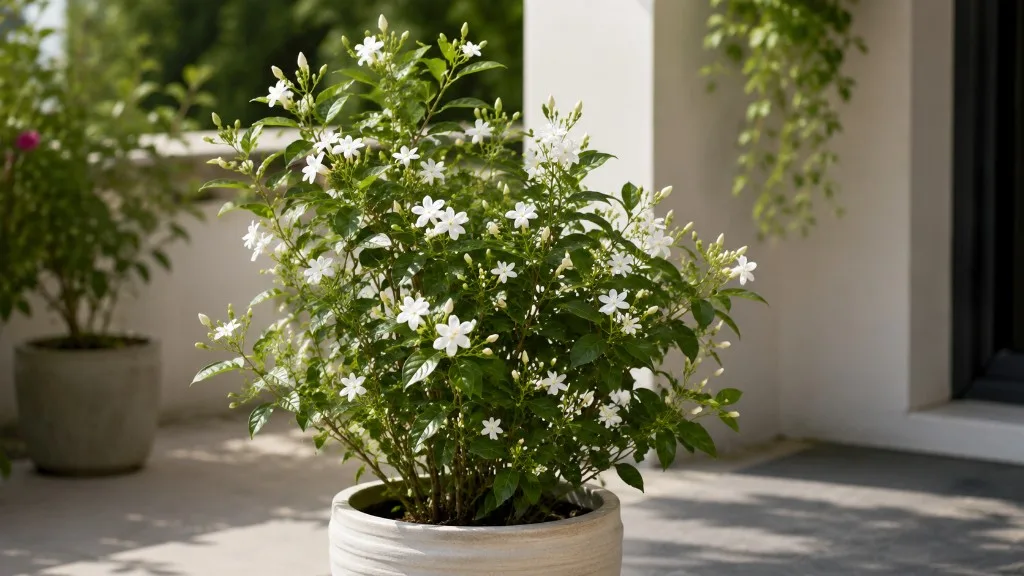
Jasmine Fertilizer Guide: Bloom Support and Timing
Jasmine Fertilizer Guide: Bloom Support and Timing
Jasmine fertilizer decisions matter most when your vine looks vigorous but the flowers never arrive. True jasmine species in the genus Jasminum - including common jasmine (Jasminum officinale), pink jasmine (Jasminum polyanthum), and Arabian jasmine (Jasminum sambac) - are grown primarily for their fragrant star-shaped blooms, not for foliage alone. Fertilizer does not force a struggling plant to flower, but steady, appropriately timed feeding during active growth gives the plant the phosphorus and potassium it needs to set buds, open flowers, and sustain the woody structure that carries next season’s bloom wood. Feed too much nitrogen, too often, or at full label strength, and you get the opposite: lush green vines with few or no flowers, brown leaf tips, white salt crust on the soil, and roots stressed by accumulated salts.
The practical goal for most home growers is straightforward: start the active season with a balanced water-soluble fertilizer at half the label strength, then switch to a bloom-support formula with higher phosphorus as buds begin to form. Apply every three to four weeks from early spring through late summer, water onto moist soil, and pause entirely from late fall through winter. Container plants need more consistent feeding than in-ground vines in rich soil. Freshly repotted, drought-stressed, or cold-dormant plants need none until they recover and push active new growth.
This guide covers when to fertilize for maximum blooms, how much to use, which NPK ratios work best, when to switch from balanced to bloom-support feeding, how to read deficiency versus burn, and the mistakes that cause more damage than skipping a month ever would.
Why Fertilizer Matters for Jasmine Blooms
Jasmine is a moderate to fast-growing climber in favorable conditions, reaching roughly 3–9 m on a trellis outdoors or 60–90 cm as a supported container shrub indoors. That growth rate comes at a cost: the plant continuously builds new leaves, stems, roots, and - when conditions align - flower buds, pulling nitrogen, phosphorus, potassium, and trace elements out of the potting mix or garden soil. Watering leaches some of those nutrients over time. Root growth and microbial activity in organic matter consume others. Fertilizer replaces what the plant uses - but only up to the point its roots can absorb without salt damage.
The Royal Horticultural Society notes that jasmine in containers benefits from supplemental feeding with a high-potassium liquid feed during the growing season, while in-ground plants in decent soil often need only an annual mulch. That distinction matters: a potted jasmine cannot reach beyond its pot for fresh nutrients, so depleted mix directly limits bloom potential. NC State Extension lists jasmine for high organic matter loam with good drainage - when phosphorus is limited in depleted container mix, plants may produce thick, lush leafy growth but few blooms.
Think of feeding as maintenance for a healthy, actively growing plant positioned to bloom - not a rescue tool for a jasmine that sits in too little light, dries out repeatedly, or struggles in waterlogged mix. Fix light and water first, then add nutrients on a conservative schedule. Phosphorus drives bud initiation and flowering; potassium supports vigor and stress tolerance; nitrogen builds leaves and stems in moderation. Excess nitrogen redirects energy toward vegetative growth at the expense of blooms - the central reason bloom-support formulas matter for jasmine.
When to Fertilize Jasmine for Maximum Flowers
Timing is the first decision, and it follows the plant’s metabolism and bloom rhythm more than the calendar on your wall. Feed when jasmine is actively producing new leaves and extending stems, and stop when growth slows sharply. Outdoors, that rhythm tracks warm weather and long days - roughly February through September in mild climates, with adjustments for your zone. Indoors, heated rooms and supplemental light can extend the window, but most houseplant jasmines still slow noticeably in late fall and winter.
A jasmine kept indoors through winter often looks alive enough to trick growers into summer-rate feeding - but lower light and shorter days slow new shoot production, and unused nutrients accumulate as salts. For winter-blooming species like pink jasmine (J. polyanthum), wait until the winter flower flush finishes before resuming fertilizer.
Spring and Summer Feeding Window
Start feeding when you see fresh growth at stem tips - new leaves unfurling, side shoots extending along supports, and roots visibly active if you gently check the root zone. Outdoors in temperate climates, that usually means late winter through early spring in mild areas, or mid-spring where frosts persist longer, continuing through late summer. The Royal Horticultural Society recommends feeding container jasmine with a high-potassium liquid feed during the growing season and applying compost or mulch in spring for in-ground plants.
During this active window, a half-strength balanced liquid feed every three to four weeks works for most container plants. As bud swell becomes visible - tiny green bumps at leaf axils along new wood - switch to a bloom-support formula with higher phosphorus for the next two to three applications. Fast growers in bright light or small pots may sit at the three-week end; established in-ground vines in compost-rich soil may need only spring compost plus one or two supplemental feeds.
| Month (temperate climate) | Growth phase | Feeding guidance |
|---|---|---|
| February–March | Waking up, root expansion | Start half-strength balanced liquid if active growth visible |
| April–May | Vegetative flush, bud initiation | Balanced feed; switch to bloom-support as buds swell |
| June–August | Peak bloom cycles | Bloom-support or high-P formula every 3–4 weeks |
| September | Slowing slightly | Reduce to every 4–6 weeks or taper off |
| October | Wind-down | Final light feed if still growing, then pause |
| November–January | Low growth / dormancy | No fertilizer for typical setups |
The table is a framework, not a law. A jasmine on a sunny patio in July dries its pot every two days and may use nutrients faster than one in a shaded window. Watch the plant: if it is building healthy new wood and setting visible buds, the timing is right. If it is static or only producing leaves, solve light and water before adding food.
Fall Taper and Winter Pause
Taper feeding in early to mid-fall as day length drops and night temperatures cool. One practical approach: give a final half-strength feed in early fall if you still see new growth, then stop entirely from late fall through winter. Most indoor jasmines do fine with no fertilizer from November through February, especially in cooler rooms or north-facing windows. The Missouri Botanical Garden notes that indoor jasmine rests from October through March and should not be fed during that cool rest period.
Winter rest is not full dormancy, but metabolic demand drops sharply. Late-season feeding encourages frost-vulnerable soft growth outdoors and wastes nutrients indoors. Under strong grow lights with continuous new shoots, feed lightly at half strength every six to eight weeks - but skipping winter feeds is still safer.
Best Fertilizer Type for Jasmine Blooms
The best jasmine fertilizer for bloom support is a complete, water-soluble formula with higher phosphorus than nitrogen - not a generic high-nitrogen lawn or foliage feed. You want enough nitrogen to sustain healthy green tissue and strong new wood, elevated phosphorus to support bud set and flowering, and adequate potassium for overall vigor and stress tolerance. Micronutrients on the label - iron, magnesium, manganese - matter because pale new growth on otherwise well-watered plants sometimes traces to trace-element gaps rather than macronutrient hunger, especially in alkaline irrigation water.
Avoid shopping by the word “jasmine” on the bottle unless you already trust the brand’s dosing guidance and can read a clear NPK breakdown. A standard tomato or rose fertilizer with confirmed phosphorus content often outperforms mystery “bloom miracle” products applied at label strength.
Bloom-Support NPK Ratios and Phosphorus
For jasmine grown primarily for flowers, look for formulas where the middle number (phosphorus) is equal to or higher than the first number (nitrogen). Effective ratios cited across horticultural sources include 7-9-5, 5-10-10, 5-10-5, and 3-9-6. The Royal Horticultural Society recommends a high-potassium liquid feed for container jasmine during active growth - phosphorus and potassium both support flowering more directly than excess nitrogen.
A 10-10-10 or 20-20-20 balanced formula at half strength is a reasonable starting point in early spring when the plant is building structure before bloom induction. Once you see vigorous growth but no bud development, switch to bloom-support rather than increasing the balanced dose. What fails jasmine most often is not the absence of fertilizer but the wrong ratio applied year-round - especially high-nitrogen houseplant food that keeps the vine leafy and flowerless.
Liquid formulas win for control and timing in small pots. Mix at half the label’s recommended strength, apply to moist soil until a little drains, and discard saucer water. Pick bloom-support, tomato, or rose formulas with clear NPK labels; skip lawn or heavy vegetative feeds.
Organic, Slow-Release, and What to Skip
Organic options - fish emulsion, compost tea, seaweed extract - work at half strength, though ratios vary and some run nitrogen-heavy. Slow-release granules suit garden vines at planting; in small indoor pots they stack unpredictably with liquid feeds. In-ground jasmine in rich soil rarely needs heavy feeding - annual compost or mulch often suffices per the Royal Horticultural Society. Skip foliar feeding, fertilizer-pesticide combos, and products without NPK disclosure.
Pet note: True Jasminum species are generally considered non-toxic to cats, dogs, and horses, but the common name “jasmine” is sometimes applied to unrelated toxic plants such as Trachelospermum (star jasmine) or Gelsemium. Verify the genus before assuming safety, and confirm with a current authoritative source such as the ASPCA.
How to Switch to Bloom Support Before Flowering
The bloom-support switch is the highest-leverage timing decision in jasmine feeding. Start the season with balanced half-strength feed when new growth first appears - this supports root recovery, leaf expansion, and the structural wood that will carry flowers. Watch stem tips and leaf axils along new growth for the first signs of bud swell: tiny rounded bumps replacing the smooth green junction where leaf meets stem.
When buds are visible but not yet open, apply your first bloom-support dose - a 7-9-5, 5-10-10, or equivalent high-phosphorus formula at half strength. Continue bloom-support every three to four weeks through the primary flowering window. After a heavy bloom flush finishes, you can return to one balanced feed if the plant is pushing significant new vegetative growth before the next bloom cycle, then switch back to bloom-support as the next round of buds forms.
If your jasmine shows dark green leaves with long internodes but zero buds after months of high-nitrogen feed, flush the pot with plain water two or three times over a week, pause two weeks, then restart bloom-support at half strength. Confirm the plant gets four to six hours of direct or very bright light daily - no fertilizer compensates for insufficient light. Repeat-blooming Arabian jasmine (J. sambac) may cycle balanced and bloom-support two or three times per year; once-a-year pink jasmine (J. polyanthum) needs bloom-support concentrated in the six to eight weeks before its next expected flower window.
How Much Fertilizer to Use on Jasmine
If you remember one number, make it half strength - never full label strength on a container-grown jasmine unless the label specifically targets flowering vines in outdoor beds and you have experience leaching salts regularly.
Houseplant and garden fertilizer labels assume a range of species and pot sizes. Jasmine sits in the moderate feeder category - more demanding than succulents, comparable to roses or tomatoes during bloom, but still vulnerable in small pots with limited soil volume. Cutting the label rate to one-half is the safest default for liquid feeding during active growth. Quarter strength is reasonable for monthly feeding on a plant in moderate light with a history of tip burn.
Example: if the bottle says 1 tablespoon per gallon for outdoor flowering plants, use 1½ teaspoons per gallon (half strength) for container jasmine on a three- to four-week schedule. If it says 1 teaspoon per gallon for houseplants, use ½ teaspoon per gallon. Measure with a spoon or syringe - “eyeballing” concentrates errors because different products use different scoops.
For a first spring feed on a plant that was not fertilized all winter, half-strength balanced liquid is enough. For bloom-support applications, half strength is still the rule - bloom formulas are not an invitation to apply at full rate. Go weaker still if you see salt crust, post-feed tip burn, or an oversized pot that stays wet for days. Pale new foliage with no bud set usually means light or phosphorus timing is off, not that you need to double the dose.
How Often to Fertilize Jasmine
Frequency should follow growth rate, container size, bloom stage, and salt management - not guilt about whether you are “doing enough.”
For most container jasmines indoors or on a patio:
- Every 3 to 4 weeks with half-strength liquid from early spring through late summer
- Every 2 to 3 weeks only if the plant is in a small pot, bright direct light, and actively growing with no salt crust
- Bloom-support formula for two to three consecutive feeds during bud development, then reassess
- Once in early fall at half strength if growth is still visible, then stop
- No fertilizer from late fall through winter for typical room-grown plants
- Optional light feed every 6 to 8 weeks only if the plant keeps actively growing under bright light or grow lights in winter
For in-ground garden jasmine in amended soil:
- Compost or mulch in spring, plus one or two bloom-support feeds between April and July if blooms are sparse
- Often no additional feeding if beds are rich and the plant flowers reliably
That three-to-four-week range beats feeding at every watering, which stacks salts faster than the plant can use them. NC State Extension lists jasmine as a moderate feeder in fertile, well-drained soil - more frequent feeding is appropriate only for actively growing container vines in bright light with regular leaching.
| Situation | Suggested frequency | Strength |
|---|---|---|
| Active growth, bright light, container | Every 2–3 weeks | Half label strength |
| Active growth, moderate light, container | Every 3–4 weeks | Half label strength |
| Bud swell visible | Every 3 weeks | Half-strength bloom-support |
| In-ground, rich soil | 1–2 feeds per season | Half-strength bloom-support |
| Post-repot or stressed | Pause 4–6 weeks | None until new growth |
| Winter indoors | None | - |
Step-by-Step: How to Feed Jasmine Safely
A consistent method prevents the two most common failures: feeding dry roots and stacking doses after a missed week.
Step 1 - Check the calendar and plant state. Confirm it is within the active feeding window (spring through late summer) and the plant is not drought-stressed, recently repotted, or showing salt burn. Skip feeding if any of those apply.
Step 2 - Water the day before if soil is dry. Moist soil buffers roots against fertilizer salts. If the top inch is dry but deeper mix is approaching dry, water thoroughly first and feed the next day.
Step 3 - Mix at half strength. Measure fertilizer into clean water per label directions, then halve the concentration. Stir well. Use the solution within a few hours - do not store mixed feed for days.
Step 4 - Apply to moist soil, not leaves. Pour slowly around the root zone, avoiding foliage contact. Continue until a small amount drains from the bottom. Empty the saucer within 30 minutes.
Step 5 - Log the date and formula to prevent accidental double-feeding. Step 6 - Flush monthly with plain water until twice the normal volume drains through, especially in warm rooms where evaporation concentrates salts.
Pre-Feed Checks and the Moist-Soil Rule
Before every feed, check soil moisture, salt crust, and newest growth color. Water first if the top inch is dry; flush instead of feeding if white crust is present. The moist-soil rule is non-negotiable - fertilizer on dry roots burns fine root hairs immediately. Water today and feed on the next scheduled day rather than rushing both in one session.
Signs Your Jasmine Needs Better Nutrition
Under-fertilized jasmine is less common than over-fertilized jasmine, but nutrient gaps do happen - especially in older container mix that has been watered without feeding for a full season.
Pale or yellowing older leaves while new growth stays green can indicate general macronutrient depletion, though overwatering and root rot produce similar symptoms - check moisture first. Small leaves and thin new stems on a plant in adequate light suggest the root zone is exhausted. No flowers despite good light, proper watering, and visible bud sites that stall and abort often points to phosphorus deficiency or a nitrogen-heavy history suppressing bloom completion.
Slow spring growth may mean nutrient-poor soil, root-binding, or winter recovery - Jasmine repotting guide sometimes solves it without fertilizer. If deficiency signs appear mid-season, start with one half-strength balanced feed, then move to bloom-support. Never jump to full-strength bloom booster to “catch up.”
Signs of Over-Fertilizing and Salt Buildup
Over-fertilizing is the most common jasmine feeding mistake, and the symptoms are distinctive once you know what to look for.
Brown leaf tips and margins - often starting on older leaves - indicate salt burn from accumulated fertilizer. White or yellowish crust on the soil surface, pot rim, or drainage holes means soluble salts are concentrating as water evaporates. Sudden leaf drop shortly after feeding, especially if soil was dry or dose was strong, points to root damage. Dark green, overly lush foliage with exaggerated internode length and no flowers suggests chronic high-nitrogen feeding rather than acute burn, but it is still a fertilizer problem.
Less obvious signs: stunted new growth, sour smell from the pot, and wilting despite moist soil. Stop feeding immediately and flush - do not resume until new healthy growth appears, usually four to six weeks later.
How to Flush Jasmine After Over-Feeding
Flushing leaches excess salts from the root zone and is the most reliable recovery tool for over-fertilized jasmine.
Step 1 - Move the pot to a sink, tub, or outdoor area where copious drainage will not damage floors or furniture.
Step 2 - Water slowly and thoroughly with plain room-temperature water. Apply until water runs freely from drainage holes, wait ten minutes, then water again. Repeat until you have passed roughly twice the pot’s volume in water through the mix.
Step 3 - Let the pot drain completely. Do not let it sit in saucer water. Elevate on bricks or a rack if needed.
Step 4 - Repeat the flush two more times over seven to ten days if burn was severe. Step 5 - Pause fertilizer for four to six weeks. Step 6 - Resume at half-strength balanced feed, then return to bloom-support when healthy new growth appears. Recovery takes one to two leaf cycles; inspect roots for rot if decline continues after three flushes.
Species-Specific Bloom Feeding Notes
Not all jasmines bloom on the same schedule, and the fertilizer rhythm should respect each species’ flowering biology.
Common jasmine (Jasminum officinale) flowers on new growth from late spring through summer. Feed balanced half-strength at spring wake-up, switch to bloom-support by late spring, and continue every three to four weeks through July. Prune after the main flush if needed, then one more bloom-support feed if secondary growth is strong.
Pink jasmine (Jasminum polyanthum) blooms heavily in late winter and early spring on prior-year wood indoors. Do not fertilize during the winter bloom show. After flowers fade and new spring growth begins, start balanced feed, then bloom-support six to eight weeks before you want the next cycle’s bud set. This species is tender - stop feeding by August so growth hardens before cold.
Arabian jasmine (Jasminum sambac) can bloom repeatedly in warm, bright conditions. Cycle bloom-support every three to four weeks during active growth periods, with balanced feed only when recovering from a hard prune or repot. In warm climates, NC State Extension notes that container jasmines in Jasmine light guide with moist well-drained soil respond well to supplemental feeding during the growing season - fertilizer supports bloom only when heat and light are already adequate.
Winter jasmine (Jasminum nudiflorum) is a hardy, yellow-flowered shrub that blooms on old wood in late winter. It rarely needs more than one balanced feed in early spring after flowering finishes. Heavy bloom-support is unnecessary and may push soft growth at the wrong season.
If you do not know your species, default to the common jasmine container schedule - balanced spring start, bloom-support before summer, pause in fall - and adjust based on when your plant actually flowers.
Fertilizer and Other Jasmine Care
Fertilizer only works when light, water, soil, and temperature are already in range. Jasmine in four to six hours of direct sun uses more nutrients and blooms more reliably than one in a dim corner - fix light before chasing blooms with phosphorus. Jasmine watering guide affects salt concentration; pair feeding with a moisture check rather than a rigid calendar. Jasmine prefers well-draining mix at pH 6.0–7.5; fresh airy mix at repotting reduces fertilizer dependence for six to eight weeks. Hard pruning stimulates regrowth that benefits from one balanced feed, then bloom-support as new wood matures. Cool winter nights (around 50–55°F) help some indoor species initiate buds - fertilizer cannot substitute for that temperature cue.
Common Jasmine Fertilizer Mistakes
Feeding on a calendar without checking growth. Jasmine in a cool, dim room in May may not be metabolically ready for feed while a sunny patio pot in March already is. Growth stage beats date.
Using high-nitrogen houseplant food year-round. This is the number-one reason for lush, flowerless vines. Switch to bloom-support when buds should form.
Applying full label strength to container plants. Half strength prevents the majority of salt burn cases. Full strength is for experienced growers who leach aggressively.
Feeding dry soil. Always water first. Root burn from dry-soil application can set a vine back an entire season.
Skipping the bloom-support switch. Balanced feed alone maintains health but may not correct phosphorus limitation in depleted container mix.
Feeding in winter because the plant still has leaves. Metabolic rest matters. Pause and resume with spring growth.
Ignoring salt crust. White deposits are a warning, not decoration. Flush before the next feed.
Expecting fertilizer to fix low light. No NPK ratio replaces photons. Move the plant before you escalate feeding.
Conclusion
Jasmine fertilizer for bloom support comes down to three principles: feed lightly and consistently during active growth, switch to higher-phosphorus formulas as buds form, and stop entirely when the plant rests. Half-strength liquid every three to four weeks from spring through late summer covers most container plants. In-ground vines in good soil often need little more than spring compost and one or two targeted bloom feeds. Watch for the nitrogen trap - dark green leaves with no flowers mean it is time to change ratio and flush salts, not to feed more.
When in doubt, less is more. Jasmine tolerates a missed month far better than it tolerates root burn from an enthusiastic corrective dose. Pair conservative feeding with adequate light, even moisture, and species-appropriate pruning, and the blooms - not just the foliage - will follow.
When to use this page vs other Jasmine guides
- Jasmine overview - Start here for whole-plant context before deep-diving this topic.
- Jasmine problems hub - Jump to symptom-specific fix guides when this care topic does not resolve the issue.
- Fertilizer Burn on Jasmine - Escalate here when fertilizer adjustments are not enough.
- No Flowers on Jasmine - Escalate here when fertilizer adjustments are not enough.
Related Jasmine guides
- Jasmine overview
- Jasmine watering
- Jasmine light
- Jasmine soil
- Jasmine propagation
- Jasmine repotting
- Fertilizer Burn on Jasmine
- No Flowers on Jasmine
- Jasmine problems
Related tool
Try the Fertilizer Dilution Calculator with jasmine pre-selected to estimate needs for your setup.