Jasmine Repotting: When, How, and Mistakes to Avoid
Jasmine Repotting: When, How, and Mistakes to Avoid
Jasmine Repotting: When, How, and Mistakes to Avoid
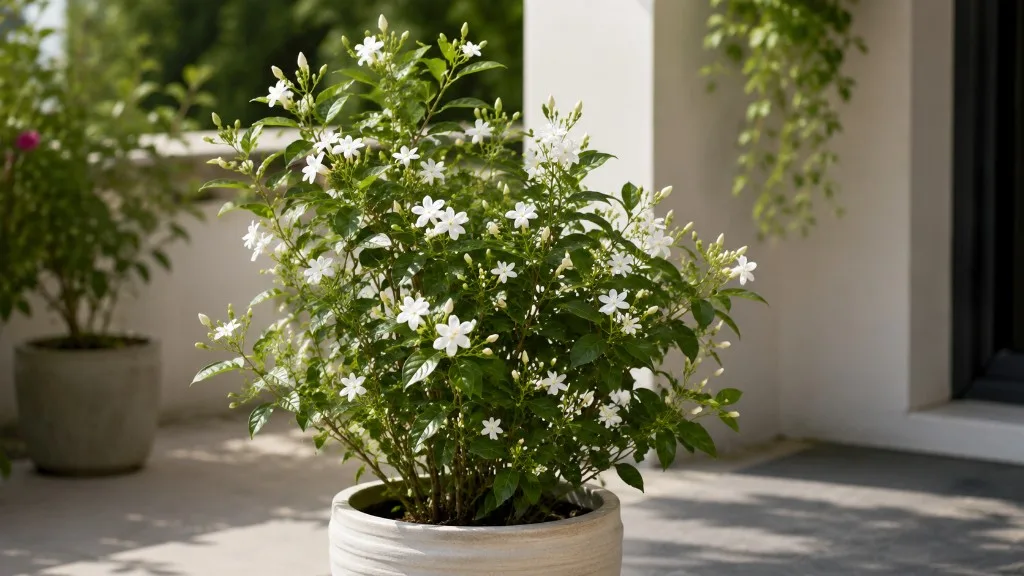
Jasmine - most often Jasminum officinale (common jasmine), Jasminum polyanthum (pink jasmine), or Jasminum sambac (Arabian jasmine) - is a climbing or twining plant that can reach 3–9 m outdoors yet is commonly kept at 60–90 cm in a container with support. That size gap tells you something important about repotting: the roots work hard in a small volume while the foliage above wants room to run. When the mix compacts, salts build up, or roots circle the pot wall, flowering slows, water behaves oddly, and a plant that smelled perfect last season suddenly feels like a maintenance problem.
Repotting is the reset that fixes those root-zone issues before they show up as yellow leaves, bud drop, or chronic wilting. Done in early spring with one pot size up and a fresh, well-draining mix, a jasmine repot is usually uneventful: a day of careful handling, a week of mild adjustment, and then new white root tips exploring fresh soil. Done in an oversized pot, mid-winter, or with roots stripped bare, the same job can cost you weeks of growth and - for bloom-sensitive species - an entire flowering cycle. This guide covers when to repot, how to do it step by step, and the mistakes that turn a routine upgrade into a recovery project.
Why Repotting Matters for Jasmine
Repotting solves three problems that all eventually show up as leaf or bloom symptoms if you ignore them long enough. First, roots circle the inside of a pot until they form a dense mat that cannot absorb water or oxygen efficiently. Second, even good potting mix breaks down - peat and coir compress, perlite crumbles, and the pore spaces that keep roots breathing disappear, usually within two to three years in an active container. Third, salts from tap water and fertilizer accumulate at the root zone, which can burn fine root hairs and produce pale or scorched leaf edges even when you water carefully.
Jasmine belongs to Oleaceae, the olive family. Family members generally want well-drained soil that never sits stagnant around the roots for days. That matters because the most common repotting failure - jumping to a pot that is much too large - creates exactly that stagnant zone. The plant above ground looks like an elegant fragrant vine or shrub, but below ground it behaves like a plant that wants evenly moist, airy soil, not a swamp. Repotting is your chance to rebuild that balance before decline becomes obvious.
What fresh soil and root room restore
Fresh mix restores structure: the air pockets, organic matter, and drainage speed that compacted old soil lost months ago. Extra root room lets new white root tips spread outward instead of spiraling, which directly improves water and nutrient uptake after each watering cycle. You will notice the difference in how the pot behaves. A root-bound jasmine often dries out unusually fast and then wilts dramatically between waterings, not because you are underwatering on purpose but because the root mat is so dense that water runs through channels without wetting the whole mass evenly.
A repot also gives you the only easy moment to inspect roots for root rot - brown, mushy, sour-smelling tissue that needs trimming before it spreads. Catching rot during repotting is far simpler than trying to diagnose it from yellow leaves alone. If roots are mostly white or light tan and firm, you are upgrading space and soil. If they are not, repotting becomes a rescue operation, and the steps below still apply with more aggressive trimming and a lighter watering hand afterward.
If roots still fit comfortably but the mix smells sour or drains without absorbing, a same-size repot with all-new mix is often the right call.
How vining jasmine outgrows its container
Most indoor jasmine is grown as a climbing or twining vine on a hoop, trellis, or balcony rail, though J. sambac behaves more shrubby and may not need vertical support. Vining types develop a substantial root system relative to pot size because the foliage mass above keeps demanding water during active growth and flowering. A vigorous J. polyanthum or J. officinale in a 20 cm pot can become root-bound within one to two growing seasons, while a slower winter period may mean the same plant sits comfortably for months without needing intervention.
As a working baseline, plan on a full repot every two to three years for an established indoor or patio jasmine, or sooner if multiple root-bound signals appear at once. Young nursery plants in small starter pots may need an upgrade within the first year. The calendar is a reminder to lift the pot and look, not a command to repot on a fixed date regardless of what the roots show. Jasmine tolerates staying slightly tight better than many houseplants tolerate chronic overpotting, so when in doubt between “maybe soon” and “definitely now,” check roots before you grab the trowel.
Vining types need a pot at least as deep as it is wide - preferably slightly deeper when anchoring a trellis.
Signs Your Jasmine Needs Repotting
The clearest sign is visual: roots emerging from drainage holes or circling the surface when you slip the plant partway out of the pot. Less obvious but equally reliable signals include water that runs straight through without absorbing, a plant that wilts hours after a thorough watering, growth that stalls despite good light and feeding, and reduced flowering even when other care has not changed. When two or more of these appear together during the active growing season, repotting is usually the right move.
Do not repot simply because a leaf turned yellow. Yellowing can mean overwatering, cold drafts, low light, pest stress, or natural aging of lower leaves. Repotting a plant that is already stressed for unrelated reasons adds another variable and often makes diagnosis harder. Confirm that the root zone or spent mix is the bottleneck before you commit to the work.
Plants sold as “jasmine” are not always Jasminum - star jasmine (Trachelospermum jasminoides) shares container care basics but differs in bloom timing. Confirm your botanical name when species-specific pruning matters.
Root-bound and drainage signals
Lift the pot and look at the bottom first. Roots peeking through holes mean the plant has used the volume it was given. Slide the plant out gently - if the root ball holds a perfect pot-shaped mold with little visible mix on the sides, you are looking at a classic root-bound situation. Circling roots at the bottom are not automatically an emergency, but they tell you the plant has been asking for space for a while.
Fast drainage sounds positive until you realize water is bypassing the root mass because the center is hydrophobic or channels are too open from compacted, spent mix. If you water thoroughly and the pot feels light again within an hour while leaves wilt, the mix may be exhausted rather than the plant simply thirsty. Slow drainage in old mix combined with sour smell or mushy stems points to rot that requires immediate attention - repotting with trimmed roots and fresh airy mix, not waiting for spring if the plant is actively declining.
Empty the saucer 10–15 minutes after every watering; standing water is the fastest route to rot in jasmine.
Growth, flowering, and leaf symptoms tied to root stress
Stunted new growth is a late-stage root-bound signal. Jasmine normally pushes fresh stems and leaves regularly when light and water are adequate during the growing season. When the plant stops producing new nodes, or new leaves arrive smaller and paler than older ones, depleted or compacted soil is a prime suspect. Top-heavy wobble - where the foliage mass outweighs the root anchor - is another clue, especially on trellised vines that tip easily despite being well watered.
Pale or yellow lower leaves can indicate nutrient exhaustion in old mix, particularly if you have fertilized faithfully but the soil no longer holds nutrients effectively. Check moisture first, as overwatering produces similar colouring. If the top 2–3 cm dries on a normal schedule and yellowing persists, inspect roots. Repotting with fresh mix often resolves the colour issue within one to two new leaf cycles, provided light levels match what the species needs - bright light for most jasmine, with some protection from harsh midday sun immediately after repotting.
For J. polyanthum, chronic root stress during bud formation can reduce the next spring bloom - fix roots in early spring rather than waiting until the plant is visibly desperate.
Best Time of Year to Repot Jasmine
Timing matters because jasmine recovers fastest when it is already geared for growth. Spring, just as new growth begins, is the safest window for most indoor and patio growers in temperate climates. Rising temperatures and lengthening days trigger active shoot and root development, so the plant can colonize fresh mix quickly and re-establish its Jasmine watering guide before summer heat or winter slowdown arrives.
Repot on a mild day when possible, and avoid extreme heat or cold snaps that add environmental stress on top of root disturbance. Morning repotting gives the plant a full day of stable indoor conditions before overnight temperature drops. You do not need greenhouse perfection - you need ordinary indoor warmth and Jasmine light guide, not a cold drafty porch.
Avoid repotting during peak flowering when you can. Jasmine redirected into root repair during heavy bloom sometimes drops open flowers or aborts buds. That is rarely fatal, but it wastes the reason many people keep the plant. If repotting is urgent and buds are still tight rather than open, the trade-off is usually acceptable. If the plant is in full fragrant bloom and not in crisis, waiting two weeks until petals fall is reasonable.
Spring and early summer windows by species
J. officinale (common jasmine) breaks dormancy in spring and blooms on current-season growth through summer and early fall. Repotting in late winter to early spring, before vigorous new shoots lengthen, gives roots time to settle before the heavy water demands of summer growth. Early summer repotting is still workable if you missed spring, but shade the plant slightly for the first week if your home lacks air conditioning and the pot sits in a sun-adjacent window.
J. polyanthum (pink jasmine) is often grown as a seasonal indoor plant outside mild climates because it needs a cool period to trigger spring bloom. Repot in early spring after the main bloom flush finishes - roughly April or May in many temperate regions - not in late fall when flower buds for the next cycle may already be forming on old wood. Pruning and repotting at the wrong time on Jasmine overview can cost you a full bloom season; repotting itself is less dangerous than pruning, but root disturbance during bud formation still adds stress.
J. sambac behaves more like a compact shrub and tolerates spring or early summer repotting well. New turgid leaves usually appear within two to four weeks after a successful spring repot.
When winter repotting is still justified
Winter repotting is a backup plan, not a default. Growth slows, days are short, and a disturbed root system sits in wet mix longer because the plant is not pulling water actively. That combination increases rot risk, especially for deciduous or semi-deciduous jasmine that is already in a rest phase. Skip winter repotting if the plant is merely slightly tight but still growing a little and watering normally.
Repot in winter only when delay would clearly harm the plant: severe root-binding with repeated wilting, active root rot that requires trimming and fresh mix, or a pot that has cracked or become unusable. If you must repot then, use a modest size increase, keep temperatures above roughly 10–13°C for cold-sensitive species, provide bright indirect light, and water more cautiously than you would in spring - let the top of the mix dry slightly further between waterings until new growth appears.
When fall arrives and the plant is only mildly tight, top-dressing - replacing the top 3–5 cm of mix - is gentler than a full repot until spring.
Choosing the Right Pot Size, Depth, and Material
The single most important pot decision is diameter, not aesthetics. Jasmine wants one step up, not a mansion. Jumping from a 20 cm pot to a 30 cm pot feels generous, but the unused soil volume stays wet for days while the root system catches up. That wet zone is where Oleaceae roots struggle most and where root rot starts quietly.
Measure the current inner diameter and choose a new pot 5 cm (about 2 inches) wider for most container sizes, with the same depth profile or slightly deeper for climbing types. For a jasmine in a 15 cm nursery pot, an 18–20 cm pot is appropriate. From 25 cm, move to 28–30 cm. Repeat the one-size-up rule each time rather than skipping sizes to save effort next year.
The one-size-up rule and why jasmine hates oversize pots
Overpotting is one of the most common reasons potted jasmine struggles - more soil without more roots means chronic bottom wetness and reduced flowering. The one-size-up rule also keeps watering rhythm predictable after repotting. A modest increase in soil volume means you water slightly less often than before, but not so much less that the mix stays saturated at the bottom for a week. If you repot and find yourself waiting ten days before the top dries, the pot is probably too large, the mix too heavy, or both - easier to prevent upfront than to fix after leaves yellow.
At maximum container size, switch to same-size repotting with fresh mix or light root pruning every three to five years rather than potting up indefinitely.
Drainage holes, depth, and support for climbing types
Every jasmine pot needs drainage holes. No exceptions for long-term care. Decorative cache pots without holes are fine only if the plant remains in a nursery pot that drains freely into a saucer you empty after every watering. The old gravel layer at the bottom does not improve drainage; it creates a perched water table that keeps the soil above it wetter, not drier. Use fast-draining mix all the way to the bottom of the pot.
Terracotta breathes through porous walls and dries faster - a good match for jasmine if you tend to overwater or grow in cooler rooms. Plastic retains moisture longer, which helps in dry, bright environments but demands sharper attention to drainage quality. Glazed ceramic sits between the two; weight adds stability for top-heavy trellised vines. Match material to your watering habits rather than to appearance alone.
Install or re-anchor trellis or support stakes before the root ball is locked in place - pushing hardware into fresh mix damages roots.
Best Soil Mix for Repotting Jasmine
Jasmine wants well-draining standard potting mix with enough organic matter to hold moisture without going soggy. Target pH 6.0–7.5; most quality peat- or coir-based indoor mixes land close enough that hobbyists rarely need to adjust pH unless tap water is extremely alkaline. The Missouri Botanical Garden and NC State Extension both emphasize moist, well-drained, organically rich soil - the same tension every good houseplant mix balances.
A reliable DIY blend for repotting:
- 50–60% quality peat- or coir-based potting mix
- 20–25% perlite, pumice, or coarse sand for aeration
- 15–20% compost, worm castings, or aged bark fines for organic matter
That ratio drains within seconds of watering while holding enough moisture that jasmine does not wilt hourly between drinks. Adjust upward on perlite if your home is cool or you tend to water heavily; add a little extra compost if the plant dries too fast in bright, dry air on a sunny patio. The Royal Horticultural Society recommends fertile, well-drained soil in sun or partial shade for all jasmine repots.
DIY blend ratios that stay airy
Mix ingredients in a tub before you repot rather than layering them in the pot. Dry blending distributes perlite evenly and prevents the ineffective “all drainage at the bottom” approach. Orchid bark in small amounts adds chunkiness for long-lived mixes on large vines. Worm castings are excellent in moderation; a handful per liter of mix is plenty. Avoid garden soil, which compacts and introduces pathogens. Avoid pure cactus mix unless you amend it heavily with organic matter - jasmine is not a desert plant.
Full repot replaces all old mix when roots are bound or mix is sour. Top-dressing the top 3–5 cm buys time when drainage is still acceptable but will not fix circling roots at the bottom. Never reuse mix from a rot case.
Step-by-Step: How to Repot Jasmine Without Shock
Repotting jasmine is straightforward if you prepare materials first and minimize root exposure time. Gather the new pot, pre-mixed soil, clean scissors, a chopstick or pencil, support hardware if needed, and a watering can. Work on a surface you can wipe clean - jasmine stems are somewhat flexible but brittle when cold or dry.
Step 1: Water the plant 24 hours before repotting. A lightly moist root ball holds together and slips out of the old pot more cleanly than a bone-dry or soggy one.
Step 2: Add a small mound of fresh mix to the bottom of the new pot. Do not create a thick gravel drainage layer.
Step 3: Turn the jasmine on its side and slide it out, supporting the base of stems with your hand. If it resists, squeeze flexible nursery pots or run a knife around the inside edge of rigid pots.
Step 4: Inspect roots. Trim brown, mushy tissue with clean scissors. Tease circling roots at the bottom and sides gently with your fingers so they point outward. On severely bound plants, make two or three vertical scores 1–2 cm deep along the root ball sides to encourage outward growth.
Step 5: Set the plant in the new pot so the previous soil line sits about 1–2 cm below the rim. Jasmine should not be buried deeper than it was growing; stem burial invites rot on woody bases.
Step 6: Backfill with fresh mix, working soil between roots with a chopstick while holding the plant centered. Firm lightly - enough to remove large air gaps, not enough to compress the mix into concrete.
Step 7: Water thoroughly until excess runs from drainage holes. Empty the saucer. Place the plant in bright indirect light, out of direct sun, for 7–14 days.
Step 8: Hold fertilizer for four to six weeks while roots settle. Resume normal watering checks rather than a calendar schedule.
Preparing the plant and teasing circling roots
The goal of root teasing is to redirect growth, not to destroy the root ball. Jasmine relies on fine root hairs for water uptake; bare-rooting by washing every particle of old soil away strips those hairs and extends recovery time unnecessarily. Keep most of the original root mass intact while freeing the outer circling layer.
If roots are densely matted, you may slice 1–2 cm off the bottom of the root ball with a clean knife to stimulate new white tips - standard nursery practice adapted for houseplants. Avoid removing more than one-third of the total root mass unless you are rescuing rot. Trim top growth lightly if you trimmed roots aggressively so the plant is not supporting more foliage than roots can feed.
For most indoor growers, tease and refresh beats washing roots bare - reserve full rinsing for active rot cases.
Placement, backfill, and the first watering
Center the plant so it stands without wobbling. A wobbly repot usually means insufficient backfill beneath the root ball or a pot that is too tall for the root depth. Add mix under the ball, not just around the sides, until the plant sits firmly - especially important when anchoring a trellis.
The first watering settles mix and closes small air pockets. If the soil level drops noticeably after watering, top up with a little more mix before the plant roots into empty space. For the first week, water when the top 2–3 cm feels dry - similar to pre-repot checks, but expect the interval to lengthen slightly as soil volume increases. Wilting in the first 48 hours is common; recoverable wilting improves after a careful drink. Wilting that worsens daily despite careful moisture usually means rot, oversized pot, or buried stems - inspect accordingly.
If you moved patio jasmine indoors for winter, repot before the transition when possible so the plant faces one stress at a time.
Common Jasmine Repotting Mistakes and Recovery
Oversized pots top the list. More soil without more roots means chronic bottom wetness and yellow lower leaves that look like nutrient problems but are really oxygen problems. Stick to one size up even if you imagine the plant will grow into the space before next season.
Bare-rooting or over-washing removes the fine hairs that absorb water. Keep the root ball mostly intact unless rot forces a wash. Tease, do not scrub.
Immediate fertilizing after repot burns tender new root tips in fresh, already nutrient-rich mix. Wait until you see new growth that matches normal size and colour, then resume half-strength feeding if your jasmine care routine includes fertilizer.
Repotting during peak bloom is not fatal, but jasmine often drops open flowers when roots are disturbed. If fragrance this week matters more than long-term health, delay a non-urgent repot until petals fall.
Using a pot without drainage holes turns repotting into a long-term rot trap. If you love a decorative container, use it as a cover pot only.
Repotting while the plant is sick for the wrong reason - yellow leaves from cold drafts, spider mites, or sun scorch - adds stress without fixing the trigger. Diagnose first; repot when roots or mix are clearly the issue.
Ignoring genus when pets are involved: true Jasminum species are generally considered non-toxic to cats and dogs, but the common name “jasmine” is applied to plants that are not - including some that are harmful. Verify the botanical name against a current source such as the ASPCA before assuming safety. Keep repotting debris out of reach while you work regardless.
Winter repotting without urgency combines slow uptake with wet cold mix - the pattern that produces sour soil and soft stems by February. Wait for spring unless the roots are clearly failing.
Knowing what normal recovery looks like keeps you from overcorrecting. Mild transplant shock on jasmine usually shows as slight wilting, a pause in new leaves or buds, or one or two dropped lower leaves for one to two weeks. The plant should still perk up after watering and should not smell sour at soil level. Full root re-establishment typically takes four to six weeks in warm, bright conditions. New growth is the clearest success signal - firm stems, normal leaf size, and restored colour on fresh leaves mean the roots have found the new mix.
Place the plant in bright indirect light, not direct sun, during recovery. If wilting persists beyond three weeks, check for rot, buried stems, or an oversized pot. After recovery, check moisture with your finger rather than assuming the old watering schedule still applies.
Conclusion
Jasmine repotting comes down to reading the roots, choosing early spring when you can, moving the plant one pot size up with fresh, well-draining mix, and giving it a quiet week or two in bright indirect light while roots settle. Plan on checking every two to three years, or sooner if water runs through instantly, roots circle the ball, or flowering fades despite otherwise good care - but never repot on autopilot when the real problem is light, water, temperature, or pests.
Get the pot size, depth, and soil right and jasmine rewards you with steady new stems and the fragrance you kept it for. Oversize the container, fertilize too soon, bare-root without cause, or repot mid-winter without urgency and the same plant will look punished for weeks. Watch roots, not just leaves, match timing to your species when bloom cycles matter, and treat repotting as a targeted fix - not a reflex - and you will rarely lose a healthy jasmine to a routine upgrade.
When to use this page vs other Jasmine guides
- Jasmine overview - Start here for whole-plant context before deep-diving this topic.
- Jasmine problems hub - Jump to symptom-specific fix guides when this care topic does not resolve the issue.
- Transplant Shock on Jasmine - Escalate here when repotting adjustments are not enough.
Related Jasmine guides
- Jasmine overview
- Jasmine watering
- Jasmine light
- Jasmine soil
- Jasmine propagation
- Jasmine fertilizer
- Transplant Shock on Jasmine
- Jasmine problems
Related tool
Try the Pot Size Calculator with jasmine pre-selected to estimate needs for your setup.