Transplant Shock on Jasmine: Causes, Checks & Fixes
Quick answer
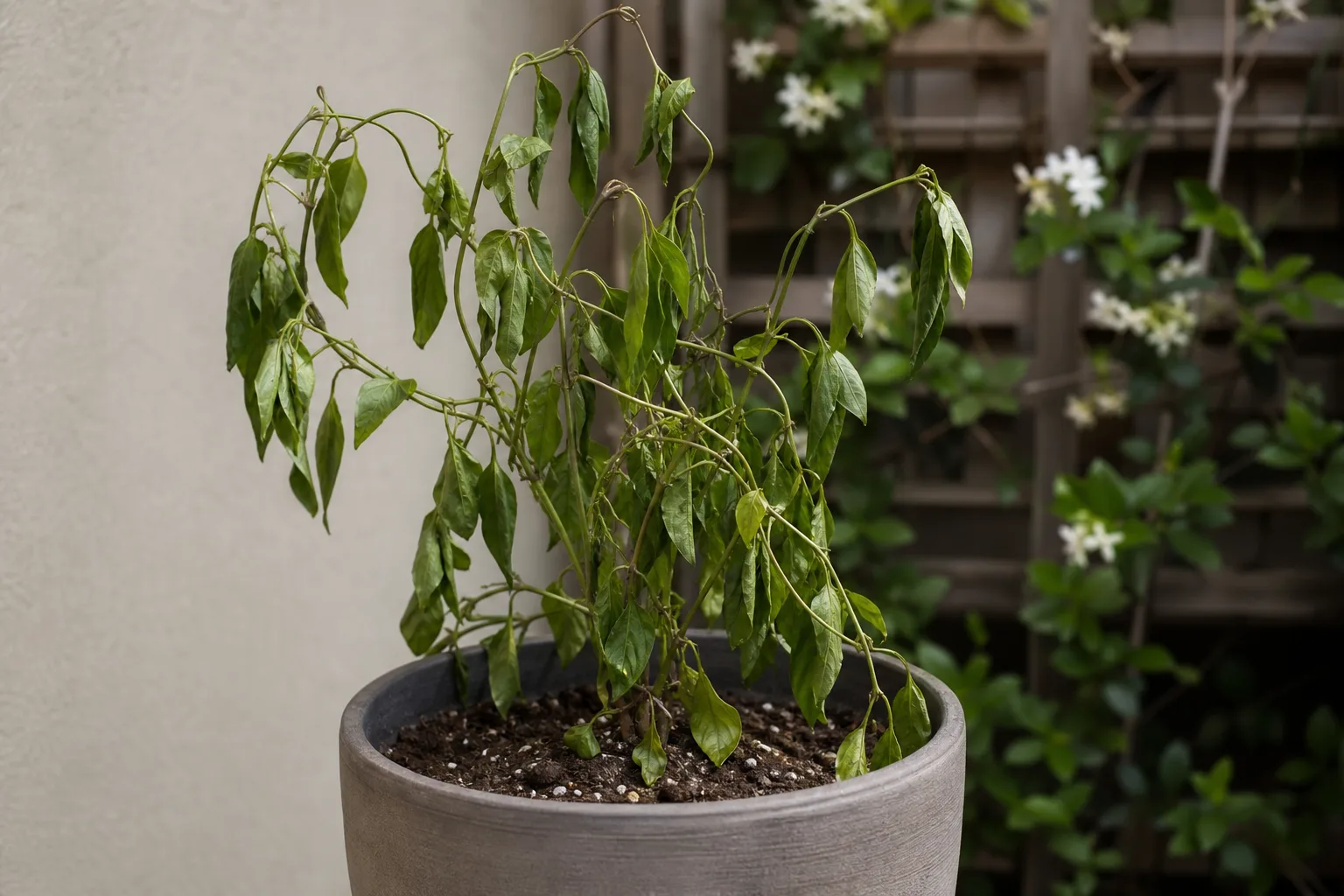
Jasmine often wilts or drops leaves for days after repotting-especially if roots were disturbed heavily or the plant was blooming. First step: move it to bright indirect light, give one settling water if the mix is dry, then wait for the top inch to dry before watering again.
Transplant Shock on Jasmine: Causes, Checks & Fixes
This guide covers transplant shock on Jasmine. See also the general Transplant Shock guide, watering, and light pages for this plant.
Transplant Shock on Jasmine: Causes, Checks & Fixes
Quick answer
Transplant shock on jasmine shows as temporary wilt, leaf drop, or stalled buds within days of repotting or moving pots. Common jasmine (Jasminum officinale) is a vigorous twining climber whose fine root hairs break easily during transplant-leaves can droop even when soil is lightly moist. If you have not repotted yet and need step-by-step procedure, start with the jasmine repotting guide first; this page covers post-move diagnosis and recovery.
First step: place the plant in bright indirect light and give one settling water only if the top inch of mix is dry. If you watered heavily at repot, wait for that dry-down before watering again. Hold fertilizer until new tips firm up.
Why jasmine shocks after repot
Repotting interrupts the root-to-shoot pipeline. When you lift a jasmine from its old pot, you break delicate root hairs that absorb water and nutrients. Until new roots grow into fresh mix, the vine loses more moisture through its leaves than damaged roots can replace. That mismatch produces wilt that looks like thirst but is really a temporary uptake problem.
Jasmine makes this worse in a few predictable ways. Container-grown vines need regular watering through the growing season because they have limited soil volume-any root setback shows quickly as limp stems. Repotting during heavy bloom diverts energy away from root repair; open buds and young flowers often drop first because the plant sheds expendable tissue to survive. A vigorous climber with long trailing stems also transpires heavily in warm rooms, so shock appears faster than on compact houseplants.
Timing matters. Early spring is the best repot window before summer growth and flowering peak. Repotting in blazing summer heat, during the cool winter rest period when growth slows, or right before the plant needs its chilling phase for next year’s buds adds stress beyond normal adjustment. Indoor common jasmine rests from October to March and benefits from a cool period to set flower buds-disturbing roots during that rest window can stall both roots and bloom wood.
Species note: J. polyanthum vs J. officinale
Pink jasmine (Jasminum polyanthum) is more tender than common jasmine and often blooms indoors in late winter after a cool spell. Repotting it during that chill window-when night temperatures sit near glass in the 13–15°C (55–59°F) band-adds cold stress on top of root disturbance. Wait until mid to late spring after the indoor flower flush fades, as outlined in the repotting guide. Summer-flowering J. officinale follows the early-spring window instead. Confirm your species on the jasmine overview before applying timing advice.
Pot choice extends shock when it goes wrong. Jumping more than one size up leaves excess wet soil around a small root ball. UMN Extension notes that oversized containers hold too much water and can cause root problems-on jasmine, that wet zone mimics shock longer and can slide into root rot. Bare-rooting, aggressive root pruning, or teasing apart a dense root ball during an unnecessary repot multiplies the damage. If the plant was root-bound before you moved it, shock can look like a continuation of pre-repot wilt-check the timeline carefully.
What transplant shock looks like on jasmine
Typical shock signs:
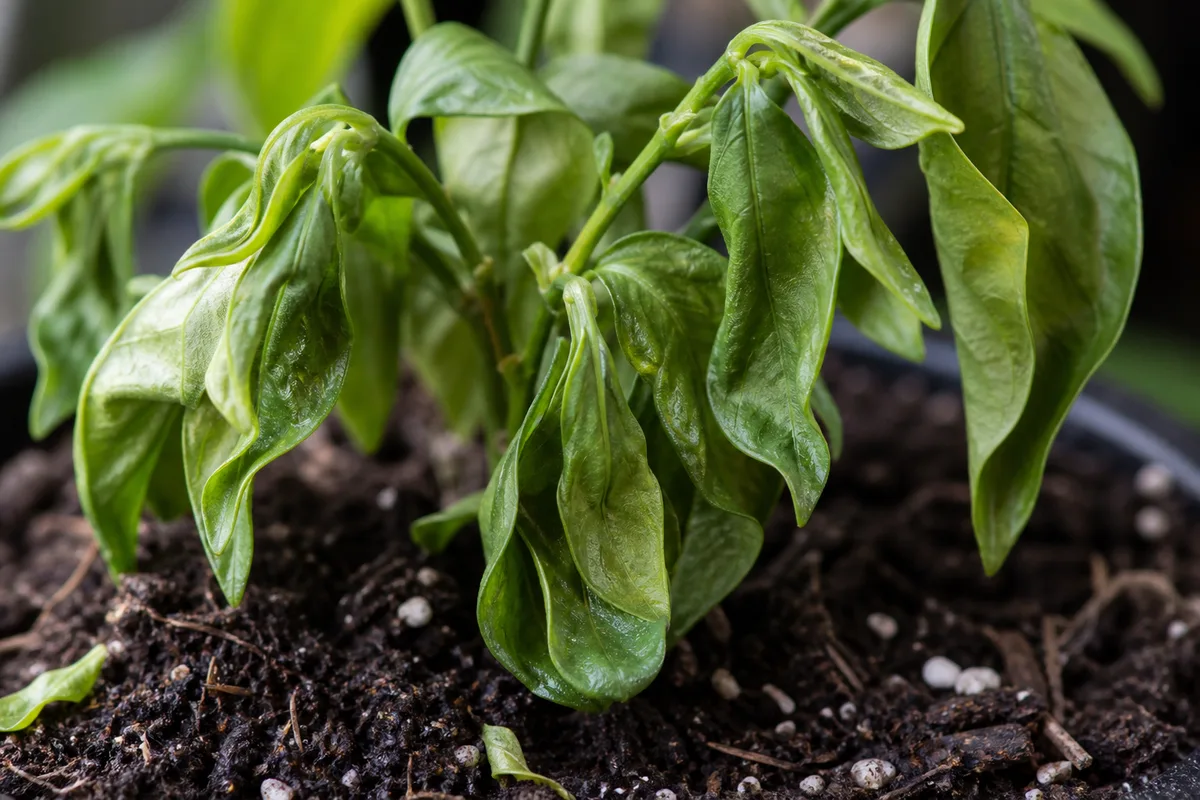
Transplant Shock symptoms on Jasmine - compare with healthy tissue on the same plant.
- Wilting or drooping stems within three to seven days of repot, even when mix is moist but not soggy
- Yellowing lower leaves that drop while upper leaves stay green briefly
- Open flowers or tight buds aborting after spring repot
- Stalled new tip growth for one to two weeks despite otherwise firm stems
- Slight leaf curl on exposed shoots while the plant re-establishes
What shock usually does not include:
- Mushy stems at the soil line
- Sour or rotten smell from the mix
- Blackened tissue spreading up stems
- Widespread collapse on wet soil that worsens daily after the first week
Damaged leaves from shock rarely green up again-they yellow and fall. That is normal shedding, not a sign the whole vine is dying. Judge recovery by firm stems and fresh tip break, not by old foliage returning.
How to confirm the cause
Work through these checks in order before you change anything else:
- Timeline - Did wilt or leaf drop start within a week of repotting, dividing, or moving from nursery pot to your container? Shock fits a tight post-repot window.
- Stem firmness - Pinch lower stems. Firm, pliable green wood suggests shock. Soft, darkening bases point to rot or crown damage.
- Soil moisture and smell - Probe the top inch. Moist but not waterlogged fits shock. Constant sogginess with sour odor does not.
- Pot weight - Lift the container. A pot that stays heavy days after repot in a warm room may be too large or poorly drained-extending stress.
- Bloom stage - Heavy bud or flower drop right after repot strongly supports shock rather than disease, especially in spring.
- Root peek - If you must confirm, gently slide the root ball out. White or tan firm roots with moist (not mushy) tips support shock. Brown slimy roots mean rot.
If wilting began before any repot and soil smells fine, look elsewhere-spider mites, drought, or cold drafts are common jasmine issues unrelated to transplant.
Shock vs. root rot decision table
| What you observe | Most likely cause | First action | Urgency |
|---|---|---|---|
| Wilt within 3–7 days of repot, firm stems, moist aerated mix, no sour smell | Transplant shock | Bright indirect light; dry-down watering | Routine - stabilization path |
| Wilt worsens daily, mix stays wet, pot heavy, stems still firm at first | Oversized pot / overwatering during shock | Stop watering until top inch dries; empty saucer | Routine - dry-down correction |
| Soft stem base, sour mix smell, brown slimy roots on peek | Root rot | Unpot, trim mushy tissue, repot into fresh well-drained mix | Same-day - root-rot rescue |
| Light pot, dusty dry core, water ran down pot sides at repot | Underwatering / dry root ball | Bottom-water once, then dry-down rhythm | Routine - soak path |
| Yellowing after cold window move, no repot timeline | Cold damage | Move away from glass; hold stable cool rest temps | Routine - placement fix |
| Stippling and webbing building over weeks, not hours post-repot | Spider mites | Rinse undersides; confirm pests before spray | Routine if mites confirmed |
If the mix is constantly soggy with sour odor, do not treat the case as benign shock-follow the root-rot path even when repot was recent.
First fix for jasmine
Move the vine to bright indirect light and water only when the top inch of mix feels dry.
This single step reduces transpiration stress while preventing the overwatering spiral that kills repotted jasmine. An east- or west-facing window with filtered sun, or a few feet back from a south window, gives enough light without baking reduced roots. If the mix was saturated at repot, skip watering until the surface dries-roots need oxygen as much as moisture.
Do not fertilize, hard-prune, or repot again on day one. Do not move the plant between rooms every day trying to “find a happy spot.” Stability matters more than perfect placement during the first week.
Step-by-step recovery
After the initial stabilization:
- Water on dry-down rhythm - When the top inch is dry, water until excess drains freely. Empty the saucer. Jasmine in active growth uses water steadily, but damaged roots cannot handle constant wet feet. Match seasonal depth to the jasmine watering guide.
- Maintain adequate humidity - Indoor jasmine needs high humidity and plenty of light to flower well. Dry indoor air accelerates wilt on shocked vines; grouping with other plants or a nearby humidifier helps more than misting leaves once.
- Support climbing stems - Re-tie long stems to their trellis or hoop gently. Bouncing unsupported vines increases physical stress on a plant already re-rooting.
- Hold fertilizer three to four weeks - Wait until you see new tip growth with firm turgor. Salts in fertilizer can burn tender regrowing roots.
- Remove only clearly dead material - Yellow leaves that detach easily can go. Do not cut back half the vine hoping to “help” unless stems are genuinely dead.
- Resume normal light gradually - Once new tips appear, move toward your usual full sun to partial shade placement over several days. Sudden jumps into intense sun can scorch leaves on a plant with a reduced root system.
Recovery timeline
Most established jasmine vines show the first firm new tips within seven to fourteen days when moisture and light are appropriate. Full visual recovery-replacing dropped lower leaves and refilling sparse sections-may take several weeks because jasmine grows moderately fast once roots anchor.
Dropped flowers and buds do not reopen. If you repotted during spring bloom, accept that this flush may be lost; focus on stable growth so the plant can build strength for later summer flowers and next year’s bud set.
If there is no new tip break after three weeks on correct dry-down watering, with firm stems and neutral-smelling soil, inspect roots for hidden rot or dryness at the core. Persistent decline on wet mix is not normal shock-it is likely overwatering or rot.
Lookalike symptoms to rule out
Root rot follows overwatering in heavy mix or oversized pots. Wilting worsens even though soil stays wet, stems soften at the base, and roots turn brown and slimy. Shock wilts on moist but aerated mix with firm stems. See the dedicated root rot guide for trim-and-repot rescue.
Underwatering wilts jasmine when the entire root ball dries out-common if old mix was hydrophobic and water ran down the sides at repot without soaking the core. Probe deep; if the center is dusty dry, bottom-water once, then return to dry-down rhythm.
Cold damage after moving a pot near a winter window can yellow and drop leaves without any repot. Check for cold glass contact or exposure below roughly 7°C (45°F) on tender indoor specimens. Jasmine needs a cool winter period for flowering, but freezing exposure damages tissue permanently. Details live in the cold damage guide.
Spider mites cause stippling and fine webbing, often after the winter rest when indoor air is dry. Mite damage builds over weeks, not hours after repot. Shake a leaf over white paper to check.
Pot-bound stress before repot made the plant wilt before you touched it-roots circling, soil drying in hours. That is why you repotted; do not confuse pre-repot decline with post-repot shock if symptoms started earlier.
General wilting without a repot timeline may be drought, heat, or root failure unrelated to transplant-use the wilting guide when collapse did not follow a pot move.
Mistakes to avoid
Do not water daily “to help roots settle.” Daily soaking in a fresh, possibly oversized pot is how jasmine rot starts after repot.
Do not repot again because the plant looks sad on day four. Double disturbance often kills vines that would have recovered from one move.
Do not fertilize stressed jasmine hoping to push blooms. Excess nitrogen produces leafy growth at the expense of flowers and salts burn damaged roots.
Do not place a freshly repotted vine in all-day direct sun through hot glass. Reduced roots cannot support peak transpiration.
Do not bare-root or aggressively wash soil from roots unless rescuing rot. Jasmine establishes faster when you keep the root ball intact and only loosen the outer circling roots.
Do not repot during peak flowering if it can wait. Bud drop after repot is common and preventable with early spring timing from the repotting guide.
How to prevent transplant shock next time
Repot in early spring before summer flowering peaks. RHS guidance recommends planting summer jasmine in spring or autumn; for container vines entering active growth, early spring is the practical window.
Move up one pot size only-roughly two to three centimeters wider in diameter. Use a well-draining mix with perlite or coarse sand, and a pot with open drainage holes. Terracotta dries more evenly than sealed plastic for this species.
Water the day before repot so the root ball holds together. Water thoroughly immediately after transplanting to settle fresh mix around roots, then let dry-down rhythm take over.
Disturb roots minimally-slide the plant out, loosen only the outer circling roots, and place at the same depth as before. Deep planting encourages stem rot on woody climbers.
Avoid stacking stress-do not combine repot, hard prune, and fertilizer in the same week. Space major interventions by at least two to three weeks.
Support the vine before and after so stems do not whip around during the move. A stable trellis reduces physical damage to new root connections.
When to worry
Treat as urgent when stems soften at the soil line, the mix smells sour, or wilting deepens daily on constantly wet soil within the first week. Those signs point to rot from overwatering or poor drainage-not recoverable shock without intervention. Open the root-rot guide immediately.
Also escalate if the entire vine collapses despite firm roots you checked at repot-sometimes hidden stem damage or severe root pruning removed too much absorptive surface.
Normal shock is gradual improvement after a brief stall: firm stems, neutral soil smell, and new tips within two weeks. Temporary leaf drop on an otherwise rigid vine is expected, not an emergency.
Conclusion
Post-repot wilt on jasmine is a root uptake stall, not a death sentence-but daily watering on wet mix converts shock into rot fast. Use the decision table above, keep stems firm and soil on dry-down rhythm, and measure success by new tip break rather than old leaves re-greening. Early spring moves, one-size-up pots, and minimal root disturbance prevent most cases-and spare the flower buds you repotted to enjoy in the first place.
Related tool
Use the Plant Problem Diagnosis Tool to narrow causes for transplant shock on this plant before changing multiple variables at once.