Pot Too Large on Jasmine: Causes, Checks & Fixes
Quick answer
Jasmine in a pot much wider than its root ball sits in wet, idle soil that roots never reach. First step: slide the plant out, measure the root mass-not the vine length-and repot into a container only 2.5–5 cm (1–2 in) wider with fresh draining mix.
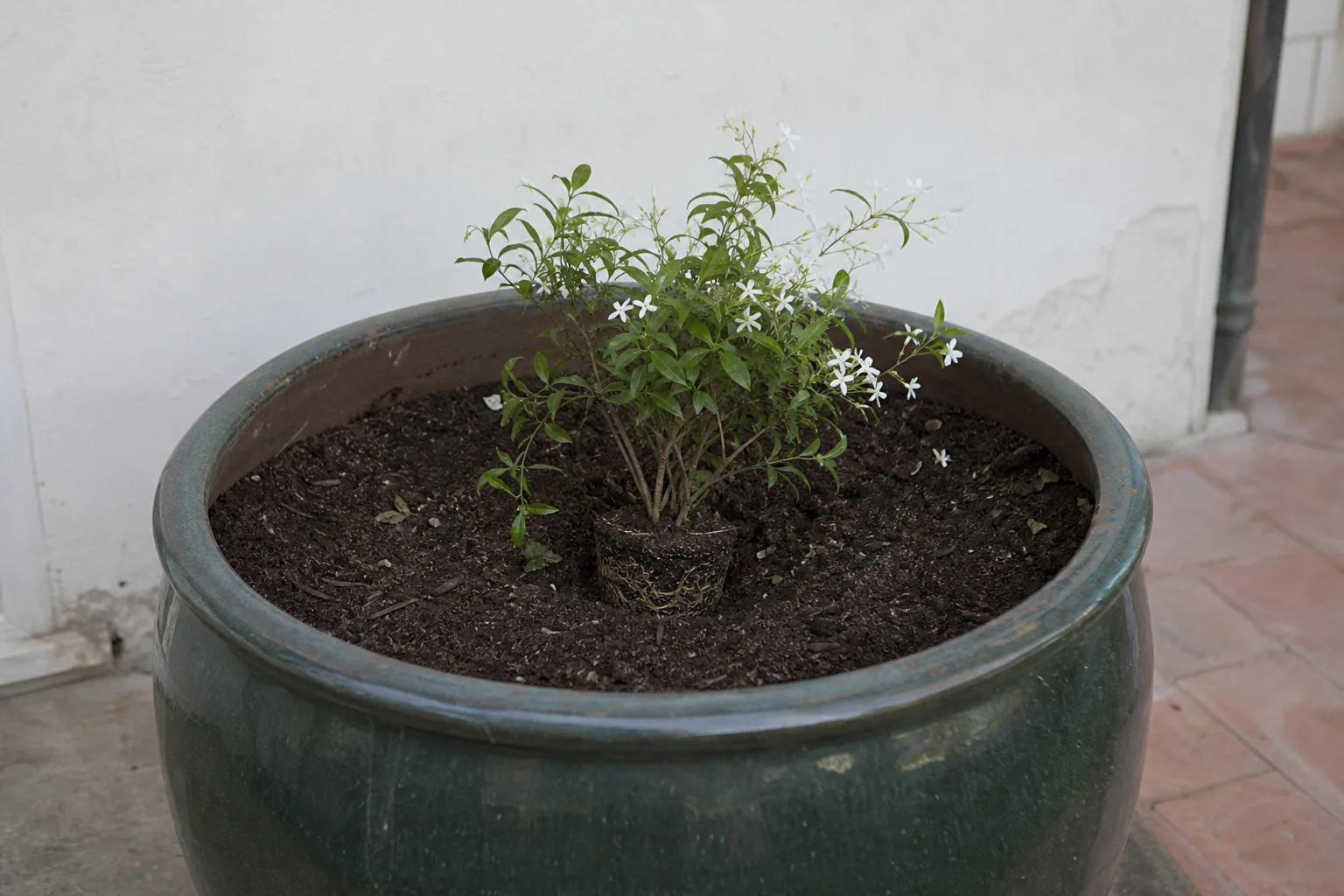
Pot Too Large on Jasmine: Causes, Checks & Fixes
This guide covers pot too large on Jasmine. See also the general Pot Too Large guide, watering, and light pages for this plant.
Pot Too Large on Jasmine: Causes, Checks & Fixes
Quick answer
Jasminum officinale is a vigorous climbing vine, but its root system stays compact relative to trailing stems. Putting jasmine in a decorative pot sized for the vine-not the roots-surrounds a small root ball with wet compost that roots never colonize. That soggy outer ring reduces oxygen, stalls growth, and can lead to yellow leaves and failed bloom.
First step: unpot the plant and measure the root mass. Repot into a container only 2.5–5 cm (1–2 in) wider in diameter than the root ball, with fertile, well-drained mix. Match pot volume to roots, not vine length.
Why jasmine gets an oversized pot
The most common mistake is equating a long, trailing jasmine stem with a large root system. Gardeners buy a tall trellis specimen or repot after seeing vigorous summer growth, then jump two or three pot sizes hoping for faster climbing. Jasmine roots expand steadily but do not fill a huge volume in one season-especially indoors or on a cool winter windowsill when growth slows.
Jasmine also needs well-drained soil and regular watering during flowering, with the top inch allowed to dry between drinks. In an oversized pot, the root ball saturates quickly while the outer compost stays wet for days. Overpotting creates a soggy ring around the rootball where anaerobic conditions develop; roots rot there instead of growing outward.
Several habits push jasmine into this trap:
- Decorative cache pots that hide an already-large inner container and trap runoff
- Jasmine repotting guide in autumn or winter when jasmine semi-rests and uses little water-wet compost lingers longer
- Heavy peat-rich mix in a deep glazed pot, which holds moisture far longer than terracotta
- Watering on a summer schedule through winter, when an oversized pot never dries at depth
Unlike succulents, jasmine will not show distress within days. Symptoms often appear weeks after a well-intentioned upsize, which makes overpotting easy to miss.
What pot too large looks like on jasmine
Overpotting on jasmine mimics chronic overwatering because the mechanism is the same: roots sit in wet mix too long.
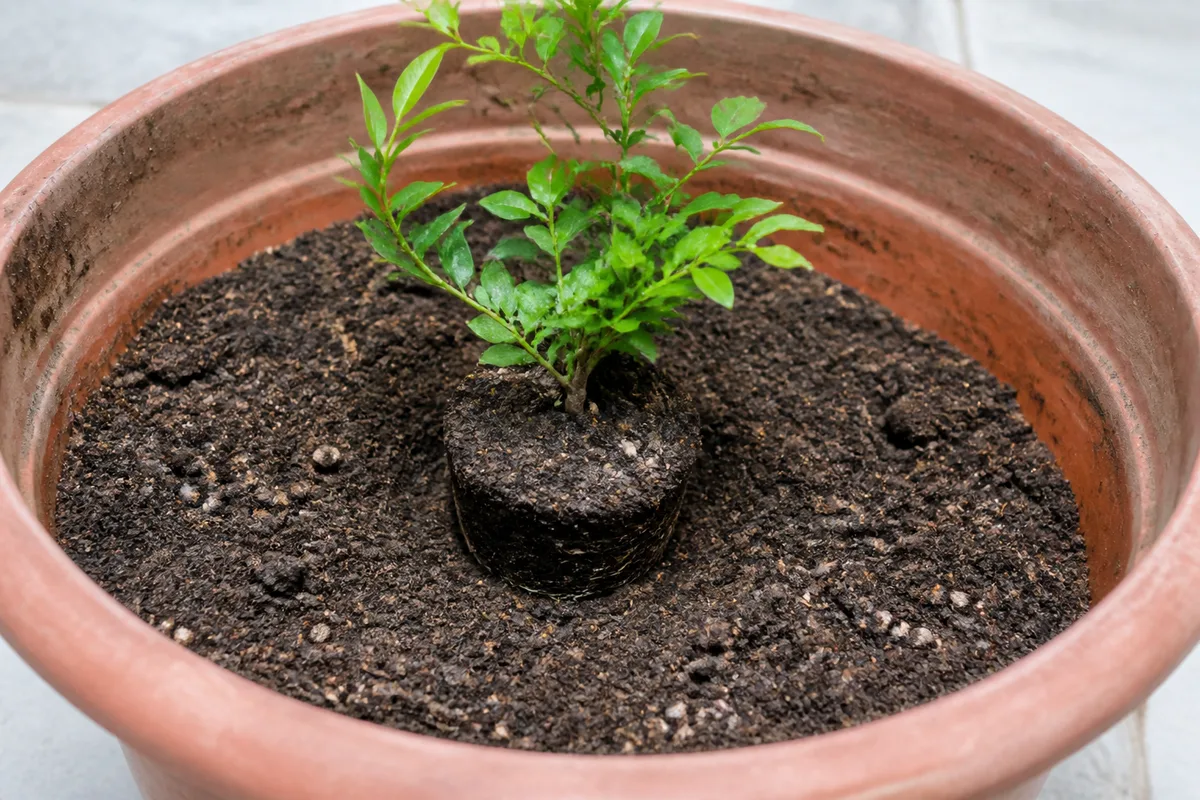
Pot Too Large symptoms on Jasmine - compare with healthy tissue on the same plant.
Typical patterns:
- Slow dry-down - The surface feels dry, but soil at 3 cm depth stays cool and damp 10–14 days after watering during active growth
- Stalled tips - No new leaves or tendrils for weeks in warm, bright weather despite regular care
- Lower-leaf yellowing - Older leaves yellow and drop while the plant stops pushing buds
- Weak or absent flowering - Bud formation fails when roots are stressed, even if light and winter chill were adequate
- Musty or sour smell - Indicates anaerobic breakdown in idle outer compost
- Fungus gnats - Small flies over wet surface soil that roots are not using
- Small root ball in a large pot - After gentle unpotting, roots form a tight cylinder with loose, wet compost falling away from the sides
What healthy jasmine looks like for contrast: Firm stems, new tips during spring and summer, mix that dries at the top within a few days in active growth, and roots that gradually reach toward pot walls-not a tiny ball rattling in excess soil.
How to confirm the cause
Work through these checks before repotting again:
- Pot-to-root ratio - Slide the plant out (water lightly the day before if mix is bone dry). Measure root ball width. If fresh mix on all sides exceeds 3–4 cm, the pot is likely too large for current roots.
- Dry-down test - Water thoroughly, then probe depth with a finger or skewer every few days. If the top 3 cm takes more than a week to dry in warm active growth, oversizing or heavy mix is suspect.
- Weight check - Lift the pot. An oversized container feels disproportionately heavy days after watering while the plant looks thirsty.
- Repot history - Did you jump from a 15 cm nursery pot to a 30 cm decorative planter? That single step commonly triggers overpotting on jasmine.
- Drainage path - Confirm holes are open and no saucer or cache pot holds standing water. Poor drainage mimics oversizing.
- Root firmness - White, firm roots with pale tips support a downsizing fix. Mushy brown roots suggest rot-trim before repotting and see root rot guidance.
Rule out lookalikes: Root-bound jasmine dries out in one day and needs a modest upsize-opposite timing. Pure underwatering gives crispy leaves and light pots, not chronic damp depth. No flowers alone often trace to missing cool winter chill, not pot size-though an oversized wet pot can compound bud failure.
First fix for jasmine
Unpot, assess the true root ball, and repot into a container only one size larger than the root mass-not the vine spread.
Steps:
- Water lightly if mix is completely dry, then tip the plant out over newspaper.
- Brush away loose outer compost. Keep the intact root ball; do not bare-root unless rot is present.
- Choose a pot 2.5–5 cm (1–2 in) wider than the root ball with drainage holes. Avoid deep “long tom” pots unless you fill the bottom with well-draining mix only.
- Use fresh well-draining potting mix-roughly half potting soil, part compost, and perlite or coarse sand for porosity, matching jasmine’s preference for drainage.
- Set the root ball so the crown sits at the same depth as before. Firm mix gently around it without compacting.
- Water once until a little runs from drainage holes, then wait until the top inch dries before watering again.
- Hold fertilizer until new growth appears-stressed roots do not need feeding.
Do not jump to pruning half the vine, moving to Jasmine light guide, and fertilizing on the same day. One correction-right-sized pot and careful watering-comes first.
Step-by-step recovery
After the downsizing repot:
- Place in bright light - Jasmine recovering from wet roots needs good light to use water. Full sun to partial shade with airflow helps mix dry evenly.
- Water on dry-down only - Check the top 3 cm. In winter semi-rest, stretch intervals to every 10–14 days only if the smaller pot actually dries.
- Trim only dead or mushy material - Remove yellow leaves that come away easily and any soft stems at the base. Keep healthy green vine for photosynthesis.
- If roots were mushy - Trim brown soft roots back to firm white tissue with clean scissors. Dust cuts if your practice includes fungicide; repot immediately into the smaller container.
- Support the vine - Re-tie stems to a trellis or hoop without pulling the root ball. Physical stability reduces stress while roots re-establish.
- Monitor weekly - Track pot weight, tip growth, and soil smell. Improvement shows as new leaves, not re-greening of old yellow ones.
If symptoms persist four weeks after correct sizing, inspect for root rot, spider mites in dry winter air, or insufficient light-not another upsize.
Recovery timeline
Mild overpotting often stabilizes within two to three weeks once the mix dries predictably. New leaf tips commonly appear in three to six weeks during spring or summer growth. Lower yellow leaves may continue dropping; that is normal shedding, not failure.
Flower buds depend on seasonal rhythm-jasmine needs its cool winter period to set buds. Do not expect immediate bloom after a mid-summer repot. Judge success by firm roots, active tips, and soil that dries on a sensible cycle.
Severe root rot from months in a wet oversized pot may take a full growing season to outgrow. If stems collapse or smell persists after downsizing and root trim, the plant may not be saveable.
Lookalike symptoms to rule out
Root-bound jasmine - Water runs straight through, roots circle densely, and soil dries within a day. Fix with a modest one-size-up repot in early spring, not a dramatic downsize.
Overwatering without oversizing - Same yellow leaves and gnats, but root ball fills most of the pot. Correct watering and drainage first; pot size may already be appropriate.
Transplant shock - Temporary wilt for a few days after any repot. Overpotting stress builds over weeks with chronic dampness, not acute collapse.
No flowers from missing chill - Lack of a cool winter period (around 7–13°C for several weeks) prevents bud set regardless of pot. Fix environment next autumn; pot size is secondary.
Spider mites - Stippling and webbing on leaves in dry indoor winter air, not necessarily wet soil. Confirm with a shake test over white paper.
Mistakes to avoid
Do not upsize because the vine reached the trellis top-the roots decide pot size, not stem length.
Do not add gravel at the pot bottom instead of proper mix; perched water still sits above the layer and does not fix oversizing.
Do not keep watering because leaves look pale when the pot is heavy and wet at depth-that deepens rot.
Do not repot into an even larger container hoping roots will “grow into it faster.”
Do not fertilize a stalled, wet-rooted plant to force bloom-excess nitrogen pushes leaves at the expense of flowers on jasmine already stressed.
Do not combine downsizing with hard pruning, relocation, and feed on one weekend. Stagger stress.
Jasmine care cross-check
While correcting pot size, confirm the basics that determine how fast mix dries:
- Light - Four to six hours of direct sun or very bright indirect light; weak light slows water use and worsens overpotting effects indoors.
- Winter rhythm - Reduce watering during semi-rest; an oversized pot in a cool dim room stays wet longest.
- Mix - Standard potting soil amended for drainage; pH roughly 6.0–7.5 suits jasmine.
- Container material - Terracotta dries faster than glazed ceramic-helpful after overpotting recovery.
- Cache pots - Empty standing water within 30 minutes of watering.
How to prevent pot too large next time
Repot jasmine every two years or when root-bound, usually in early spring before vigorous growth. Move up one size only-about 2.5–5 cm wider-when roots circle the pot or emerge from drainage holes.
Choose pots with open drainage, match material to your watering habits, and size for the root ball you see at unpotting-not the mature vine you hope for next year. After repotting, water sparingly until new growth confirms roots are active in the fresh mix.
When to worry
Treat as urgent when soil smells sour, stems soften at soil line, or yellowing climbs the vine while mix stays wet in warm weather-those signs suggest active root decline from chronic wetness. Downsize, trim rotted roots, and improve light and airflow the same week.
A stable plant with slow growth in winter and appropriately damp-but not soggy-soil in a slightly large pot may recover with careful watering alone. Reserve downsizing for confirmed ratio mismatch or rot signs.
If the root ball is mostly mush after unpotting and stems collapse, replacement may be more realistic than repeated ups and downs.
Conclusion
Jasmine’s long vines tempt gardeners into oversized pots, but Jasmine overview thrives when root mass and container volume stay in balance. Unpot, measure the root ball, repot one size up at most with draining mix, and water when the top inch dries-not when the calendar says so. That single diagnostic path fixes most overpotting cases and protects the flowering rhythm jasmine needs for the season ahead.
When to use this page vs other Jasmine guides
- Jasmine watering guide - Use for routine moisture checks before assuming pot too large is the main issue.
- Jasmine problems hub - Browse all 53 common issues on this species.