Bacterial Wilt on Jasmine: Causes, Checks & Fixes
Quick answer
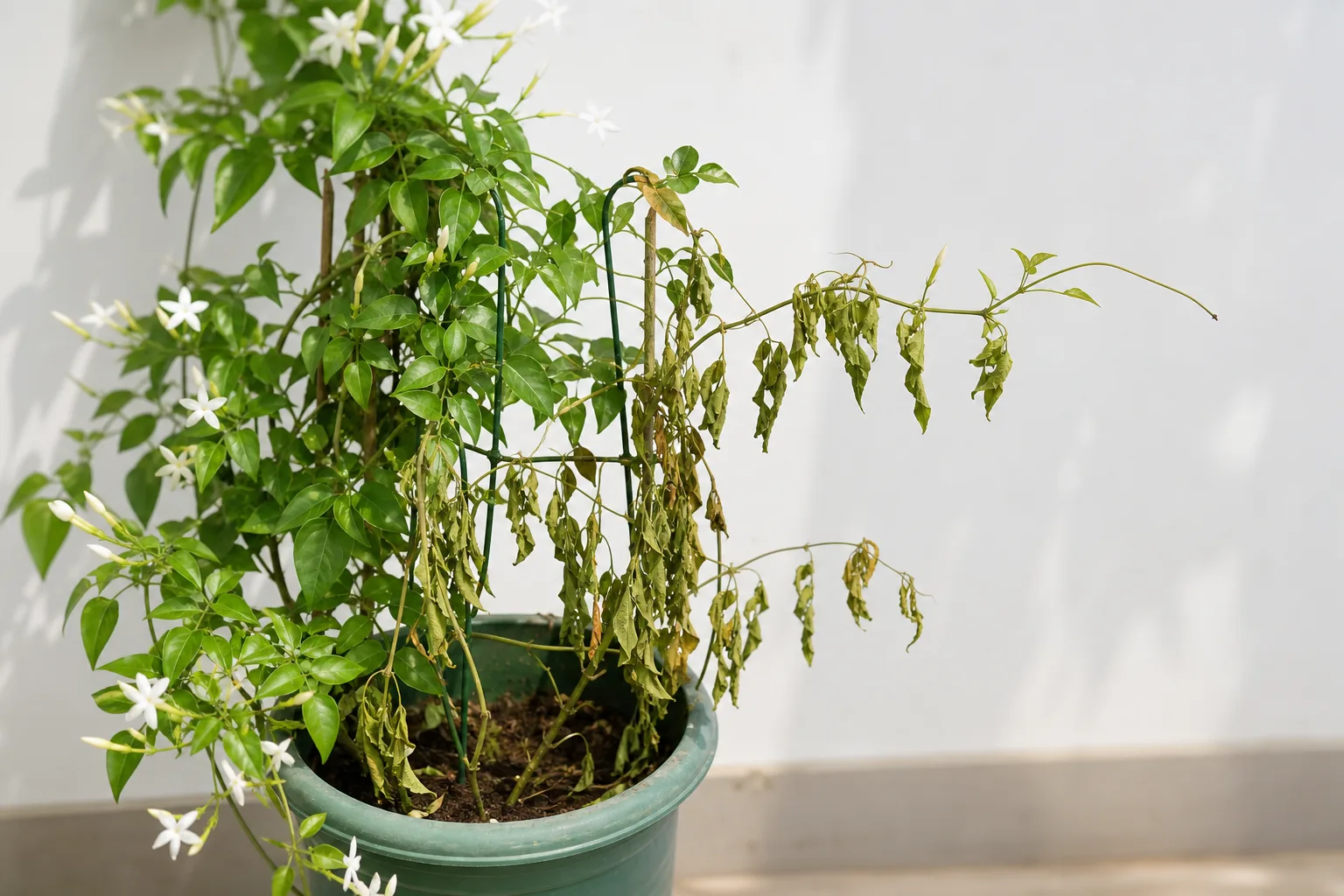
Sudden wilting of entire jasmine shoots despite wet soil may indicate bacterial vascular wilt-often spread through wounds or contaminated tools. On common jasmine, fungal wilt and root failure are documented more often than bacterial block; confirm milky ooze on cut stems before treating as bacterial. Isolate immediately, stop overhead watering, and discard severely affected vines-there is no reliable cure.
Bacterial Wilt on Jasmine: Causes, Checks & Fixes
This guide covers bacterial wilt on Jasmine. See also the general Bacterial Wilt guide, watering, and light pages for this plant.
Bacterial Wilt on Jasmine: Causes, Checks & Fixes
Quick answer
Bacterial wilt on common jasmine (Jasminum officinale) shows as sudden shoot collapse while roots may still look intact-a different pattern from slow root rot in wet, poorly drained mix. But honest epidemiology matters: on jasmine, documented crop literature names fungal wilt (Fusarium solani and Sclerotium rolfsii sclerotial wilt on commercial Jasminum species) more often than bacterial vascular block. Southern bacterial wilt from Ralstonia solanacearum affects hundreds of ornamentals-geranium, impatiens, zinnia-but jasmine is not a prominently listed host in extension factsheets.
First step: isolate the vine and run the cut-stem ooze test on a wilting shoot before you water, fertilize, or prune broadly. Milky bacterial threads between cut surfaces, or cloudy exudate when a stem piece sits in water, support bacterial vascular wilt. No ooze with white crown mycelium points to southern blight instead; mushy sour roots point to root rot; a light pot that firms after soaking points to drought wilt.
Severely affected plants should be discarded rather than repeatedly treated-there is no reliable home cure for confirmed bacterial wilt.
Is bacterial wilt common on jasmine?
Documented fungal wilt vs. rare bacterial vascular block
Home growers often label any overnight jasmine collapse “bacterial wilt,” but crop-disease references tell a different prevalence story. India’s National Horticulture Board jasmine disease guide documents wilt caused by Fusarium solani-roots turn black and patches of vines fail-and sclerotial wilt from Sclerotium rolfsii, where white mycelia girdle roots and tan sclerotia cling to wilted plants. Field studies on commercial Jasminum grandiflorum, J. auriculatum, and J. sambac report Fusarium wilt on jasmine crops causing major yield loss in jasmine-growing regions.
By contrast, southern bacterial wilt factsheets list geranium, impatiens, vinca, and solanaceous crops as primary ornamental hosts. Ralstonia solanacearum clogs vascular tissue after entering through wounds, thrives in warm wet soil above 85°F, and can kill plants within 7–14 days of first symptoms-but jasmine is not named among common hosts. That does not mean bacterial wilt is impossible on a container J. officinale; it means you should confirm ooze before assuming bacterial etiology and rule out the fungal and moisture causes documented on jasmine crops.
This page owns the ooze-positive bacterial vascular branch. For the broader wilt fork-dry pot, wet rot, heat stress-start at wilting on jasmine.
Why jasmine vines collapse rapidly
Wound entry, wet foliage, and container drainage
Jasmine vines grow quickly in warm weather with regular watering during flowering. Pathogens exploit that soft spring growth through several entry routes:
Bacterial vascular wilt (Ralstonia spp.): Bacteria enter through pruning wounds, insect damage, or transplant injury, then multiply in xylem. Disease development favors warm temperatures and wet soils. Dense twining foliage that stays wet overnight lets bacteria spread in water films along stems-not only through soggy roots. Container jasmine with restricted drainage is not immune.
Fungal wilt and collar rot (Fusarium, Sclerotium): Soilborne fungi attack roots and crowns. Sclerotium rolfsii penetrates the crown where stem meets roots, produces white mycelial mats, and forms mustard-seed-sized sclerotia. Wilting can appear 2–4 days after crown infection in warm humid conditions (80–95°F). Fusarium solani wilt on jasmine crops blackens roots and kills patches of vines.
Root rot and drought: Chronic winter overwatering suffocates fine roots-wilt on wet soil without ooze or crown mycelium. Missed summer drinks collapse a twining summer-flowering climber within hours on a sunny trellis. See water stress on jasmine for heat-and-moisture overlap.
Understanding which pathway fits your vine prevents treating fungal crown rot with a bacterial-wilt discard protocol-or drowning a drought-wilted jasmine because mix already feels damp at the surface.
What bacterial wilt looks like on jasmine
Bacterial vascular collapse vs. fungal sclerotial wilt vs. root rot
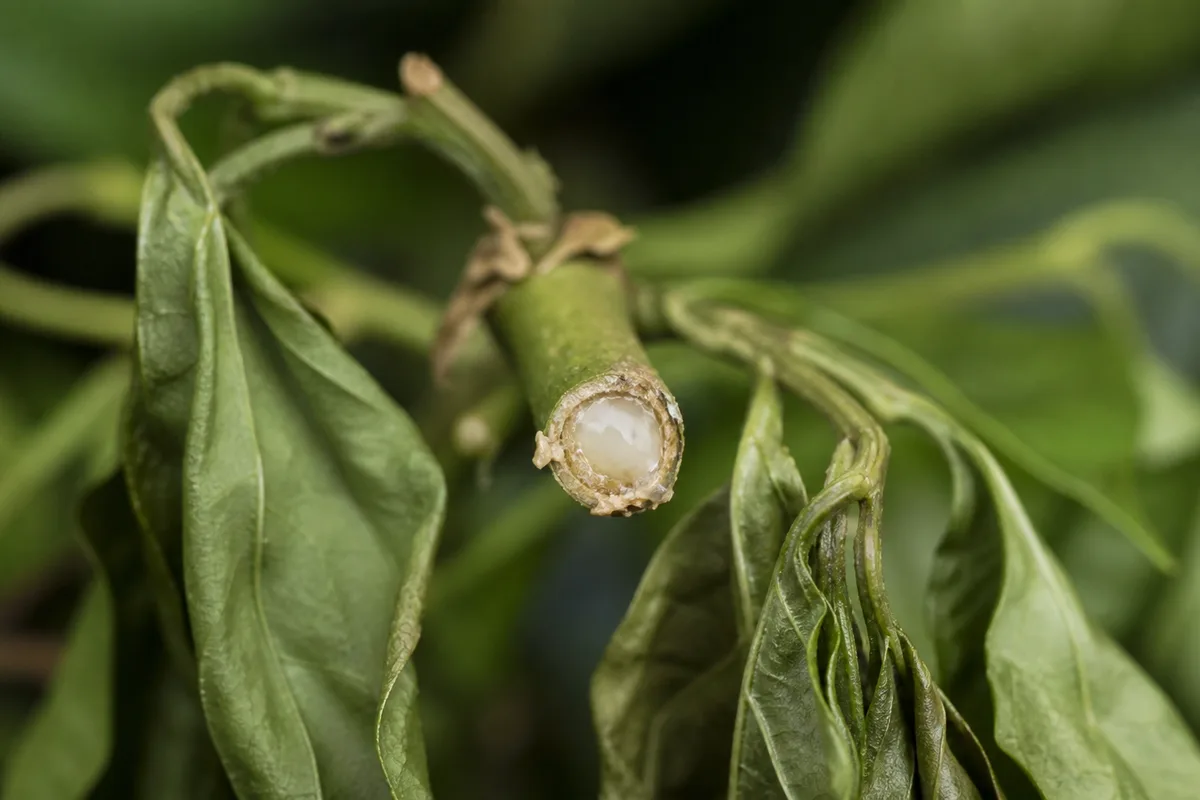
Bacterial Wilt symptoms on Jasmine - compare with healthy tissue on the same plant.
Bacterial vascular wilt (ooze-positive):
- Individual stems wilt from tip to base within days, sometimes one section of an otherwise healthy climber
- Leaves turn dull green then brown without the yellowing typical of root rot
- No recovery after watering-damaged xylem cannot move water
- Advanced cases show dark streaks inside stems when split lengthwise; vascular tissue may show brown discoloration
- Cut-stem test: milky threads between cut surfaces, or cloudy water when a stem piece sits in a glass
- Plants may wilt during the day and appear slightly firmer overnight early in infection, then fail permanently as bacteria spread
Fungal sclerotial wilt / southern blight (Sclerotium rolfsii):
- Rapid wilt, often starting near the soil line rather than random mid-vine shoots
- White mycelial mat at the crown; tan to dark brown sclerotia (about 0.5–1 mm) on stem and soil surface
- Water-soaked lesion girdling the lower stem
- No milky bacterial ooze on cut stems above the crown
- More commonly documented on commercial jasmine than bacterial wilt
Fusarium wilt (Fusarium solani):
- Patchy wilt in the garden; roots turn black
- May show stunting and lower-leaf yellowing before collapse
- No crown mycelium mat; ooze test negative
Root rot:
- Yellow lower leaves, sour smell, mushy brown roots
- Whole-vine limpness on heavy wet pot over days to weeks-not isolated shoot collapse overnight
- See root rot on jasmine for trim-and-repot rescue
Drought wilt:
- Lightweight pot, dry mix throughout, perks within hours of a thorough soak
- Firm white roots on rinse
How to confirm the cause
Cut-stem ooze test, root inspection, and crown examination
Work through these checks in order-do not skip to bacterial discard without evidence.
-
Pot weight and soil moisture. Lift the pot. Underwatered jasmine perks after a deep soak; bacterial and fungal vascular wilt do not. Wet heavy mix with mushy roots redirects to root rot.
-
Crown inspection. Pull mulch or surface mix back from the stem base. White fungal mats and sclerotia at the soil line confirm Sclerotium southern blight-not bacterial wilt. Treat via stem rot / crown rot guidance.
-
Root rinse. Firm white roots suggest vascular disease rather than rot. Blackened, patchy root death with otherwise firm upper stems fits documented Fusarium wilt on jasmine crops.
-
Cut-stem ooze test (bacterial confirmation). Slice a wilting stem diagonally. Press cut surfaces together and pull apart-bacterial wilt may show milky threads. Alternatively, suspend a 2-inch stem piece in clear water; bacterial exudate clouds the water within minutes. Clear water with firm green cambium is not bacterial confirmation-continue fungal and moisture differentials.
-
Split-stem streaking. Lengthwise cut on a wilting stem: dark vascular streaks support vascular wilt (bacterial or fungal); water-soaked crown tissue with external mycelium points fungal.
Confirmation decision table
| Pattern | Ooze test | Crown / roots | Likely cause | Next page |
|---|---|---|---|---|
| One shoot collapses overnight; rest firm | Milky threads or cloudy water | Firm white roots | Bacterial vascular wilt | Stay here-isolate and discard protocol |
| Rapid wilt at soil line | Negative | White mycelium + sclerotia | Sclerotium southern blight | Stem rot |
| Patch wilt in bed; black roots | Negative | Blackened roots | Fusarium wilt | Extension ID; discard affected patches |
| Yellow leaves; sour smell; wet pot | Negative | Mushy brown roots | Root rot | Root rot |
| Light pot; dry mix; perks after soak | Negative | Firm roots | Drought wilt | Wilting |
| Afternoon limp; firm by evening | Negative | Moist firm roots | Heat / water stress | Water stress |
When ooze is absent but collapse is rapid, contact your local extension office or plant disease clinic-lab culture distinguishes bacterial from fungal vascular pathogens better than home tests alone.
First fix for jasmine
Isolate the plant immediately-before you cut, water, or move pots near other vines.
Remove wilted stems with sterilized pruners-dip blades in 10% bleach (one part bleach to nine parts water) or wipe with 70% isopropyl alcohol between cuts, especially when ooze is present. Switch to soil-level watering only; keep foliage dry. Improve airflow around remaining growth by spacing outdoor vines and avoiding overhead irrigation on leaves.
Severity ladder:
- Less than one-third of shoots wilted with confirmed ooze: Remove affected stems only; quarantine two weeks; watch neighbors daily.
- More than one-third collapses within a week with ooze: Discard the entire plant in a sealed bag. Do not compost near oleaceous plants (jasmine family).
- Ooze-negative rapid collapse: Do not assume bacterial wilt-follow fungal or root-rot branches above.
Cutting salvage from uninfected stock
If upper stems remain firm and never wilted:
- Scrape bark lightly-green cambium under the scrape is required
- Run cut-stem test on candidate cutting wood; discard any piece that clouds water
- Take semi-hardwood cuttings with sterile tools and fresh sterile mix
- Quarantine rooted cuttings away from established jasmine for at least two weeks before returning to the collection
Affected shoots rarely recover once bacteria block xylem. Judge success only on uninfected new growth from salvaged cuttings-not on re-greening wilted leaves.
What not to do
Do not fertilize a collapsing vine-stressed roots and blocked xylem cannot use nutrients, and fertilizer salts worsen injury.
Do not mist foliage or overhead water; water films spread bacteria along twining stems.
Do not compost infected material near other jasmine, olive, or oleaceous garden plants.
Do not take cuttings from any stem that has wilted, even partially.
Do not reuse mix, drainage shards, or support stakes from a discarded wilted plant without sterilization.
Do not assume “bacterial wilt” from collapse alone without the ooze test-fungal collar rot is more commonly documented on jasmine crops and needs different disposal and bed management.
How to prevent bacterial wilt next time
Plant jasmine in well-draining potting mix with a drainage hole. Prune during dry weather and sterilize tools between plants. Space outdoor vines for airflow so dew dries quickly on twining foliage. Quarantine new plants for two weeks before placing near established jasmine.
Avoid wounding stems during active growth in warm wet periods when Ralstonia multiplies fastest. In regions where southern blight is common, keep mulch away from crowns and inspect soil lines weekly during summer-fungal sclerotia persist in soil debris for years.
Match watering to season per the jasmine watering guide so you do not confuse wet root failure with vascular wilt.
When to worry - whole-vine collapse, ooze-negative wilt, or spread to neighbors
Treat as urgent when:
- A whole twining section collapses overnight while other shoots still look green-isolate before you prune other vines
- Milky ooze appears on cut stems and wilting spreads to a second shoot within 3–5 days
- More than one-third of the vine fails within a week with confirmed vascular symptoms
- A neighbor vine on the same trellis or bench shows matching overnight collapse
- You grow commercial jasmine or outdoor beds in warm humid regions where Sclerotium and Fusarium are endemic-rapid patch death may be fungal, not bacterial, but still demands immediate isolation
Escalate to extension or a plant disease clinic when collapse is rapid but ooze-negative, crown mycelium is absent, and roots are firm-lab diagnosis prevents mislabeling fungal wilt as bacterial.
Lower urgency when one small tip wilts on a dry pot and the vine perks after a deep soak-that is drought wilt, not vascular disease.
If corrective isolation and removal produce no stable uninfected growth after four weeks, discard and sanitize the pot rather than repeated pruning cycles.
Conclusion
Bacterial wilt on jasmine is a confirmed diagnosis-not a default label for any overnight collapse. Documented jasmine crop diseases center on Fusarium and Sclerotium fungal wilt; southern bacterial wilt from Ralstonia is a real ornamental threat best confirmed by milky stem ooze, dark vascular streaking, and failure to recover after watering. Isolate first, run the decision table, and discard aggressively when ooze-positive wilt crosses one-third of the vine within a week. Salvage only from firm, ooze-negative upper wood-and link outward to wilting, root rot, and stem rot guides when the pattern does not fit bacterial vascular block.
Related tool
Use the Plant Problem Diagnosis Tool to narrow causes for bacterial wilt on this plant before changing multiple variables at once.