Jasmine Plant Care: Light, Water & Soil Tips
Jasminum officinale
Jasmine needs a cool winter period (7–13°C) to set flower buds - this is the most important care fact. Bright light and some direct sun in summer. Train the vigorous climbing stems. Prune after flowering.
Jasmine Plant Care: Light, Water & Soil Tips
Start with wateringThe most common care mistake for JasmineWatering guide →Jasmine care essentials
Light
full sun to partial shade (4–6 hours of direct sun)
Water
Allow top inch to dry between waterings. Water regularly during flowering. Reduce in cool winter period (every 10–14 days).
Soil
Well-draining standard potting mix. pH 6.0–7.5.
Humidity
Moderate (40–60%); tolerates Indian outdoor humidity well
Temperature
15°C to 32°C (60–90°F)
Fertilizer
Use balanced liquid fertilizer; switch to high-potassium feed just before flowering season and stop if the plant is stressed, newly repotted, or not actively growing.
About Jasmine
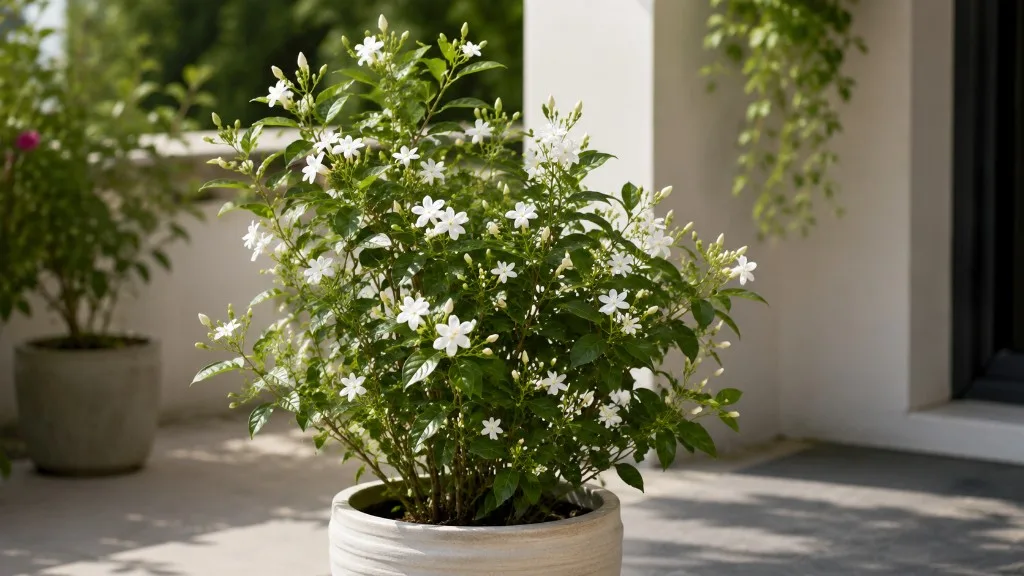
Jasmine is native to Caucasus and northern Iran, naturalised across Asia, typically reaches 3–9 m as climber; 60–90 cm as container shrub with support indoors, with moderate to fast once established growth. Jasmine has a climbing growth habit and part of the Oleaceae family. It is also known as Common Jasmine, Poet's Jasmine, and Chameli.
| Detail | Information |
|---|---|
| Also known as | Common Jasmine, Poet's Jasmine, Chameli |
| Native region | Caucasus and northern Iran, naturalised across Asia |
| Mature size | 3–9 m as climber; 60–90 cm as container shrub with support |
| Growth rate | Moderate to fast once established |
| Growth habit | Climbing |
| Scientific name | Jasminum officinale |
| Family | Oleaceae |
Jasmine Plant Care: Light, Water & Soil Tips
What Is Jasmine?
Jasmine is a group of flowering plants in the genus Jasminum, grown for small, often star-shaped blooms and a sweet fragrance that can fill a room or garden on warm evenings. Most species grow as twining climbers that need support, though some form compact shrubs. Indoors, a well-grown jasmine in a bright window can perfume an entire room when buds open; outdoors, trained vines on trellises, pergolas, and patio posts place that scent exactly where people sit and walk.
The species most often referenced in general care guides is Jasminum officinale - common or poet’s jasmine - a vigorous deciduous to semi-evergreen vine native from Turkey through the Trans-Caucasus to southern central China, now naturalized across much of Asia and the Mediterranean. In cultivation it can reach 3 to 9 meters (10 to 30 feet) on a strong support, or stay around 60 to 90 cm (2 to 3 feet) as a container shrub if regularly pruned. Growth is moderate to fast once established, which means the plant can outgrow its pot, its trellis, and your patience if light and water keep pace.
If you are deciding whether jasmine fits your space, the honest summary is this: jasmine rewards bright light, consistent moisture with good drainage, cool winter rest, and a trellis - and it punishes warm dim rooms, soggy soil, and neglect of any one of those basics. It is harder than a pothos and easier than a finicky orchid. The payoff is fragrance and elegant white or pale blooms on glossy foliage, plus propagation simple enough that one healthy parent vine can supply gifts for years. One critical caveat: plants sold as “jasmine” are not always Jasminum species, and misidentification matters for cold tolerance and pet safety.
Botanical Background and True Jasmine vs Lookalikes
Jasmine belongs to the family Oleaceae - the olive family - which includes olives, lilacs, and forsythia. Oleaceae plants generally prefer well-drained soil, dislike sudden temperature swings, and show stress at the roots before leaves tell the full story. Opposite leaves, twining stems, and tubular flowers that open into star-shaped faces are characteristic of many Jasminum species.
The naming problem is real. Several unrelated plants carry “jasmine” in the common name and look or smell similar enough to confuse buyers:
- Trachelospermum jasminoides (star jasmine or confederate jasmine) is a popular evergreen climber with fragrant white flowers, but it is not a true jasmine. It is often hardier and more forgiving in containers than tender Jasminum species, though care details differ.
- Gelsemium sempervirens (Carolina jessamine or false jasmine) produces yellow trumpet flowers and is highly toxic to pets and humans if ingested - the opposite of true Jasminum, which the ASPCA lists as non-toxic to cats, dogs, and horses.
- Gardenia jasminoides (cape jasmine) is a fragrant shrub in the Rubiaceae family and is toxic to pets according to the ASPCA - another reason to read the botanical name on the tag, not just the common name on the pot.
True jasmines include Jasminum officinale (white summer-blooming vine, USDA Zones 7–10 with protection at the cold end), Jasminum polyanthum (pink jasmine, tender vine that often blooms indoors in late winter, Zones 9–11), Jasminum sambac (Arabian jasmine, compact shrubby habit, excellent container fragrance, Zones 9–11), and Jasminum nudiflorum (winter jasmine, yellow flowers on bare stems in late winter, one of the hardier species to about Zone 6). When a care guide says “jasmine,” it usually assumes a twining, bloom-driven vine like J. officinale or J. polyanthum unless noted otherwise. Shrubbier types like J. sambac need similar light and water but less vertical structure.
Why Species Choice Changes Your Care Plan
Two pots labeled “jasmine” at a nursery can have opposite winter needs. Tender species - J. sambac, J. polyanthum, and many Arabian jasmine cultivars - behave like warm-climate plants: they want frost-free nights, bright winter light if kept indoors, and reduced watering during the coolest months. Hardier species - J. officinale in ground in Zone 8+, J. nudiflorum in Zone 6+ - can stay outdoors in many temperate gardens with less intervention, though roots in containers freeze faster than roots in the ground, so potted hardy jasmines still need shelter or insulation in cold regions.
Bloom timing also varies, and that changes pruning and feeding. Summer-flowering vines like common jasmine set buds on new growth during the active season; they need strong spring and early-summer light to build flower wood. Winter- or spring-blooming types like pink jasmine often flower on growth made the previous year - prune immediately after bloom, not in early spring, or you remove the buds you wanted. Arabian jasmine can flower repeatedly in warm conditions, making it one of the better choices for fragrance-first container growers who can provide bright light and steady moisture.
Before you adjust care, identify what you have. A nursery tag with a botanical name is worth keeping. If the tag is missing, use habit and bloom clues: pink buds opening to white suggest J. polyanthum; pure white pinwheel flowers on a compact shrub suggest J. sambac; yellow flowers on leafless green stems in late winter point to J. nudiflorum, not a white summer vine at all.
Best Growing Conditions for Jasmine
Jasmine performs best when your space approximates the seasonal rhythm of its native range - bright growing seasons, cooler rest periods, and soil that drains freely while holding enough moisture that roots never bone-dry for long during active growth. The four variables that decide almost every outcome are light, water, soil, and temperature. Align those and feeding, Jasmine repotting guide, training, and propagation become routine. Misalign one - especially light indoors or drainage in a heavy mix - and the plant declines or refuses to bloom no matter how much fertilizer you add.
Light Requirements
Jasmine needs strong light to bloom well. Outdoors, most summer-flowering Jasminum species prefer full sun to partial shade - roughly 4 to 6 hours of direct sun with protection from the harshest afternoon heat in very hot climates, according to NC State Extension and multiple extension-style references. A sheltered south- or west-facing wall with morning-to-midday sun is often ideal for in-ground vines. Vines in windy exposed sites may need windbreaks; brittle new growth and desiccated buds are common when strong wind pairs with intense sun.
Indoors, the bar is higher than “a bright room.” Jasmine typically needs a very bright south- or west-facing window, or supplemental grow lights, to build the energy reserves flowering demands. The Missouri Botanical Garden notes that indoor specimens need plenty of light to flower, high humidity, and a cool winter rest period from October through March. East windows work for some plants if the exposure is genuinely strong; north windows rarely support reliable bloom long-term.
The diagnostic for incorrect light is new growth, not old damage. Compact internodes, firm stems, and deep green leaves mean the plant is probably receiving enough energy. Long, thin stems with sparse leaves mean more light. Bleached patches, brown scorch on sun-facing leaves, or midday curling mean less direct exposure or slower acclimation. Acclimate gradually over one to two weeks when moving from a dim shop shelf to a bright sill - leaves formed in low light burn easily if you jump straight into harsh afternoon sun.
Flowering is the honest report card. Jasmine leaves can persist in mediocre light for months, but buds fail or drop when the plant cannot photosynthesize enough. If your vine is lush and green but never blooms indoors, light and winter temperature are the first suspects, not missing micronutrients.
Temperature and Humidity
Most Jasminum species enjoy stable warmth during active growth and a cooler rest period during short days. A practical comfort range is 15 to 32°C (60 to 90°F) during the growing season, with many references recommending 60 to 75°F (15 to 24°C) for indoor plants. Night temperatures 10 to 15°F (5 to 8°C) cooler than daytime highs often support bud formation better than constant warmth - one reason jasmine struggles in overheated living rooms with weak winter light.
Frost tolerance is species-dependent, not generic. Tender types like J. sambac and J. polyanthum are damaged or killed by hard freezes and are usually treated as Zone 9–11 plants or as container specimens moved indoors before frost in cooler regions. J. officinale survives in USDA Zones 7–10 in ground with winter protection at the colder end of that range. J. nudiflorum is among the hardiest, often listed for Zone 6. A light frost may scorch tender foliage; a hard freeze can kill roots in an unprotected pot even when the same species survives in the ground nearby.
Humidity helps but is secondary to light and watering. Jasmine tolerates moderate humidity around 40 to 60% and handles average home levels reasonably well during active growth. Very dry air - below about 30% - can encourage spider mites, especially on indoor vines near heating vents. A pebble tray with the pot elevated above the water line, grouping plants, or a small humidifier near the vine all help more than occasional misting, which raises humidity briefly and can leave wet foliage that invites fungal spotting when air circulation is poor.
Avoid problem microclimates: directly under AC vents, on uninsulated winter window ledges touching cold glass, and above radiators that bake roots while leaves look fine from across the room.
Soil and Drainage
Use a well-draining standard potting mix with a target pH of 6.0 to 7.5 - slightly acidic to neutral. The principle matters more than a branded recipe: the mix should hold moisture in the root zone without staying waterlogged for days, and retain enough air space that roots breathe. A workable home blend is roughly two parts quality peat-free or peat-based houseplant mix, one part perlite, and optionally one part compost or fine bark for outdoor containers. Add extra perlite if your home runs hot and bright; add slightly more organic matter if you struggle to keep moisture even in small pots during summer bloom.
In garden beds, jasmine prefers fertile, well-drained soil, as the Royal Horticultural Society describes. Amend heavy clay with compost and grit before planting; amend pure sand with organic matter so roots do not dry out hourly in summer.
Always plant in a container with a drainage hole. Decorative cachepots are fine only if you empty runoff after every watering. Compacted, peat-heavy mix that has broken down over two years is one of the fastest paths to root problems - repot into fresh mix before you chase mysterious yellow leaves with fertilizer.
How to Water Jasmine
The general rule for jasmine is allow the top inch (about 2.5 cm) of soil to dry between waterings, then water thoroughly until a small amount runs from the drainage hole. During active growth and flowering, the plant uses water steadily and dislikes drying completely for long stretches. In cooler, dimmer months, the same rhythm that worked in summer will overwater the plant. A practical starting interval for many indoor containers is roughly every 2 to 3 days in warm, bright summer conditions and about once a week in winter - but your calendar should be a reminder to check, not a rule to follow blindly.
Use a finger, wooden skewer, or pot-weight check consistently so you learn how your specific container dries. Water when the top 3 cm feels dry and the pot has lost noticeable weight; if the deeper mix is still damp and the pot feels heavy, wait. Always empty the saucer so roots are not standing in stale water.
Jasmine watering guide During Active Growth
During the warm, bright months when stems elongate and buds form, jasmine drinks predictably. The goal is consistent moisture without soggy mud: the mix should feel like a wrung-out sponge through most of the root zone, not wet concrete and not dusty dry. Wilting on a light, dry pot is a clear thirst signal - water thoroughly and watch for recovery by evening. Wilting on a heavy, wet pot points to root stress from overwatering rather than drought.
Flowering increases water demand. Buds drop when roots swing between extremes - bone dry one day, saturated the next - so stability matters as much as volume. If you just bought the plant, expect a short adjustment period. Greenhouse-grown jasmine often arrives in peat-heavy mix; do not compensate for transplant shock by watering more frequently unless the pot is genuinely dry. Stabilize light first, then fine-tune the interval.
Seasonal Adjustments
In cooler, dimmer months - especially for overwintered indoor plants - growth slows and the pot dries more slowly. Stretch the interval between waterings, keep the plant in the brightest available spot, and reduce or pause fertilizer until new growth resumes in late winter or spring. The most common winter failure mode is continuing a midsummer watering schedule in lower light, which keeps the mix waterlogged and leads to yellow lower leaves, fungus gnats, and root rot.
Outdoor container plants need a parallel shift in autumn. As nights cool and day length shortens, jasmine drinks less. Move pots to sheltered spots before frost threatens tender species, and check moisture before each watering rather than assuming the July rhythm still applies. For tender jasmines overwintered indoors, aim for slightly dry soil during the lowest-light weeks - not desert dry, but clearly less than summer - to prevent soft, etiolated growth that will not bloom anyway.
Common Watering Mistakes
The single most damaging mistake is watering on a fixed schedule without checking the pot. The second is letting the plant sit in a full saucer or cachepot, which suffocates roots within days even if the surface looks fine. The third is giving tiny daily sips instead of a full soak when the plant is dry - that wets only the top while the center stays parched, producing wilt cycles that weaken fine roots over time.
People also misread jasmine wilting. A thirsty plant recovers after a thorough watering; a rotting plant may wilt while the mix stays wet and then decline despite your efforts. Always pair wilt with a moisture check at depth before adding more water. If stems are soft at the base and the mix smells sour, stop watering, inspect roots, and trim any brown mushy tissue before repotting into fresh mix.
How to Feed Jasmine
Jasmine is a moderate feeder during active growth, not a heavy one. A balanced water-soluble fertilizer - for example 10-10-10 - or a bloom-oriented formula with higher phosphorus and potassium applied at one-quarter to one-half of the label rate is sufficient for most indoor and container plants. The Royal Horticultural Society recommends a high-potassium liquid feed during the growing season for container plants, while in-ground vines benefit from compost in early spring plus supplemental feeding through the growing season.
Apply fertilizer to already-moist soil so the solution moves through the root zone without burning dry roots. If your potting mix contains a slow-release starter charge, hold off supplemental feeding for the first month after purchase or repot.
Hold fertilizer entirely during the cool, low-light rest period, after a major repot until new growth appears, and while the plant is recovering from root rot or pest damage. Overfeeding produces salt buildup and brown leaf margins that look like drought stress but persist even when watering is correct. If margins crisp despite good moisture, flush the pot with plain water at two to three times the pot volume and pause feeding for six to eight weeks.
Pruning and feeding interact. For summer-flowering vines, light spring pruning followed by steady feeding and strong light builds the wood that blooms. For types that bloom on old wood, avoid heavy spring cuts - feed after flowering as new growth extends. Removing spent flowers on repeat-blooming J. sambac can encourage another flush when light and warmth stay high.
Repotting and Root Health
Repot jasmine roughly every one to two years, or whenever roots circle drainage holes, the plant dries out within a day of watering, or water runs straight through without soaking in. The best timing is early spring as active growth resumes, which gives the plant a full warm season to fill the new root zone. Fast-growing vines started from cuttings may need repotting twice in their first year if light, water, and feeding stay strong.
Choose a pot only one size larger than the current root ball - typically 2.5 to 5 cm (1 to 2 inches) wider. Oversized pots hold excess wet mix around roots that cannot use it, which is the most common trigger for rot after repotting. Use fresh, well-draining mix, install or reinstall a trellis at repot time rather than disturbing roots later, and water lightly for the first week while cut roots heal. Keep the plant in bright light and avoid fertilizer until you see new tip growth.
Signs It Is Time to Repot
Physical signs include roots emerging from drainage holes, a top-heavy plant that wilts despite moisture, or mix that has broken down into fine, water-retentive mud. Performance signs include stalled growth for weeks during warm weather despite adequate light and feeding, or chronic bud drop that persists after you have corrected watering - sometimes indicating a root-bound plant that dries out unevenly.
Do not repot a plant that is actively collapsing from overwatering until you have inspected roots and trimmed rot. Moving a failing root ball into fresh mix without fixing the underlying moisture problem rarely saves jasmine.
Propagation Methods for Jasmine
The standard home propagation methods for jasmine are stem cuttings and layering. Seed is possible for species plants but slow and unnecessary when cuttings root readily. Work with a healthy, well-watered parent plant and use clean, sharp tools. Do not propagate stressed, diseased, or heavily pest-infested vines - cuttings inherit the parent’s problems.
For stem cuttings, take a 10 to 15 cm (4 to 6 inch) cutting just below a leaf node in late spring or early summer when growth is soft to semi-hard. Remove leaves from the lower half, leaving one or two leaf pairs at the top. Root in a moist, well-draining mix or in water - change water every few days if using the water method - and place the cutting in bright indirect light with stable humidity. Roots typically form in three to six weeks at warm temperatures near 21°C (70°F). Transplant water-rooted cuttings into mix once roots reach 2.5 to 5 cm (1 to 2 inches).
Layering suits long outdoor vines: bend a low stem to the ground, wound the underside lightly, bury the wounded node in soil while the tip remains above ground, and sever once roots establish. This method produces a larger starter plant with less shock than a small indoor cutting.
Provide a trellis or stakes from the start on new plants. Jasmine does not cling like ivy; it needs ties or weave-through support. Training early prevents tangled stems that are painful to untangle later.
Common Jasmine Problems
Most jasmine problems are environmental, not mysterious diseases. The plant communicates through leaf color, stem length, bud retention, and wilt timing long before the entire specimen collapses. The useful habit is to check light, moisture, and temperature in that order before reaching for pesticide or extra fertilizer.
Yellow Leaves, Failed Blooms, and Pests
Yellow leaves can mean overwatering, underwatering, low light, natural aging of older leaves, sudden temperature drop, or nutrient issues. If yellow leaves are soft and the mix is wet, suspect overwatering and inspect roots for brown mushy tissue. If yellow leaves are crisp and the pot is light, drought stress is more likely. A single yellow lower leaf on an otherwise vigorous vine is often normal senescence - remove it and watch new growth rather than overcorrecting every variable at once.
No flowers or bud drop usually trace to insufficient light, insufficient winter cool rest, overfeeding with nitrogen-heavy fertilizer, or erratic watering during bud formation. Indoor jasmine that never blooms is often sitting in a warm room with short winter days and medium light - fix placement and temperature before buying bloom booster products.
Brown leaf tips and margins often point to salt buildup from over-fertilizing, drought stress, or low humidity in dry indoor air. Flush the pot with plain water if salts are suspected. Tips that are already brown will not turn green again; judge success by undamaged new leaves.
Leggy growth is almost always insufficient light, especially on overwintered plants. Move the vine closer to a bright window or add a grow light, then prune back long stems after bloom or in early spring depending on species.
Watch for spider mites in dry indoor air - fine webbing and stippled leaves are the tell. Mealybugs hide in leaf axils as white cottony clusters. Scale appears as immobile bumps along stems. Aphids may cluster on tender new growth and buds. Fungus gnats indicate overly wet surface mix; let the top layer dry slightly between waterings. Catch pests early with weekly inspection. A strong shower, manual removal, and insecticidal soap applied per label directions handle most infestations if you act before the population spreads.
Root rot at the base combined with foul-smelling mix is advanced overwatering damage. Take healthy cuttings above the rot and restart propagation rather than trying to save a mushy crown on a large vine.
Is Jasmine Safe for Pets?
True jasmine - Jasminum species - is non-toxic to cats, dogs, and horses according to the ASPCA toxic and non-toxic plants listing, which covers the genus broadly. That is good news for households that want fragrance without the anxiety that accompanies many flowering vines.
The catch is the word “jasmine” on a label, not the genus Jasminum. Carolina jessamine (Gelsemium sempervirens) is highly toxic and can cause severe neurological symptoms if ingested. Cape jasmine (Gardenia jasminoides) is toxic to pets. Star jasmine (Trachelospermum jasminoides) is a separate genus with its own profile - often listed as non-toxic by the ASPCA under its botanical name, but still not a Jasminum species. When pet safety matters, confirm the botanical name on the tag before placing any fragrant vine within reach of a cat that treats houseplants as a buffet.
Non-toxic does not mean “encourage eating.” Large ingestions of any plant material can cause mild digestive upset in sensitive pets. Keep vines on sturdy supports out of jump range if your cat is persistent, and contact your veterinarian or the ASPCA Animal Poison Control Center at (888) 426-4435 if you suspect ingestion of an unidentified plant. This is general information, not veterinary advice.
Conclusion
Jasmine (Jasminum species) is a fragrant climbing vine or shrub from warm-temperate and subtropical regions that trades consistent care for memorable scent and elegant blooms. Give it strong light - especially if you expect flowers indoors, well-draining soil with a steady moisture rhythm, cooler winter rest with reduced watering, and a trellis or support from day one, and most species reward you with healthy glossy foliage and seasonal perfume. Match the species to your climate: tender J. sambac and J. polyanthum for bright indoor or frost-free patio fragrance, hardier J. officinale or J. nudiflorum where winters demand more resilience.
When something looks wrong, read the plant in context: leggy pale stems mean more light; bleached sun-facing leaves mean less direct sun or slower acclimation; dramatic wilt on a dry pot means water; wilt on a wet pot means roots. Yellow leaves usually trace to moisture imbalance or cold, not a missing magic nutrient. No buds indoors usually mean light and winter temperature, not a secret bloom formula. Fix the environment first, adjust watering second, confirm you have a true Jasminum and not a toxic lookalike if pets are involved, and treat pests before they spread. Do that, and jasmine becomes one of the most satisfying fragrant plants you can grow - indoors near a bright window or outdoors on a trellis where you actually pause to breathe it in.
When to use this page vs other Jasmine guides
- Jasmine overview - Canonical hub for this species - care topics and problems branch from here.
- Jasmine problems - Symptom-first path when you already know something is wrong.
Related Jasmine guides
How to care for Jasmine?
How much light does Jasmine need?
full sun to partial shade (4–6 hours of direct sun)
- full sun to partial shade (4–6 hours of direct sun) - full sun to partial shade (4–6 hours of direct sun).
When should you water Jasmine?
Allow top inch to dry between waterings. Water regularly during flowering. Reduce in cool winter period (every 10–14 days).
- Water when the top 3 cm of soil is dry - Water regularly during flowering.
- Drain excess water - Allow top inch to dry between waterings.
What soil works best for Jasmine?
Well-draining standard potting mix. pH 6.0–7.5.
- 50% potting soil - Well-draining standard potting mix.
- 30% compost
- 20% coarse sand or perlite - Light white granules that keep soil airy and help prevent compaction.
Grower notes for Jasmine
What matters most with Jasmine
Jasmine needs enough light and seasonal rhythm to bloom well. Leaves may stay alive in mediocre light, but flowers usually reveal whether the plant is truly getting what it needs. In practice, the care checkpoint is simple: full sun to partial shade (4–6 hours of direct sun). Pair that with well-draining standard potting mix; pH 6.0–7.5, and avoid changing water, pot size, and placement all at once.
Best placement in a real home
Jasmine belongs where full sun to partial shade (4–6 hours of direct sun) is realistic for most of the day, not only where the pot looks good. Allow top inch to dry between waterings. Water regularly during flowering. Reduce in cool winter period (every 10–14 days). If the pot stays wet longer than expected, move the plant into better light or reassess the mix before watering again. Humidity target: Moderate (40–60%); tolerates Indian outdoor humidity well. Temperature comfort zone: 15°C to 32°C (60–90°F).
Before you buy this plant
Choose Jasmine with firm new growth, clean leaf undersides, and soil that does not smell sour or feel compacted. Be cautious if you see no-flowers, sticky residue, collapsed crowns, or a pot that is wet in poor light. Cosmetic old-leaf damage is less worrying than weak roots or active pests.
First month after bringing it home
Do not repot Jasmine on day one unless the mix is failing or pests are obvious. Quarantine it, learn how fast the pot dries, and keep care boring while it adjusts. Watch especially for no-flowers, bud-drop, and spider-mites. If problems appear, correct the condition first rather than stacking fertilizer, repotting, and pruning together.
Pet-aware note for Jasmine
Jasmine is a better choice for pet-aware homes than toxic ornamentals, but pet safe does not mean the plant should be chewed. Use hanging, shelf, or room placement if pets dig in soil or shred leaves, and choose sturdier plants for high-traffic pet zones.
How to tell Jasmine is settling in
Also sold as Common Jasmine, Poet's Jasmine, and Chameli, this plant should be judged by stable new growth rather than label names alone. If you plan to multiply it later, common methods include Stem cuttings and Layering. Repot only when you see roots circling the pot and reduced flowering despite good care. If bud-drop shows up early, inspect light, watering, and roots before assuming the plant is permanently weak.
Is it pet safe?
True Jasminum species are generally considered non-toxic to cats and dogs. Ensure plant is not star jasmine or false jasmine.
True Jasminum species generally non-toxic. Caution: 'jasmine' name is sometimes applied to toxic Trachelospermum or Gelsemium species. Verify the genus before assuming safety.
Watering Jasmine
For Jasmine, water when the top 3 cm of soil is dry and water every 2–3 days in summer; once a week in winter. Reduce in winter - the plant semi-rests; resume normal watering in February.
| Detail | Information |
|---|---|
| How often | Every 2–3 days in summer; once a week in winter |
| How to check | Water when the top 3 cm of soil is dry |
| Seasonal changes | Reduce in winter - the plant semi-rests; resume normal watering in February |
Signs of overwatering
- yellow leaves
- soggy soil with no improvement after drying
- root rot
Signs of underwatering
- wilting stems
- leaf drop
- no new buds forming
Soil & potting for Jasmine
Use a mix of 50% potting soil, 30% compost, 20% coarse sand or perlite for Jasmine. Good drainage essential; terracotta pots preferred. Target soil pH around 6.0–7.5. Repot every 2 years or when root-bound, ideally in early spring.
| Detail | Information |
|---|---|
| Recommended mix | 50% potting soil, 30% compost, 20% coarse sand or perlite |
| Drainage | Good drainage essential; terracotta pots preferred |
| Soil pH | 6.0–7.5 |
| Repotting frequency | Every 2 years or when root-bound |
| Best season to repot | Early spring |
Signs it needs repotting
- roots circling the pot
- reduced flowering despite good care
Humidity & temperature for Jasmine
Jasmine prefers moderate (40–60%); tolerates Indian outdoor humidity well, though normal home humidity is usually fine. Keep temperatures around 15°C to 32°C (60–90°F).
| Detail | Information |
|---|---|
| Humidity | Moderate (40–60%); tolerates Indian outdoor humidity well - normal home humidity is fine. |
| Ideal temperature | 15°C to 32°C (60–90°F) |
Fertilizer & pruning for Jasmine
Use use balanced liquid fertilizer; switch to high-potassium feed just before flowering season and stop if the plant is stressed, newly repotted, or not actively growing. for Jasmine.
| Detail | Information |
|---|---|
| Fertilizer type | Use balanced liquid fertilizer; switch to high-potassium feed just before flowering season and stop if the plant is stressed, newly repotted, or not actively growing. |
Common problems on Jasmine
Likely cause: May 9, 2026 · Jasmine first flowers in the spring, and subsequent blooms cover the plant until late fall, as long as the plant receives sufficient water and bright light. However, each flower lasts for only a …
Quick fix: Confirm diagnosis on your Jasmine, then address the most likely care or pest factor described in current extension guidance.
Full fix guide →Aphids
MediumLikely cause: Mar 25, 2026 · To get rid of aphids on your jasmine plant, use natural methods such as horticultural soap or oil, treating at the first signs of damage or for preemptive measures in early spring.
Quick fix: Confirm diagnosis on your Jasmine, then address the most likely care or pest factor described in current extension guidance.
Full fix guide →Bacterial Wilt
HighLikely cause: Symptoms of root rot include wilting , yellowing leaves, and stunted growth. If left untreated, root rot can eventually kill the jasmine plant. To prevent root rot, ensure proper drainage by planting jasmine in well-draining soil. Avoid ove
Quick fix: Confirm diagnosis on your Jasmine, then address the most likely care or pest factor described in current extension guidance.
Full fix guide →Brown Leaves
MediumLikely cause: May 14, 2026 · If your jasmine leaves are turning brown , it usually means something is stressing your plant. This could be anything from too much water to pests. The good news is that with a little detective work, you can figure out what’s
Quick fix: Confirm diagnosis on your Jasmine, then address the most likely care or pest factor described in current extension guidance.
Full fix guide →Brown Tips
MediumLikely cause: Sep 19, 2025 · This is known as chemical drought. The excess salts are eventually transported to the leaf margins and tips , where they accumulate to toxic levels, burning the cells and causing that characteristic browning . Excessive or im
Quick fix: Confirm diagnosis on your Jasmine, then address the most likely care or pest factor described in current extension guidance.
Full fix guide →Bud Drop
MediumLikely cause: Water stress, low humidity, or sudden temperature change causes flower buds to drop before opening
Quick fix: Maintain consistent watering during budding; raise humidity; stabilise temperature
Full fix guide →Calcium Deficiency
MediumLikely cause: Leaves fall off from the Jasmine plant If your Jasmine gets too little water, the roots cannot pass through the soil and collect nutrients. This can dry the leaves and fall. If you leave a puddle of water under the planter, roots can be pro
Quick fix: Confirm diagnosis on your Jasmine, then address the most likely care or pest factor described in current extension guidance.
Full fix guide →Cold Damage
MediumLikely cause: May 31, 2023 · The exposure to cold temperatures presents a significant challenge for jasmine plants, as most varieties are not frost-tolerant. When exposed to freezing temperatures for extended periods, jasmine can suffer damage or even di
Quick fix: Confirm diagnosis on your Jasmine, then address the most likely care or pest factor described in current extension guidance.
Full fix guide →Crispy Leaves
MediumLikely cause: May 14, 2026 · How to spot it: Leaves may turn brown and crispy , especially at the edges. The soil feels dry to the touch. The plant may wilt. Why it happens: Infrequent watering, especially during hot weather, or planting jasmine in very
Quick fix: Confirm diagnosis on your Jasmine, then address the most likely care or pest factor described in current extension guidance.
Full fix guide →Curling Leaves
MediumLikely cause: Oct 30, 2023 · As a passionate gardener, I’ve encountered this issue myself and understand the frustration it can bring. Fear not! In this article, we’ll explore the common reasons behind jasmine leaf curling and provide practical solutions
Quick fix: Confirm diagnosis on your Jasmine, then address the most likely care or pest factor described in current extension guidance.
Full fix guide →Damaged Roots
MediumLikely cause: Aug 6, 2025 · Root rot is a prevalent issue affecting jasmine , often caused by excessive soil moisture and poor drainage. Symptoms include wilting leaves despite adequate watering, yellowing foliage, and a general decline in overall plant
Quick fix: Confirm diagnosis on your Jasmine, then address the most likely care or pest factor described in current extension guidance.
Full fix guide →Deformed New Growth
MediumLikely cause: After learning how to grow jasmine on a balcony and how plants propagate, the next question is: Why does jasmine sometimes flower… and sometimes not? You may notice: This is not random. Jasmine follows a natural growth cycle. And once you u
Quick fix: Confirm diagnosis on your Jasmine, then address the most likely care or pest factor described in current extension guidance.
Full fix guide →Distorted Leaves
MediumLikely cause: Nov 13, 2024 · Common pests that attack jasmine include aphids, spider mites, and whiteflies. These pests can be identified by their physical presence or symptoms like sticky residue and distorted leaves . Diseases such as powdery mildew an
Quick fix: Confirm diagnosis on your Jasmine, then address the most likely care or pest factor described in current extension guidance.
Full fix guide →Downy Mildew
MediumLikely cause: Our closeup photographs above showpowdery mildew growing on the leaves of a jasmine plant. Mildewis a specific type of mold that grows on living plants. Just on plants. Notice that this mold ( mildew ) is white? Mildew is always white or pe
Quick fix: Confirm diagnosis on your Jasmine, then address the most likely care or pest factor described in current extension guidance.
Full fix guide →Exposed Roots
MediumLikely cause: Shop this exposed root Water Jasmine bonsai featuring fragrant white flowers, elegant trunk movement, glossy foliage, and a blue Yixing ceramic pot. Ships from Florida.
Quick fix: Confirm diagnosis on your Jasmine, then address the most likely care or pest factor described in current extension guidance.
Full fix guide →Likely cause: Find 2+ Hundred Faded Jasmine stock images in HD and millions of other royalty-free stock photos, 3D objects, illustrations and vectors in the Shutterstock collection. Thousands of new, high-quality pictures added every day.
Quick fix: Confirm diagnosis on your Jasmine, then address the most likely care or pest factor described in current extension guidance.
Full fix guide →Fertilizer Burn
MediumLikely cause: Over- fertilizing your Jasmine may cause brown leaf tips and edges, yellowing, wilting leaves, and possibly a visible crust of fertilizer salts on the surface of the soil around the tree.
Quick fix: Confirm diagnosis on your Jasmine, then address the most likely care or pest factor described in current extension guidance.
Full fix guide →Flowers Turning Brown
MediumLikely cause: Cold temperatures and biting wind can cause jasmine to develop crunchy, brown leaves and die back. Placing star jasmine on a wall facing north or east will minimize winter damage. View all Leaves fall off from the Jasmine plant If your Jasm
Quick fix: Confirm diagnosis on your Jasmine, then address the most likely care or pest factor described in current extension guidance.
Full fix guide →Holes in Leaves
MediumLikely cause: It's possible that there will be small holes in the leaves after being eroded by insects. In this case, it's necessary to use medicine and spray it. At the same time, the plant should be isolated and placed in a well ventilated place for ma
Quick fix: Confirm diagnosis on your Jasmine, then address the most likely care or pest factor described in current extension guidance.
Full fix guide →Iron Deficiency
MediumLikely cause: Nov 17, 2024 · While jasmine tea may not be a significant source of iron, it wouldn’t directly help with iron deficiency . For addressing iron deficiency, it’s crucial to consult a healthcare professional and focus on consuming iron-rich fo
Quick fix: Confirm diagnosis on your Jasmine, then address the most likely care or pest factor described in current extension guidance.
Full fix guide →Leaf Miners
MediumLikely cause: Get free shipping on qualified Jasmine, Leaf Miners and Tip Moths, Perennials Natural Pest Management products or Buy Online Pick Up in Store today in the Outdoors Department.
Quick fix: Confirm diagnosis on your Jasmine, then address the most likely care or pest factor described in current extension guidance.
Full fix guide →Leggy Seedlings
MediumLikely cause: Nov 20, 2024 · In this article, we'll go through how to recognize leggy growth in your Madagascar Jasmine and the steps you can take to encourage it to grow fuller and healthier.
Quick fix: Confirm diagnosis on your Jasmine, then address the most likely care or pest factor described in current extension guidance.
Full fix guide →Mosaic Virus
MediumLikely cause: Feb 22, 2024 · In May 2023, a symptomatic Angelwing jasmine sample from Miami-Dade County tested positive for both JMaV and JaVH. This is the first report of JMaV and JaVH in single or mixed infections in jasmine in Florida, adding to the k
Quick fix: Confirm diagnosis on your Jasmine, then address the most likely care or pest factor described in current extension guidance.
Full fix guide →No Flowers
HighLikely cause: Without the cool winter period (7–13°C for 8–10 weeks), jasmine does not set flower buds for the following season
Quick fix: Provide cool period next autumn/winter; ensure adequate summer light and high-potassium feeding
Full fix guide →No New Growth
MediumLikely cause: Jul 8, 2023 · Jasmine plants do not flower for several reasons, including lack of sunlight, improper fertilization, low temperatures, and pruning at the wrong time . Additionally, young jasmine plants may need time to establish their root s
Quick fix: Confirm diagnosis on your Jasmine, then address the most likely care or pest factor described in current extension guidance.
Full fix guide →Not Enough Light
MediumLikely cause: May 22, 2026 · Jasmine plants need at least 12 hours of light every day to thrive. This is crucial for their growth and helps them bloom beautifully. I’ve found that placing jasmine in a spot with full sun works wonders for their health. If
Quick fix: Confirm diagnosis on your Jasmine, then address the most likely care or pest factor described in current extension guidance.
Full fix guide →Nutrient Lockout
MediumLikely cause: Mar 25, 2026 · In this article, we will discuss important micronutrients for jasmine plants and how gardeners can effectively manage and prevent nutrient deficiencies. Micronutrients are essential elements required by plants in small quanti
Quick fix: Confirm diagnosis on your Jasmine, then address the most likely care or pest factor described in current extension guidance.
Full fix guide →Pale Leaves
MediumLikely cause: Find out why jasmine leaves turn yellow and how to fix overwatering, nutrient stress, pests, poor drainage, and low light.
Quick fix: Confirm diagnosis on your Jasmine, then address the most likely care or pest factor described in current extension guidance.
Full fix guide →Plant Leaning
MediumLikely cause: Jul 16, 2023 · As jasmine plants grow taller and produce more foliage, they can become top-heavy and start leaning towards one side . Without proper support, the weight of the plant can cause it to bend and grow in a sideways direction.
Quick fix: Confirm diagnosis on your Jasmine, then address the most likely care or pest factor described in current extension guidance.
Full fix guide →Pot Too Large
MediumLikely cause: Sep 27, 2025 · For container-grown plants, especially vigorous bloomers like jasmine, a pot that is significantly too large can cause a cascade of problems , leading to stunted growth, yellowing leaves, and a frustrating lack of those signa
Quick fix: Confirm diagnosis on your Jasmine, then address the most likely care or pest factor described in current extension guidance.
Full fix guide →Potassium Deficiency
MediumLikely cause: Leaves fall off from the Jasmine plant If your Jasmine gets too little water, the roots cannot pass through the soil and collect nutrients. This can dry the leaves and fall. If you leave a puddle of water under the planter, roots can be pro
Quick fix: Confirm diagnosis on your Jasmine, then address the most likely care or pest factor described in current extension guidance.
Full fix guide →Purple Leaves
MediumLikely cause: Cestrum elegans, the purple cestrum, red cestrum, or bastard jasmine, is a species of flowering plants in the genus Cestrum. Cestrum elegans belongs to the family Solanaceae. Solanaceae is derived from the Greek language meaning a plant of
Quick fix: Confirm diagnosis on your Jasmine, then address the most likely care or pest factor described in current extension guidance.
Full fix guide →Red Leaves
MediumLikely cause: May 21, 2026 · When jasmine leaves turn from their usual lush green to red , it’s a sign that your plant is stressed or unwell. Identifying the underlying causes is critical to restoring your jasmine ’s health. View all 1. Seasonal Changes
Quick fix: Confirm diagnosis on your Jasmine, then address the most likely care or pest factor described in current extension guidance.
Full fix guide →Root Bound
MediumLikely cause: One day after a thorough drink, my soil might be bone dry. This is because the root ball has become so dense that it occupies most of the pot, leaving very little soil to retain moisture. Furthermore, the compacted roots can create channels
Quick fix: Confirm diagnosis on your Jasmine, then address the most likely care or pest factor described in current extension guidance.
Full fix guide →Scale Insects
MediumLikely cause: Mar 28, 2026 · Jasmine scale insects belong to the order Hemiptera, which includes aphids, whiteflies, and other sap-feeding insects. Most species associated with jasmine belong to the superfamily Coccoidea, commonly referred to as scale in
Quick fix: Confirm diagnosis on your Jasmine, then address the most likely care or pest factor described in current extension guidance.
Full fix guide →Seeds Not Germinating
MediumLikely cause: Jun 9, 2023 · Keep the seeds at 70°F to encourage germination , with 8 to 10 hours of indirect sunlight a day. If you cannot maintain this temperature, use a heating pad underneath the starter tray. Fill a clean spray bottle with water and
Quick fix: Confirm diagnosis on your Jasmine, then address the most likely care or pest factor described in current extension guidance.
Full fix guide →Likely cause: May 9, 2026 · Jasmine first flowers in the spring, and subsequent blooms cover the plant until late fall, as long as the plant receives sufficient water and bright light. However, each flower lasts for only a …
Quick fix: Confirm diagnosis on your Jasmine, then address the most likely care or pest factor described in current extension guidance.
Full fix guide →Soil Too Acidic
MediumLikely cause: Jul 17, 2025 · If you find that your soil is too acidic or too alkaline, there are several steps you can take to adjust the pH level. For acidic soil , you can add lime to raise the pH, while for alkaline soil, you can add elemental sulfur
Quick fix: Confirm diagnosis on your Jasmine, then address the most likely care or pest factor described in current extension guidance.
Full fix guide →Soil Too Alkaline
MediumLikely cause: Jul 17, 2025 · A soil pH that is too high or too low can affect the availability of nutrients for jasmine plants. For example, if the soil is too alkaline, it can lead to a deficiency of essential nutrients like iron, manganese, and zinc .
Quick fix: Confirm diagnosis on your Jasmine, then address the most likely care or pest factor described in current extension guidance.
Full fix guide →Spider Mites
HighLikely cause: Spider mites thrive on jasmine in dry indoor air, particularly during and after the winter cool period
Quick fix: Shower plant; neem oil every 5 days for 3 weeks; raise humidity above 50%
Full fix guide →Stem Rot
HighLikely cause: Jan 17, 2024 · In this article, we'll walk you through everything you need to know about identifying, treating, and preventing stem rot in your Madagascar Jasmine . From understanding the causes to practical tips on nurturing your plant bac
Quick fix: Confirm diagnosis on your Jasmine, then address the most likely care or pest factor described in current extension guidance.
Full fix guide →Stunted Growth
MediumLikely cause: Mar 5, 2023 · Jasmine plants can face problems that can hinder their growth and beauty. Identifying and treating common issues affecting jasmine plant climbers is crucial to keep your plant healthy.
Quick fix: Confirm diagnosis on your Jasmine, then address the most likely care or pest factor described in current extension guidance.
Full fix guide →Likely cause: Dec 11, 2023 · However, if it gets too much sun, it can suffer from sunburn , leaving its leaves scorched and unhappy. In this article, we'll go through everything you need to know to nurse your sunburnt Madagascar jasmine back to health.
Quick fix: Confirm diagnosis on your Jasmine, then address the most likely care or pest factor described in current extension guidance.
Full fix guide →Thin Stems
MediumLikely cause: Jun 26, 2022 · For a tropical touch of sweetly soothing perfume and masses of starry flowers, learn about 13 popular types of jasmine vines and shrubs for the garden.
Quick fix: Confirm diagnosis on your Jasmine, then address the most likely care or pest factor described in current extension guidance.
Full fix guide →Thrips
MediumLikely cause: Thrips are slender, yellowish, or pale brown insects that crawl or move within the plant foliage. Prevention: Choose thrips -resistant jasmine cultivars and avoid planting in high thrips population areas.
Quick fix: Confirm diagnosis on your Jasmine, then address the most likely care or pest factor described in current extension guidance.
Full fix guide →Transparent Leaves
MediumLikely cause: Choose from 100+ Jasmine Leaves graphic resources and download in the form of PNG, EPS, AI or PSD.
Quick fix: Confirm diagnosis on your Jasmine, then address the most likely care or pest factor described in current extension guidance.
Full fix guide →Transplant Shock
MediumLikely cause: Wilting after transplanting may indicate transplant shock . Ensure you water your star jasmine adequately and keep it in partial shade for a few days post-transplant.
Quick fix: Confirm diagnosis on your Jasmine, then address the most likely care or pest factor described in current extension guidance.
Full fix guide →Water Stress
MediumLikely cause: Jul 20, 2025 · Potassium silicate (PS) has been proposed as a foliar spray to alleviate plant water stress . This study aimed to evaluate the effects of PS on growth, ornamental traits, and photosynthetic parameters of off-season potted Cur
Quick fix: Confirm diagnosis on your Jasmine, then address the most likely care or pest factor described in current extension guidance.
Full fix guide →Weak Stems
MediumLikely cause: Jul 21, 2023 · The stems of jasmine plants are equally important as the roots. They provide support to the plant and serve as a conduit for the transportation of water, nutrients, and sugars throughout the plant.
Quick fix: Confirm diagnosis on your Jasmine, then address the most likely care or pest factor described in current extension guidance.
Full fix guide →Whiteflies
MediumLikely cause: Whiteflies on your Star Jasmine? Learn to identify, treat naturally, and prevent future infestations. Get your plant healthy again.
Quick fix: Confirm diagnosis on your Jasmine, then address the most likely care or pest factor described in current extension guidance.
Full fix guide →Wrong Soil Mix
MediumLikely cause: Jul 22, 2025 · We’ll delve into the specific soil characteristics they crave, explore different soil types, and offer practical tips on amending your existing soil to ensure your jasmine flourishes.
Quick fix: Confirm diagnosis on your Jasmine, then address the most likely care or pest factor described in current extension guidance.
Full fix guide →Yellow Leaves
MediumLikely cause: Nov 9, 2023 · Jasmine leaves are turning yellow due to a variety of reasons, including waterlogging, lack of water, nutrient deficiency, pests, improper soil pH, natural aging, and chlorosis.
Quick fix: Confirm diagnosis on your Jasmine, then address the most likely care or pest factor described in current extension guidance.
Full fix guide →Yellow Seedlings
MediumLikely cause: Discover fragrant yellow jasmine seeds , perfect for gardeners and floral enthusiasts. Explore rare, heirloom, and night-blooming varieties, offering beautiful white and blue blooms for your garden and home.
Quick fix: Confirm diagnosis on your Jasmine, then address the most likely care or pest factor described in current extension guidance.
Full fix guide →Drooping Leaves
MediumLikely cause: Drooping leaves on jasmine usually mean roots cannot supply water-either the mix is too dry or too wet and roots are failing. First step: lift the pot and probe the top one to two inches of mix before
Quick fix: See plant-specific guide for step-by-step fixes.
Full fix guide →Fungus Gnats
MediumLikely cause: Fungus gnats on jasmine mean the potting mix stays wet too long-almost always because summer watering habits continue through the vine's cool October–March rest. First step: stop watering until the to
Quick fix: See plant-specific guide for step-by-step fixes.
Full fix guide →Leggy Growth
MediumLikely cause: Leggy jasmine shows long gaps between small pale leaves on thin stems reaching toward windows. The stretched tissue does not thicken back-fix light first, then prune naked runners to side shoots once
Quick fix: See plant-specific guide for step-by-step fixes.
Full fix guide →Low Humidity
MediumLikely cause: Low humidity stresses jasmine hardest after winter chill-when buds swell in a warm, dry heated room. Bud drop, brown leaflet tips, and spider mites follow. First step: move the vine off heating vents
Quick fix: See plant-specific guide for step-by-step fixes.
Full fix guide →Mealybugs
MediumLikely cause: Mealybugs on jasmine (*Jasminum officinale*) form white cottony clusters in leaf axils, trellis ties, and bud bracts along twining stems. First step: isolate the vine and dab every visible cluster wit
Quick fix: See plant-specific guide for step-by-step fixes.
Full fix guide →Mold on Soil
MediumLikely cause: Surface mold on jasmine is a moisture warning, not a leaf disease. First step: stop watering, scrape the fuzzy top inch of mix, and let the top 2 inches dry completely before the next drink-especially
Quick fix: See plant-specific guide for step-by-step fixes.
Full fix guide →Overwatering
MediumLikely cause: Overwatered jasmine sits in wet mix too long-lower leaves yellow, buds drop, and the vine wilts despite damp soil, especially through winter rest. First step: stop watering until the top one to two in
Quick fix: See plant-specific guide for step-by-step fixes.
Full fix guide →Root Rot
MediumLikely cause: Root rot on jasmine means fine twining roots are decaying in saturated mix-often after winter overwatering in an oversized pot. First step: stop watering immediately and unpot to inspect root firmness
Quick fix: See plant-specific guide for step-by-step fixes.
Full fix guide →Slow Growth
MediumLikely cause: Slow growth on common jasmine often means insufficient direct sun, a root-bound pot, or normal quiet during cool winter rest-not disease. Measure new tendril tips after chill ends; if extension stays
Quick fix: See plant-specific guide for step-by-step fixes.
Full fix guide →Underwatering
MediumLikely cause: Underwatered jasmine wilts with a light pot and dusty dry mix-especially on summer trellises and during bud swell. First step: probe the top one to two inches of soil and lift the pot; if both read dr
Quick fix: See plant-specific guide for step-by-step fixes.
Full fix guide →Wilting
MediumLikely cause: Wilting on jasmine is acute turgor loss-limp stems and collapsed leaves. First step: lift the pot and probe the top one to two inches of mix before you water. A light dry pot with firm stems needs a d
Quick fix: See plant-specific guide for step-by-step fixes.
Full fix guide →