Pale Leaves on Jasmine: Causes, Checks & Fixes
Quick answer
On jasmine, pale leaves usually mean nitrogen shortage on older foliage, iron chlorosis on new growth at high pH, or too little sun-not disease. First step: note whether lower leaves, new tips, or the whole vine faded before you change feeding or placement.
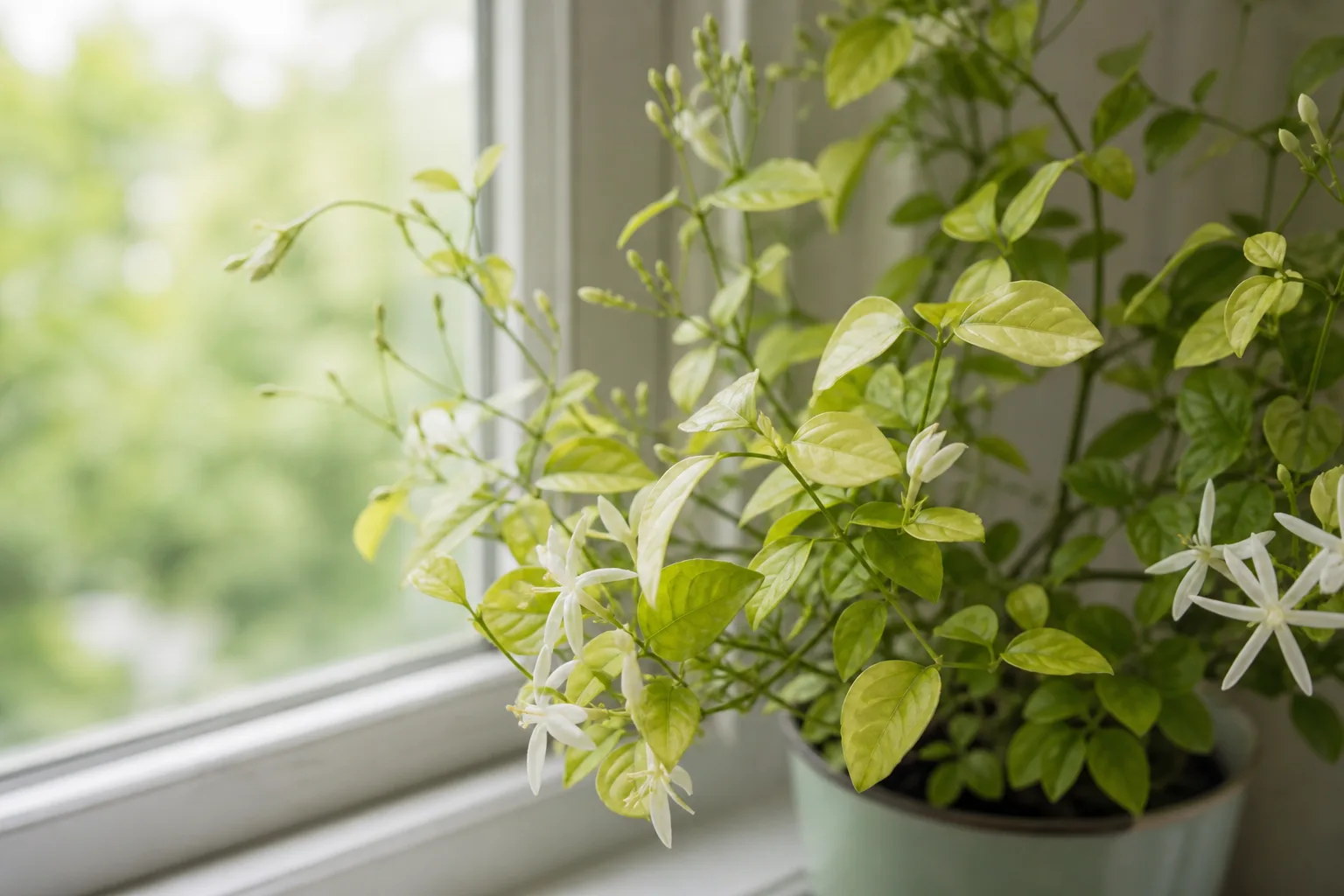
Pale Leaves on Jasmine: Causes, Checks & Fixes
This guide covers pale leaves on Jasmine. See also the general Pale Leaves guide, watering, and light pages for this plant.
Pale Leaves on Jasmine: Causes, Checks & Fixes
Quick answer
Pale leaves on jasmine rarely mean a mystery disease. On common jasmine (Jasminum officinale) and related climbers, washed-out foliage usually falls into three tracks: older leaves fading first (often nitrogen shortage in tired container mix), new leaves yellow between green veins (iron chlorosis when pH is too high or roots are stressed), or the whole vine light green in too much shade.
First step: look at which leaves pale first and write it down. That single pattern tells you more than guessing with fertilizer. Only after you map the symptom should you adjust feeding, light, or drainage.
Why jasmine gets pale leaves
Jasmine is a vigorous flowering climber that needs fertile, well-drained soil in sun or partial shade. When any part of that equation slips, chlorophyll production drops and leaves look pale before they turn fully yellow.
Nitrogen shortage is common on container jasmine that has not been repotted or fed in two or more seasons. Nitrogen supports chlorophyll in actively growing tissue. When supplies run low, the plant moves limited nitrogen to new shoots and older leaves fade first. This pattern intensifies during spring push when the vine builds long stems for summer bloom.
Iron chlorosis shows differently. Iron chlorosis affects new growth first, with leaf blades turning yellow or pale while veins stay green. Iron may be present in the mix, but high soil pH above about 7.0 makes it unavailable. Hard tap water, limestone-heavy compost, and alkaline wall runoff all push container jasmine toward this pattern.
Insufficient light bleaches the whole plant evenly. Jasmine can survive in mediocre indoor light, but leaves stay chartreuse and stems stretch. Summer jasmines like a warm, sheltered, sunny spot-without enough direct sun, pale foliage often appears before bud-drop or no-flowers complaints show up.
Root stress mimics nutrient problems. Overwatered mix that stays wet in cool winter rest suffocates roots, so uptake fails even when fertilizer is present. Root-bound pots with little fresh soil left also run out of nitrogen faster. Pale leaves plus sour-smelling mix or stems that wilt despite wet soil point here-not to a spray deficiency.
Spider mites cause a different pale look: fine stippling and dull gray-green patches, often with webbing on leaf undersides during dry indoor winter air. This is pest damage, not chlorosis, and feeding will not fix it.
What pale leaves look like on jasmine
Nitrogen-related paleness:
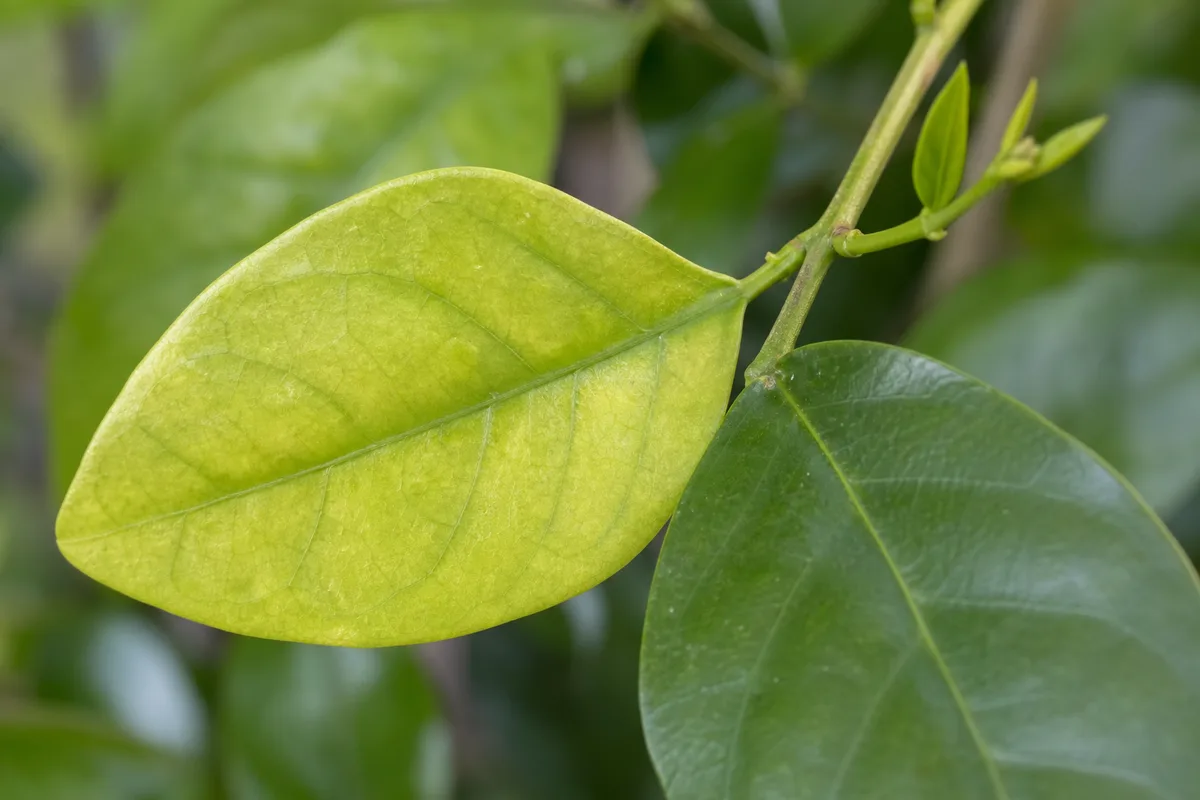
Pale Leaves symptoms on Jasmine - compare with healthy tissue on the same plant.
- Lower and inner leaves turn light green, then yellow, while tips may still look greener
- Overall growth slows; new internodes shorten
- Vine may still flower weakly on stored reserves
Iron chlorosis:
- Newest leaves and shoot tips pale or yellow with dark green veins
- In severe cases, new growth can bleach white and stall
- Often worse in spring on fresh flush after winter rest
Low-light paleness:
- Entire plant evenly light green, not patchy
- Stems lean toward the brightest window; internodes lengthen
- Fewer or smaller flower buds than the previous season
Root-stress paleness:
- Yellowing spreads without a clear old-leaf-first or new-leaf-first pattern
- Soil stays wet for days; pot feels heavy
- Soft stems at soil line or musty smell from mix
Spider mite stippling:
- Tiny pale dots on upper leaf surfaces; leaves look sandblasted
- Fine webbing under leaves; damage worsens in dry, warm rooms
Natural aging also matters. One or two older leaves near the base fading each season is normal. Worry when the pattern accelerates or hits new growth.
How to confirm the cause
Work through these checks in order:
- Leaf map - Photograph the vine and mark whether paleness starts on lower leaves, new tips, or everywhere at once.
- Soil moisture and smell - Stick a finger 3 cm into the mix. Sour odor or waterlogged soil rules out “just add fertilizer.”
- Pot weight and roots - After a normal watering, the pot should lighten within a few days in active growth. A pot that stays heavy for a week suggests drainage or root problems.
- Light check - On a clear day, note whether the plant receives several hours of direct sun on foliage, not just bright ambient room light. Deep shade keeps jasmine pale even with correct watering.
- pH test - If new leaves show green veins on yellow blades, test drainage water or use a simple soil pH meter. Readings above 7.0 support iron chlorosis over nitrogen shortage.
- Pest scan - Hold a leaf over white paper and tap it; wipe undersides with a white cloth. Stippling plus webbing confirms mites, not nutrition.
- Response test (after fixes) - Once you address the likely cause, new leaves over the next month tell the truth. Older pale leaves may not revert, but fresh growth should deepen in color.
If lower leaves pale first, drainage is good, and the plant has not been fed in over a year, nitrogen shortage is the leading suspect. If new tips show veined yellowing at high pH, prioritize iron and pH correction-not more nitrogen.
First fix for jasmine
Map which leaves are pale, confirm soil moisture is appropriate, then make one targeted change based on the pattern.
Do not fertilize until you know the vine is not sitting in wet mix. For a nitrogen pattern on a healthy, draining pot, apply a balanced liquid feed at half the label strength once, after a normal watering, during active spring or summer growth. For iron chlorosis with confirmed high pH, use chelated iron according to product directions or repot into fresh neutral mix rather than stacking full-strength fertilizers. For shade-related paleness, move the pot gradually into more direct sun over one to two weeks. For wet roots, stop watering until the top 3 cm dries and improve airflow before any feed.
This single diagnostic step prevents the most common mistake: dumping fertilizer on a pale winter-rest plant or an overwatered vine.
Step-by-step recovery
Track A - Nitrogen shortage (lower leaves pale, good drainage, no pests):
- Water when the top 3 cm of mix is dry, not on a fixed calendar.
- Feed with balanced liquid fertilizer at half strength every three to four weeks from spring through early autumn.
- Repot in early spring if roots circle the pot or the plant has not been repotted in two years.
- Remove fully yellow lower leaves after the vine stabilizes-they will not re-green.
Track B - Iron chlorosis (new leaves yellow with green veins, pH high):
- Confirm pH; aim for 6.0–7.5 in container culture.
- Apply chelated iron foliar or drench per label, or repot with fresh peat-free potting mix without limestone amendments.
- Avoid hard tap water if your supply is alkaline; use filtered or rainwater for a few months.
- Do not add extra nitrogen until iron symptoms on new growth improve.
Track C - Insufficient light (even pale vine, leggy stems):
- Move to a spot with morning or late-afternoon direct sun, or a south-facing window with at least partial sun on leaves.
- Rotate the pot weekly so all sides receive light.
- Prune leggy stems after the vine adapts to brighter conditions to encourage bushier green growth.
Track D - Root stress (wet mix, sour smell, wilting):
- Let mix dry to the correct depth before the next watering.
- Ensure the pot drains freely; remove saucer water promptly.
- If stems soften or smell persists, unpot, trim mushy roots, and repot into fresh well-draining mix-then wait two weeks before feeding.
Track E - Spider mites (stippling, webbing):
- Shower the vine thoroughly, targeting leaf undersides.
- Raise humidity around the plant and repeat rinsing every few days.
- Use insecticidal soap on undersides if populations persist-do not fertilize until pest pressure drops.
Recovery timeline
Pale jasmine usually shows improvement on new growth within two to four weeks after the correct fix. Older leaves that have already yellowed typically do not return to deep green; judge success by fresh tips and the next flush of leaves.
- Light correction: New leaves darken within two to three weeks; flowering may improve the following season.
- Nitrogen feed: Lower leaf yellowing stops spreading within three to four weeks; repotted plants may need one full growth cycle to look full again.
- Iron and pH: New leaves should show greener blades within three to six weeks; pH adjustments in containers work faster than ground soil.
- Root recovery: Two to six weeks before stable new growth; severe rot may take a full season.
Signs the fix is working: deeper green on the newest leaves, firmer stems, normal pot dry-down rhythm, and resumed bud formation before bloom season.
Signs the problem is worsening: new tips bleaching white, spreading wilt despite careful watering, blackening stems, or pale leaves climbing the vine weekly despite corrections.
Lookalike symptoms
| What you see | Often confused with | How to tell apart |
|---|---|---|
| Lower leaves light green → yellow | Natural leaf drop | Natural aging affects one or two old leaves slowly; nitrogen shortage hits many lower leaves over weeks |
| New leaves pale with green veins | Sunburn | Sunburn shows bleached or brown patches on exposed surfaces, not uniform veining |
| Whole plant washed out | Overwatering yellow leaves | Overwatering adds wilt, soft stems, and wet mix; low light shows even paleness with dry correct watering |
| Pale stippling | Powdery mildew | Mildew forms white coating you can wipe; mites leave dots and webbing underneath |
| Pale after Jasmine repotting guide | Nutrient deficiency | Transplant shock fades in two to three weeks if roots were healthy; deficiency persists on new flushes |
Mistakes to avoid
- Fertilizing a pale winter-rest plant. Jasmine slows in cool winter conditions; unused fertilizer salts can burn roots on pale, weak foliage.
- Adding nitrogen when iron chlorosis is the issue. Extra nitrogen pushes soft growth while new leaves stay veined and yellow.
- Assuming pale leaves need more water. Check drainage first; chronic wetness causes the same pale look as deficiency.
- Moving into full midday sun instantly. Sun-starved jasmine scorches if light increases too fast; harden off over one to two weeks.
- Ignoring pH on container jasmine. Nutrients can be present in the pot yet unavailable-especially iron at alkaline pH.
- Trimming all pale leaves before fixing the cause. Leaves are evidence; remove only fully dead tissue after the vine stabilizes.
How to prevent pale leaves next time
Match routine care to how jasmine actually grows. Container jasmines need regular watering through the growing season and benefit from high-potassium feed during active growth to support flowering without excess nitrogen that produces leafy, pale, flower-shy vines.
- Repot every two years in early spring with well-draining mix; pH 6.0–7.5.
- Place summer-flowering jasmine where it receives sun or partial shade with several hours of direct light on foliage.
- Feed lightly during active growth; pause in winter rest unless the plant is actively pushing new leaves.
- Scout leaf undersides monthly during dry indoor winter air for spider mites.
- Test drainage after watering-saucers should empty, and mix should dry predictably at the top 3 cm.
When to worry
Pale leaves alone are rarely an emergency, but act promptly when:
- New growth bleaches nearly white or dies back at tips-severe chlorosis weakens the whole vine.
- More than a third of leaves pale within a week, especially with soft stems or blackening at the base.
- The vine wilts in wet soil-possible root rot needing immediate unpotting.
- Pale foliage spreads despite corrected light, drainage, and targeted feeding over six weeks.
If the root ball is mostly mushy or stems are hollow below the soil line, recovery may not be possible. Healthy white roots and firm green buds lower on the vine mean the plant can still rebound with patient correction.
When to use this page vs other Jasmine guides
- Jasmine watering guide - Use for routine moisture checks before assuming pale leaves is the main issue.
- Jasmine problems hub - Browse all 53 common issues on this species.