Ants on Jasmine: Causes, Checks & Fixes
Quick answer
Ants on jasmine rarely chew leaves-they climb twining stems to harvest honeydew from aphids, scale, or mealybugs on tender spring shoots and swelling buds. First step: isolate the vine, follow ant trails to the pest colony, and treat that sap feeder before baiting ants.
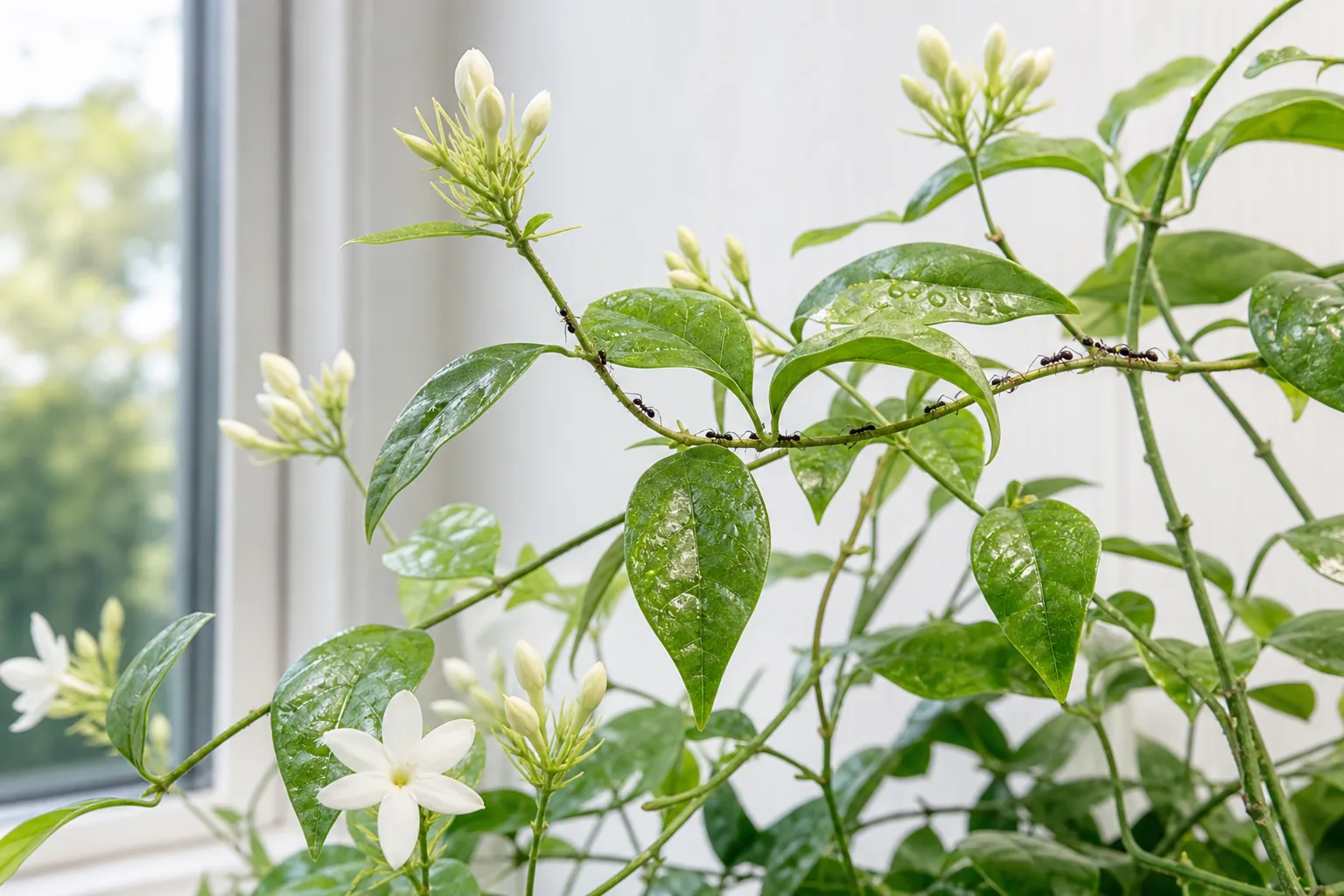
Ants on Jasmine: Causes, Checks & Fixes
This guide covers ants on plant on Jasmine. See also the general Ants on Plant guide, watering, and light pages for this plant.
Ants on Jasmine: Causes, Checks & Fixes
Quick answer
Ants marching up a jasmine vine (Jasminum officinale, common or poet’s jasmine) are almost never the real pest. They are collecting honeydew-the sugary waste that aphids, scale, and mealybugs excrete while feeding on sap. On jasmine, that food source concentrates on the tenderest tissue: swelling flower buds, new spring shoots, and the twining stem joints where overlapping growth hides small colonies.
First step: isolate the plant and follow the ant trail to where it stops. Inspect that bud cluster or shoot tip for sap-sucking insects, wipe sticky residue, and treat the pest colony-not spray ants while honeydew keeps flowing. Ants protect those insects from predators, which is why the infestation persists until you break the cycle at the source.
For full aphid treatment detail, see aphids on jasmine. Scale bumps and mealybug cotton have their own guides at scale insects and mealybugs.
What ants on jasmine look like
On a twining jasmine vine, ants show up as steady lines climbing:
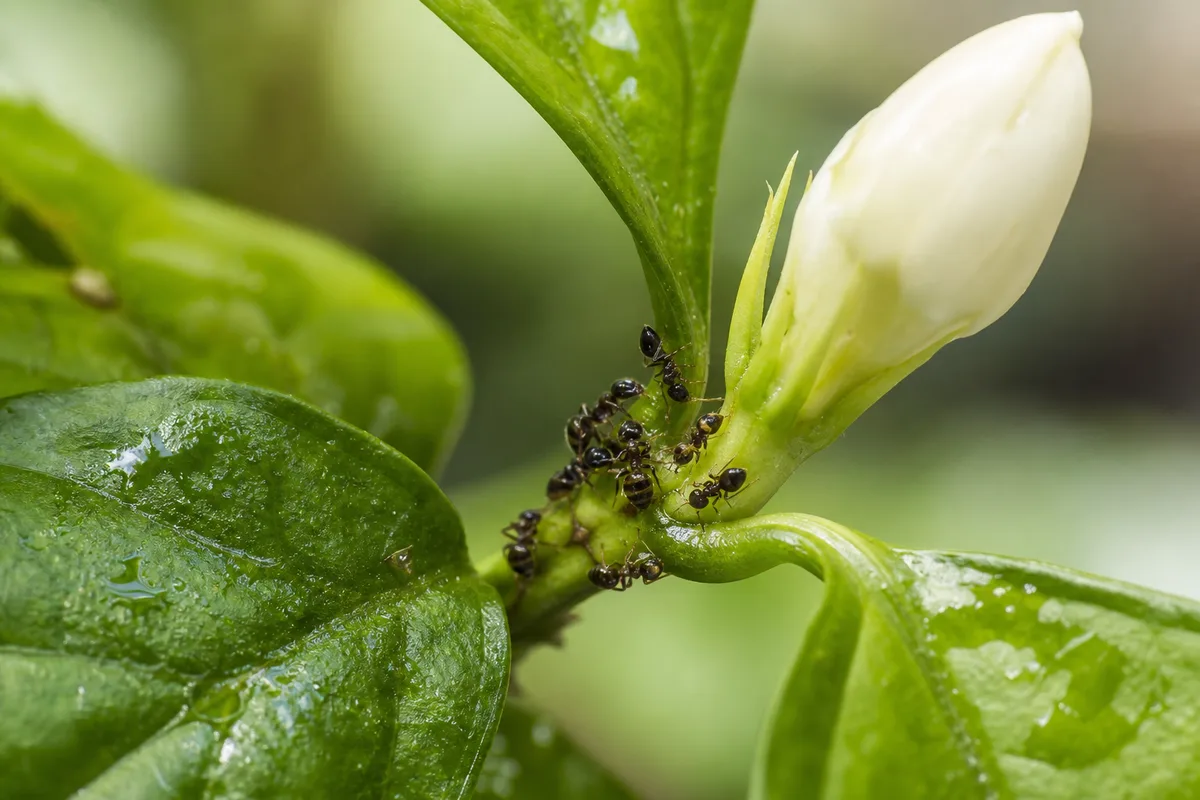
Ants on Plant symptoms on Jasmine - compare with healthy tissue on the same plant.
- Pot rims, trellis supports, or window sills up toward the canopy
- Twining stems toward swelling bud clusters at shoot tips
- Stem joints where overlapping vines create sheltered pockets
Companion signs that confirm ants are farming-not just visiting:
- Shiny, tacky leaves or stems from fresh honeydew
- Black sooty coating growing on honeydew on leaves below a heavy infestation
- Green, black, or pink soft-bodied aphids grouped just below buds
- Immobile brown scale bumps on older woody stems
- White cottony mealybug patches tucked in leaf axils along the vine
The ants themselves do not chew holes in jasmine foliage. If you see leaf distortion, stickiness, or bud yellowing, look past the ants for the sap feeder they are tending. Jasmine’s climbing habit means damage and ant traffic concentrate at shoot tips where the vine elongates toward summer bloom-not on the lower woody framework.
Why jasmine gets ants
Common jasmine is a summer-flowering twining climber that pushes soft new stems each spring. That flush is exactly what aphids colonize-and ants follow the honeydew.
Several jasmine-specific factors make this pattern common:
- Bud-stage vulnerability. Swelling flower buds are soft, sugar-rich targets. Ants on buds before bloom season are a higher-stakes warning than on foliage-only houseplants because heavy sap-feeder colonies can trigger bud drop and ruin the fragrance season.
- Twining growth architecture. Overlapping stems hide mealybugs and scale in pockets you cannot see from across the room-until ant trails reveal the farm.
- Indoor predator gap. Outdoor jasmine often balances itself when lady beetles and lacewings keep aphids low. On a windowsill vine, ants defend colonies that would otherwise collapse.
- Soft growth from excess nitrogen. Heavy feeding produces lush shoots that aphids reproduce on quickly-and already reduces flowering on jasmine.
Moving outdoor jasmine indoors for winter without rinsing foliage is a common introduction route. Ants on the pot may be the first visible sign that hitchhiking aphids or scale came inside with the vine.
How to confirm the cause
Work through this inspection in order-each step narrows the diagnosis on twining jasmine stems:
- Start at the pot rim where ants enter. Follow the line upward without disturbing it.
- Note where the trail ends-usually a bud cluster, newest shoot tip, or stem joint with visible pests or stickiness.
- Check swelling buds and bracts with a hand lens. Aphids cluster just below flower buds and on leaf undersides.
- Open overlapping twining stems at joints for mealybug cotton or hidden scale.
- Feel leaves for tackiness even when ants are not visible-dried honeydew confirms active or recent feeding.
- Scan neighboring plants on the same windowsill or trellis. Ants often signal an infestation on a different pot in the collection.
If you find aphids, scale, or mealybugs with honeydew, ants are secondary farmers-not the primary problem. If no sap-feeders and no stickiness appear after a thorough check, ants may be scouting or foraging; still monitor bud tips weekly through spring.
Lookalike symptoms to rule out
| What you see | Likely cause | Key difference |
|---|---|---|
| Ant trails + sticky leaves + pests on buds | Honeydew farming | Treat sap feeder first; see aphids or scale |
| Ants in pot soil, no honeydew on leaves | Nesting or foraging | Soil disturbance at base; stems are clean and unsticky |
| Ants on dry saucer only | Food spill or foraging | Wipe saucer; ants do not return to stems |
| Tiny flies above wet mix | Fungus gnats | Insects fly, not march; no honeydew on foliage |
The first fix to try
Isolate the vine and physically remove the sap-sucking pests at the end of the ant trail.
Move jasmine away from other plants while you work. Outdoors, a firm jet of water from a hose can dislodge aphids from tender shoots-rinse in morning or evening, not in harsh midday sun on a stressed vine. Indoors, use a sink sprayer or shower head on sturdy stems, bud clusters, and leaf undersides until insects wash off.
After removal, wipe honeydew from leaves, stems, trellis supports, and the pot rim with a damp cloth. That removes the ant food source and lets you spot any pests that return. Wait three to five days and re-inspect the same bud tips before adding sprays.
That single focused pass tells you whether you have a light hitchhiker problem or a colony that needs follow-up treatment on the aphids page.
Step-by-step recovery if pests persist
Once you have confirmed active aphids, scale, or mealybugs behind the ant trails:
- Apply insecticidal soap to stems and leaf undersides, covering pests directly. Contact sprays kill only insects they wet-they have no residual effect.
- Repeat every five to seven days for two to three cycles to catch newly hatched nymphs, per Clemson HGIC houseplant pest guidance.
- For scale, scrape lightly with a fingernail or soft brush on woody stems, then treat the exposed insects. See scale insects on jasmine for species-specific follow-up.
- Wipe sooty mold from honeydew-coated leaves after pests die-the mold itself does not kill jasmine but blocks light on heavily coated foliage.
- Place ant bait stations near the pot (not in the soil) only after pest numbers drop, if ants still defend remaining colonies. Keeping ants off plants helps beneficial insects finish the job outdoors.
Avoid broad-spectrum sprays on open jasmine flowers if you grow for fragrance or harvest. Do not stack repotting, heavy pruning, and pesticide on the same day-one intervention at a time makes it easier to see what helped.
Recovery timeline and signs of progress
| Timeframe | What to expect |
|---|---|
| 1–3 days | Ant traffic drops once honeydew is wiped and pests are removed |
| 1–2 weeks | With repeated soap treatments, new shoot tips look clean and unsticky |
| Same season | Flower buds may open with normal fragrance if feeding stopped early; heavily distorted buds may abort |
Improvement signs: fewer ants, no fresh stickiness, healthy new shoots at vine tips, buds swelling without yellowing.
Worsening signs: expanding sooty mold, ants returning to the same bud clusters after treatment, or bud drop on multiple swelling flowers-meaning the underlying pest was missed in a stem crevice or protected by ants.
Cosmetic leaf damage from feeding does not heal, but jasmine often outgrows it with the next flush. Judge recovery by clean new growth and buds that open normally-not just ant departure.
Mistakes to avoid
- Spraying ants only. You treat the symptom and leave the pest colony intact behind overlapping stems.
- Baiting ants before clearing sap feeders. Ants defend the colony; pests rebound when ants die first.
- Increasing fertilizer on a sticky vine. Soft growth feeds more aphids and reduces bloom on jasmine.
- Applying soap or oil in hot direct sun, which can scorch treated foliage.
- Returning a quarantined vine to the collection before two weeks of clean bud inspections.
- Ignoring scale on woody lower stems while only treating aphids at the tips-ants may farm scale honeydew on older wood.
Prevention on jasmine
Match normal jasmine care and add pest vigilance during the spring growth flush:
- Quarantine new purchases for two weeks before placing them near established vines.
- Inspect weekly from spring through early summer, checking trellis tips and swelling buds before they open.
- Rinse foliage when bringing outdoor plants back inside to knock off hitchhiking aphids.
- Feed lightly during active growth; excess nitrogen produces soft shoots aphids prefer.
- Encourage predators outdoors by avoiding broad-spectrum sprays that kill lady beetles and lacewings.
Ants are useful early-warning scouts on jasmine. When they show up, read them as a prompt to find the honeydew source on bud clusters-not as the main enemy.
When to escalate
Treat pest pressure as urgent if ants cover multiple swelling buds before bloom season, if sooty mold coats most of the leaf surface, or if several plants in the same room show ants and stickiness. Bud-stage infestations can drop blooms fast on a vine timed for summer fragrance.
Ants alone on a healthy jasmine with no honeydew and no visible pests after a thorough inspection rarely justify chemical treatment-monitor for a week before intervening.
Jasmine is non-toxic to cats and dogs per ASPCA, but keep treated plants away from pets until sprays dry.
Conclusion
Ants on jasmine are a warning sign, not the root problem. They climb twining stems toward honeydew from aphids, scale, or mealybugs on spring shoots and swelling buds. Follow the trail, treat the sap feeder at the endpoint, wipe sticky residue, and monitor bud tips through bloom season. Once the food source is gone, ant trails fade-and clean new growth tells you the vine is recovering.