Flowers Turning Brown on Jasmine: Causes, Checks & Fixes
Quick answer
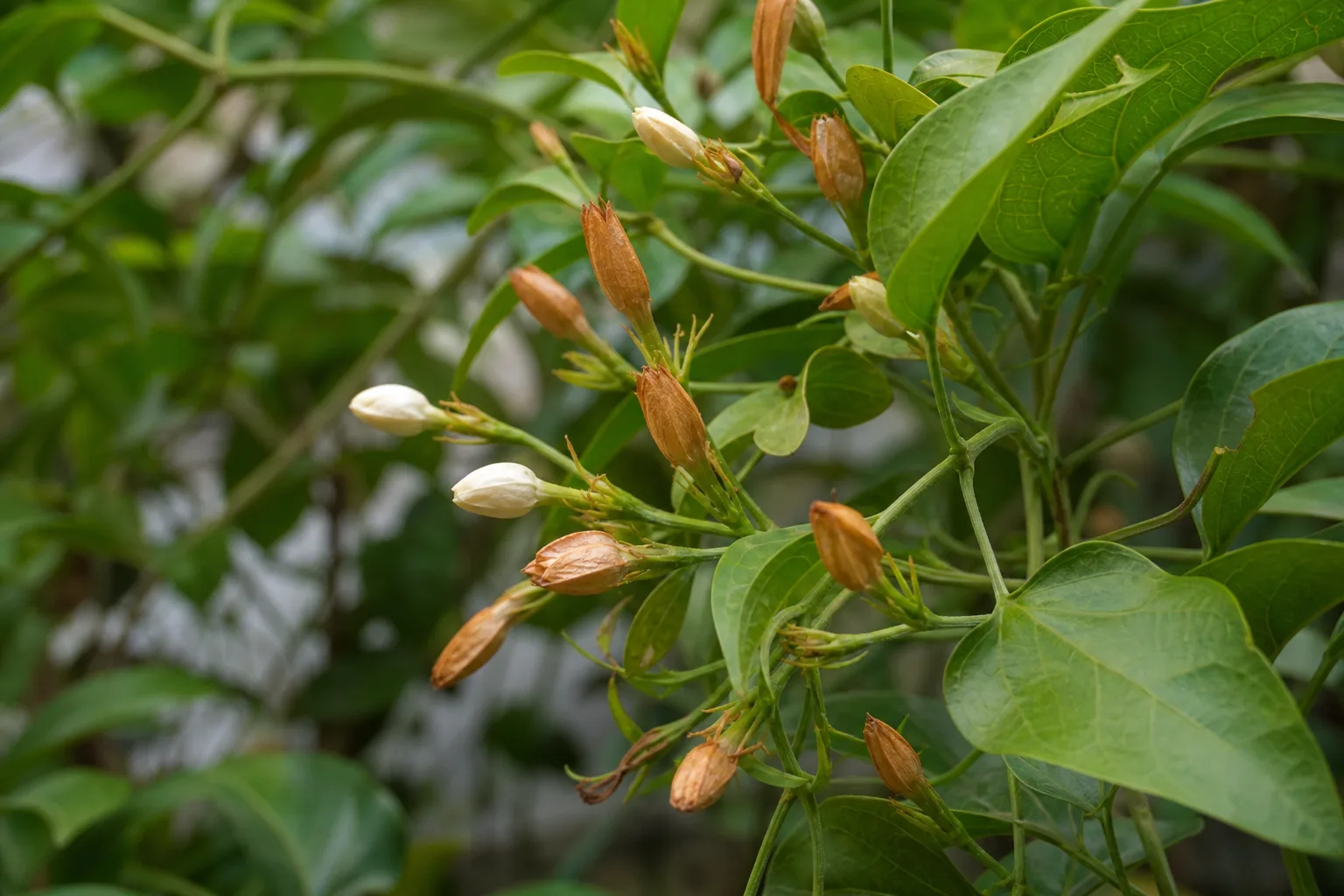
Open jasmine blooms fade pink-brown within a day or two-that is normal. Buds browning before they open usually mean dry soil during budding, botrytis in humid weather, thrips, or a late frost. First step: see whether new buds are still opening; if not, check soil moisture at 3 cm depth and stabilize watering.
Flowers Turning Brown on Jasmine: Causes, Checks & Fixes
This guide covers flowers turning brown on Jasmine. See also the general Flowers Turning Brown guide, watering, and light pages for this plant.
Flowers Turning Brown on Jasmine: Causes, Checks & Fixes
Quick answer
Brown flowers on common jasmine (Jasminum officinale) are often normal aging, not a crisis. Each white, fragrant bloom opens in a cluster, perfumes the room for a night, then fades pink-brown at the petal edges as the next buds on the stem prepare to open. That short life is expected on a summer-flowering climber that produces waves of flowers for months.
First step: watch one flower cluster for 24 hours. If open blooms brown while new buds stay green and keep opening, remove spent flowers and keep steady moisture-no spray needed. If unopened buds shrink, turn brown, or grow fuzzy mold before opening, stick your finger 3 cm into the mix and stabilize watering before you treat disease or pests.
What brown flowers look like on jasmine
Jasmine carries flowers in small clusters along twining stems. Healthy open blooms are pure white, tubular, and intensely fragrant-especially at night. Knowing which brown pattern you see separates normal fade from a fixable problem.
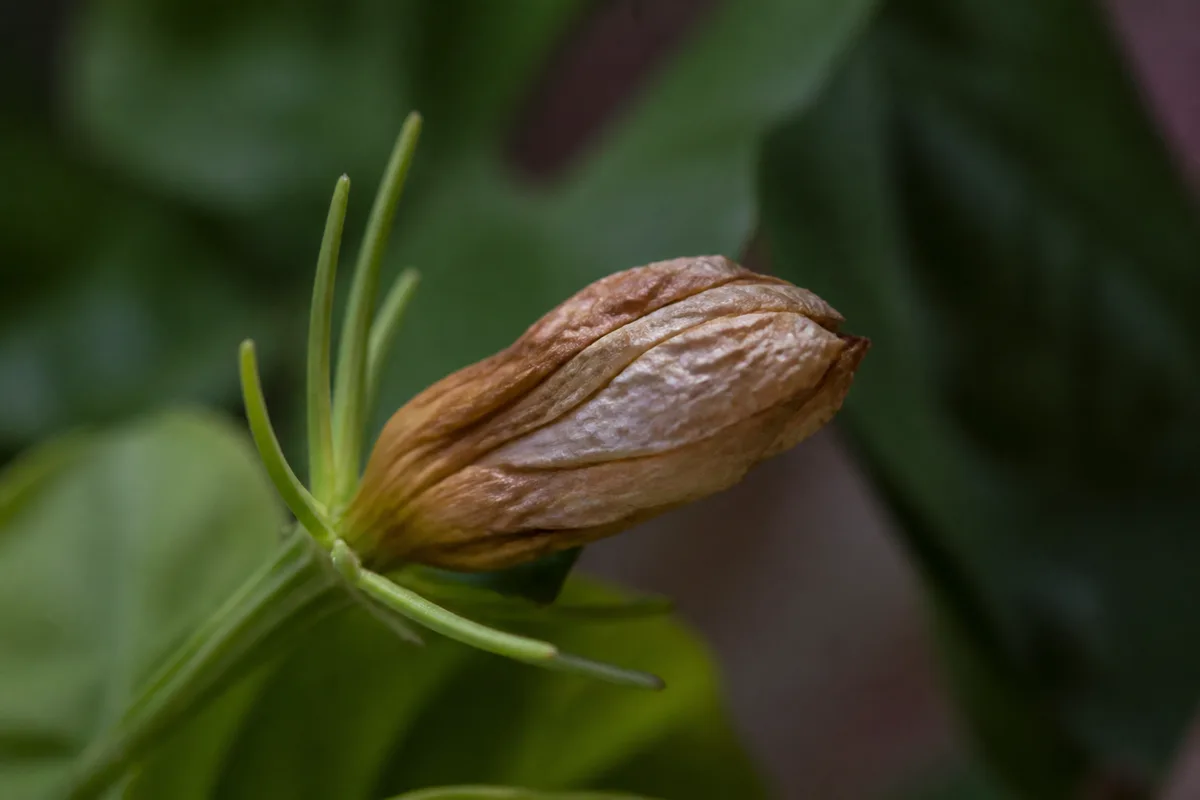
Flowers Turning Brown symptoms on Jasmine - compare with healthy tissue on the same plant.
Normal aging shows on already-open flowers only:
- Petal edges turn pink, then tan-brown, while the center may stay white briefly
- Flowers feel papery, not wet or slimy
- New white buds on the same stem continue to open daily during peak season
- No gray fuzz, no black streaks inside closed buds
Water-stressed budding hits buds before they open:
- Buds shrink, dry, and turn crisp brown on the stem
- Dry brown calyxes remain after buds abort
- Often follows a hot week when the pot went bone-dry between waterings
- Leaves may look fine at first-jasmine sacrifices flowers before foliage
Botrytis gray mold appears in cool, humid, still air:
- Unopened buds turn brown or black and may never open
- Dead flowers and petals develop a fuzzy gray coating typical of gray mold
- Brown spots spread from spent petals onto leaves below
- Common after rainy spells, evening misting, or crowded vines that stay wet overnight
Thrips damage shows on partially open or young blooms:
- Petals look streaked or distorted, scarred, or bronze-brown in patches
- Silvery stippling on nearby leaves
- Tiny dark specks of excrement inside buds when you peel petals back gently
- Buds may distort or fail to open fully
Frost or freeze injury browns buds after a late cold snap:
- Buds and open flowers look water-soaked, then turn brown or black
- Often follows warm days that pushed buds ahead of a freezing night
- Damage is sudden and localized to the exposed flush
Why jasmine gets brown flowers
Common jasmine blooms on previous-year wood early in the season, then on current-season growth for later flushes. That heavy flowering rhythm makes the plant sensitive to anything that interrupts bud development or shortens open bloom life.
Short bloom life is built in. Individual jasmine flowers are ephemeral. The plant compensates by producing continuous clusters through summer-not by keeping each blossom for weeks. Brown edges on day-old open flowers usually mean the bloom finished its cycle, especially when fragrance has already peaked.
Inconsistent moisture during budding is the most common cultural trigger. Jasmine wants the top inch of mix to dry between drinks, but steady moisture while buds swell matters. Letting a container go completely dry during a hot flowering week forces the plant to abort buds; chronic wet roots cause stress too, though that more often yellows leaves before it browns flowers.
Humid, stagnant conditions favor botrytis gray mold on tender petals and spent flowers. Old blooms that stay wet are an entry point; infection spreads to nearby buds in cool, cloudy weather with poor airflow between climbing stems.
Thrips target protected buds and freshly opening flowers. Dry indoor air after a winter cool period-when jasmine is brought back to warmer rooms-can coincide with outbreaks on tender new growth.
Temperature swings matter on a plant that needs a cool winter rest to set buds, then strong summer light to finish them. Late frost kills exposed buds. Sudden heat after a cool stretch can also shorten open bloom life on sun-facing stems.
Lookalikes tied to other jasmine problems: sticky honeydew and sooty mold point to aphids or scale on stems, not petal aging. Widespread leaf yellowing with wet soil suggests root trouble more than flower browning alone.
How to confirm the cause
Work through these checks in order-each step narrows the cause before you change watering, prune, or spray.
- Bloom age on one cluster - Are only open flowers brown while new buds on the same stem are green and swelling? Normal fade.
- Soil moisture at 3 cm - Dry and dusty during budding points to water stress. Wet and heavy for days with sour smell points away from simple drought and toward root stress-stabilize drainage before focusing on flowers.
- Weather and timing - Did a frost, heat spike, or week of rain precede the browning? Match frost, botrytis, or drought patterns.
- Texture of brown tissue - Papery dry petals = aging or drought. Slimy or fuzzy gray = botrytis.
- Thrips test - Tap a suspect bud over white paper or hold a blue sticky card near new growth for a day. Tiny elongated insects or black specks support thrips.
- Airflow and watering habit - Evening overhead misting, crowded foliage against a wall, or dead flowers left wet overnight increase botrytis odds.
- Whole-plant context - Firm stems, healthy new leaves, and rolling flushes suggest localized flower issues. Widespread bud death with wilting may need a broader care review.
If open flowers brown individually but the vine keeps producing white blooms for weeks, stop diagnosing-you are watching a prolific bloomer age each flower normally.
First fix for jasmine
Watch one cluster for 24 hours, then deadhead only if new buds are still opening.
- Snip spent brown flowers just above the next healthy bud with clean scissors.
- If the top 3 cm of mix is dry and buds-not just old petals-are browning, water thoroughly once until a little runs from drainage holes; empty the saucer within 30 minutes.
- Do not mist buds at night, do not fertilize, and do not repot while flowers are active.
If unopened buds are browning in groups after humid weather, your next action-after the moisture check-is to remove infected flowers and any moldy petals, improve airflow around the vine, and switch to morning watering at soil level only.
If thrips specks appear on multiple buds, rinse stems and buds in a shower or sink before any spray. Confirm live insects, then treat buds with insecticidal soap on a weekly cycle.
Step-by-step recovery
Normal spent blooms
- Deadhead brown flowers daily or every few days during heavy bloom.
- Keep regular summer watering-top inch dry, then soak.
- Judge success by new buds forming on current-season stems, not by old petals re-whitening.
Dry stress during budding
- Soak the pot until water drains freely; discard saucer water.
- Move the plant out of harsh midday sun if soil was drying in hours-heat plus drought aborts buds fast.
- Check daily for the next week; maintain even moisture without keeping the mix soggy.
- Expect new buds on healthy stems in two to four weeks during active growth.
Botrytis on flowers
- Pick off and discard all brown, fuzzy flowers and any affected leaves touching them.
- Thin crowded stems so air reaches bud clusters-especially on wall-trained vines.
- Water at the soil line in the morning so foliage dries before night.
- Avoid overhead misting until the flush finishes.
- Many vines recover when weather turns warm and dry; repeat removal if new fuzzy spots appear.
Thrips on buds
- Shower the plant, directing water through bud clusters.
- Set blue or yellow sticky cards near new growth to monitor adults.
- Apply insecticidal soap to buds and stems weekly for three weeks, covering insects directly.
- Keep humidity moderate-very dry air favors spider mites; stagnant damp favors mold. Aim for steady room conditions.
Frost-damaged buds
- Remove blackened buds and flowers; leave firm stems alone.
- Protect outdoor plants from late frosts with fleece or move containers indoors when nights dip near freezing.
- Do not fertilize immediately-let the plant push new growth on undamaged wood.
- Bloom display for that flush may be lost, but the plant is usually not permanently harmed.
Recovery timeline
Normal fade needs no recovery-new blooms open within days on a healthy vine through summer.
Water-stressed buds often show new green buds in two to four weeks once moisture is steady and temperatures stay in the comfort range.
Botrytis clears fastest when humidity drops; expect one to three weeks without new fuzzy lesions if you remove debris and improve airflow.
Thrips need three weeks of consistent washing or soap sprays before you judge success-watch for clean, fully opening white blooms.
Frost damage may cost the current flush entirely; the next wave depends on how much bud wood survived and whether summer light and winter chilling requirements were met for the following season.
Signs of improvement: fresh white buds swelling, full petal opening, strong night fragrance returning, no new brown buds on the same stem cluster.
Signs of worsening: entire stem clusters aborting before open, gray mold spreading to leaves, thrips specks on every new bud, or repeated bud death after you have stabilized water.
Lookalike symptoms
- Bud drop with green calyx intact - Buds fall before browning, often from sudden moves or drafts; less often botrytis.
- Faded flowers (pale, not brown) - Low light or aging blooms losing color without crisp brown edges.
- Brown leaves, not flowers - Cold damage, drought, or root problems; treat foliage stress first.
- No flowers at all - Missing cool winter period or weak summer light; a different problem than browning blooms.
- Spider mite stippling on leaves - Fine webbing and speckled foliage; flowers may fail secondary to overall stress.
What not to do
Do not panic over every brown petal on a heavy summer bloomer-removing spent flowers is enough when new buds keep opening.
Avoid evening misting or overhead watering when buds are present; wet petals overnight invite gray mold.
Do not fertilize a stressed vine to “save” blooms-stabilize water and light first.
Skip Jasmine repotting guide or relocating while buds are visible; jasmine drops and browns buds after environmental shocks.
Do not spray fungicide or insecticide before confirming botrytis fuzz or live thrips-soap and removal often suffice on indoor vines.
Avoid confusing true jasmine with star jasmine (Trachelospermum jasminoides) or night jasmine (Cestrum)-care and toxicity differ even when flowers look similar.
Jasmine care cross-check
Brown flowers often appear when another pillar of jasmine care slipped during budding:
- Light - Jasmine light guide to partial shade with several hours of direct sun; weak light reduces bloom power and can shorten open flower quality.
- Winter rhythm - Cool rest near 7–13°C for weeks helps set the next season’s buds; warm rooms all year reduce future flushes even if current flowers brown for other reasons.
- Watering - Top inch dry, then soak; more frequent checks in terracotta or small pots during flowering heat.
- Airflow - Train vines with space between stems against walls or trellis.
- Pruning timing - Prune after flowering, not during bud swell, so you do not remove the wood that carries the next cluster.
How to prevent brown flowers next time
Deadhead spent blooms regularly so old petals do not hold moisture against new buds. Water in the morning, keep drainage clear, and learn how fast your pot dries in summer-jasmine in active bloom may need more frequent checks than winter rest.
During humid spells, thin congested growth and avoid wetting foliage at dusk. Inspect buds weekly in late spring and early summer for thrips specks or early mold.
Hold off on repotting until after the main flush. If you overwinter jasmine cool indoors, introduce warmer display rooms gradually and shower the plant when you see stippling on new growth.
Provide the cool winter period the species needs for future bud set, then give bright summer light-prevention for next year’s flowers matters as much as fixing this week’s brown petals.
When to worry
Treat promptly when unopened buds rot in clusters with gray mold, thrips infest most new buds, or an entire flush browns after frost while you expected peak bloom.
A few brown petals on open flowers with continuous new white blooms is routine maintenance, not an emergency.
If bud death repeats through summer despite steady moisture, good light, and clean deadheading, inspect roots and stems for wider stress-chronic wet soil or pest pressure on the whole vine.
Conclusion
Brown jasmine flowers are often the natural end of a short-lived, fragrant bloom-not a sick plant. Confirm whether new buds keep opening; if they do, deadhead and keep even moisture. When buds fail before opening, check soil dryness first, then mold and thrips. Protect the next flush with morning watering, airflow, and stable care through budding-and save bigger changes like repotting for after the flowers finish.
When to use this page vs other Jasmine guides
- Jasmine watering guide - Use for routine moisture checks before assuming flowers turning brown is the main issue.
- Jasmine problems hub - Browse all 53 common issues on this species.