Curling Leaves on Jasmine: Causes, Checks & Fixes
Quick answer
Jasmine leaves curl from sap-sucking pests on new shoots, drought stress during summer bloom, or dry indoor air after the cool rest-not always disease. Check leaf undersides and bud tips first, then soil moisture at 3 cm depth.
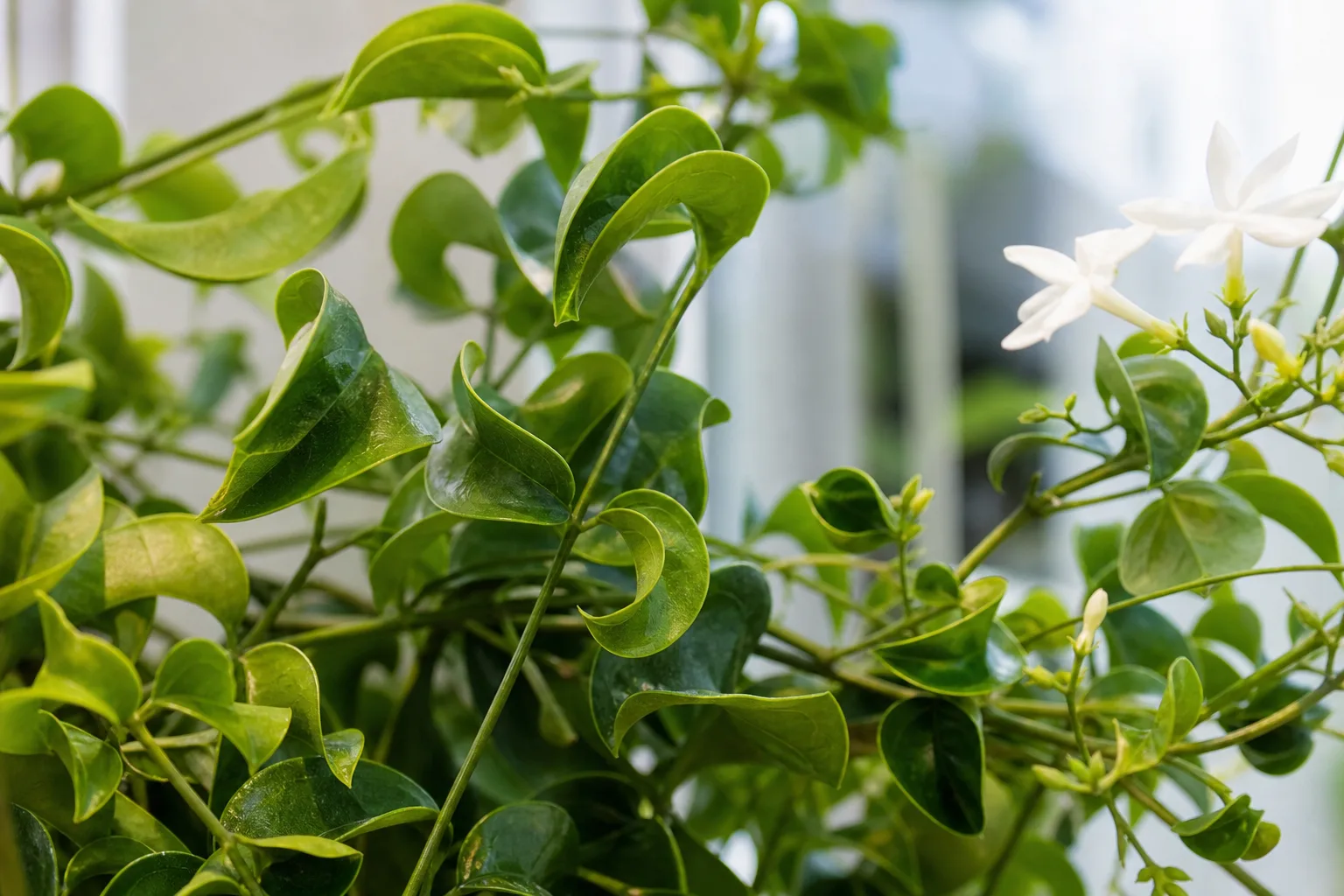
Curling Leaves on Jasmine: Causes, Checks & Fixes
This guide covers curling leaves on Jasmine. See also the general Curling Leaves guide, watering, and light pages for this plant.
Curling Leaves on Jasmine: Causes, Checks & Fixes
Quick answer
Curling leaves on common jasmine (Jasminum officinale) are a directional stress signal-not a mystery fungus. Upward cupping with sticky honeydew on spring shoot tips usually means aphids on tender new growth. Fine stippling and silk webbing on pinnate leaflets after the cool winter rest point to spider mites in dry heated rooms. Uniform downward curl on many leaves with dry soil at 3 cm depth means drought-especially during summer bloom when water demand peaks.
First step: inspect newest leaves and swelling buds with a hand lens, then check soil moisture and pot weight before spraying anything. Curl direction plus what you find underneath the leaf usually narrows the cause to one branch in under five minutes.
This page covers whole-leaf cupping and roll on twining stems. For twisted or narrowed leaflets on expanding tips, see distorted leaves on jasmine. For the full mite rinse-and-spray protocol after the chill period, see spider mites on jasmine.
What curling leaves look like on jasmine
Healthy jasmine leaflets on a pinnate leaf lie mostly flat-thin, dark green, and flexible along the twining vine. Stress curling changes the whole leaf blade or every leaflet on a compound leaf:
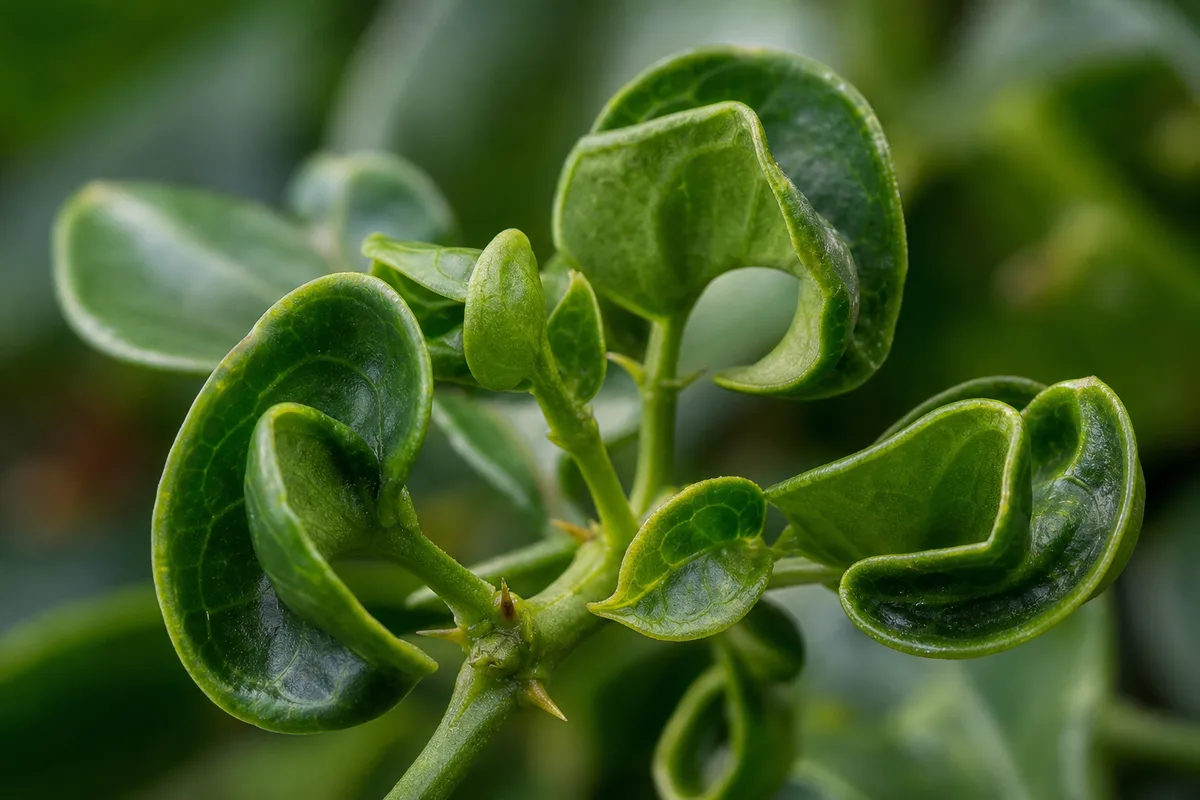
Curling Leaves symptoms on Jasmine - compare with healthy tissue on the same plant.
- Upward or inward cupping on young leaves near shoot tips, sometimes with a sticky shine on the surface
- Downward roll along leaflet margins when the pot has gone dry during active growth or flowering
- Fine yellow or white stippling on leaflet tops paired with dull bronzed tissue-not the same as simple cupping
- Fine silk webbing at leaflet bases and twining stem joints when mites are established
- Uniform curl across many leaves after a dry spell with no insects visible on undersides
- One-sided curl on leaves facing a hot south window or heating vent
- Limp downward curl with yellowing lower leaves while soil stays wet for days
Variegated or newly unfurling spring leaves may show slight natural cup until they harden-that is not pest damage unless insects, stippling, or honeydew appear at the same time.
Upward cupping vs. downward drought cup
| Pattern | What it often means | Quick check |
|---|---|---|
| Upward cup + sticky buds/shoot tips | Aphids draining sap on spring flush | Hand lens on bud clusters; ants on stems |
| Stippling + webbing + upward cup | Spider mites after cool-rest transition | White-paper tap test; see spider mites |
| Downward cup + dry top 3 cm + light pot | Drought during bloom or summer heat | Deep soak; recheck weight in 24 hours |
| Limp curl + wet sour soil + yellow lowers | Root stress from overwatering | Stop watering; see overwatering |
| Margin curl only on sun-facing leaves | Heat and dry soil without pests | Move pot or shade root zone in afternoon |
Why jasmine gets curling leaves
Common jasmine is a vigorous twining vine that needs seasonal rhythm-cool rest, spring flush, summer fragrance. Curling appears when pests, water, or heat interrupt that rhythm on thin pinnate foliage.
Spring aphids on soft new growth
Jasmine produces soft new growth each spring as buds swell for the summer flush. Aphids cluster on tender shoots and flower buds, piercing cells and withdrawing sap. Leaves cup upward as turgor drops on attacked tissue. Heavy colonies on bud-bearing tips can distort expanding leaves and coat blooms in honeydew before they open.
Ants climbing twining stems often signal hidden aphid colonies below swelling buds-the ants harvest honeydew and protect aphids from predators.
Post-chill mite outbreaks in dry heated rooms
Jasmine needs a cool winter rest period (about 7–13°C for eight to ten weeks) to set flower buds. When the vine moves from an unheated porch or cool window back to a heated living room, spider mites thrive in hot, dry conditions-especially near sunny windows where jasmine must sit for flowering.
Mites stipple individual cells on leaflet tops, dull the foliage, and spin fine silk at stem joints. Early cupping can precede obvious webbing. This is the same post-chill window covered in depth on spider mites on jasmine-do not increase watering because leaves look dull; winter dry-down at the roots is correct even when foliage air is mite-friendly.
Drought during summer bloom
Container jasmine in summer sun transpires heavily while flowering. When evaporative demand exceeds what roots can supply-common in small pots, fast-draining mix, or missed waterings during bud swell-leaflets curl downward to reduce exposed surface area. Jasmine performs best with regular moisture during active growth; prolonged dryness reduces flowering and can yellow or drop foliage.
This downward curl is the strongest difference from distorted leaves, where leaflets twist or narrow from pest feeding on expanding tissue rather than whole-leaf roll from thirst.
Heat and dry soil without pests
Extreme afternoon heat on a south-facing terrace plus dry soil can curl leaflet margins even when no insects are present. The pattern is usually one-sided-leaves facing the sun cup while shaded leaves on the same vine stay flatter. Pair with the jasmine watering guide for summer rhythm rather than a fixed calendar.
Overwatering root stress (lookalike)
Chronic wet mix suffocates roots. Damaged roots cannot move water, so leaves may curl limply downward and yellow even though soil feels damp-a pattern common on overwatered houseplants. Jasmine during cool rest is especially vulnerable because growers sometimes compensate for dry winter air with extra water at the pot. See underwatering and overwatering for the full moisture fork.
How to confirm the cause
Work through these checks in order-stop when one branch clearly fits:
- Shoot tips and buds first. Aphids cluster below flower buds and new leaves. Sticky shine, shed white skins, or moving soft-bodied insects confirm aphids-not mildew or dust.
- Leaf undersides with a hand lens. Stippling, moving specks, or silk threads confirm mites. Tap a suspect leaflet over white paper; crawling dots are definitive.
- Moisture at 3 cm depth and pot weight. Dry, light pot with downward curl = drought. Wet, heavy pot with limp curl = hold water and inspect roots.
- Distribution pattern. Curl on one branch only often means a localized aphid colony on that shoot. Uniform curl on the whole vine after a dry week = water stress. Post-chill stippling concentrated on upper twining tips = mites.
- Soil smell and root spot-check. Sour wet mix with spreading limp curl may mean root failure-slide the plant out only if wet soil and yellow lowers persist after you stop watering.
Confirmed diagnosis needs visible evidence-insects, stippling with webbing, or dry soil with light pot weight-not guesswork from curl alone.
The first fix to try
Make one correction based on what you confirmed. Do not stack fungicide, fertilizer, and Jasmine repotting guide on day one.
If aphids are visible on buds or shoot tips: Isolate the vine. Blast insects off with a strong lukewarm rinse outdoors or in a shower, hitting bud clusters and leaf undersides. That physical knockdown is the first fix before insecticidal soap on labeled intervals.
If stippling and webbing confirm mites: Isolate and shower every leaflet underside-full protocol on spider mites on jasmine. Do not water more because foliage looks dull.
If the top 3 cm is dry and the pot is light with downward curl: Water thoroughly until excess drains, empty the saucer, and recheck in 24 hours. Maintain even moisture through flowering without keeping soil soggy.
If soil is wet and sour with limp curl: Stop watering. Move to Jasmine light guide so the mix can dry. If soil stayed wet more than a week, unpot and trim mushy roots before repotting-see root rot on jasmine.
Do not apply fungicide on curl without confirming pests or moisture first. Do not increase nitrogen-it pushes soft growth aphids prefer.
Step-by-step recovery
After the first fix, follow the branch that matches your diagnosis:
Aphid recovery (7–14 days):
- Rinse or soap-treat every 3–5 days until no live aphids remain on bud tips.
- Wipe sticky honeydew from trellis supports so sooty mold does not block light.
- Scout weekly through spring flush; one missed bud cluster can restart the colony.
- Trim one or two heavily coated tips only after clean new growth appears-distorted leaflets rarely flatten.
Mite recovery (2–3 weeks):
- Initial shower, then insecticidal soap or horticultural oil every 5–7 days for at least three cycles.
- Raise ambient humidity modestly after the cool period without misting buds heavily.
- Judge recovery on unstippled new leaflets, not on bronzed old tissue.
Drought recovery (24 hours to 1 week):
- Deep soak when dry; then water when the top 3 cm dries-often every 5–7 days in summer containers, longer during cool rest.
- Mulch the pot surface or move to a larger container if the root ball dries in a day or two during bloom.
- Expect downward-cupped leaflets to stay misshapen; watch the next two flushes of new leaves.
Root-stress recovery (1–3 weeks):
- Let mix dry to appropriate depth for the season before the next drink.
- Repot only if roots are mushy; otherwise stabilize watering per the watering guide.
- New flat leaves signal roots are transporting water again.
Recovery timeline
Mild drought curl on healthy roots often relaxes within hours to one day after a proper soak-though severely cupped leaflets may stay rolled permanently. Aphid-curled young leaves frequently open flatter on the next clean flush one to two weeks after insects are gone. Mite-stippled leaflets stay marked; allow two to three weekly treatment cycles before judging new growth. Overwatering recovery takes one to three weeks once roots dry and new tips stay flat.
Lookalike symptoms
| What you see | Often confused with | How to tell apart |
|---|---|---|
| Twisted narrow leaflets at tips | Curl from aphids | Distortion warps shape on expanding tissue-see distorted leaves |
| Silvery bud scars | Aphid curl | Thrips rasp petals; shake a bud over white paper-see thrips on jasmine |
| Whole vine limp and drooping | Drought curl | Drooping leaves are limp stems; curl is rolled leaflet tissue-check soil together |
| Yellow leaves only | Curl | Yellowing without cup may be natural leaf drop after cool rest or nutrient issues-curl adds a directional roll |
| New leaf still furled | Pest curl | Fast spring growth can hold leaflets slightly closed for days before flattening-no honeydew or stippling |
Mistakes to avoid
- Spraying fungicide before confirming pests or moisture
- Increasing nitrogen to “boost” a stressed vine-soft shoots attract aphids
- Ignoring ants on stems-they often protect aphid colonies on buds
- Watering on a calendar without checking 3 cm depth; bloom season needs checks, not autopilot
- Expecting already-curled leaflets to fully flatten-judge recovery on new growth
- Applying insecticidal soap to jasmine in direct hot sun-phytotoxicity can burn thin leaflets; treat in shade and let foliage dry before sun returns
- Confusing this page with deformed new growth when tips are pinched or virus-suspect
How to prevent curling leaves next time
Inspect jasmine during active growth, especially when moving outdoors for summer or back indoors after the chill period. Rinse foliage monthly when heat is running. Keep humidity moderate after winter rest without overwatering the pot. Avoid excess nitrogen that pushes soft pest-attracting shoots.
Match watering to season using the jasmine watering guide-steadier moisture during flowering, lighter drinks during cool rest. Quarantine new vines two weeks before placing them near established jasmine on a shared trellis.
True jasmine is listed as non-toxic to cats and dogs; allow sprays to dry before pets access treated foliage.
When to worry
Escalate if curl climbs the vine during bud swell with heavy aphid colonies-sap loss can drop flowers before they open. Treat immediately when mite webbing spreads along twining stems and reaches bud clusters. See an extension agent or experienced grower if limp curl persists on wet soil after two weeks of corrected drainage, or if every new flush stays cupped after three pest treatment cycles.
Lower urgency: a few drought-cupped leaflets on an otherwise firm vine after one missed watering in summer-soak and monitor.
Related jasmine problems
- Jasmine overview - species ID, cool rest, and bloom rhythm
- Watering jasmine - seasonal moisture checks
- Aphids on jasmine - bud-cluster colonies and honeydew
- Spider mites on jasmine - post-chill outbreak window
- Distorted leaves - twist and warp vs. simple cup
- Underwatering and overwatering - moisture extremes
- Drooping leaves - limp vines vs. rolled leaflets
Conclusion
Jasmine leaf curl is readable once you note direction and context: upward sticky cup on spring shoots means aphids; stippling after the chill period means mites; downward cup on dry soil during bloom means thirst; limp curl on wet mix means roots before pests. Confirm with a lens and soil check, apply one first fix, then watch the next flat leaflets-not the ones already rolled.
When to use this page vs other Jasmine guides
- Jasmine watering guide - Use for routine moisture checks before assuming curling leaves is the main issue.
- Jasmine problems hub - Browse all 53 common issues on this species.
- Spider Mites on Jasmine - Different entry point when symptoms overlap with curling leaves.
- Thrips on Jasmine - Different entry point when symptoms overlap with curling leaves.
- Not Enough Light on Jasmine - Different entry point when symptoms overlap with curling leaves.