Spider Mites on Jasmine: Causes, Checks & Fixes
Quick answer
Spider mites hit jasmine hardest after the cool winter rest, when dry indoor air meets warm rooms. Look for stippled leaflets and fine webbing on twining stems. First step: isolate the vine and shower every leaf underside before any spray.
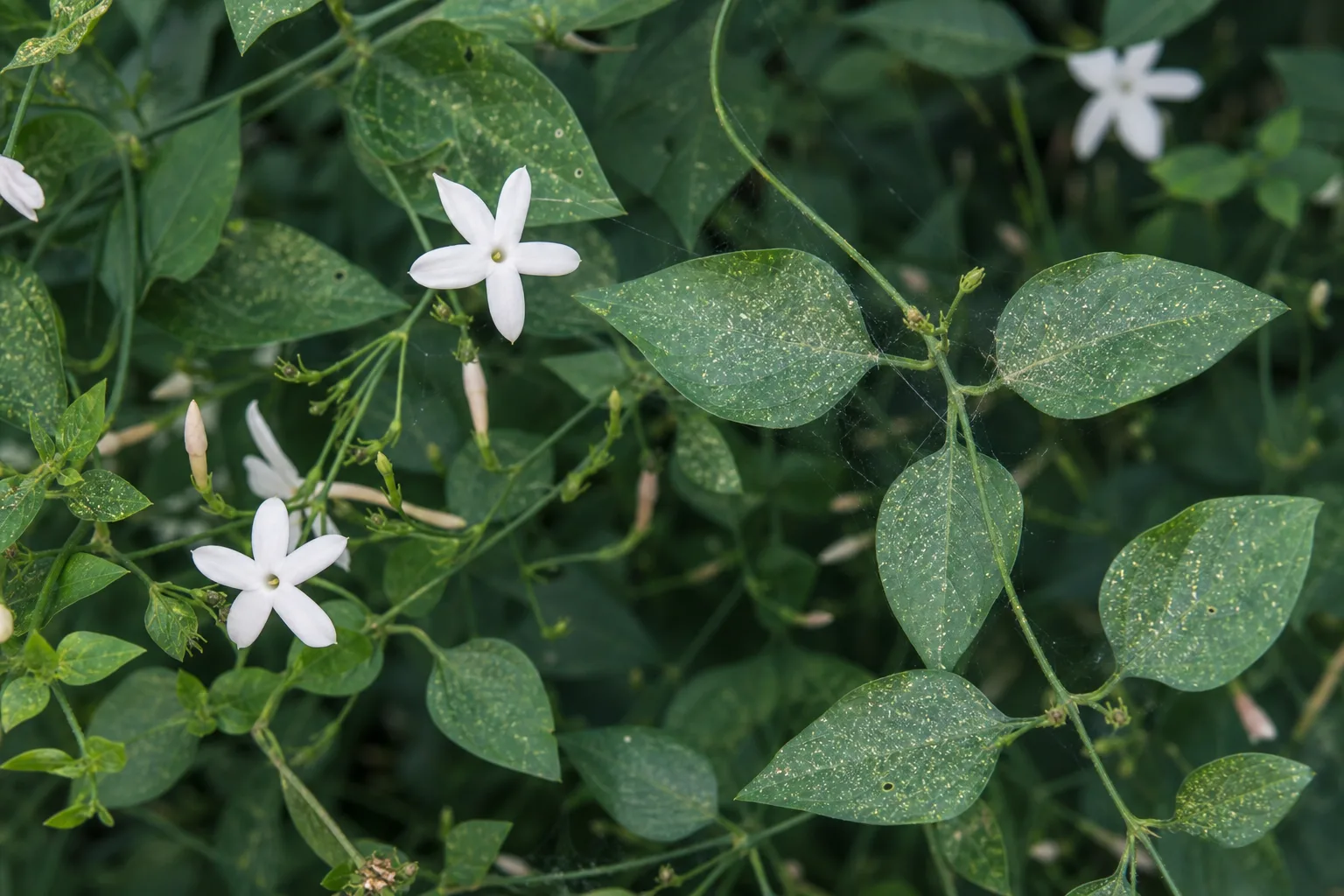
Spider Mites on Jasmine: Causes, Checks & Fixes
This guide covers spider mites on Jasmine. See also the general Spider Mites guide, watering, and light pages for this plant.
Spider Mites on Jasmine: Causes, Checks & Fixes
Quick answer
Spider mites on jasmine (Jasminum officinale, common jasmine) show up as pale stippling on leaflet tops, dull bronzed foliage, and fine silk webbing where twining stems wrap a trellis or hoop. The outbreak window is predictable: jasmine spends weeks in a cool, often dry winter rest (about 7–13°C), then returns to heated rooms with low humidity-exactly when mites reproduce fastest.
First step: isolate the vine and shower every leaf underside with a firm stream of lukewarm water. That physical knockdown confirms live mites and removes adults before you decide on soap, oil, or miticide sprays.
Jasmine needs bright light and seasonal rhythm to bloom, but indoor jasmine may attract red spider mites along with mealybugs. Do not respond to stippled leaves by watering more-reduced winter watering is normal for Jasmine overview, and wet soil during cool rest invites root problems unrelated to mites.
What spider mites look like on Jasmine
Spider mites are pinhead-sized arachnids-often amber, green, or red-orange-clustered on leaf undersides and tender stem tissue. On jasmine’s thin, pinnate leaves (typically five to nine leaflets per leaf), feeding damage has a distinct pattern:
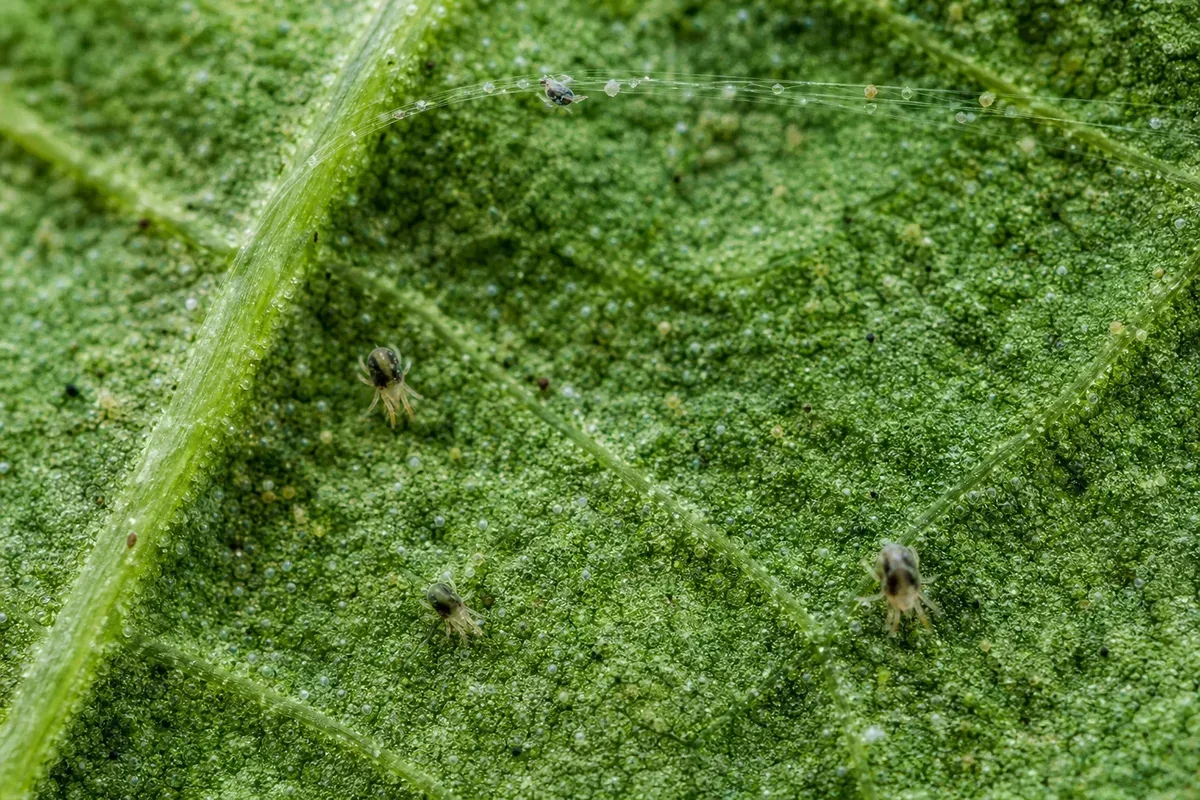
Spider Mites symptoms on Jasmine - compare with healthy tissue on the same plant.
- Stippling: thousands of tiny yellow or white dots where sap was drained from individual cells
- Bronzed or dusty-looking leaflets that still feel papery, not mushy
- Fine webbing at leaflet bases, twining stem joints, and support wires
- Slow or distorted new growth on tips that should be pushing buds before the summer flush
Because jasmine leaflets are smaller than many houseplant leaves, early stippling can look like ordinary aging until you flip a leaf. By the time webbing is obvious along twining stems, the colony has usually been present for weeks. During the post-chill transition, mites concentrate on newest growth and bud-bearing tips-the tissue that determines whether you get fragrant summer flowers.
Unlike aphids, there is no sticky honeydew or ant trails. Unlike powdery mildew, there is no white fungal coating-only silk threads and feeding dots.
Why Jasmine gets spider mites
Jasmine is a vigorous climbing vine that requires high humidity and plenty of light to flower indoors. Spider mites exploit the opposite side of that equation: warm air with little moisture on leaf surfaces. The conflict is not about watering the pot-it is about dry foliage air above roots that are correctly drying down.
Common triggers on common jasmine:
The cool-rest-to-warm-room transition. Jasmine needs a cool period (about 7–13°C for eight to ten weeks) to set flower buds. That rest often happens in an unheated porch, garage, or cool window where humidity is low. When the vine moves back to a heated living room, spider mites thrive in hot, dry conditions-especially near sunny windows where jasmine must sit for flowering.
Winter heating season. Central heat drops indoor humidity while jasmine sits in reduced watering mode. Soil appropriately dry plus foliage air below 40% relative humidity is mite-friendly even when roots are healthy.
Dusty twining stems. Vigorous jasmine accumulates dust on horizontal leaf surfaces and along supports, which blocks inspection and gives mites cover.
Crowded plant shelves. Mites walk short distances between pots and spread on hands, tools, or breeze during pruning.
Stressed tips after Jasmine repotting guide or hard pruning. Post-flowering pruning and spring repotting expose tender regrowth that mites colonize first.
The twospotted spider mite infests hundreds of plant species and is a serious greenhouse pest-jasmine is not exempt just because it is fragrant.
How to confirm the cause
Work through these checks before spraying anything:
- White-paper tap test. Hold a suspect leaflet over white paper and flick the underside. Moving specks confirm live mites.
- Magnifier scan. Inspect newest leaflets and twining stem joints at 10× magnification. Look for dots, cast skins, and silk threads.
- Soil moisture check. Push a finger into the top 3 cm of mix. Cool-season dryness with firm stems is normal jasmine rhythm-not proof against mites. Wet mix with stippling still means mites, but fix drainage before heavy indoor rinsing.
- Distribution pattern. Stippling on bud clusters and upper twining tips after the chill period strongly suggests mites. Uniform yellowing on older lower leaves alone may be reduced winter watering or natural leaf turnover.
- Neighbor audit. Check other plants on the same shelf for early stippling-mites often arrive on one vine and spread before webbing is visible.
Confirmed mites show stippling with undersurface activity or webbing. Suspected mites with only a few yellow leaflets dropping during cool rest and no silk may be normal seasonal leaf loss-recheck undersides with a lens before treating.
The first fix to try
Isolate and shower the entire vine. Move jasmine away from other plants. In a shower, bathtub, or outdoors in mild weather, spray every leaflet underside and twining stem with a strong lukewarm stream for several minutes. Wrap the pot or tilt it so you do not waterlog soil that should stay on its winter dry-down schedule.
This single step:
- Removes a large fraction of adults and eggs through physical washing
- Confirms you are treating the right problem
- Avoids stacking pesticides on day one
Let foliage dry in bright light the same day. Do not increase watering because leaves look stippled-jasmine’s winter rhythm is lighter drinks, not wet soil.
Step-by-step recovery
After the initial shower, use this sequence over the next two to three weeks:
Day 1 (same day or next morning): If stippling persists or webbing remains, apply insecticidal soap or horticultural oil labeled for mites. Coat all leaf surfaces, especially undersides and stem crotches, until the solution barely drips. Insecticidal soap and plant oil extracts are effective against spider mites on indoor plants when coverage is complete.
Every 5–7 days: Repeat soap or oil at least three times. Mite eggs hatch in cycles; most miticides are not effective on eggs, so two or more applications at five-day summer intervals or seven-day winter intervals are required.
Between sprays: Raise ambient humidity modestly with a pebble tray or room humidifier-target above 50% after the cool period without misting buds heavily. Jasmine requires high humidity to flower indoors; dry air suppresses mites less than it invites them back.
Prune only if needed. Snip one or two heavily webbed stem tips and bag them. Do not strip the vine bare unless most foliage is already lost-jasmine needs leaves to rebuild energy for flowering.
Inspect neighbors weekly. Treat any adjacent pot showing early stippling before mites walk to your jasmine again.
Recovery timeline
Days 1–3: Webbing loosens after the first shower; live mite activity should drop on re-inspection.
Week 1–2: Stippling stops spreading to new leaflets if treatment coverage reached stem crotches and twining joints.
Weeks 2–4: After three timed spray cycles, new tip growth should emerge without fresh dots. Old stippled leaflets stay marked permanently-that is normal.
Bloom season: Clean new stems by late spring support the summer flower flush. Mite-stressed buds may drop before opening if infestation ran into the warming period.
If stippling spreads through three spray rounds, escalate to a miticide labeled for spider mites and follow label intervals. General insecticides often miss mites and can harm beneficial predators.
Lookalike symptoms
Reduced winter watering. Older yellow leaflets on a firm-rooted vine in cool months without stippling or webbing often reflect normal rest-not mites.
Nutrient stress. Even pale green leaflets across the whole plant without undersurface dots or silk.
Powdery mildew. White fungal coating on leaf surfaces, not stippling with silk at stem joints.
Thrips. Silvery scars and distorted young leaves rather than classic dot pattern plus webbing.
Aphids. Soft clusters on tender shoots with sticky honeydew-not mite stippling.
Mistakes to avoid
Watering more when leaflets yellow. Mite-stippled jasmine still needs its cool-season dry-down. Wet soil during rest invites root stress unrelated to pests.
One-and-done spraying. A single soap application leaves eggs to hatch. Plan three cycles minimum.
Treating only upper leaf surfaces. Mites live underneath leaflets and in twining stem crotches. Incomplete coverage guarantees return.
Spraying open flower buds. If winter-blooming varieties still carry buds, treat stems and leaves while avoiding heavy soak on open flowers that may wilt.
Assuming yellow leaves mean overwatering. Check for mites first-especially after the post-chill move indoors.
Using generic insecticides. Products aimed at aphids or beetles often miss mites; oils, soaps, or labeled miticides target the pest directly.
How to prevent spider mites next time
Match prevention to how jasmine actually lives in your home:
- Quarantine new vines for two weeks; rinse and inspect undersides before placing near other plants.
- Rinse foliage monthly during indoor active growth-the same physical control that works in treatment.
- Scout weekly during the post-chill transition when heat is running and humidity drops.
- Raise ambient humidity modestly after winter rest without keeping soil wet.
- Keep dust off sun-facing leaflets so stippling shows early.
- Maintain airflow around twining stems without crowding multiple plants on one shelf.
- Inspect when moving from cool porch to warm room-that transition is the highest-risk window.
Strong culture helps: bright light, correct seasonal watering, and the cool rest jasmine needs for buds-but dry heated air still requires inspection, not heavier watering.
When to worry
Treat as urgent when:
- Webbing spans multiple twining stems and returns within days of showering
- Stippling reaches bud clusters before the summer flush
- New growth emerges already dotted despite two treatments
- Mites appear on several plants in the same room
- Defoliation accelerates while the plant should be breaking dormancy
Lower urgency when stippling is on one branch, roots are healthy, and the first shower removes visible mites. Monitor for a week before adding sprays.
Spider mites rarely kill an established jasmine on their own if caught before severe defoliation-but they can weaken the vine enough that bud drop and stalled flowering follow. Fix pests first; keep the seasonal watering rhythm disciplined.
Conclusion
Related jasmine problems
Spider mites thrive when low humidity follows the cool winter rest. Related guides:
- Jasmine overview - seasonal care rhythm and chill requirements
- Jasmine watering - winter dry-down without confusing mite stippling for overwatering
- Bud drop - mite stress can weaken bloom clusters
- Scale insects and aphids - other sap-feeding pests with different treatments
- Yellow leaves - nutrient or watering causes without stippling or webbing
Isolate, shower thoroughly, then repeat contact treatments on a 5–7 day schedule while keeping winter dry-down watering intact. Judge success by clean new growth and unwebbed stem tips, not by repaired old leaflets.
When to use this page vs other Jasmine guides
- Jasmine watering guide - Use for routine moisture checks before assuming spider mites is the main issue.
- Jasmine problems hub - Browse all 53 common issues on this species.
- Curling Leaves on Jasmine - Different entry point when symptoms overlap with spider mites.
- Thrips on Jasmine - Different entry point when symptoms overlap with spider mites.