Distorted Leaves on Jasmine: Causes, Checks & Fixes
Quick answer
Distorted jasmine leaves almost always trace to sap-sucking pests on expanding spring growth-aphids on bud clusters, thrips on flowers, or spider mites after the cool winter rest. First step: inspect shoot tips and leaflet undersides with a hand lens before spraying fungicide or fertilizer.
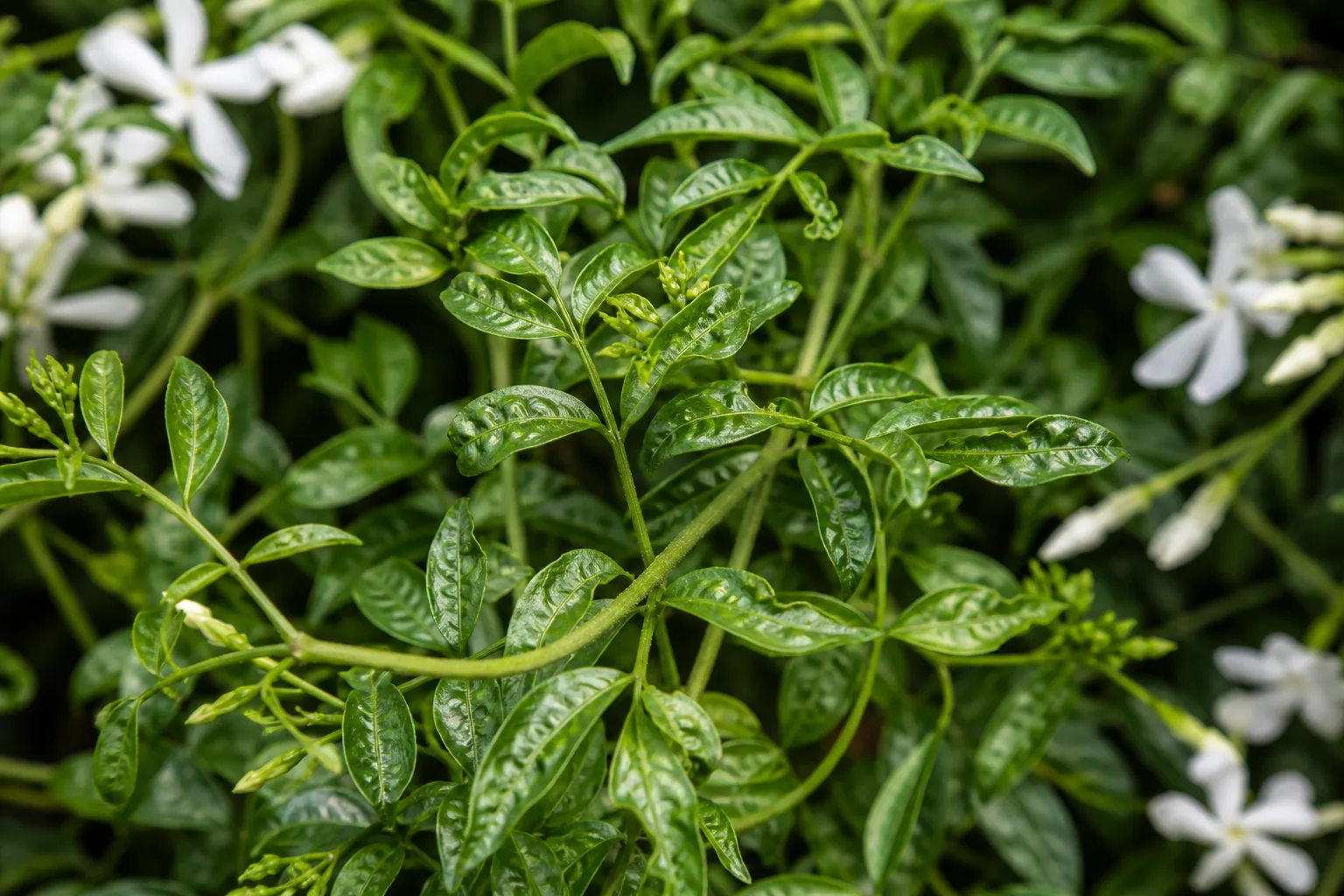
Distorted Leaves on Jasmine: Causes, Checks & Fixes
This guide covers distorted leaves on Jasmine. See also the general Distorted Leaves guide, watering, and light pages for this plant.
Distorted Leaves on Jasmine: Causes, Checks & Fixes
Quick answer
Cupped, twisted, or narrow leaflets on common jasmine (Jasminum officinale) almost always mean something interfered while the tissue was still expanding-not a problem you can fix on fully hardened foliage. Jasmine pushes soft new shoots each spring on twining stems, and that tender growth attracts aphids, thrips, and spider mites. The predictable mite window hits when the vine leaves its cool winter rest and returns to heated rooms with dry air.
First step: inspect bud clusters and leaflet undersides with a hand lens before you spray fungicide, add nitrogen, or prune. If you find aphids, silvery thrips scarring on buds, or mite stippling with webbing, treat for the pest you confirmed. If distortion is patchy across the vine with no insects and keeps returning on every new flush, isolate and consider virus or herbicide exposure.
This page covers leaflet distortion on expanding growth-cupping, twisting, narrowing, and puckering at vine tips. For downward leaf roll from drought, see curling leaves on jasmine. For shoot-tip pinching, herbicide drift, and virus discard decisions, see deformed new growth on jasmine.
Distorted leaves vs. curling leaves vs. deformed new growth
Jasmine has three related problem pages because growers describe damage differently-and the first fix differs.
| What you see | Likely cause | Best page |
|---|---|---|
| Leaflets cup, twist, or narrow at tips; sticky honeydew; insects on buds | Aphids, thrips, or mites on expanding tissue | This page |
| Whole leaves roll upward or downward; drought curl without twist | Water stress, heat, or early mite stippling before warp | Curling leaves |
| Shoot tips pinched, stunted, or mottled on successive flushes; drift or virus | Herbicide exposure, virus, or severe tip dieback | Deformed new growth |
Rule of thumb: distortion on newest vine sections only while older pinnate leaves look normal usually means sap feeders-not old age. Uniform mottling on multiple new flushes after pests are cleared points toward mosaic virus on jasmine.
Why jasmine gets distorted leaves
Common jasmine is a vigorous twining vine with pinnate leaves-typically five to nine thin leaflets per leaf. Pests and environmental stress hit expanding leaflets and bud clusters hardest because cell walls are still forming.
Aphids on spring flush. Jasmine produces soft new growth each spring that aphids colonize on shoot tips. Heavy aphid infestations cause distorted leaves as sap is drained from tender tissue. Honeydew attracts sooty mold and ant trails on trellis wires near buds.
Thrips on flowers and young foliage. Thrips rasp plant tissue, leaving silvery streaks on petals and young leaflets. Banded greenhouse thrips host plants include jasmines. Flower-feeding thrips can deform blooms and cause bud blast before the fragrant summer flush opens.
Spider mites after cool rest. Jasmine needs a cool winter rest to set flower buds, then moves to heated rooms where spider mites thrive in hot, dry conditions. Mites stipple leaflet tops and spin silk at twining stem joints, warping the newest growth. The full rinse-and-spray protocol lives on the spider mites on jasmine page.
Powdery mildew is a lookalike, not the same problem. White fungal coating on leaf surfaces does not cause the cupped, twisted leaflet shape typical of insect feeding-do not treat mildew with the same first step as aphids.
Virus and herbicide are edge cases. Patchy yellow-green mottling on successive new flushes without insects suggests virus-isolate and read mosaic virus on jasmine. Outdoor vines exposed to lawn herbicide drift may show cupped new growth on one windward side; that workflow is covered on deformed new growth.
What distorted leaves look like on jasmine
Cupped or twisted new leaflets at vine tips (aphids)
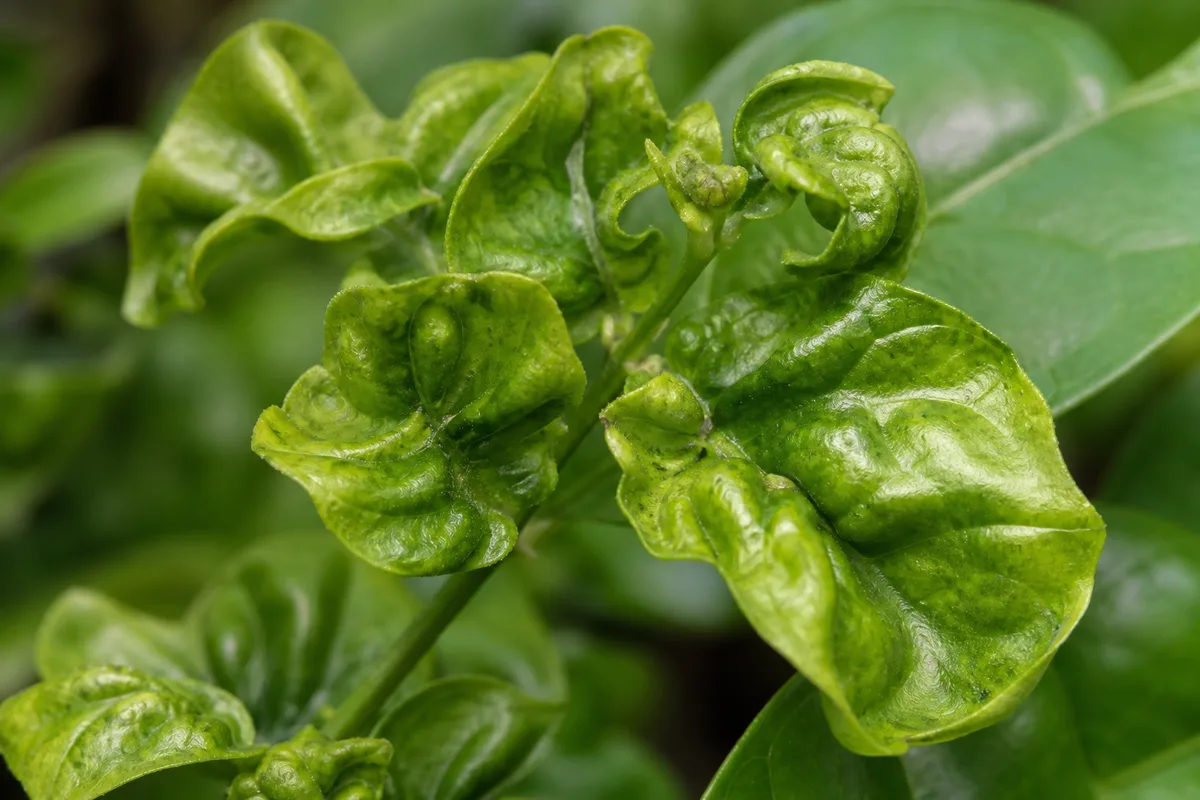
Distorted Leaves symptoms on Jasmine - compare with healthy tissue on the same plant.
- Newest leaflets at bud clusters curl inward, narrow, or pucker while the leaflet below looks normal
- Soft-bodied aphids clustered just below swelling buds and on tender internodes
- Shiny honeydew on leaves; black sooty mold on sticky areas
- Ant trails on trellis wires or pot rims farming aphid colonies
Silvery streaks on petals and buds (thrips)
- Pale or silvery scars on flower buds and young petals during pre-bloom swell
- Scarred or silver-flecked young leaves at vine tips
- Tiny black fecal specks on leaflet undersides near damage
- Distorted buds that fail to open or blooms with streaked, discolored petals
Stippling and webbing after winter rest (spider mites)
- Fine yellow or white dots on leaflet tops; bronzed or dusty-looking tissue
- Fine webbing at leaflet bases, twining stem joints, and support wires
- Slow or warped new growth on tips that should be pushing buds before summer bloom
- Damage concentrated after the vine moves from cool storage to a dry heated room
White coating vs. insect distortion (powdery mildew lookalike)
- Powdery white patches on leaf surfaces that wipe off-no honeydew, no insects, no silvery thrips streaks
- Leaflets may look dull but are not twisted or cupped in the classic pest pattern
Patchy mottling without insects (virus or herbicide suspect)
- Yellow-green mosaic on multiple new flushes across the vine
- Distortion returns on every new leaf cluster after pest treatment and stable care
- No aphids, webbing, or thrips found on repeated inspections
How to confirm the cause
Work through this checklist from vine tips downward:
- Hand-lens scan of bud clusters. Inspect the newest leaflets and swelling buds at twining stem tips-aphids cluster below flower buds and new leaves.
- Shake test. Tap a suspect leaflet over white paper; crawling specks confirm mites. Shake a flower bud over paper for thrips.
- Honeydew and ant check. Sticky shine on leaves or ant activity on supports confirms sap feeders even when insects are hard to see.
- Post-chill timing. Distortion appearing within weeks of moving jasmine from cool rest to a heated room strongly suggests mites-cross-check spider mites on jasmine.
- Distribution pattern. Damage on newest sections only with insects visible = pests. Patchy mottling plant-wide with no insects = virus or herbicide suspect-isolate before pruning.
Cause confirmation matrix
| Symptom pattern | Location | Insects visible | Honeydew | Bloom impact | First fix |
|---|---|---|---|---|---|
| Cupped, twisted leaflets | Bud clusters, shoot tips | Aphids on soft growth | Often yes | Buds may abort if heavy | Water knockdown or insecticidal soap |
| Silvery bud/petal scars | Flowers, young leaflets | Thrips (shake test) | No | Deformed or failed blooms | Rinse buds; soap on labeled intervals |
| Stippling + webbing | New tips after chill | Mites on undersides | No | Stressed buds may drop | Isolate; shower; see mite guide |
| White wipeable coating | Leaf tops | None | No | Usually minor | Mildew treatment-not this page |
| Mottled successive flushes | Whole vine | None after scouting | No | Progressive decline | Isolate; virus workup |
First fix for jasmine
Inspect shoot tips and leaflet undersides with a hand lens, then treat only the pest you find.
Do not spray fungicide when aphids are visible. Do not add nitrogen-it produces softer growth that attracts more aphids. Do not ignore ants on trellis wires; they often mark hidden aphid colonies on jasmine buds.
If aphids are confirmed: knock them off with a firm water spray outdoors or in a shower, coating leaflet undersides and bud clusters. For persistent colonies, apply insecticidal soap to labeled directions and repeat every five to seven days.
If mites are confirmed: isolate the vine and shower every leaflet underside-full protocol on spider mites on jasmine.
If thrips are confirmed: rinse bud clusters and apply soap to tender growth; see thrips on jasmine for flower-season detail.
Step-by-step recovery
If aphids on bud clusters
- Isolate the vine from other houseplants during active treatment.
- Shower or spray firm water on shoot tips, bud clusters, and all leaflet undersides.
- Apply insecticidal soap to labeled coverage if colonies return within three days.
- Wipe honeydew from sticky leaves to limit sooty mold.
- Repeat soap every five to seven days until new leaflets open without cupping.
- Snip one or two heavily distorted tips only after clean new growth appears-they rarely flatten.
If thrips on flowers and young foliage
- Inspect buds during pre-bloom swell; shake flowers over white paper to confirm thrips.
- Rinse bud clusters and young leaflets with water-thrips hide in buds and leaf folds.
- Apply insecticidal soap to tender growth, including bud surfaces, on five- to seven-day intervals.
- Remove heavily scarred buds that will not open cleanly after treatment begins.
- Scout weekly through bloom season-thrips can reduce flower longevity.
If spider mites after winter rest
- Follow the isolate-and-shower first step on spider mites on jasmine.
- Raise ambient humidity modestly after the cool period-target above 50% without overwatering the pot.
- Complete three timed soap or oil cycles at five- to seven-day intervals.
- Do not increase watering because leaflets look stippled-jasmine’s winter rhythm is lighter drinks.
If virus or herbicide suspected
- Isolate the vine immediately; do not propagate from suspect tissue.
- Sterilize pruners between cuts if you must trim.
- For virus patterns, read mosaic virus on jasmine before discard decisions.
- For outdoor drift patterns on one side of the vine, see deformed new growth.
Recovery timeline
Days 1–3: Live pest activity should drop after the first water knockdown or shower. Honeydew stops accumulating on new tissue.
Week 1–2: Stippling and new cupping should stop spreading to fresh leaflets if treatment reached bud clusters and stem joints.
Weeks 2–4: After two to three treatment cycles, the next leaflet cluster should open with normal shape. Old distorted leaflets stay twisted permanently-that is normal.
Bloom season: Clean shoots by late spring support the summer flower flush. Heavily distorted buds may drop before opening if sap loss ran through pre-bloom-treat before flowering when possible.
If distortion spreads through three treatment rounds with confirmed pest ID, escalate to a labeled miticide (mites) or reassess for virus if no insects are found.
Lookalike symptoms
Curling leaves from drought. Downward or upward roll on many leaflets after dry soil-without twist, honeydew, or stippling. See curling leaves on jasmine.
Powdery mildew. White wipeable coating on leaf surfaces-not cupped leaflets with insects underneath.
Normal winter leaf yellowing. Older leaflets may yellow and drop during cool rest without changing shape. Distortion with stippling or webbing after the heated-room move is mites, not dormancy.
Calcium or moisture stress. Isolated tip burn on newest leaflets during fast spring growth without insects-see calcium deficiency on jasmine if margins crisp without cupping across multiple flushes.
Low humidity alone. Bud drop and crisp edges without leaflet twist-see low humidity on jasmine. Mites often follow the same dry-air window.
What not to do
Do not spray fungicide alone when aphids are visible on buds. Do not increase nitrogen fertilizer-it produces softer pest-attracting growth. Do not ignore ants on trellis wires near bud clusters. Do not propagate from virus-suspect vines. Do not assume ASPCA non-toxic listing means treated foliage is safe for pets to chew-keep cats and dogs away until sprays dry completely, and confirm the plant is true jasmine, not toxic lookalikes such as Carolina jessamine.
How to prevent distorted leaves on jasmine
Scout bud clusters and leaflet undersides weekly during spring bud swell-the same window when aphids colonize tender shoots. Rinse foliage after moving the vine indoors from cool rest to discourage mites in dry heated air. Quarantine new vines two weeks before placing them near blooming plants. Encourage beneficial predators outdoors. Maintain the seasonal watering rhythm from the jasmine watering guide-consistent root moisture supports bloom, but extra water does not replace humid air or prevent mites.
Species note: Jasminum polyanthum (pink jasmine) often blooms indoors in late winter and may show thrips scarring earlier than summer-flowering J. officinale. Confirm your species on the jasmine overview before adjusting the inspection calendar.
When to worry
Treat as urgent when:
- Bud clusters are heavily distorted with visible aphid colonies during pre-bloom-sap loss can reduce the season’s bloom
- Webbing spreads along multiple twining stems while stippling reaches bud tips
- Distortion returns on every new flush after three pest treatment cycles with no insects found-isolate for virus
- You plan to prune virus-suspect tissue without sterilizing tools or isolating the vine
Cosmetic cupping on one shoot tip with firm stems and a clear aphid hit is manageable-treat early and judge the next flush. If whole vines decline with mottling and no pest signs, read mosaic virus on jasmine before attempting salvage.
Conclusion
Distorted jasmine leaflets are a pest-and-timing problem more often than a mystery disease. The diagnostic path is inspect bud clusters first, confirm the insect or mite, treat that cause, and judge recovery by the next leaflet flush-not by waiting for old twisted leaves to flatten. Treat before flowering when buds are at stake, watch the post-chill mite window, and use sibling guides when your symptom pattern points to curl, shoot-tip dieback, or virus instead of cupped expanding leaflets.