Calcium Deficiency on Jasmine: Causes, Checks & Fixes
Quick answer
Calcium problems on jasmine show on the newest compound leaves and shoot tips while older foliage stays greener-usually because uneven watering blocks uptake during fast spring growth, not because the mix lacks calcium. Stabilize moisture at 3 cm depth before reaching for gypsum or lime.
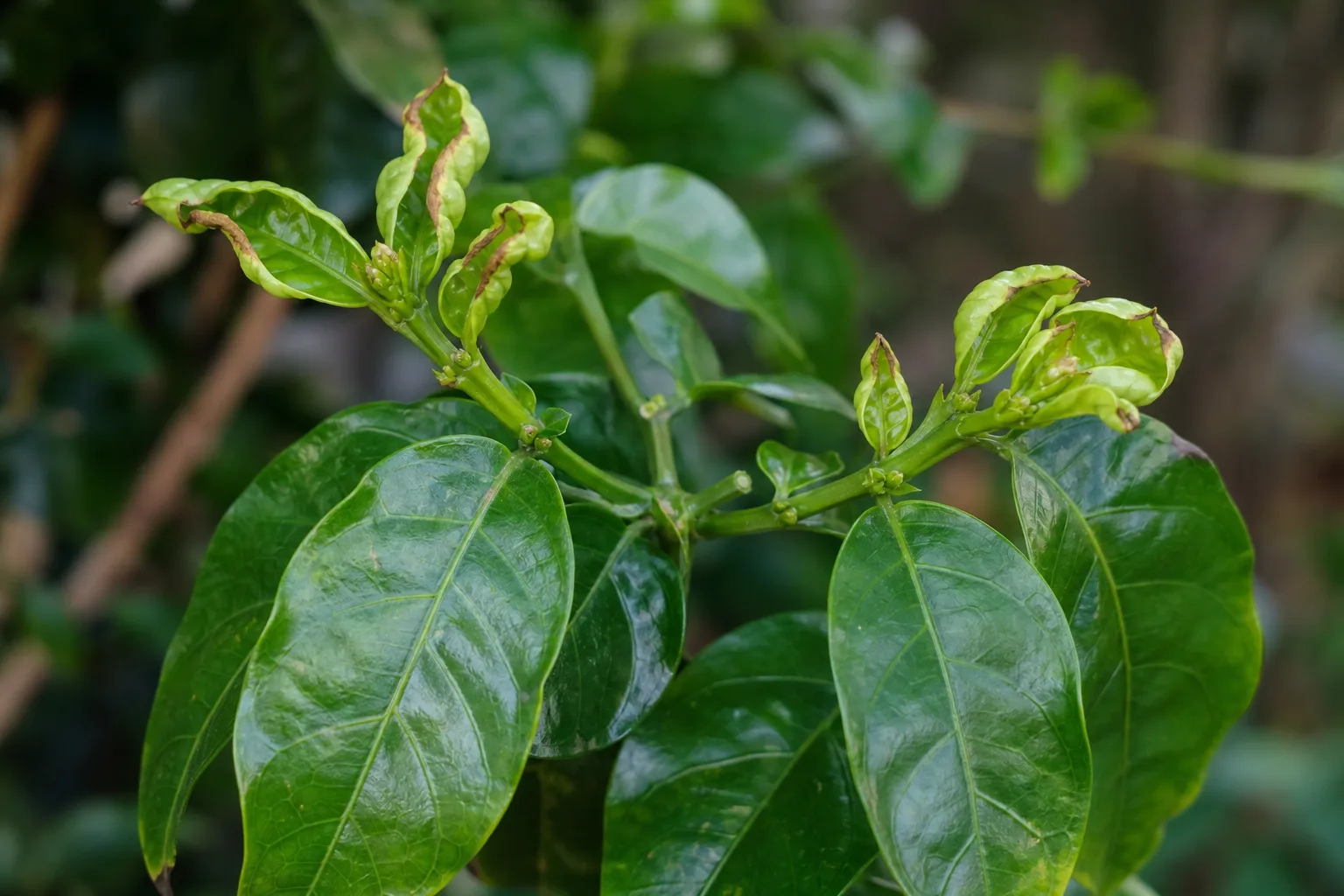
Calcium Deficiency on Jasmine: Causes, Checks & Fixes
This guide covers calcium deficiency on Jasmine. See also the general Calcium Deficiency guide, watering, and light pages for this plant.
Calcium Deficiency on Jasmine: Causes, Checks & Fixes
Quick answer
Calcium deficiency on Jasminum officinale-common jasmine-is a new-growth problem, not whole-vine yellowing. Calcium is immobile in plants, so the youngest leaflets at twining shoot tips show trouble first: brown or crinkled margins, slightly twisted new shoots, and sometimes stalled buds during the main bloom flush-while older pinnate leaves lower on the stem often stay green.
The trigger is rarely a calcium-poor potting mix. On this vigorous summer-flowering climber, interrupted water flow during fast spring extension is the usual culprit-dry spells, flood-and-drought cycles, or damaged roots that cannot move dissolved calcium to expanding cells.
First step: probe soil moisture at 3 cm depth daily for a week and note whether the pot swings between bone-dry and soggy. Stabilize that rhythm before adding supplements. If tips browned right after heavy feeding with white crust on the soil, also read fertilizer burn on jasmine-salt lockout mimics calcium stress.
Why jasmine gets calcium deficiency
Spring growth flush and flowering climber demand
Common jasmine is a rapidly growing twining vine that pushes soft new shoots from late winter through summer. Each compound leaf carries five to nine leaflets, and every expanding leaflet tip demands a steady calcium supply for cell walls. During the main flowering season, the vine allocates resources to buds and new runners simultaneously-peak demand on a limited root system in a container.
Indoor jasmine follows a seasonal rhythm: cooler rest from roughly October through March, then a growth and bloom surge when light and warmth return. Owners who resume summer watering intensity too slowly-or who let the pot go dry while buds form-interrupt calcium delivery exactly when new tissue needs it most.
Moisture swings, heavy nitrogen, and root stress
Calcium travels with water through the xylem. When soil moisture fluctuates sharply, young leaflet tips can brown even in calcium-rich mix-the deficiency is often uptake failure, not missing minerals in the substrate.
Heavy nitrogen feeding during active growth pushes lush soft tips that outpace calcium delivery. Excess magnesium from random Epsom salt use can antagonize calcium absorption. Fertilizer salt buildup in an old container pulls moisture from root tips and blocks mineral uptake-a chemical drought that scorches margins on new growth.
Root damage from overwatering creates the same symptom overlap: wet, compacted mix suffocates roots, so the vine cannot transport calcium even when fertilizer is present. Sour-smelling soil with mushy roots points to root rot rather than a simple mineral gap-do not fertilize until drainage and root health are corrected.
What calcium deficiency looks like on jasmine
Young-tip burn vs. distortion on compound leaves
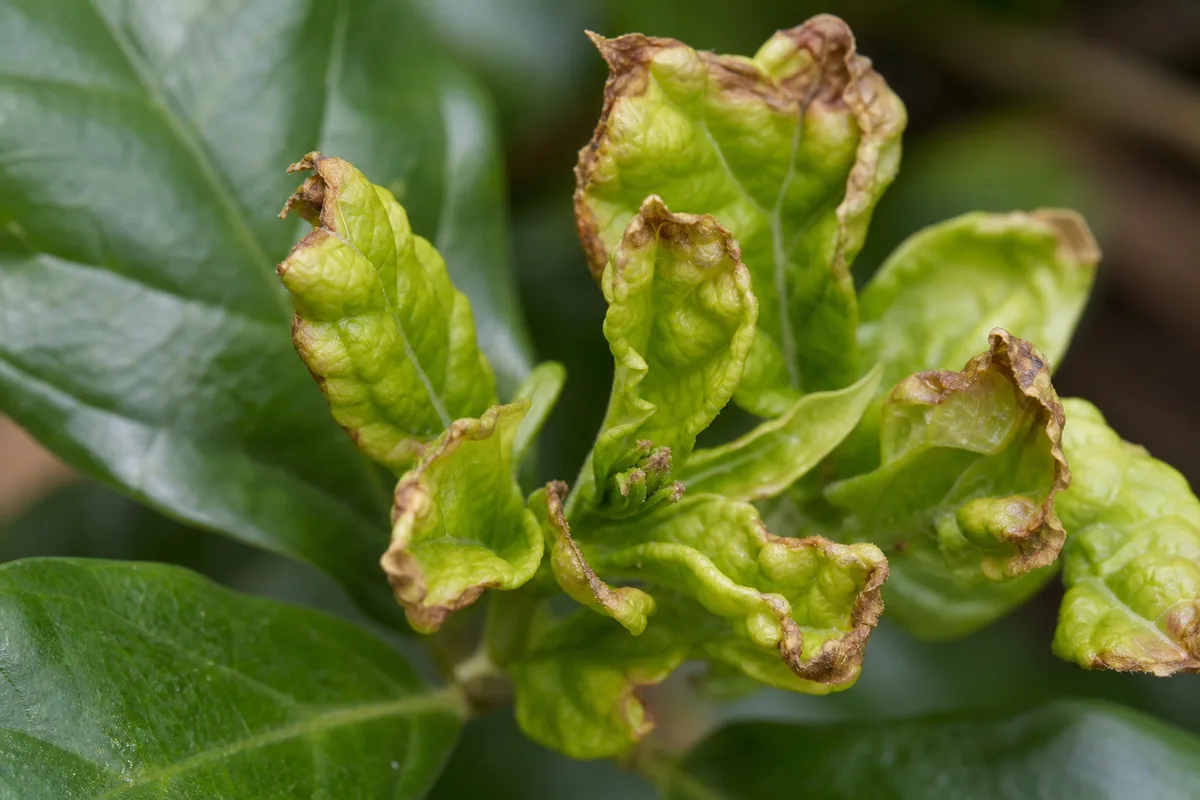
Calcium Deficiency symptoms on Jasmine - compare with healthy tissue on the same plant.
Watch the twining tips before worrying about lower foliage. On jasmine’s pinnate leaves, the youngest leaflets at the shoot apex show browning, crinkling, or slight cupping while older leaflets on the same stem-and leaves farther down the vine-look relatively normal. New shoots may emerge smaller or slightly twisted compared with healthy plump growth.
Other jasmine-specific clues:
- Bud stall during bloom flush - flower buds form but brown at the tip or fail to open when calcium transport fails during peak season
- Margin-first necrosis on tender leaflet tissue, not random holes or V-shaped lesions
- No webbing or stippling - unlike spider mites, which leave fine dots and silk on undersides
- No sticky honeydew - unlike aphids on soft spring shoots
- Normal lower-leaf drop - jasmine sheds a few older leaves naturally; that turnover is not a calcium crisis
Compare with distorted leaves on jasmine when cupping and twist affect multiple flushes with pest or virus patterns-not isolated tip burn on the newest tissue only.
Calcium deficiency vs. brown tips vs. distorted leaves
Use leaf age and timing to separate overlapping symptoms:
| Pattern | Likely cause | Key check |
|---|---|---|
| Newest leaflet tips brown; older leaves green | Calcium uptake failure | Moisture swings at 3 cm depth; recent heavy nitrogen |
| Crispy tips on many leaflets; white soil crust | Salt / fertilizer burn | Fed heavily recently; see fertilizer burn |
| Older leaves yellow first; center stays greener | Nitrogen shortage | Yellowing on older, lower leaves climbs from base up, not tips down |
| Interveinal yellow on new leaves; green veins remain | Iron or manganese chlorosis | pH drift; see nutrient lockout |
| Stippling + webbing on undersides | Spider mites | Dry winter air after cool rest; hand-lens check |
| Cupping across several flushes; aphids on shoots | Pests or virus | Isolate; see distorted leaves |
| Tips brown on dry soil + heated winter air | Simple drought / low humidity | Often overlaps brown tips without true deficiency |
Calcium problems concentrate on the youngest tissue during fast spring growth. Brown tips from dry air or salt stress can hit margins broadly without the new-growth-only signature. Distortion that returns on every flush after pests are gone needs a different workup than one-time tip burn after a dry weekend.
How to confirm the cause
Work through checks in this order:
- Inspect newest shoots under bright light. Browning or crinkling on the apical leaflets while lower pinnate leaves stay green matches calcium uptake trouble better than pest or rot patterns.
- Probe soil at 3 cm depth daily for seven days. Record dry-down speed. Bone-dry followed by heavy soak interrupts calcium transport even when mix contains adequate minerals.
- Lift the pot. A light container with crisp new tips and dry probe readings suggests drought stress overlapping deficiency. A heavy, wet pot with sour smell and limp stems suggests root failure-see root rot.
- Review fertilizer history. White crust on soil surface, heavy feeding in the last month, or Epsom salt applications raise salt-lockout and magnesium-antagonism risk.
- Scan for pests. Tap a leaflet over white paper; stippling with webbing means mites. Sticky shoots with clustered insects mean aphids-not calcium.
- Check roots when repotting or if soil stays wet. Firm white roots support a cultural fix. Mushy brown roots need rot treatment before any supplement helps.
- Optional soil test. Most Minnesota soils-and typical potting mixes-already contain adequate calcium; a test confirms whether deficiency is environmental rather than elemental.
Confirmation decision table
| If you find… | First branch |
|---|---|
| Dry-wet swings + new-tip burn only | Stabilize watering per jasmine watering guide |
| White crust + burn after heavy feed | Flush salts; read fertilizer burn |
| Wet sour mix + limp stems | Root rot workup-not calcium supplements |
| Stippling + webbing | Spider mites rinse protocol |
| Older leaves yellow first | Nitrogen or general stress; see yellow leaves |
| Distortion on every new flush, no insects | Distorted leaves and virus differential |
First fix for jasmine
Stabilize watering before adding supplements.
Soak when the top 3 cm of mix is dry, drain fully, and empty the saucer. During the spring bloom flush, maintain regular moisture while actively growing without letting the pot sit waterlogged for days. Match the seasonal rhythm in the jasmine watering guide-lighter during October–March rest, steadier as new shoots extend.
Hold off heavy nitrogen until new leaflet tips emerge clean. If you fed heavily recently and see white crust, leach the pot once with twice the container volume of plain water and withhold fertilizer for two weeks.
If tips keep burning after two weeks of steady moisture and roots are firm:
- Use a balanced liquid feed at half label strength every four to six weeks during active growth per the jasmine fertilizer guide
- Do not double-dose calcium products, gypsum, or lime without a soil test-excess calcium can interfere with magnesium and potassium uptake
- Do not dump Epsom salt on a dry vine; excess magnesium worsens calcium antagonism
Repot and salt-flush when tips persist
If the mix is more than two years old, heavily root-bound, or crusted with salts:
- Repot in early spring before the main growth flush into well-draining potting mix with drainage holes-one size up at most
- Gently loosen circling roots; set the vine at the same depth
- Water once until excess drains; hold fertilizer for two weeks
- For salt buildup without immediate repot need, flush with plain water until twice the pot volume runs from the drainage hole
Recovery timeline
Burned leaflet tips will not re-green-damaged tissue is permanent. Judge recovery by new shoots, not old margins.
Within one to two weeks of stable moisture, active tip burn should stop spreading. Two to four weeks after correcting the root zone, new leaflets should emerge with normal shape and color during spring growth-faster on a vigorously growing vine, slower if the plant is still in winter rest.
Buds that stalled during stress may need the next bloom cycle to open normally once transport recovers.
Signs of improvement: clean new leaflet tips, firm twining stems, stable pot weight between waterings, no fresh crinkling on the apical flush.
Signs the problem is worsening: every new leaf tip browns during bloom flush, buds abort in clusters, sour wet mix with soft stems at the base, or tip burn continues despite steady moisture and salt flush-escalate to nutrient lockout or root rot diagnosis.
What not to do
Do not sprinkle lime or gypsum on every tip-burn case without checking watering first-calcium deficiencies are often caused by uneven watering, not low soil calcium. Do not increase fertilizer on a stressed vine sitting in old, salty mix. Do not confuse normal lower-leaf drop with a calcium crisis-jasmine sheds older foliage naturally.
Do not foliar-feed with undiluted fertilizer on tender new leaflets; it can spot foliage. Do not repot, hard-prune, and feed full strength the same week unless roots are clearly rotting. Do not treat wet sour mix with more water-fix drainage first.
How to prevent calcium problems next time
Use well-draining mix in a pot with drainage holes. Water on pot weight and 3 cm probe readings, not a rigid calendar-see the watering guide for seasonal rhythm. Repot every two years or when roots circle densely, before chronic dry-wet swings start.
Feed lightly and consistently during spring and summer rather than in large bursts. Flush salts occasionally if you fertilize regularly. Keep the vine in full sun to partial shade with good air movement so transpiration and calcium transport stay steady.
True jasmine is safe around pets, but rinse treated foliage before pets investigate new shoots.
When to worry - persistent tip burn, wet sour mix, or bud loss
Treat as urgent when:
- Every new leaflet tip browns during the main bloom flush and buds abort repeatedly-continued stress can weaken the vine for the season
- Soil stays wet for days with sour smell and soft stems at the soil line-root rot escalation, not more calcium
- Tip burn persists after two weeks of steady moisture and a salt flush with firm roots-test for nutrient lockout or pH drift
- Stippling and webbing spread to growing tips during bud formation-spider mites can stall blooms independently of minerals
Lower urgency when one shoot tip shows slight burn after a missed watering and the rest of the vine is firm-stabilize moisture and watch the next flush.
Conclusion
Calcium deficiency on jasmine rewards owners who fix the root zone before reaching for supplements. Its twining spring flush and compound leaves make the youngest leaflet tips the earliest warning system-when only new growth looks wrong while lower foliage stays green, think interrupted calcium transport, not a whole-plant crisis. Stabilize moisture at 3 cm depth, rule out salts and pests with the lookalike table above, and judge success by the next clean shoot, not by burned margins turning green again.