Brown Tips on Jasmine: Causes, Checks & Fixes
Quick answer
Brown tips on jasmine usually mean the leaf margins dried out before roots could replace the water-often after dry soil, heated winter air, or salt buildup from heavy feeding. First step: check soil moisture 3 cm down and humidity near the vine before trimming anything.
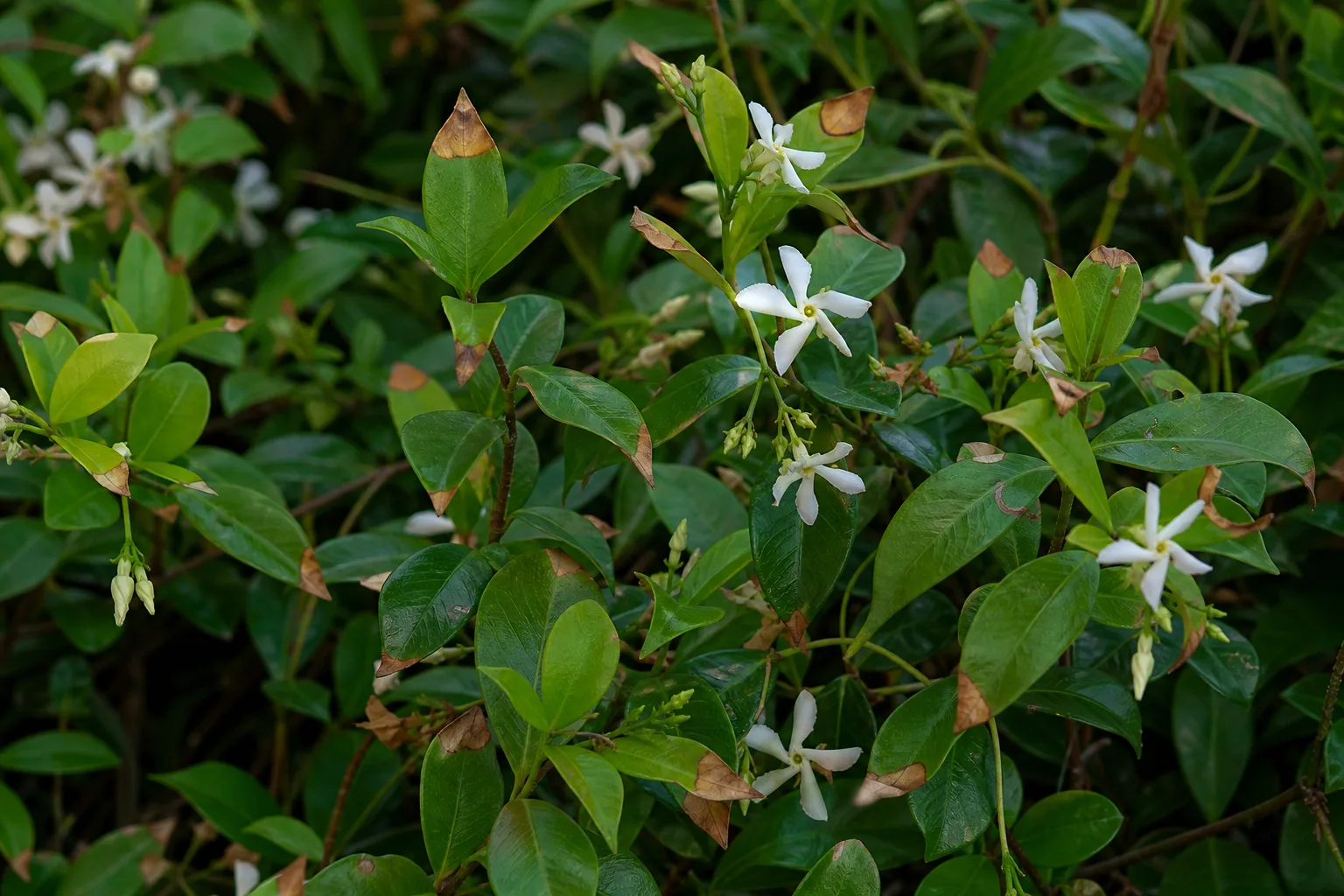
Brown Tips on Jasmine: Causes, Checks & Fixes
This guide covers brown tips on Jasmine. See also the general Brown Tips guide, watering, and light pages for this plant.
Brown Tips on Jasmine: Causes, Checks & Fixes
Quick answer
Brown tips on jasmine (Jasminum officinale, common jasmine) are almost always environmental stress, not a leaf disease. The tips and margins are the farthest points from the roots, so they dry first when moisture delivery fails-whether from dry soil, dry indoor air, salt-damaged roots, or sun shock after a sudden move.
First step: check soil moisture 3 cm down and the humidity around the vine. Insert your finger into the mix, lift the pot to feel its weight, and note whether the plant sits near a heating vent or recently moved to stronger sun. Stabilize watering and air moisture before you trim brown tissue or add fertilizer. Trimming alone cannot stop new damage if the underlying stress continues.
What brown tips look like on jasmine
On jasmine, tip burn usually starts as dry, tan-to-brown tissue at the leaf point, sometimes creeping a few millimeters down the margin. The rest of the leaflet often stays green at first. Older leaves near the base may show damage before newer growth does, especially after a dry spell or winter heating season.
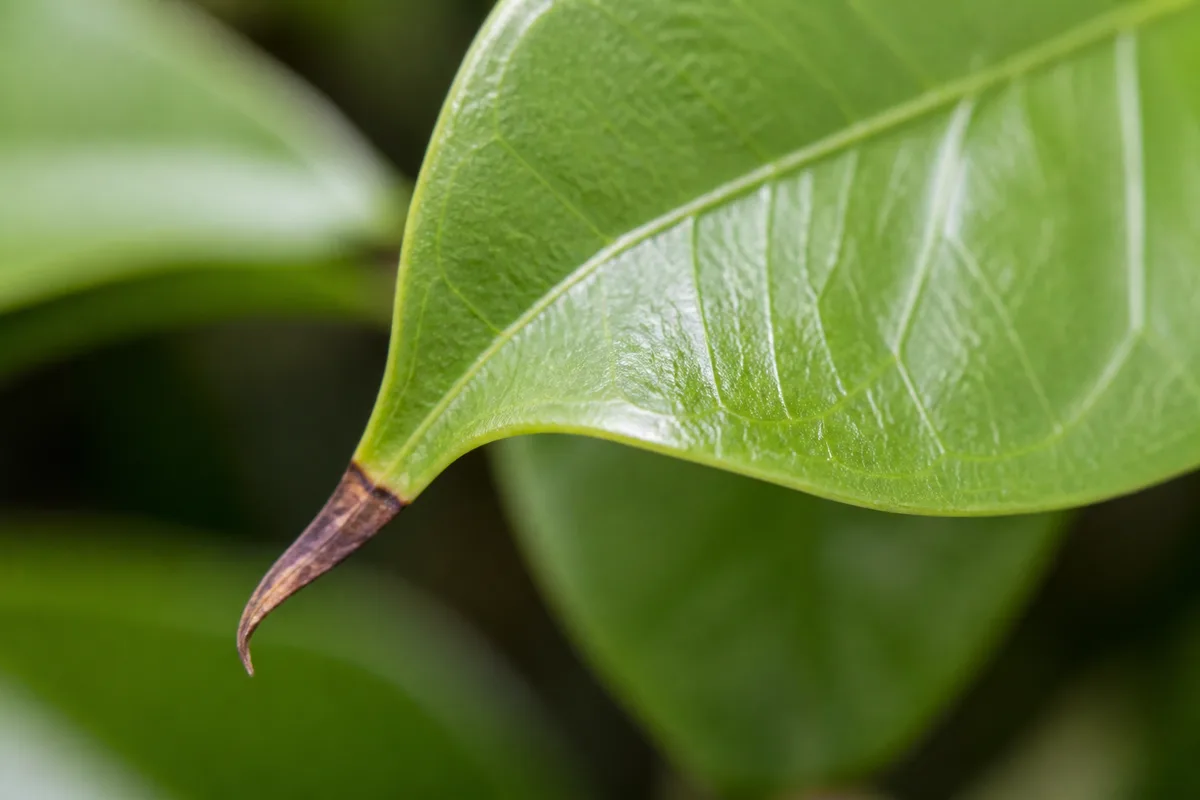
Brown Tips symptoms on Jasmine - compare with healthy tissue on the same plant.
Healthy jasmine leaves are pinnate-five to nine leaflets per leaf-and slightly downy. Tip burn can hit one leaflet while neighbors on the same stem stay clean, which helps distinguish it from whole-plant collapse.
Patterns that fit tip burn rather than infection:
- Crispy edges with no soft, wet, or spreading lesions
- Damage concentrated at tips and outer margins, not random holes
- Soil that has cycled very dry, or air that feels noticeably arid
- White or yellow crust on the soil surface after regular feeding
- Recent move to a south-facing window or outdoor Jasmine light guide without acclimation
Patterns that suggest a different problem:
- Fine webbing between stems with stippled, dusty-looking foliage (spider mites)
- Yellowing across whole leaves while soil stays wet for days (overwatering or root stress)
- Brown buds dropping before they open (humidity or temperature shock during flowering)
- Soft, dark stem tissue at the soil line (rot, not tip necrosis)
Why jasmine gets brown tips
Common jasmine evolved in subtropical climates with steady humidity and generous moisture during growth. Indoors, that profile rarely matches reality-especially after the plant’s cool winter rest when heated air can drop relative humidity sharply and spider mites become common on houseplants.
Dry soil and uneven watering
Jasmine wants regular watering while actively growing but not waterlogged roots. Your plant detail rhythm-water when the top 3 cm of soil dries-is a practical guide. When the mix stays dry too long, especially during budding or summer growth, feeder roots struggle and the farthest leaf tissue desiccates first.
The opposite also causes tip-like symptoms: overwatering damages roots, so leaves cannot hydrate even when soil feels damp. That impaired uptake often shows at margins before whole leaves yellow.
Low humidity after winter or near heat sources
Missouri Botanical Garden notes that indoor jasmine requires high humidity and plenty of light to flower well. Winter rooms with forced-air heating often run far below jasmine’s comfort zone. Vines placed within a few feet of radiators or vents lose water through leaves faster than roots can replace it-classic margin burn.
This pattern peaks when a chilled vine returns to a warm living room: the plant resumes transpiration in dry air before you increase watering or humidity.
Salt and fertilizer buildup
Container jasmine fed every few weeks during spring and summer can accumulate soluble salts in the pot. Excess fertilizer and minerals from hard tap water concentrate as water evaporates. High salt levels pull moisture out of root tips and leaf margins-a “chemical drought” that scorches edges even when you water on schedule.
White crust on the soil surface, salt rings on terracotta pots, or tip burn that worsened after heavy feeding all point here.
Sun scorch and abrupt light changes
Jasmine tolerates full sun to partial shade outdoors but indoor-trained leaves are thinner and less UV-tolerant. Moving a conservatory vine to harsh midday sun in one step, or shifting it to a blazing south window in late spring, can crisp margins within days. Sunburn often affects the most exposed leaf faces, not just tips-check whether damage aligns with the brightest side of the pot.
Root congestion and fast dry-down
A root-bound jasmine dries the pot in hours after watering. The cycle-bone dry, then heavy soak-stresses roots and produces repeated tip burn on new growth even when you think you are watering enough.
How to confirm the cause
Work through these checks in order. You are looking for one primary driver, not every possible issue at once.
- Soil moisture at depth - Dry 3 cm down with a light pot and slightly limp stems suggests drought. Wet deep mix with limp foliage suggests root stress from overwatering.
- Pot weight and dry-down speed - Does the container go from heavy to feather-light in one day? Root-bound or very fast-draining mix may need a soak-and-dry rhythm adjustment.
- Humidity and placement - Is the vine near a heating vent, fireplace, or air conditioner? Can you see salt crust on soil or pot rims?
- Recent care changes - Heavy fertilizer application, Jasmine repotting guide, outdoor move, or return from a cool winter perch in the last two to four weeks?
- Leaf pattern - Tips only, or whole margins? One side of the plant (sun side) or random scattered damage?
- Pest scan - Hold white paper under a leaflet and tap. Moving specks plus webbing mean mites, not humidity burn alone.
- Root peek (only if soil stays wet) - Tip the plant out gently. Firm white roots with dry surface soil point away from rot. Brown, mushy roots with sour smell need a different fix than humidity.
If soil is evenly moist, humidity is reasonable, and tips still browned right after a sunny move, suspect light stress. If tips worsened after months of feeding with white crust visible, suspect salts before underwatering.
The first fix to try
Stabilize watering and raise local humidity-do not trim or fertilize yet.
Water thoroughly until a little runs from the drainage holes, then let the top 3 cm dry before the next drink. At the same time, move the pot away from heating vents and add a pebble tray or small humidifier to bring ambient humidity toward the 40–60% range jasmine prefers.
This single step addresses the two most common causes-dry soil plus dry air-without stacking repotting, feeding, or pruning on a stressed vine. Wait five to seven days and watch newest leaves: if fresh growth emerges clean, you found the main trigger.
If white salt crust is obvious on the soil, make the first fix a flush instead: run clear water through the pot at roughly twice the pot’s volume, let it drain fully, and discard saucer water. Resume normal watering only after the surface dries slightly.
Step-by-step recovery
Once moisture and humidity are stable, work through secondary steps based on what your checks showed.
For drought and humidity stress
- Group jasmine with other leafy plants to create a slightly more humid microclimate.
- Run a cool-mist humidifier nearby rather than relying on occasional misting, which lifts humidity only briefly.
- During active growth and flowering, keep soil evenly moist but never soggy-reduce frequency only during the cool winter rest.
- Trim fully dead tip tissue with clean scissors, following the natural leaf curve and leaving a thin brown edge to avoid cutting into live green cells.
For salt or fertilizer burn
- Scrape off only the white surface crust-about 6 mm deep at most-before flushing.
- Leach the pot with clear water at two to three times the container volume; repeat if runoff still tastes faintly salty or looks cloudy.
- Hold fertilizer for four to six weeks while new leaves establish.
- When growth resumes, feed at label rate with balanced or high-potassium liquid only during active growth-not during winter rest.
For sun scorch
- Move the plant to bright indirect light or morning sun with afternoon shade.
- Acclimate to stronger outdoor positions over 7–10 days, adding an hour of direct sun every few days.
- Remove only fully crisp leaves that shade lower growth; keep partially green foliage to photosynthesize.
For root-bound dry cycles
- If roots circle densely and water runs straight through, plan a spring repot one size up with fresh, well-draining mix (50% potting soil, 30% compost, 20% perlite or coarse sand).
- Do not repot during heavy tip burn in winter unless roots are rotting-stability matters more than extra soil volume mid-stress.
If spider mites are present
- Shower leaf undersides with lukewarm water to knock mites down.
- Isolate the vine and repeat rinses every few days while raising humidity-mites thrive in hot, dry air.
- Treat confirmed infestations with insecticidal soap or horticultural oil per label directions; tip burn from mites usually comes with stippling, not clean margin necrosis alone.
Recovery timeline
Cosmetic tip tissue never re-greens-expect improvement only on new growth.
Within one to two weeks of stable moisture and humidity, the vine should stop producing freshly browned tips. New leaflets emerging clean are the best early sign.
Full replacement of damaged foliage on a twining jasmine may take several weeks to a few months, depending on growth rate and season. Plants pushing spring growth after winter rest often outgrow old blemishes fastest.
Worsening signs: browning spreads to whole leaves while soil stays wet, stems collapse, buds drop in clusters, or stippling and webbing increase despite humidity fixes. Those patterns mean reassess roots, watering volume, or pests-not more trimming.
Lookalike symptoms
- Spider mites - Fine webbing, stippled yellow dots, dusty leaf undersides; common on indoor jasmine in dry winter air.
- Overwatering / root stress - Yellowing lower leaves, soggy mix, limp stems despite wet soil; tips may brown from failed uptake, not drought.
- Cold damage - Brown or blackened leaves after exposure below frost tolerance; often whole leaf sections, not isolated crispy points.
- Bud drop - Flower buds fall before opening from humidity or temperature swings; foliage tips may stay green.
- Fungal leaf spots - Round brown patches with yellow halos, not uniform margin dryness.
Mistakes to avoid
Do not increase fertilizer to “green up” browned tips-salts often make margins worse. Avoid deep trimming into healthy tissue; cut only dead portions. Do not mist once a day as your only humidity plan on a heating-season jasmine.
Skip repotting and pruning the same week unless roots are clearly rotting. Do not move straight from dim indoor light to full outdoor sun in one afternoon. Avoid bottom watering exclusively in fertilized pots-salts concentrate in the root zone without periodic flushing.
Jasmine care cross-check
Brown tips are a checkpoint on the wider care rhythm, not an isolated blemish. Confirm:
- Light - Four to six hours of direct sun is realistic for bloom; too little light slows growth and complicates watering judgment.
- Winter rest - Cooler temperatures and reduced watering from roughly October through March match jasmine’s indoor cycle; returning to a warm, dry room without humidity adjustment invites tip burn.
- Flowering season - Regular moisture matters while buds form; dry spells then crisp both tips and buds.
- Drainage - Terracotta and open drainage holes help the top inch dry predictably.
How to prevent brown tips next time
Match watering to the pot’s dry-down, not a calendar. During growth, let only the top 3 cm dry; in winter rest, stretch intervals to every 10–14 days while keeping the plant cool and bright.
Maintain 40–60% humidity indoors-humidifier, pebble tray, or grouped plants-especially after winter chill. Flush salts every four to six months if you feed through spring and summer. Acclimate outdoor summer moves gradually.
Feed at label strength only during active growth; withhold fertilizer on a stressed or winter-resting vine. Repot every two years or when roots circle, before chronic dry-wet swings start.
When to worry
Tip burn alone is cosmetic and reversible through culture fixes. Escalate if:
- More than half of new leaves emerge browned despite stable humidity
- Whole leaves yellow and drop while soil remains wet for days
- Stems soften at the base or the pot smells sour
- Mite webbing covers growing tips during bud formation
Those signs point to root failure, severe salt toxicity, or pest pressure-not margin dryness you can trim away.
Conclusion
Brown tips on jasmine tell you the leaf margins dried faster than roots could hydrate them-usually from dry soil, dry winter air, salt buildup, or sudden sun. Check moisture 3 cm down and humidity near the vine first, stabilize both, then trim dead edges only after new growth stays clean. Jasmine rewards steady rhythm over quick fixes; once water and air match what this twining species expects, fragrant new foliage follows.
When to use this page vs other Jasmine guides
- Jasmine watering guide - Use for routine moisture checks before assuming brown tips is the main issue.
- Jasmine problems hub - Browse all 53 common issues on this species.
- Yellow Leaves on Jasmine - Different entry point when symptoms overlap with brown tips.