Yellow Leaves on Jasmine: Causes, Checks & Fixes
Quick answer
On jasmine, yellow leaves most often mean the root zone is too wet during winter rest, too dry in summer growth, or the vine was cold-shocked after a move. First step: push your finger 5 cm into the mix and note whether the pot feels heavy and wet or light and dry before you water or feed.
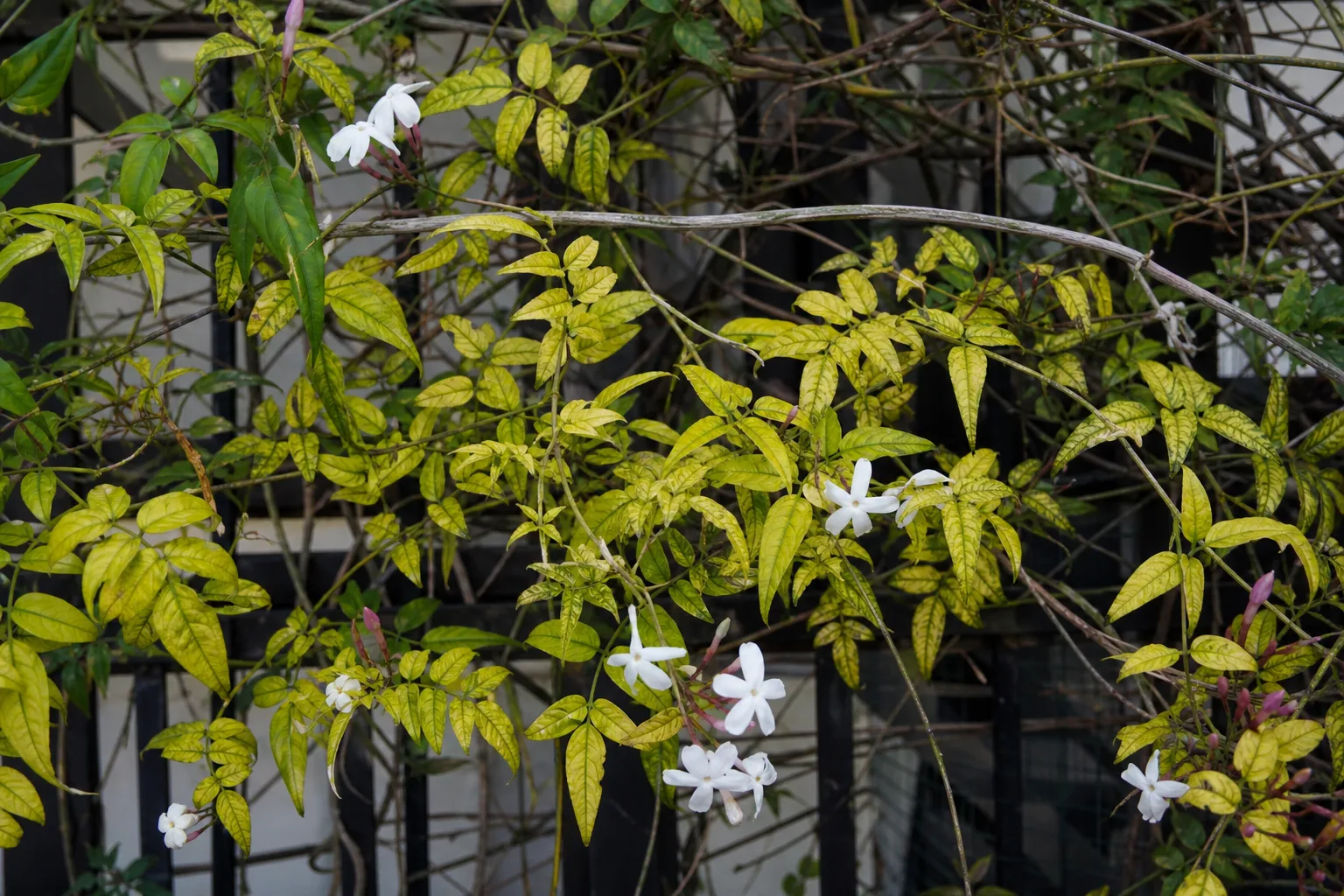
Yellow Leaves on Jasmine: Causes, Checks & Fixes
This guide covers yellow leaves on Jasmine. See also the general Yellow Leaves guide, watering, and light pages for this plant.
Yellow Leaves on Jasmine: Causes, Checks & Fixes
Quick answer
Yellow leaves on Jasminum officinale-common jasmine-almost always signal root-zone or environmental stress, not a single disease. This twining summer-flowering climber wants moist but well-drained soil in active growth and noticeably less water during its cool semi-rest. When those rhythms slip, leaves fade from green to yellow, often starting on older foliage near the base.
First step: check soil moisture 5 cm deep and lift the pot before you change anything. A heavy, wet container during winter rest points to overwatering. A light pot with wilting stems in summer points to drought. Yellowing that followed a cold porch night or a sudden move indoors points to temperature shock. Stippled yellow patches with fine webbing on leaf undersides point to spider mites in dry winter air.
Do not reach for fertilizer on day one. Stressed jasmine roots cannot use nutrients until moisture, temperature, and light are stable.
What yellow leaves look like on Jasmine
Healthy common jasmine carries glossy deep-green leaves on wiry twining stems. Yellowing shows up in distinct patterns depending on cause:
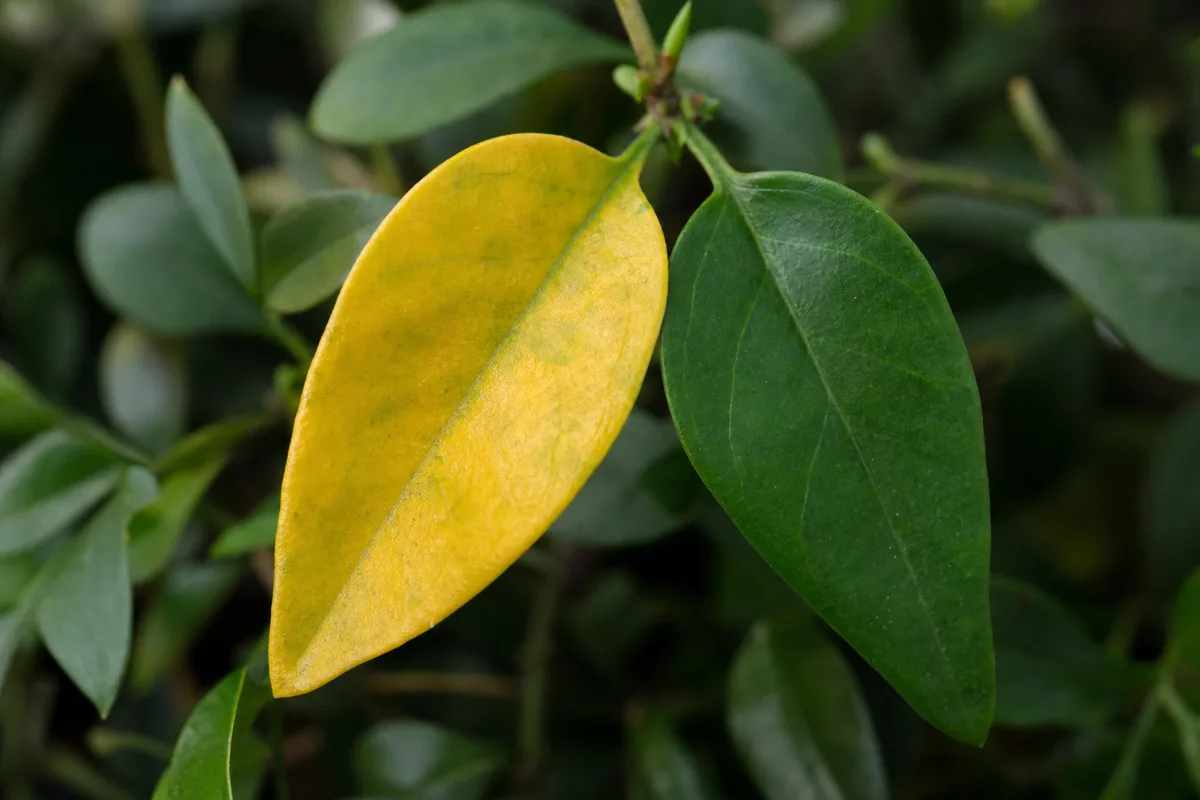
Yellow Leaves symptoms on Jasmine - compare with healthy tissue on the same plant.
Overwatering or root stress:
- Soft, pale yellow leaves, sometimes across multiple nodes at once
- Lower and inner leaves yellow first, but newer leaves can follow if roots stay waterlogged
- Soil stays wet for days after watering; pot feels heavy
- Sour or musty smell from the mix
- Stems may stay limp even when soil is wet
Underwatering during active growth:
- Crisp yellow on oldest lower leaves, often with brown edges
- Pot feels light; top 3 cm of mix is bone dry
- Stems wilt between waterings in summer heat
- Bud drop may accompany leaf yellowing when drought hits during flowering
Cold or draft shock:
- Yellowing appears quickly after a cold night, open window, or move from cool rest room to warm radiator heat
- Leaves may yellow without obvious wet or dry soil pattern
- Often affects outer leaves exposed to the chill first
Spider mites in dry indoor air:
- Stippled yellow or bronze patches, not uniform fading
- Fine webbing on leaf undersides and between twining stems
- Damage worsens in warm, dry winter rooms after the cool rest period
Natural aging:
- One or two fully yellow leaves at the very base of a mature vine
- Rest of plant firm, green, and growing normally
- No sour soil, webbing, or rapid spread
A few bottom leaves turning yellow slowly on an otherwise vigorous vine is normal turnover. Widespread yellowing on a container jasmine during winter almost always deserves a root-zone check first.
Why Jasmine gets yellow leaves
Jasmine is not a passive houseplant-it follows a seasonal rhythm. In summer it climbs fast, flowers, and pulls water steadily from a well-drained mix. In late autumn and winter it semi-rests, often in a cooler spot to set next season’s buds. During that rest, transpiration drops sharply. Water that felt correct in July stays too long in December, suffocating roots and yellowing leaves from the base up.
Overwatering is the most common indoor cause because growers keep a summer schedule through winter. Roots in saturated mix lose oxygen, stop absorbing water and nutrients, and decay. The vine then shows the paradox gardeners know well: yellow leaves and limp stems despite wet soil, because damaged roots cannot move water.
Underwatering yellows jasmine too, especially in terracotta pots on sunny porches during peak bloom. The vine drops older leaves to conserve moisture when fine roots dry out repeatedly. Jasmine tolerates brief dryness once established, but container vines in Jasmine light guide can exhaust a small root ball within a day or two in heat.
Temperature swings hit jasmine harder than many foliage houseplants. Common jasmine prefers warm summer growth but needs a cool period for bud formation. Moving the pot from a 10°C rest window to a 24°C living room-or leaving it on a frost-exposed porch-can yellow leaves within days as cell function stalls. Cold-damaged tissue does not recover; only new growth replaces it.
Low light compounds watering mistakes. A jasmine in a dim corner uses less water than one in full sun to partial shade. Soil that would dry correctly in bright light stays wet too long in shade, mimicking overwatering symptoms even when watering frequency never changed.
Spider mites thrive on jasmine in dry indoor winters, particularly after the cool rest period when humidity drops near heating vents. Mites pierce leaf cells, causing stippled yellowing that looks like a nutrient problem until you flip the leaf and find webbing.
Nutrient deficiency and chlorosis can yellow jasmine leaves, but they are less common as a first diagnosis on a potted vine with decent potting mix. Iron chlorosis shows yellow leaves with green veins, often linked to alkaline water or chronic wet roots blocking uptake. Treat water and root health before assuming a fertilizer fix.
How to confirm the cause
Work through these checks in order. Each step narrows the cause before you treat.
-
Moisture at depth - Push your finger 5 cm into the mix, or use a bamboo skewer that comes out dark and cool when wet. Compare with the top surface; a dry surface over wet depths confirms overwatering history.
-
Pot weight - Lift the container after watering once so you learn the heavy feel. A suddenly light pot with yellow crisp leaves confirms drought.
-
Smell and drainage - Sniff near the drainage hole. Sour odor suggests anaerobic, waterlogged mix. Confirm holes are open and saucers are emptied after watering.
-
Recent moves - Note whether yellowing started within 48 hours of a cold night, outdoor-to-indoor shift, or relocation near a heat vent. Timeline strongly implicates temperature stress.
-
Light level - Ask whether the vine still gets several hours of direct sun or strong window light. Leggy pale growth before yellowing suggests light stress slowing water use.
-
Leaf underside inspection - Check for stippling, bronze patches, and fine silk webbing with a hand lens. Tap a yellow leaf over white paper; moving specks confirm mites.
-
Pattern and speed - Slow yellowing on one or two bottom leaves with firm stems suggests aging. Rapid spread up the vine with soft base stems suggests root rot.
-
New growth status - Green tips while lower leaves yellow often mean aging or mild drought. Yellow tips with wet soil mean active root failure.
If soil is wet and sour and stems are soft, stop watering immediately-that confirmation is enough to begin recovery without waiting for more symptoms.
First fix for Jasmine
Stop guessing and match your next watering to what the pot actually needs-do not water on schedule until moisture at 5 cm depth tells you to.
If the mix is wet and heavy, hold all water until the top 3 cm dries and the pot weight drops noticeably. If the mix is dry and the vine is wilting, water deeply once until excess runs from drainage holes, then discard saucer water.
This single diagnostic pause prevents the two most harmful reflexes: adding water to an already waterlogged winter jasmine, or feeding a drought-stressed summer vine. Everything else-Jasmine repotting guide, mite sprays, moving to brighter light-comes after you know which side of dry versus wet you are on.
Do not fertilize yellow jasmine on day one. Do not repot on day one unless roots are clearly black and mushy and smell rotten. Do not prune heavily before stabilizing water and temperature; the vine needs leaves to recover once roots heal.
Step-by-step recovery
After the moisture check:
-
Overwatered jasmine - Leave the pot to dry until the top 3 cm is dry before the next drink. Move to brighter light if the vine sat in shade, which slows drying. If yellowing continues on wet mix after a week of drying, slide the root ball out gently; trim black mushy roots with clean shears, repot into fresh well-drained mix, and water once lightly.
-
Underwatered jasmine - Water thoroughly until runoff appears, then let excess drain. Repeat when the top 3 cm dries-not on a fixed calendar. In summer bloom, check daily on small pots in sun.
-
Cold-shocked jasmine - Move to stable temperatures between 15°C and 24°C, away from drafts and radiators. Hold water slightly until the plant shows new growth; cold roots take up less moisture.
-
Low-light jasmine - Shift to the brightest spot available with some direct morning or late sun. Better light makes watering predictable and supports new green shoots.
-
Spider mite outbreak - Rinse leaf undersides and stems with a strong morning water spray every one to two days. Increase ambient humidity modestly without leaving foliage wet overnight. Escalate to insecticidal soap only if stippling spreads after a week of rinsing.
-
Suspected chlorosis - After drainage and watering are stable for two weeks, if new leaves still show yellow with green veins, flush the pot with plain water and consider chelated iron per label on acid-loving container plants. Alkaline tap water over time can lock iron on long-held potted vines.
-
Remove fully yellow leaves - Snip leaves that are entirely yellow to reduce mold risk and let the vine redirect energy. Keep partially green leaves unless they are heavily mite-damaged.
Hold fertilizer until new growth emerges firm and green for at least two weeks. Jasmine in recovery needs stable roots more than a nutrient push.
Recovery timeline
Stabilizing moisture or temperature usually stops spread within one to two weeks. You should see firm stems and at least one new green tip within that window if roots remain mostly intact.
Fully yellow leaves drop rather than re-green. Expect visibly cleaner new foliage within two to four weeks after the cause is corrected. Severe root rot recovery can take a full growing season; the vine may skip flowers that year while rebuilding roots.
Spider mite damage fades as new leaves emerge un-stippled. Allow three to four weeks of consistent rinsing before judging mite control complete.
Cold-damaged yellow leaves drop within days to weeks; replacement growth appears only after temperatures stay stable.
Lookalike symptoms to rule out
Aphids and whiteflies cause sticky residue and distorted new shoots more often than uniform yellowing. Check tender tips for soft insects before blaming water.
Mealybugs look like white cotton tufts in leaf axils on indoor jasmine. They weaken growth but rarely yellow whole vines unless infestation is heavy.
Powdery mildew shows white powder on leaf surfaces, not chlorotic fade. It follows humid stagnant air, not wet roots.
Fertilizer burn browns leaf tips and margins after a heavy feed, sometimes with yellow bands. If you fertilized heavily within days of yellowing, flush the pot and pause feeding.
Bud drop without leaf yellowing often means inconsistent moisture during budding, not the same problem as foliage chlorosis. Jasmine can drop buds while leaves stay green.
Mistakes to avoid
Do not water on the same summer schedule through winter rest. That is the fastest route to yellow leaves on container jasmine.
Do not assume yellow leaves always mean feed deficiency. Unneeded fertilizer on wet, stressed roots worsens salt buildup and burn.
Do not move a cold-rest jasmine straight into a hot room without acclimating. Gradual temperature shifts prevent shock yellowing.
Do not ignore pot weight. Finger checks at the surface miss waterlogged depths in large climbers.
Do not let saucers hold standing water. Jasmine wants drainage; sour stagnant bottoms rot roots on twining vines as quickly as on any houseplant.
Do not treat every yellow leaf as spider mites, but do not skip underside checks in dry winter rooms-mites are a common jasmine lookalike for chlorosis.
Jasmine care cross-check
Yellow leaves often mean routine drift, not a new disease. Reset against how Jasmine overview actually grows:
- Watering - Allow the top 3 cm to dry between drinks in active growth. Reduce frequency during cool winter semi-rest when the vine is not pushing new length.
- Light - Full sun to partial shade with four to six hours of direct sun supports healthy leaf color and predictable drying.
- Temperature - Comfort zone roughly 15°C to 32°C for growth; cool rest near 7°C to 13°C for bud set, but avoid frost on container plants.
- Soil - Well-drained standard mix near pH 6.0 to 7.5. Dense, slow-drying compost-heavy pots yellow jasmine faster in winter.
- Seasonal rhythm - Resume normal watering in late winter as new growth starts, not when the calendar says spring on paper.
If multiple care factors changed at once-repot plus move plus feeding-rollback to one stable placement and a simple moisture-based watering rule before stacking more fixes.
How to prevent yellow leaves next time
Learn your pot’s dry weight in each season. Jasmine in the same container can need water every two to three days in summer sun and only once every ten to fourteen days during cool rest.
Use pots with open drainage holes. Terracotta dries faster than glazed ceramic, which helps prevent winter waterlogging on vigorous climbers.
Place the vine where light stays strong through winter. Supplement with a grow light if the only window is north-facing and soil never dries.
When moving between outdoor summer and indoor winter, transition through intermediate temperatures over several days rather than one sharp shift.
Scout undersides weekly in heated dry rooms from late winter through early spring. Early mite rinsing prevents stippled yellow outbreaks.
Refresh compacted mix every two years or when roots circle the pot. Old, dense substrate holds water longer and yellows leaves even when watering frequency looks unchanged.
When to worry
Treat as urgent when yellowing climbs the vine rapidly over seven to ten days, soil stays wet without recent watering, stems soften at the soil line, or the mix smells rotten. Those signs suggest advancing root rot-continued watering will lose the plant.
Also act quickly when more than a quarter of leaves stipple and web within a week during mite outbreaks on a small container vine, or when cold exposure followed by total leaf drop leaves bare stems with no green buds.
Yellowing is not urgent when one or two lower leaves yellow slowly on an otherwise firm, blooming vine with appropriate seasonal watering. Remove the spent leaves and monitor.
If corrective watering and light produce no new green tips after four weeks, roots may be too far gone. A hard cutback and repot into fresh mix can sometimes salvage mature jasmine, but severely mushy root balls may not recover-starting a healthy cutting is a realistic backup.
Conclusion
Yellow leaves on jasmine reward methodical checking more than quick fixes. Moisture at depth, pot weight, recent temperature moves, and mite signs on undersides separate overwatering in winter rest from summer drought, cold shock, and dry-air pests. Pause scheduled watering, correct the specific cause, and judge success by firm stems and new green twining growth-not by old yellow foliage turning green again.
When to use this page vs other Jasmine guides
- Jasmine watering guide - Use for routine moisture checks before assuming yellow leaves is the main issue.
- Jasmine problems hub - Browse all 53 common issues on this species.
- Not Enough Light on Jasmine - Different entry point when symptoms overlap with yellow leaves.