Not Enough Light on Jasmine: Causes, Checks & Fixes
Quick answer
Common jasmine needs sun or partial shade-not a dim corner. Long bare stems, pale small leaves, soil that stays wet, and no summer buds together point to insufficient light. First step: move the pot to the brightest south or west window and count direct sun hours at the leaves.
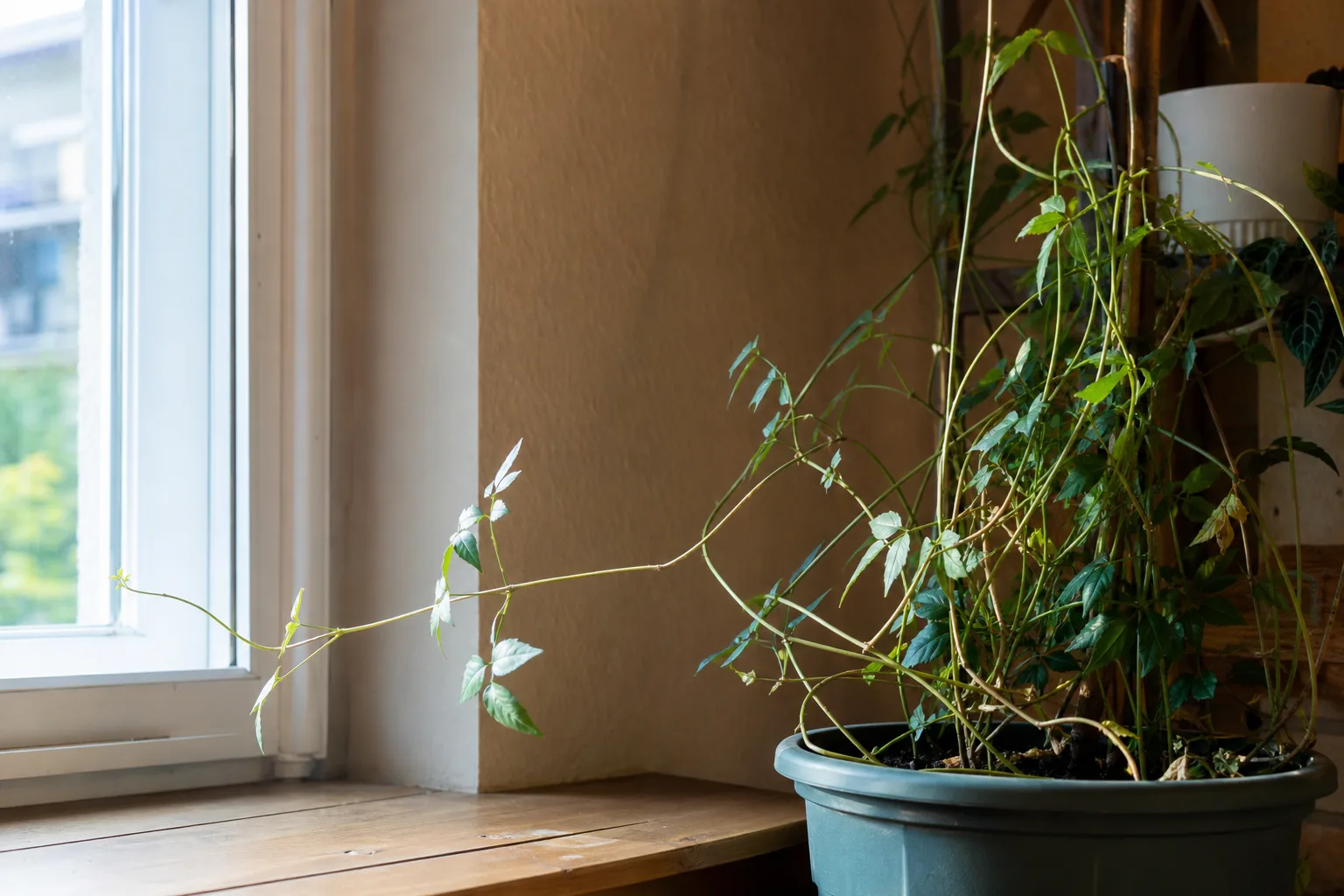
Not Enough Light on Jasmine: Causes, Checks & Fixes
This guide covers not enough light on Jasmine. See also the general Not Enough Light guide, watering, and light pages for this plant.
Not Enough Light on Jasmine: Causes, Checks & Fixes
Quick answer
Common jasmine (Jasminum officinale) is a vigorous summer-flowering climber that tolerates mediocre light far better than it blooms in it. Leaves may stay green in a dim room while the vine quietly stretches toward windows, grows slowly, and skips fragrant white clusters the following summer. First step: move the pot to your brightest south or west window and count how many hours of direct sun hit the leaves-not how bright the room feels to you.
If stems are long and bare between leaves, foliage looks washed out, soil stays wet too long, and buds never form after a proper cool winter, insufficient light is the most likely fixable cause. Acclimate gradually over 7–10 days so tender shoots do not scorch when you increase intensity.
What not enough light looks like on jasmine
Low light on this twining vine shows up as a pattern, not one yellow leaf.
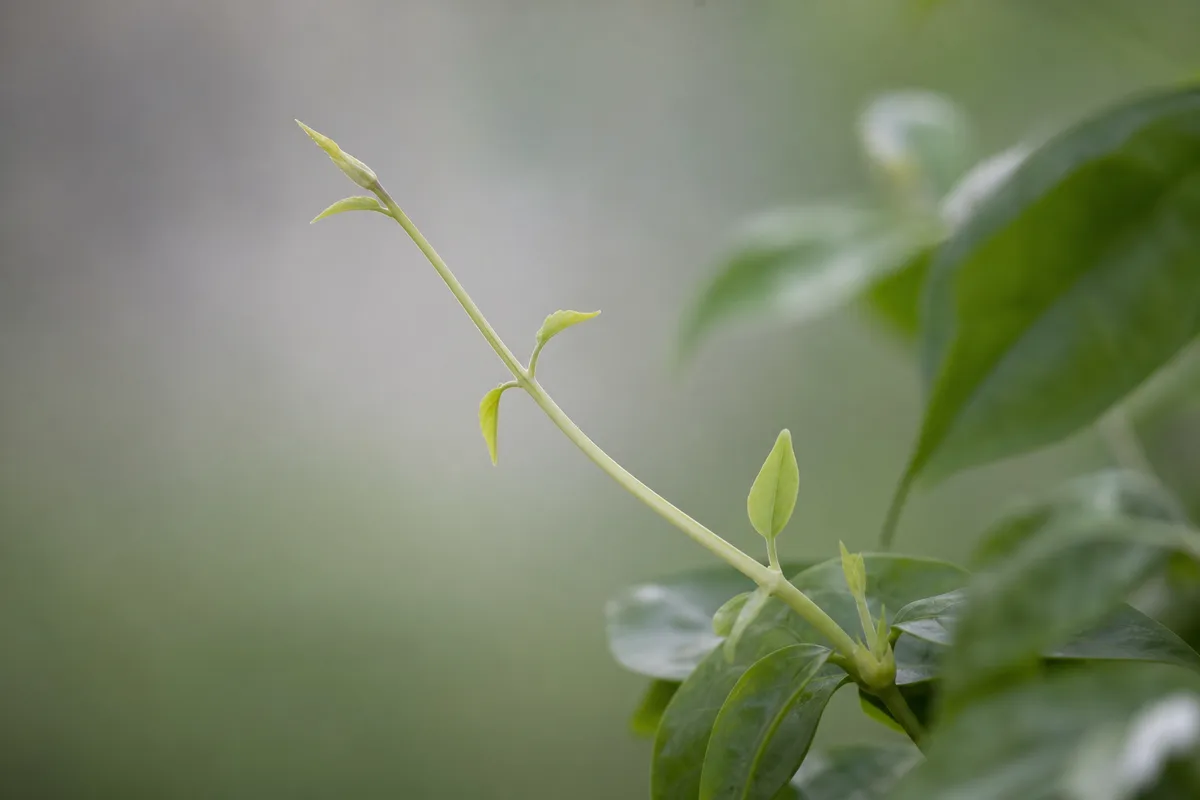
Not Enough Light symptoms on Jasmine - compare with healthy tissue on the same plant.
Typical signs on J. officinale:
- Long internodes-several inches of bare stem between pairs of small, pale leaflets
- The whole pot leaning or stems arching hard toward the brightest window
- Dark green color fading to yellow-green, especially on lower and inner shoots
- Slow or stalled extension during spring and summer despite regular watering
- Few or no flower buds by early summer, even after an adequate cool rest
- Soil that remains damp near the surface for many days because the plant is photosynthesizing slowly
- Thin, weak new tips that snap easily compared with sun-grown shoots
Jasmine is often sold as a fragrant patio plant, then kept year-round in a warm living room. That placement can keep leaves alive while the plant fails the bloom test. Flowers are the honest report card for light on Jasmine overview-foliage alone can mislead you into thinking care is fine.
Do not confuse common jasmine with winter jasmine (Jasminum nudiflorum), which flowers on bare yellow stems in cold months and tolerates more shade, or with star jasmine (Trachelospermum jasminoides), a different genus with its own light needs. Verify the label says Jasminum officinale before applying this guide.
Why jasmine struggles in low light
As a climbing member of the olive family, common jasmine evolved for warm sheltered sites in sun or partial shade. NC State Extension lists full sun as six or more hours of direct light daily, with partial shade as two to six hours. Indoor spots more than a few feet from glass, north-facing rooms without supplemental lighting, or windows blocked by sheer curtains often fall below what this vine needs for compact growth and bud formation.
Light drives three jasmine problems at once:
- Etiolation - In weak light, stems elongate rapidly toward the source while leaves stay small. The vine looks taller but weaker, with less energy stored for flowering wood.
- Reduced photosynthesis - Pale foliage and slow growth mean the plant builds fewer carbohydrates. Summer-flowering jasmine sets buds on mature wood after winter rest; dim summers produce thin stems that flower poorly even when chill was correct.
- Slower water use - A shaded pot dries slowly. Growers often keep watering on the old schedule, which keeps roots wet longer and invites root stress-a secondary problem that looks like overwatering but starts with placement.
Container culture amplifies the issue. Missouri Botanical Garden notes that indoor jasmine are vigorous growers that require plenty of light to flower, plus support and seasonal rest. A large vine on a small trellis in a corner can shade its own inner stems, creating a bright tip and a dark core even when the window is decent.
How to confirm insufficient light
Work through these checks in order before Jasmine repotting guide, fertilizing, or spraying for pests:
- Sun-hour test - On a clear growing-season day, note when direct sun first hits the leaves and when it leaves. Fewer than four hours of direct sun on the pot usually explains stretchy, pale growth on common jasmine. Dappled room brightness without a sunbeam on foliage does not count.
- Distance from glass - Indoor light intensity drops sharply with distance from the window. If the pot sits more than 1–1.5 m (3–5 ft) from the pane, move it closer temporarily and watch new growth for two weeks.
- Soil dry-down speed - Stick a finger into the top 3 cm. In adequate summer light, a healthy jasmine in a well-draining mix often dries on a predictable rhythm. Soil that stays cool and damp for a week after a moderate watering suggests the plant is not transpiring enough-common in shade.
- Pattern on the vine - One-sided lean toward a single window confirms directional starvation. Inner trellis stems paler than outer tips confirm self-shading.
- Bloom history - If the vine had a proper 7–13°C cool period for 8–10 weeks but still produced no buds after a dim summer, light during the growing season is a prime suspect. If winter was warm, also read the no-flowers guide-both can be true, but light is easier to fix first.
- Pest cross-check - Spider mites can yellow leaves in dry winter rooms. Look for fine webbing and stippling on undersides. Mite damage is patchy; uniform pale stretch across the whole vine points to light.
If sun hours are adequate and soil dries normally, look elsewhere-root rot, nutrient lockout, or missing winter chill may be the real limiter.
First fix for jasmine
Move the pot to the brightest available south or west window so direct sun reaches the leaves for at least four to six hours during the growing season.
Do this in stages if the plant has lived in deep shade for months:
- Days 1–3: Shift to bright indirect light at the window edge-no direct midday beam yet.
- Days 4–7: Pull the pot forward until morning or late-afternoon sun touches foliage for one to two hours.
- Days 8–10: Advance to full target placement with four to six hours of direct sun, or the sunniest outdoor spot when nights stay above 13°C (55°F).
While acclimating, reduce watering frequency to match slower uptake in the first few days, then recheck once new growth shows the mix drying faster. Do not fertilize during the move-solve light before pushing soft etiolated shoots with nitrogen.
If the only bright space is outdoors in summer, RHS guidance recommends a warm sheltered sunny site for summer jasmines. Bring the container back before frost and return it to a cool bright winter rest, not a dark hallway.
Step-by-step recovery after light improves
Once the vine is in stronger light and acclimated:
- Rotate the pot weekly so both sides receive sun and the lean corrects over time.
- Train stems on a trellis or wires spaced evenly from the wall. Spreading the canopy lets light into the center and reduces bare lower stems.
- Prune after you see firmer new growth-not on day one. Cut long naked leaders back to a strong side shoot or bud facing outward. Summer jasmine is pruned just after flowering; if you are mid-season and the plant has not bloomed, light pruning to redirect energy is acceptable, but avoid stripping more than one-third of live wood at once.
- Resume watering when the top 3 cm dries-the rhythm will likely shorten in brighter light. Terracotta pots help you read dry-down by weight.
- Add supplemental light if windows are insufficient - A full-spectrum LED 30–45 cm (12–18 in) above the canopy for 12–14 hours daily during dark months can support foliage health. Bud set still depends on winter chill and summer sun when possible.
Skip repotting until the vine is clearly pushing new shoots in the brighter spot. Root disturbance plus light stress stacks two problems at once.
Recovery timeline
Expect visible change on new growth, not old leaves.
- 2–3 weeks: New tips should look darker, with shorter gaps between leaf pairs if light is truly adequate.
- 4–6 weeks: Side branches should fill in along pruned stems; soil dry-down should match the brighter location.
- Same summer or next: Fragrant blooms appear only if the vine also received proper cool rest and enough sun while buds were forming on mature wood-light alone cannot rescue a warm winter, but fixing shade is prerequisite for the bloom cycle.
Stretched pale sections never thicken back to sun-grown texture. They can stay as structural stems or be removed once replacement shoots are established.
Lookalike symptoms and what to rule out
| What you see | Could also be | How to tell them apart |
|---|---|---|
| Pale yellow-green leaves | Overwatering in shade | Wet sour soil, soft stems at base; often both low light and excess water |
| No flowers | Missing winter chill | Leaves compact and green in a bright window; winter temps never dropped to 7–13°C |
| Yellow leaves with speckles | Spider mites | Fine webbing, stippling on undersides; often after dry winter heating |
| Brown crispy leaf edges | Sun scorch after a sudden move | Damage on sun-facing leaves right after jumping from deep shade to midday sun |
| Stunted growth | Root-bound pot | Roots circling drainage holes; soil dries in hours despite low vigor |
Low light is often the root cause behind “mystery” yellow leaves and soggy soil on indoor jasmine. Fix placement first, then re-evaluate.
Mistakes to avoid
- Judging light by room brightness - A well-lit room for humans can still be low light at the leaf surface several feet from glass.
- Moving straight into harsh midday sun - Sudden exposure scorches etiolated tissue. Gradual acclimation prevents swapping one stress for another.
- Keeping the same watering calendar - Shaded pots need less water; sunnier pots need more. Recheck soil moisture after every placement change.
- Fertilizing for blooms in a dark corner - Excess nitrogen pushes soft leafy growth without flowers and can worsen stretch.
- Assuming a trellis equals enough light - Training helps, but cannot replace sun hours on the foliage.
- Confusing survival with success - Jasmine can hold leaves in mediocre conditions while failing the fragrance test for seasons.
Jasmine care cross-check
Pair brighter light with the rest of this plant’s rhythm:
- Winter: Cool bright rest at 7–13°C for 8–10 weeks to set buds-not a warm dark bedroom.
- Summer containers: Regular watering during growth once the mix dries at the surface; good drainage in standard potting mix.
- Support: Twining stems need a trellis; unmanaged vines tangle and shade themselves.
- Pets: True jasmine is listed non-toxic to cats and dogs-still use secure placement if pets chew vines or dig in pots.
How to prevent low light next time
- Place new jasmine in the sunniest safe spot from day one; quarantine near the window, not a hallway.
- Move containers outdoors for summer when night temperatures stay above 13°C, then return before frost.
- Clean windows and open blinds during the growing season; sheer panels cut usable intensity more than most owners expect.
- Rotate pots weekly and prune to keep the canopy open so inner stems do not starve.
- Plan grow lights before winter if the only window is north-facing or obstructed-foliage health in a cool rest still needs brightness even when growth slows.
When to worry
Low light alone rarely kills an established jasmine quickly, but combined with wet soil it can trigger root decline over months. Escalate your response if:
- Stems go soft at the base while soil stays wet in a dark spot
- Leaves yellow and drop in large numbers after a recent move to an even dimmer room
- New growth remains pale after four to six weeks in what should be adequate sun-inspect roots and confirm species identity
If the vine is otherwise firm, has good roots, and only lacks blooms after a dim year, you have time to correct placement before the next growing season. Fragrance is worth planning for; survival is usually not the emergency-light placement is.
Conclusion
Common jasmine tells you about light through stem spacing, leaf color, soil dry-down, and blooms-not through a single diagnostic leaf. Move the pot to real sun hours, acclimate carefully, adjust water to match faster growth, and train the vine so light reaches the whole framework. Old stretch will not reverse, but new wood can carry the scent you bought the plant for-provided winter chill and drainage stay on track too.
When to use this page vs other Jasmine guides
- Jasmine watering guide - Use for routine moisture checks before assuming not enough light is the main issue.
- Jasmine problems hub - Browse all 53 common issues on this species.
- Yellow Leaves on Jasmine - Different entry point when symptoms overlap with not enough light.