Fertilizer Burn on Jasmine: Causes, Checks & Fixes
Quick answer
Fertilizer burn on jasmine is salt injury-excess nutrients dehydrate leaf margins after too-strong doses or feeding dry roots. First step: flush the container with plain water until it drains freely, then stop all fertilizer for four to six weeks.
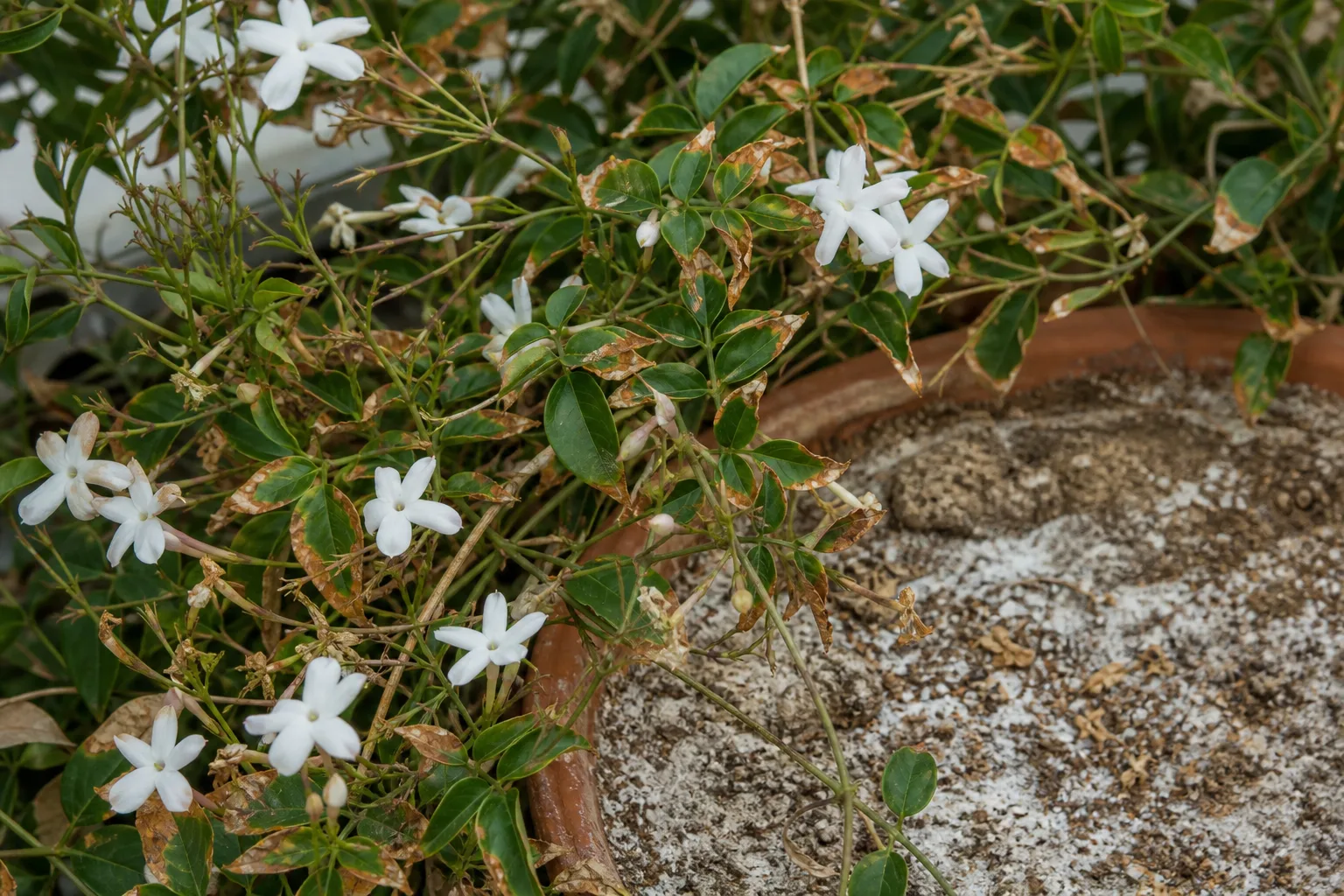
Fertilizer Burn on Jasmine: Causes, Checks & Fixes
This guide covers fertilizer burn on Jasmine. See also the general Fertilizer Burn guide, watering, and light pages for this plant.
Fertilizer Burn on Jasmine: Causes, Checks & Fixes
Quick answer
Fertilizer burn on jasmine (Jasminum species such as common jasmine, J. officinale, or pink jasmine, J. polyanthum) is salt injury, not a disease. Soluble fertilizer salts build up in container mix faster than in garden soil. When concentrations spike, they pull water out of leaf tissue-especially at tips and margins where transpiration is highest-and roots lose their ability to take up moisture evenly.
First step: flush the pot with plain room-temperature water until at least twice the pot’s volume runs freely from the drainage holes, then stop all fertilizer immediately. You need to leach excess salts before trimming leaves, switching formulas, or Jasmine repotting guide. Adding more feed to “balance” the damage makes burn worse.
What fertilizer burn looks like on jasmine
On a twining jasmine vine, burn usually appears across many leaves at once, not on one sun-exposed side. Typical signs include:
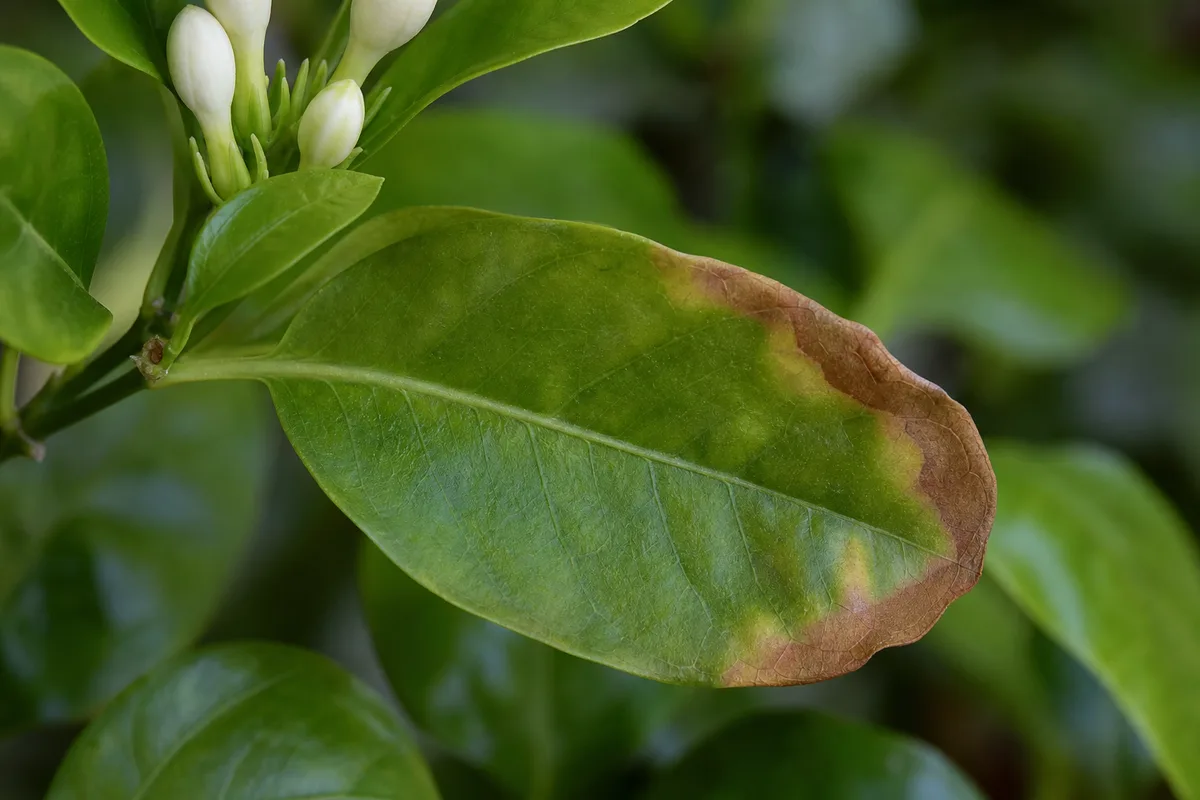
Fertilizer Burn symptoms on Jasmine - compare with healthy tissue on the same plant.
- Brown, dry, or crispy tips and margins on otherwise green leaves
- Uniform edge necrosis on both older and newer foliage after a recent feed
- White or yellowish crust on the soil surface, pot rim, or drainage holes
- Sudden leaf yellowing between burned margins, sometimes with leaf drop
- Wilting shortly after fertilizing, even when the mix feels moist
- Stalled bud development or bud drop during what should be the flowering window
Jasmine leaves are thin and transpire steadily in bright indoor light. That makes the vine sensitive to margin burn once salts accumulate-damage often shows at leaf edges before the whole blade yellows.
Timing is a strong clue. Symptoms that appear within three to seven days of liquid feeding, or up to two weeks after slow-release granules, fit salt injury better than random cultural stress. If you cannot remember the last feed but see heavy crust on dry mix, assume excess salts until a flush proves otherwise.
Why jasmine gets fertilizer burn
Jasmine is a moderate feeder during active growth, not a heavy feeder like roses or tomatoes at full outdoor rates. Container vines have nowhere for salts to go except the root zone. Every watering leaches some nutrients, but repeated feeding without periodic flushing leaves residues behind-especially in small pots on sunny windowsills where evaporation concentrates salts at the surface.
Several jasmine-specific habits make burn more likely:
Feeding dry roots. Applying liquid fertilizer when the top inch of mix is bone-dry draws moisture toward concentrated salts at the root hairs. Fine jasmine roots scorch quickly. Always water lightly first, then feed on the next scheduled day-not both in one rushed session.
Full label strength in small pots. Half-strength liquid every three to four weeks is the safe default for container jasmine during spring and summer. Full outdoor label rates on a 15–20 cm pot stack salts within a few applications.
Winter feeding when the vine rests. Houseplant jasmines often slow sharply from late fall through winter. Indoor jasmines need only very light watering in winter and should not receive summer-rate fertilizer while metabolism is low. Unused nutrients sit in mix until spring growth resumes-then burn hits new leaves hard.
High-nitrogen food year-round. Excess nitrogen pushes lush stems and dark green leaves at the expense of flowers. That pattern is not always acute tip burn, but chronic overfeeding still raises salt levels and weakens the vine. Bloom-support formulas with higher phosphorus should replace balanced feed once buds form-not more nitrogen.
Stacking products. Slow-release granules sprinkled on the surface plus weekly liquid feed, or a corrective “extra dose” after a missed month, compounds salts faster than either product alone.
Hard irrigation water. Calcium and other minerals in tap water add to fertilizer salts over months. Vines in the same pot for two or more years without repotting or flushing are especially vulnerable.
How to confirm the cause
Work through these checks before repotting or pruning heavily:
- Feeding history - When did you last fertilize? What product and at what strength? Did granules sit on dry soil?
- Salt crust - White or chalky deposits on the mix surface or inner pot rim strongly support burn. Drought stress alone rarely leaves crust.
- Soil moisture - Moist mix with tip burn after feeding fits salts. Very dry mix throughout with flexible stems and no crust fits underwatering better.
- Pattern on the plant - Burn tends to be even across the vine. Sun scorch hits the sun-facing side first. Pest damage is patchy with speckling or webbing.
- Root check (if severe) - Unpot only if leaves keep dropping after flushing. Healthy roots are firm and pale; salt-damaged roots may look brown at tips but stay structured-not mushy like rot.
- Smell - Sour, swampy odor means rot, not fertilizer burn. Chemical or sharp smell from crusty mix supports salt buildup.
If the pot has not been fed in months, yellowing with wet soil and soft stems points to overwatering or root rot, not burn. If tips browned on one side only after a sunny move, consider sun scorch first.
First fix for jasmine
Flush the container with plain water-no fertilizer mixed in.
Move the pot to a sink, tub, or outdoor spot where drainage will not damage floors. Water slowly until water runs freely from the bottom. Wait ten minutes, then water again. Repeat until you have passed roughly twice the pot’s volume through the mix. Let the pot drain completely and empty the saucer.
This single leaching step is the most important action. Washington State University Extension notes that heavy watering to wash salts away works for quick-release and liquid fertilizers in containers-exactly what most indoor jasmine growers use.
Do not foliar-feed burned leaves. Do not repot on day one unless flushing fails and roots smell sour. Do not trim every browned leaf immediately-wait until you see whether new growth emerges clean after the flush.
Step-by-step recovery
After the initial flush, follow this order:
- Scrape visible crust - If white granules or crystal deposits sit on the surface, remove them gently with a spoon before the second flush. Do not mix them deeper into the root zone.
- Repeat flush in seven to ten days - For moderate burn, one thorough leach may suffice. Severe cases with widespread yellowing benefit from two or three flush cycles across a week.
- Pause fertilizer four to six weeks - Hold all feeds until new leaves open without tip necrosis. A stressed vine uses stored energy to push recovery shoots; more salts interrupt that process.
- Trim cosmetic damage - Once stable new growth appears, snip fully brown leaves or trim dead margins on partially green blades. Damaged tissue never re-greens.
- Resume at half strength - When the vine pushes healthy new shoots in spring or summer, restart with half-strength balanced liquid on moist soil. Switch to a bloom-support formula with higher phosphorus only after buds swell-not before.
- Repot if salts persist - If crust returns quickly after two flushes, or the mix is more than two years old and compacted, repot into fresh well-drained mix. Jasmine prefers fertile, well-drained soil in sun or partial shade-do not jump to an oversized pot, which stays wet longer.
Recovery timeline
First week: Wilting from acute salt shock may stabilize after flushing. Do not interpret slight improvement as permission to feed again.
Two to four weeks: New leaves should emerge with clean margins if root damage was moderate. Old burned tips remain brown permanently.
Four to eight weeks: Flowering may resume on species that bloom on new wood, though a severely burned vine may skip one flush while rebuilding roots. Pink jasmine (J. polyanthum) that burned during its winter flower show may need until spring before the next bud cycle.
Worsening signs: Continued leaf drop after two flushes, stems softening at the base, or sour-smelling mix suggest root rot layered on salt stress-unpot and inspect rather than flush again blindly.
Lookalike symptoms
- Underwatering - Crispy tips on outer leaves with very light pot weight and dry mix throughout. No white crust. Fix with a thorough soak, not a flush-and-pause routine.
- Sun scorch - Browning on the sunniest side only after a sudden move to harsh midday glass. Shaded leaves stay green.
- Low humidity / spider mites - Fine stippling, webbing on undersides, and dusty leaf surfaces-not uniform margin necrosis after feeding.
- Iron deficiency - Interveinal yellowing on new leaves with green veins, often in alkaline water areas. Margins may stay green while the center pales-the opposite pattern of salt burn.
- Root rot - Yellowing and wilt with wet, sour soil and mushy roots. No fertilizer timing link.
What not to do
Do not feed again to “correct” yellow leaves after burn-that deepens salt injury. Avoid full-strength bloom boosters on a recovering container vine. Do not apply fertilizer to dry soil or granules on wet foliage, which causes localized scorch spots.
Skip Epsom salt or random supplements without a clear deficiency pattern-magnesium issues show interveinal chlorosis, not widespread tip necrosis after feeding.
Do not assume all browning is burn when soil stays soggy for days-fix drainage and watering before leaching. When handling crusty mix, wash hands after work; true Jasminum species are generally non-toxic to cats and dogs, but verify the genus if your plant is sold as “jasmine” but is actually star jasmine (Trachelospermum) or another lookalike.
How to prevent fertilizer burn next time
Match feeding to active growth only. Container jasmine benefits from a high-potassium liquid feed during the growing season, applied at half label strength every three to four weeks from spring through late summer. Pause when growth slows in fall and through winter rest.
Water before you feed. Moist soil buffers roots against salt shock. Log feed dates to avoid double-dosing after a busy week.
Flush periodically. In hard-water homes, run plain water through the pot until it drains freely every two to three months during the active season-this leaches accumulated minerals along with fertilizer salts.
Repot on schedule. Mix older than two years loses structure and holds salts. Repot in early spring when roots circle the pot, using well-drained standard mix at pH 6.0–7.5.
Choose the right ratio. Start spring with balanced half-strength feed, then switch to bloom-support with higher phosphorus as buds form. Avoid high-nitrogen houseplant food that produces leafy vines with few flowers-and steadily raises salt load.
When to worry
Escalate if the vine wilts and drops leaves within 48 hours of a heavy feed on dry soil-flush immediately and repeat within days. Repot if two flushes fail to stop decline, crust returns within a week, or roots at inspection are mostly brown and mushy (rot, not simple burn).
Cosmetic tip browning on a few older leaves after one mild overfeed can wait for a single flush and a feeding pause-no emergency repot required.
Conclusion
Fertilizer burn on jasmine is a container salt problem, not mysterious leaf disease. Confirm it with feeding timing, margin necrosis on many leaves, and white crust on the mix. Flush with plain water first, pause feed for four to six weeks, then resume lightly on moist soil during active growth. The vine forgives a missed month of fertilizer far more willingly than it forgives an enthusiastic corrective dose on dry roots.
When to use this page vs other Jasmine guides
- Jasmine watering guide - Use for routine moisture checks before assuming fertilizer burn is the main issue.
- Jasmine problems hub - Browse all 53 common issues on this species.
- Brown Tips on Jasmine - Different entry point when symptoms overlap with fertilizer burn.