Deformed New Growth on Jasmine: Causes, Checks & Fixes
Quick answer
Deformed new shoots on jasmine usually mean sap-sucking pests on expanding tips, herbicide drift on outdoor vines, or viral infection-not normal twining growth. First step: inspect the newest leaflets and bud clusters with a hand lens before pruning anything off.
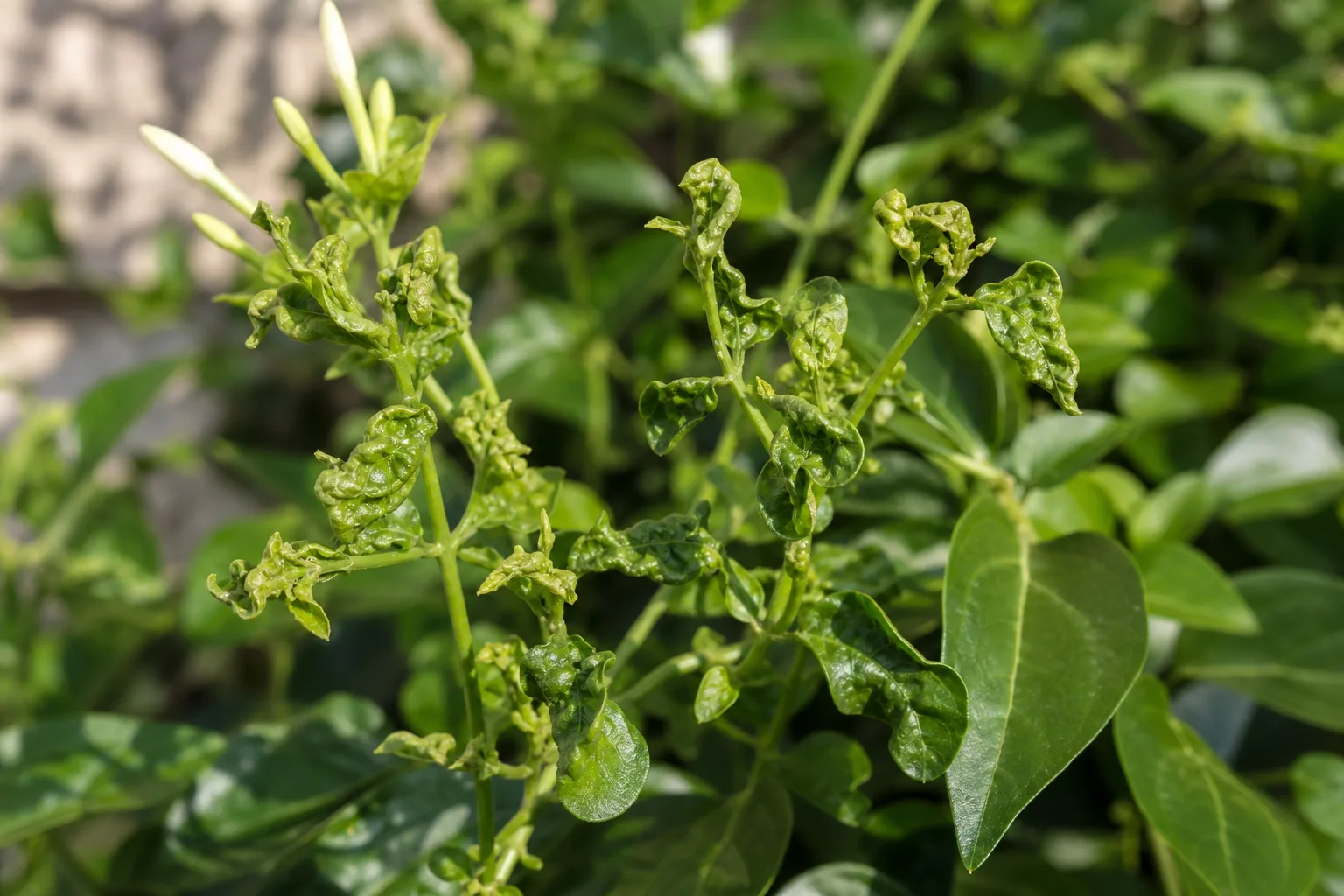
Deformed New Growth on Jasmine: Causes, Checks & Fixes
This guide covers deformed new growth on Jasmine. See also the general Deformed New Growth guide, watering, and light pages for this plant.
Deformed New Growth on Jasmine: Causes, Checks & Fixes
Quick answer
Deformed new growth on common jasmine (Jasminum officinale) shows up as twisted, narrow, or puckered shoot tips and expanding leaflets at the end of twining stems-while older foliage lower on the vine often looks normal. The usual causes are aphids on spring bud clusters, spider mites after the cool winter rest, herbicide drift on outdoor trellises, or viral infection that keeps warping successive flushes.
First step: inspect the newest shoots and bud clusters with a hand lens before you prune or spray. Look for aphid colonies, mite stippling and webbing, sticky honeydew, or mottled color on multiple new leaves. This page covers shoot-tip deformation on expanding growth only-not every distorted leaf on the vine. For broader leaf cupping or silver bud scarring, see the distorted leaves and curling leaves guides.
What deformed new growth looks like on jasmine
Jasmine carries pinnate leaves-typically five to nine thin leaflets per leaf-on twining stems that reach toward supports. Deformation almost always appears first on the youngest expanding tissue at vine tips, because that is where pests feed and where herbicides hit actively dividing cells.
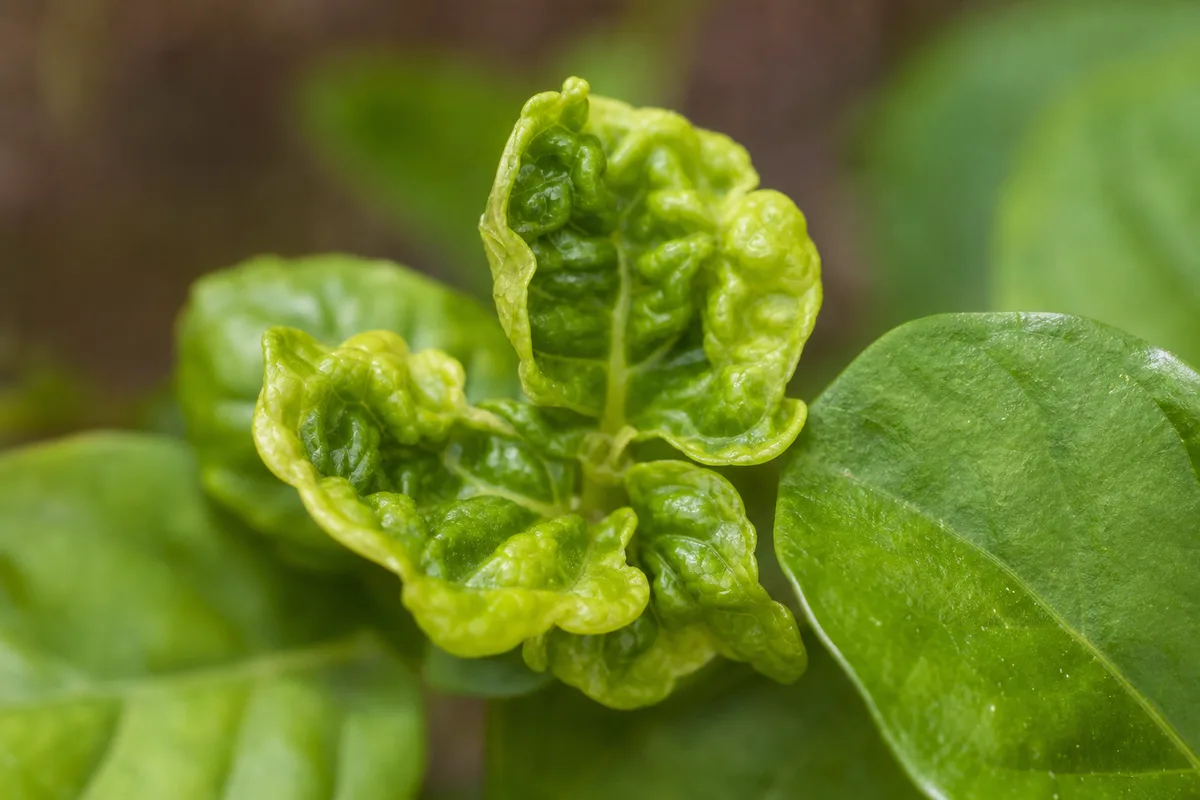
Deformed New Growth symptoms on Jasmine - compare with healthy tissue on the same plant.
Pinched or twisted shoot tips (aphids on buds)
Soft spring shoots attract aphids that cluster just below swelling buds and along the newest internodes. Expanding leaflets curl inward, narrow, or pucker while the stem tip looks pinched. You may see shiny honeydew, black sooty mold on sticky areas, or ants farming aphid colonies on bud-bearing stems.
Stippling and webbing on expanding leaflets (mites after cool rest)
After jasmine moves from its cool winter rest into heated rooms, spider mites colonize dry foliage air on the thinnest new leaflets. Damage shows as fine yellow or white stippling, bronzed leaflet tips, and silk threads at twining stem joints. New growth emerges stunted or buckled before buds set for the summer flush.
Patchy cupped flush on one side (herbicide drift)
Outdoor jasmine on fences, pergolas, or patio trellises can catch wind-borne broadleaf herbicide drift from lawn treatments, fence-line spraying, or neighbor applications. Fresh growth after exposure may show cupped, twisted, or strap-like leaflets-often patchy on the exposed side of the vine rather than evenly across every shoot. Older leaves that were fully expanded before drift often stay normal.
Mottling on successive new leaves (virus suspect)
Viral infections-including mosaic patterns documented on several Jasminum species-produce irregular yellow-green mottling alongside twisted or undersized new leaves. Unlike a one-time aphid cluster, distortion returns on the next two or more leaf flushes even after insects are gone. See mosaic virus on jasmine for isolate-and-discard guidance.
Crinkled tips without random twisting (calcium or moisture stress)
Occasional crinkled leaflet edges from uneven watering or calcium availability can mimic pest damage, but stress crinkles tend to be more uniform and lack the random twisting, honeydew, or stippling patterns of chemical or viral injury.
Deformed new growth vs. distorted leaves vs. curling leaves
These three URLs on the jasmine hub overlap in causes but answer different search intents:
| Your symptom | Best page | Why |
|---|---|---|
| Twisted or stunted shoot tips and newest leaflets only | This page | Focuses on expanding growth at vine ends before leaves mature |
| Cupped, twisted, or narrow leaves across several vine sections, including thrips on flowers | Distorted leaves | Broader leaf distortion with thrips and mildew lookalikes |
| Leaves rolling upward or inward on established foliage, often from drought or heat | Curling leaves | Mature-leaf curl from water stress and temperature swings |
When bud clusters deform before bloom season, start here-sap loss on tender tips can reduce the summer flower flush even when lower leaves still look fine.
Why jasmine gets deformed new growth
Jasmine is a vigorous twining climber that pushes soft new shoots in spring-the same tissue aphids prefer. Indoor and greenhouse jasmine commonly attracts aphids and red spider mites along with mealybugs. The plant’s seasonal rhythm creates predictable risk windows:
Spring flush vulnerability. Tender shoots and swelling buds offer easy feeding sites. Aphids inject saliva as they suck sap, which distorts leaves while they are still expanding-damage that mature tissue cannot undo.
Post-chill mite window. Jasmine needs a cool rest period to set flower buds, then returns to warm, often dry indoor air. Spider mites reproduce fastest in hot, dry conditions and concentrate on newest leaflets and bud tips-the growth that determines whether you get fragrant summer flowers. Full mite biology and treatment cadence live on the spider mites guide.
Outdoor herbicide exposure. Landscape vines near lawns or agricultural areas can absorb growth-regulator herbicides through drift. Typical injury includes cupping, twisting, and deformed growth at growing points-symptoms that appear on flushes expanding after exposure.
Virus carried on tools and cuttings. Jasmine is often propagated from stem cuttings. Plant viruses spread through infected sap on tools and hands and can arrive on rooted cuttings from already infected stock. Aphids also vector virus between shoots.
Moisture and calcium stress. Uneven watering during active growth can crinkle leaflet margins, but this pattern usually lacks insects, webbing, patchy drift geometry, or mosaic mottling.
How to confirm the cause
Work through this checklist on newest shoots only before treating:
- Hand-lens scan of bud clusters. Magnify stem tissue just below swelling buds. Aphids cluster on tender shoots and undersides of new leaves-look for soft-bodied colonies, cast skins, and honeydew shine.
- Leaflet underside check. Flip the youngest leaflets. Mites show stippling dots, moving specks, and fine silk at leaflet bases-not sticky residue.
- White-paper tap test. Hold a suspect leaflet over white paper and flick the underside. Crawling specks confirm live mites.
- Flower-bud shake for thrips. If buds look scarred or silvery, shake one over paper-slender insects suggest thrips rather than classic aphid pinch. See distorted leaves for thrips detail.
- Recent-event audit. Note lawn herbicide applications within the past one to two weeks, wind direction, and whether distortion is patchy on one exposure side (drift) versus clustered at pest sites.
- Distribution pattern. Distortion on one aphid-heavy tip with clean lower stems suggests pests. Mottled distortion on every new flush with no insects after treatment suggests virus-isolate and compare against mosaic virus criteria.
- Tool and propagation history. New plants, shared pruners, or recent cuttings from a mottled parent raise virus probability.
Confirmed pests show insects, honeydew, stippling with silk, or thrips on inspection. Suspected herbicide injury fits timing and patchy new-flush geometry without biotic signs. Suspected virus persists on fresh growth after pests are cleared.
The first fix to try
Inspect with a hand lens, then isolate if distortion is spreading unevenly or mottling appears on multiple shoots. Do not prune everything off on day one-you need diagnostic tissue visible and you risk spreading virus on unsterilized blades.
If aphids are on shoot tips
Move the vine away from neighbors. Shower or rinse aphids off with a firm water stream, targeting stems below buds and leaflet undersides. If colonies remain, apply insecticidal soap at labeled rates with complete coverage on tender shoots. Repeat every few days until new growth opens without fresh curling.
If spider mites follow winter rest
Isolate and shower every leaflet underside and twining stem joint with lukewarm water-the same first step documented on the spider mites page. Confirm live mites before stacking sprays. Do not increase watering because tips look stunted; jasmine’s winter rhythm stays lighter.
If herbicide drift is suspected
Stop further exposure-talk to neighbors if needed. Flush the root zone once with clean water if foliar drift may have run into the pot, then protect the vine from repeat spray. Avoid heavy fertilizer pushes; wait for the next clean flush of growth. New growth that formed after exposure may emerge normal while damaged tips stay twisted.
If virus is suspected
Isolate immediately. Do not propagate cuttings. Sterilize pruners between plants. If mottling and twist return on the next two leaf flushes after aphids are gone, discard the vine-see mosaic virus on jasmine for full containment steps.
Step-by-step recovery
After the first fix, follow the branch that matches your diagnosis:
Aphid recovery (1–2 weeks):
- Days 1–3: Rinse or soap tender shoots; wipe honeydew off lower leaflets to limit sooty mold.
- Every 3–5 days: Re-treat until no live aphids appear on magnification.
- After control: Snip only tips that stay badly pinched and block buds-bag and discard clippings.
- Bloom watch: Clean new stems by late spring support flowering; heavily damaged bud clusters may drop.
Mite recovery (2–4 weeks):
- Day 1: Full shower knockdown.
- Every 5–7 days: Repeat insecticidal soap or horticultural oil at least three cycles-mite eggs hatch in waves.
- Between sprays: Raise ambient humidity modestly after the cool period without keeping soil wet.
- Judge success by undotted new leaflet tips, not repaired old stippling.
Herbicide recovery (weeks to months):
- Week 1: One soil flush if needed; shade lightly if leaves yellow during stress.
- Weeks 2–8: Allow the vine to push a new flush without repeat drift exposure.
- Prune only dead or fully collapsed shoots; living twisted tissue may stay ugly until replaced by clean growth.
Virus containment:
- Isolate, stop all propagation, sterilize tools with rubbing alcohol or a 10% bleach solution between cuts.
- If two successive flushes stay mottled and twisted, remove the plant-do not compost near other ornamentals.
Recovery timeline
Days 1–3: Live aphids or mites should drop after the first rinse or shower; honeydew stops fresh accumulation.
Week 1–2: New expanding leaflets on treated tips should open without fresh pinch or stippling if coverage reached bud clusters.
Weeks 2–4: After three timed mite or aphid treatments, the next vine section should elongate with normal internode length.
Bloom season: Deformed bud clusters may fail to open; clean tips by early summer support the fragrant flush common jasmine is grown for.
Herbicide cases: The first undamaged flush may take several weeks depending on how much growing season remains.
Virus cases: No recovery timeline exists-distortion either persists on new leaves or the plant was misdiagnosed.
Lookalike symptoms
Normal twining habit. Healthy jasmine stems spiral around supports; that winding is structural, not leaflet distortion.
Cold damage after late frost. Outdoor vines can show blackened or limp new shoots after freeze-different from pest pinch or mosaic.
Iron chlorosis. Pale yellow between green veins on older leaves, not random mottling on youngest shoots only.
Powdery mildew. White fungal coating on leaf surfaces-not honeydew shine or mite stippling.
Thrips on buds. Silvery petal scarring and bud drop-often overlaps distorted leaves more than isolated shoot-tip pinch.
What not to do
Do not fertilize heavily to “push through” deformation. High nitrogen produces softer, pest-attracting growth on a vine already under stress.
Do not propagate cuttings from virus-suspect vines. Infected propagation stock spreads virus infections to every new plant.
Do not reuse pruners on healthy plants without sterilizing when mottling or unexplained distortion is present.
Do not assume every deformed tip needs fungicide. Insects and drift account for most cases; fungicides do not fix aphid saliva damage.
Do not let pets chew treated shoots until insecticidal soap or oil sprays have dried completely-even on ASPCA-listed non-toxic jasmine.
How to prevent deformed new growth on jasmine
Prevention follows how jasmine actually grows:
- Scout bud-bearing shoots weekly in spring-aphids are easiest to knock down before they distort every expanding leaflet.
- Inspect during the post-chill transition when heat is running and humidity drops; that window predictably triggers mites on thin new leaflets.
- Quarantine new vines two weeks before placing them near a blooming specimen.
- Sterilize pruners between plants, especially before taking cuttings.
- Shield outdoor trellises from lawn herbicide drift-know spray schedules upwind of your vine.
- Raise ambient humidity modestly after winter rest without overwatering the pot.
- Control ants that protect aphid colonies on jasmine buds.
Strong culture-bright light, correct seasonal watering from the jasmine overview, and the cool rest needed for buds-reduces stress but does not replace shoot-tip inspection.
When to worry
Treat as urgent when:
- Mottling and twist spread to multiple new shoots with no insects visible-isolate and read mosaic virus discard criteria
- Bud clusters deform heavily weeks before bloom and aphids or mites are unchecked
- Distortion returns on every new flush after three pest treatment cycles
- Outdoor vines show patchy new damage on several unrelated plants in the same drift path after known herbicide use
- You recently propagated from a vine that now shows mosaic patterning
Lower urgency when distortion is confined to one shoot tip with visible aphids and firm roots-the first rinse plus soap often clears it within two weeks.
Conclusion
Deformed new growth on jasmine is a tip-of-the-vine problem: expanding leaflets and bud clusters warp while older stems may look fine. Aphids on spring shoots, mites after the cool rest, herbicide drift on outdoor trellises, and persistent viral mottling are the branches that matter-each with a different first fix. Inspect newest tissue with a hand lens, isolate when mosaic patterning spreads, and judge recovery by clean subsequent flushes, not reshaped damaged leaflets. For species care rhythm, pest depth, and virus disposal, use the related guides below rather than re-searching the same causes on thinner sibling pages.
Related tool
Use the Plant Problem Diagnosis Tool to narrow causes for deformed new growth on this plant before changing multiple variables at once.