Mosaic Virus on Jasmine: Causes, Checks & Fixes
Quick answer
Mosaic virus on jasmine shows as patchy yellow-green mottling and twisted new leaves with no cure. First step: isolate the vine, rule out aphids and nutrient stress, then discard if mottling returns on the next two leaf flushes.
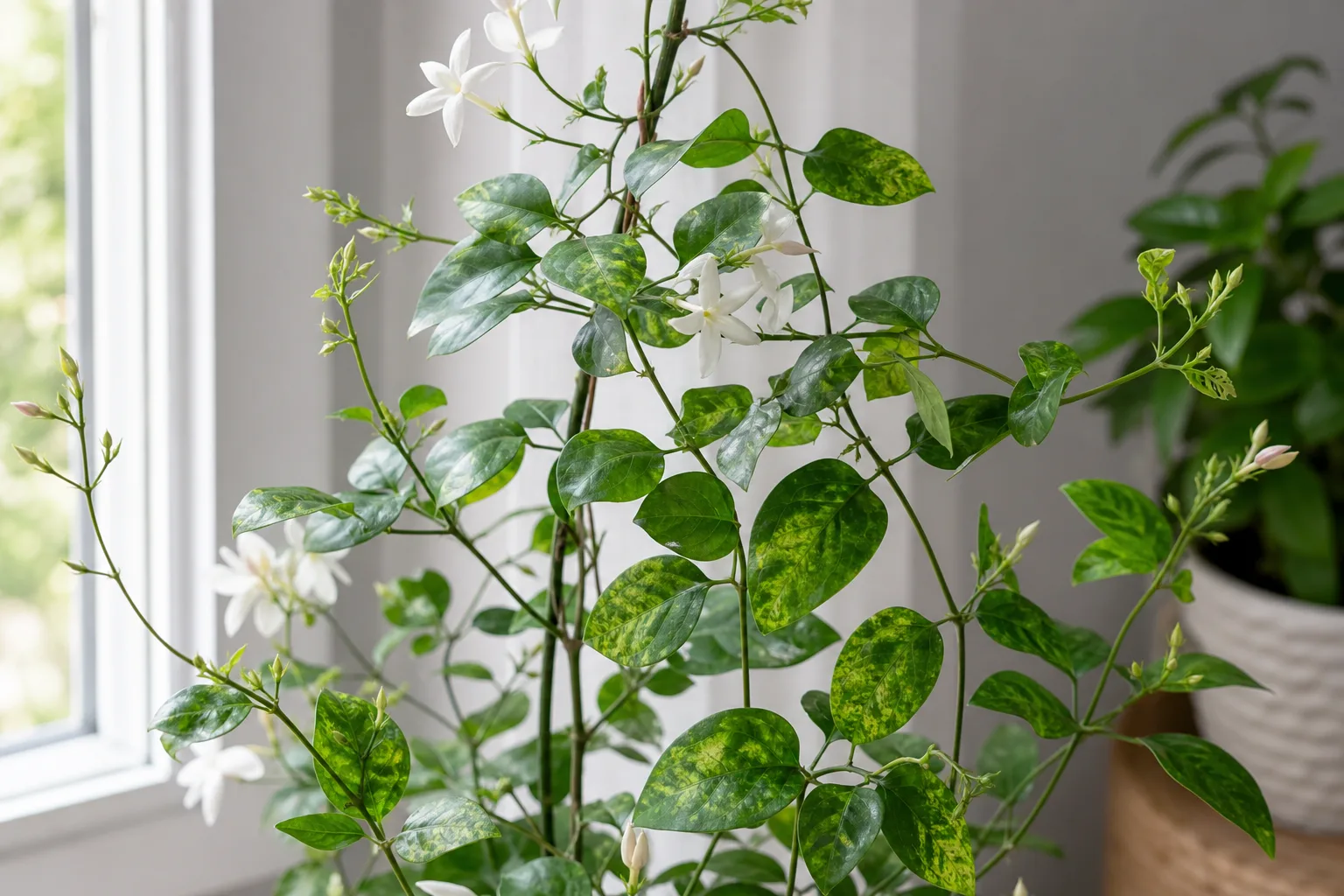
Mosaic Virus on Jasmine: Causes, Checks & Fixes
This guide covers mosaic virus on Jasmine. See also the general Mosaic Virus guide, watering, and light pages for this plant.
Mosaic Virus on Jasmine: Causes, Checks & Fixes
Quick answer
Mosaic virus on common jasmine (Jasminum officinale) shows up as irregular yellow-green mottling on leaves-patches of lighter and darker green that do not follow the veins-often paired with stunted, wrinkled, or twisted new shoots on twining stems. Unlike a nutrient problem you can fix with fertilizer, viral infection is systemic: there is no cure, only containment.
First step: isolate the vine today and move it away from other houseplants or garden specimens. Before you discard anything, rule out aphids, thrips, iron chlorosis, and herbicide drift-but if mottling returns on the next two leaf flushes after pests are cleared and care is steady, treat the plant as infected and stop taking cuttings.
What mosaic virus looks like on jasmine
On a healthy jasmine vine, leaves are glossy green and new spring shoots elongate cleanly toward supports. Virus symptoms break that pattern in ways that often show first on youngest growth, where the vine is pushing the season’s flowering wood.
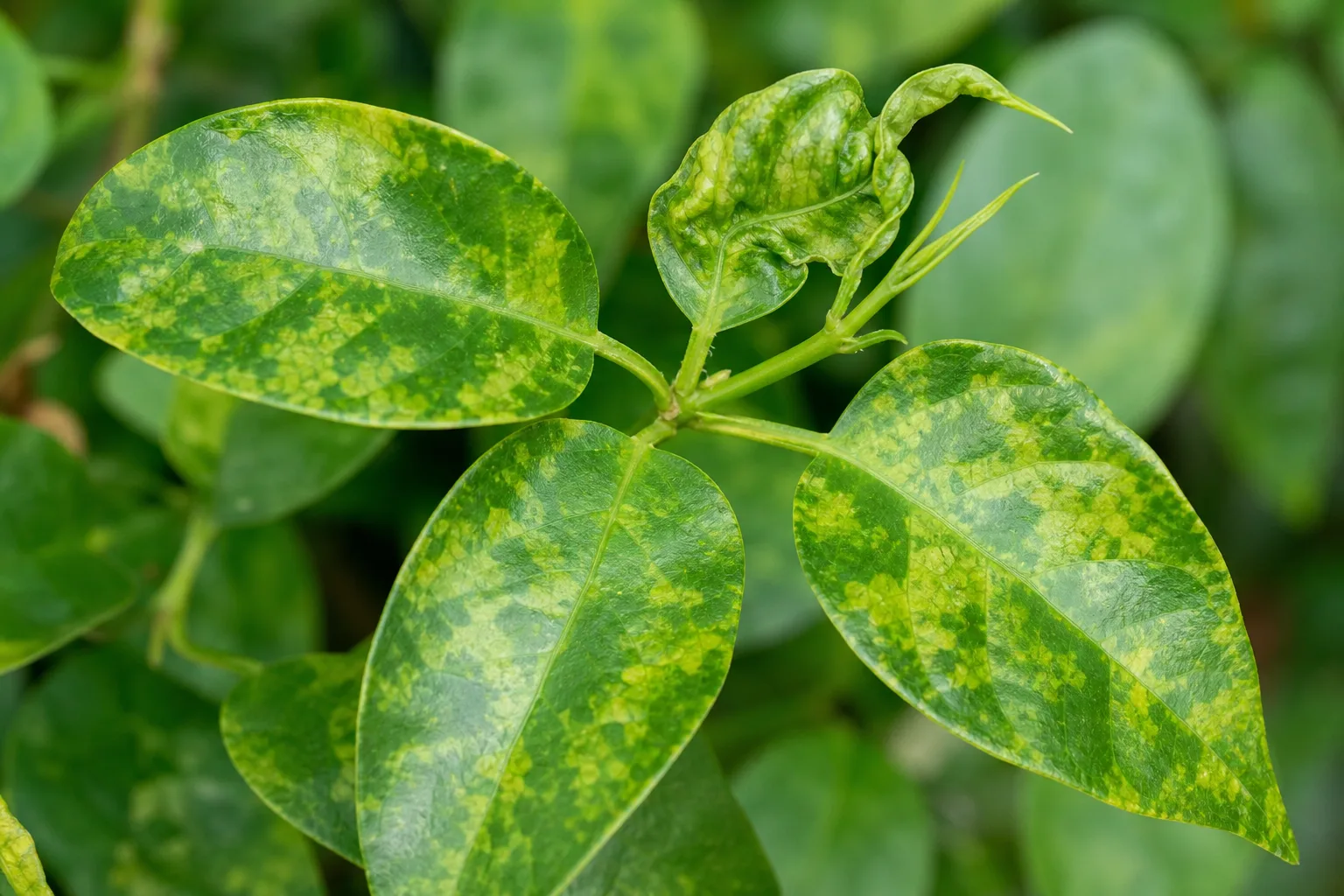
Irregular yellow-green mosaic patches on jasmine leaves (not following the veins) and a slightly wrinkled new shoot tip - compare with healthy glossy green growth on the same vine.
Typical signs on J. officinale and related true jasmines include:
- Mosaic or mottling - blotchy islands of yellow-green or pale green next to normal green tissue, not a uniform fade across the whole leaf
- Distorted new leaves - puckered, narrow, cupped, or smaller than neighboring leaves on the same stem
- Ring or line patterns - on some infected jasmines, chlorotic rings or streaks appear along the leaf blade (documented on several Jasminum species in commercial and landscape plantings)
- Stunted twining shoots - internodes shorten; the vine looks “bunched” at the tip instead of reaching cleanly for a trellis
- Reduced or abnormal flowering - buds may fail to open, flowers may be smaller, or bloom skips on shoots that look sick
The pattern usually spreads along the vine over weeks to months and reappears on fresh leaves after old damaged foliage is removed. That persistence on new flushes is the hallmark that separates virus from a one-time pest or stress event.
What it is not: spider mite damage shows fine stippling and webbing, not large mosaic blocks. Iron deficiency on jasmine tends toward yellow between green veins on older leaves, often when soil pH drifts high-not random green islands on young shoots. Aphid damage can curl leaves but clears once colonies are gone unless virus was already present.
Why jasmine gets mosaic virus
Several distinct viruses infect Jasminum species worldwide. Research has identified pelarspoviruses such as jasmine mosaic-associated virus (JMaV) and jasmine virus H (JaVH) on star jasmine, angelwing jasmine, and other landscape jasmines, often in mixed infections with overlapping mottling and ring-spot symptoms. Jasmine virus C has been linked to pronounced yellow mosaic on J. officinale in Europe. More than one virus strain can infect the same plant, which makes symptoms worse and harder to read by eye alone.
For home growers, three spread pathways matter most on jasmine:
Infected cuttings and layers. Jasmine is commonly multiplied by stem cuttings in summer and layering-exactly how viruses hitchhike. Infected plants used for propagation spread virus infections; a single rooted layer from a mottled parent passes the infection to every new plant.
Sap contact on tools and hands. Viruses move in plant sap and can be spread by infected sap on tools or by hand. Pruning one infected twining stem and immediately trimming a healthy neighbor can transfer virus on blade surfaces. The same risk applies when pinching tips or taking cuttings without cleaning tools between plants.
Sap-sucking insects. Aphids and thrips can spread viruses-aphids routinely colonize jasmine shoot tips in spring. Thrips and other vectors are less common on jasmine indoors but still worth ruling out when leaves look distorted.
Stress from overwatering, low light, or a missed cool rest does not cause mosaic virus. Stress can make an already infected vine look worse and may trigger more obvious mottling on new growth, but it does not create the infection.
How to confirm the cause
Work through these checks in order before you label a vine “viral”:
- Pest inspection - Examine newest leaves, bud clusters, and stem crotches under good light. Look for aphids, thrips, honeydew, or fine mite webbing. Treat pests if found, then wait one full leaf flush.
- Pattern persistence - Nutrient and mechanical damage often improves on new leaves. Virus mottling returns on the next growth cycle even when watering and light are correct.
- Distribution on the vine - Compare lower mature leaves, mid-stem foliage, and the growing tip. Systemic virus often shows on multiple nodes, not a single sun-scorched leaf.
- Iron/chlorosis check - If yellowing runs between veins on older leaves and soil has stayed wet or alkaline, test care first. Mosaic is blotchy and irregular, not clean interveinal yellowing.
- Herbicide history - Drift from lawn weed killers can mimic virus with distorted, cupped leaves. Ask whether spraying happened nearby in the last month; herbicide injury often hits one side of the plant or every plant in a spray zone equally.
- Propagation link - Did this vine-or a neighbor-come from a home cutting, swap, or informal layer? That raises virus probability sharply on jasmine.
- Lab confirmation (optional) - Identifying the exact virus species requires diagnostic lab testing; plant viruses can only be identified by lab testing, and visual diagnosis alone cannot name JMaV, JaVH, or other agents. Home growers rarely need a lab result to decide discard when distortion is severe-but a clinic report helps if you are protecting a nursery block or reporting to an extension office.
If only one older leaf shows a odd mark and new spring shoots stay clean after two flushes, virus is unlikely. If every new tip keeps mottling, proceed as infected.
First fix for jasmine
Isolate the plant immediately-on a separate shelf, porch, or garden zone with no shared pruning or watering splash between pots.
Do not take cuttings, layers, or divisions for propagation until you have ruled virus out. Disinfect tools regularly-sterilize pruners with rubbing alcohol between every cut and between plants. Wash hands after handling the suspect vine.
Your next decision depends on severity:
- Mild mottling on a few leaves, clean new tips forming, outdoor landscape vine you can tolerate cosmetically - Monitor only after isolation. Control aphids on spring growth. Do not merge back into a mixed collection until two flushes stay clean.
- Distorted new shoots, spreading mottling, or any plan to propagate - Remove and discard the entire plant, roots included. Bag it for municipal waste; do not compost infected jasmine near beds where you root cuttings later.
There is no cure for plant viruses-no spray, fertilizer, or repot clears mosaic infection. Fungicides and general “plant tonic” products do not target viruses. Repotting is irrelevant unless you are discarding the plant anyway.
Step-by-step management
If you are monitoring a borderline case in isolation, follow this sequence:
- Move the vine at least several feet from other jasmines, houseplants, and shared tools.
- Clear insect vectors - Rinse shoot tips; treat aphids with insecticidal soap if present. Re-check in five to seven days.
- Hold fertilizer - Skip feed until you know whether new growth is clean. Salt stress on a possibly infected vine adds noise, not recovery.
- Mark a calendar - Watch the next two leaf flushes (on jasmine, often tied to spring and early summer growth spurts). Photograph the growing tip weekly.
- Prune only with clean tools - Remove a single twisted tip if you need a clearer view, but do not strip the whole vine hoping to “cut virus out”-systemic infection remains in the stem.
- Decide keep vs discard - If flush two still shows mottling or distortion, destroy the plant and sanitize the pot before reuse.
Recovery timeline
Be honest about limits: infected tissue does not heal back to solid green. Old mottled leaves will stay mottled until they drop. You judge “recovery” only by clean new growth and normal bud development.
- Week 1–2 after isolation - You should see whether pests were the real issue. If mottling was pest-only, new leaves often look cleaner quickly.
- One full flush (roughly 3–6 weeks in active growth) - Virus-suspect vines either produce another mottled tip or finally push uniform green leaves. That single flush is decisive for most home decisions.
- Flowering season - On J. officinale, spring bloom reveals hidden damage. A vine that leafs out but sets few buds or drops buds after showing mosaic is not worth keeping in a fragrance-focused collection.
Improvement signs: new leaves match neighbors in size and color; twining stems lengthen normally; flower buds swell without aborting.
Worsening signs: mottling climbs the vine, new leaves get smaller each flush, stem tips die back, or multiple plants in the same propagation batch show the same pattern.
Lookalike symptoms
- Aphid or thrip distortion - Curling and stickiness with visible insects; often clears after treatment unless virus co-infects.
- Iron chlorosis - Yellow between veins on older foliage; linked to high pH, root stress, or cold wet roots-not random mosaic blocks on tips.
- Spider mites - Bronze speckling and webbing on thin jasmine leaves, especially after dry indoor winter air.
- Herbicide drift - Cupped, strappy new growth after lawn chemical use; may affect non-jasmine plants nearby the same way.
- Cold damage - Brown or crisp margins after frost exposure; jasmine tolerates light frost but hard freeze burns tissue without classic green-yellow mosaic.
- Nutrient excess - Too much nitrogen pushes soft, pale growth but not persistent viral-style mottling on successive flushes.
What not to do
Do not propagate from a mottled vine-layers and cuttings are how jasmine viruses spread fastest. Do not compost infected material if you later root jasmine cuttings from that compost pile. Do not merge an isolated plant back into a collection after a cosmetic prune alone.
Avoid fungicide or antibiotic sprays expecting recovery-they do not eliminate virus. Do not fertilize heavily to “green up” mosaic leaves; damaged leaves will not revert, and excess nitrogen can soften spring shoots for aphids.
Do not assume “star jasmine” or other common names mean the same plant-verify you have true Jasminum before comparing symptoms to research on J. officinale and related species.
Star jasmine vs true jasmine
Many gardeners call different plants “jasmine,” but virus literature may be species-specific. True jasmine here means Jasminum species such as J. officinale and J. sambac; “star jasmine” in landscapes is often not true jasmine (commonly Trachelospermum jasminoides). Keep labels and purchase records so you do not transfer assumptions from one species group to another.
JMaV and JaVH have been documented in multiple ornamental jasmine types, including star jasmine and angelwing jasmine, and mixed infections are now also reported in Florida jasmine plantings. In practice, if your vine is mislabeled, your best protection is still the same: isolate symptomatic plants, stop propagation, and manage vectors early.
Jasmine care cross-check
While diagnosing, keep baseline care steady so you are not chasing multiple problems:
- Light - Full sun to partial shade (about four to six hours of direct sun) supports normal leaf color; weak light alone rarely causes mosaic but can make any stunting look worse.
- Water - Allow the top inch of mix to dry between waterings; soggy roots cause yellowing that should not mimic mosaic on repeated flushes.
- Cool rest - Jasmine needs a cool winter period for flowering; after that transition, inspect closely when the vine moves indoors-quarantine new growth then.
- Propagation habit - If you routinely root summer cuttings, one infected mother plant can contaminate an entire tray. Source clean stock instead.
How to prevent mosaic virus next time
- Buy from reputable nurseries and inspect every new vine for mottling, rings, or twisted tips before mixing collections.
- Quarantine newcomers two weeks minimum; keep them away from plants you plan to layer or take cuttings from.
- Control aphids on spring shoots before colonies spread along twining stems.
- Disinfect pruners, knives, and propagation trays between plants-especially when pinching jasmine tips to shape climbers.
- Never share cuttings from vines with any history of odd leaf pattern, even if symptoms looked “mild last year.”
- Label propagation batches so you can trace a sudden mosaic outbreak to a specific parent plant.
When to use an extension diagnostic lab
Send a sample to a diagnostic clinic when:
- you run a nursery or regularly distribute cuttings
- multiple plants from one propagation tray show matching mosaic
- symptoms are severe but lookalikes (especially iron deficiency, aphids, or thrips) are still plausible
- you need documentation before removing a valuable mature vine
Lab confirmation helps separate virus from non-viral distortion and supports cleaner mother-stock decisions for future cuttings.
When to worry
Treat as urgent if more than one shoot shows mosaic, if you already rooted cuttings from the plant, or if any plant from the same propagation batch develops matching mottling. Isolate the group immediately.
You can wait a single flush only when one older leaf is marked, pests are absent, new tips look normal, and you have no plans to propagate. Even then, keep the vine isolated until two clean flushes pass.
Discard without guilt if new growth stays distorted, bloom fails, or the vine sits among other jasmines you depend on for cuttings. Keeping an infected climber for sentiment usually costs more plants later.
Related jasmine guides
Use these pages when symptoms overlap:
- Aphids on jasmine for sticky growth and vector control
- Thrips on jasmine for scarring and distorted tips
- Iron deficiency on jasmine for interveinal chlorosis patterns
- Distorted leaves on jasmine for non-viral shape changes
- Jasmine overview for seasonal care baselines that reduce misdiagnosis