Mosaic Virus on Houseplants: Signs and Next Steps
Indoor plant diseases are usually fungal or bacterial infections favored by moisture on leaves and poor ventilation. Mosaic Virus can weaken growth and spread to nearby plants if ignored. Use Mottled, patchy, distorted leaves with uneven coloring as your starting point, then confirm whether you are dealing with infection, physical damage, or care stress. Track weekly progress after you change care, and note watering, light, and repotting dates so you can tell whether the symptom is improving or returning. Compare upper versus lower leaves, new versus old growth, and soil moisture at root depth before you treat, because the same visible symptom can come from watering, light, pests, or normal aging on different plants.
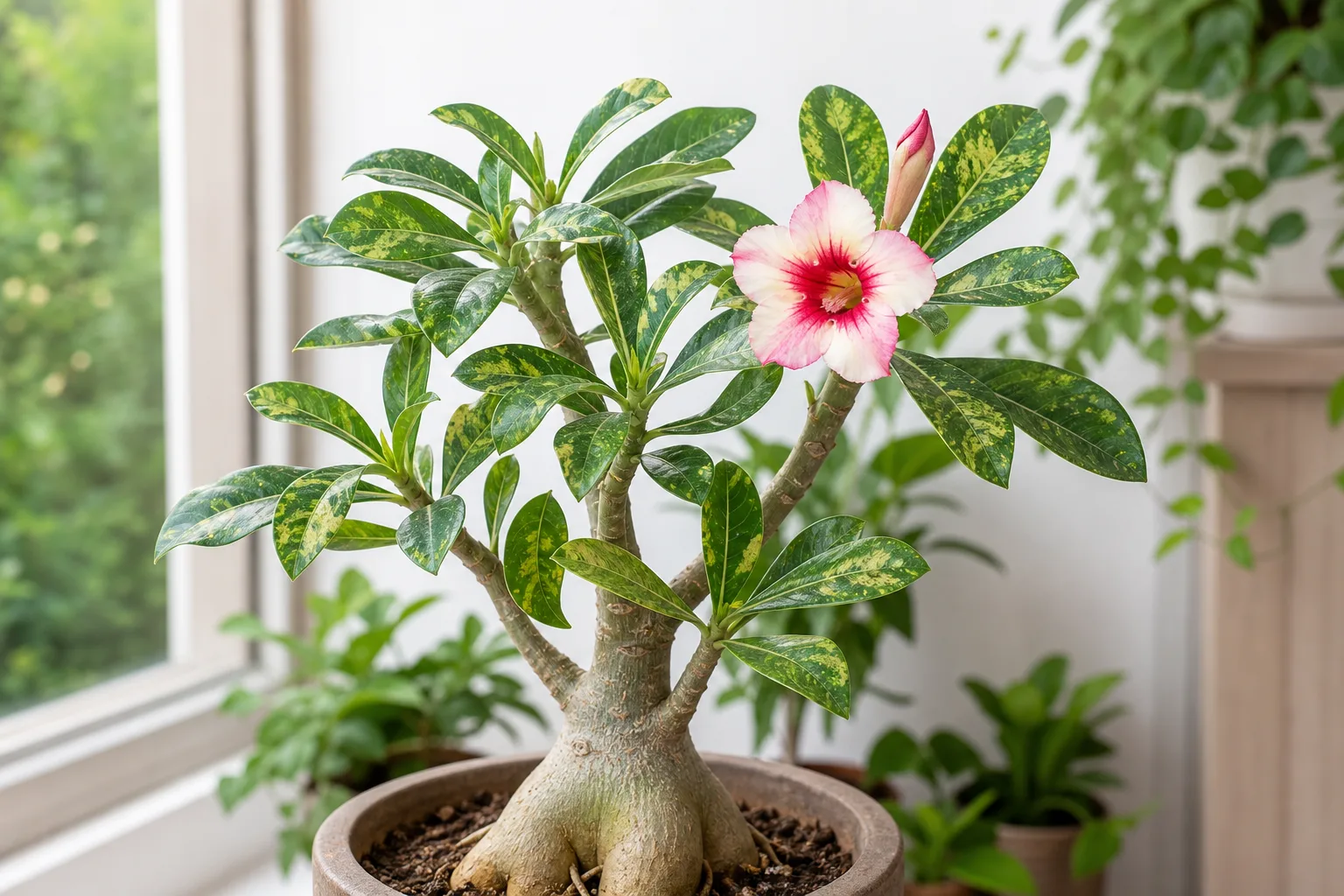
Mosaic Virus on Houseplants
Still unsure?Match your symptoms to the most likely problems in under a minute.Run diagnosis →Understand and fix mosaic virus
Indoor plant diseases are usually fungal or bacterial infections favored by moisture on leaves and poor ventilation. Mosaic Virus can weaken growth and spread to nearby plants if ignored. Use Mottled, patchy, distorted leaves with uneven coloring as your starting point, then confirm whether you are dealing with infection, physical damage, or care stress. Track weekly progress after you change care, and note watering, light, and repotting dates so you can tell whether the symptom is improving or returning. Compare upper versus lower leaves, new versus old growth, and soil moisture at root depth before you treat, because the same visible symptom can come from watering, light, pests, or normal aging on different plants.
Overview
Indoor plant diseases are usually fungal or bacterial infections favored by moisture on leaves and poor ventilation. Mosaic Virus can weaken growth and spread to nearby plants if ignored. Use Mottled, patchy, distorted leaves with uneven coloring as your starting point, then confirm whether you are dealing with infection, physical damage, or care stress. Track weekly progress after you change care, and note watering, light, and repotting dates so you can tell whether the symptom is improving or returning. Compare upper versus lower leaves, new versus old growth, and soil moisture at root depth before you treat, because the same visible symptom can come from watering, light, pests, or normal aging on different plants.
How to identify it
- Look for spots with halos, powdery coating, or water-soaked margins
- Check if damage spreads over days vs stays static
- Note whether leaves were recently misted or watered overhead
- Inspect multiple plants in the same room for similar patterns
- Smell soil-sour odor suggests rot rather than surface disease alone
When to worry
Rapid defoliation, soft mushy stems, or spots enlarging daily mean isolate immediately and trim affected tissue.
Common causes
Water sitting on leaves overnight
Overhead watering and late-day misting keep foliage wet for hours-the perfect environment for leaf spot and mildew.
Poor airflow between plants
Crowded shelves and closed rooms trap humidity around leaves and speed up Mosaic Virus.
Infected tools or splashing water
Pruning with dirty shears or reusing drip trays without cleaning spreads pathogens plant to plant.
Weakened or stressed plants
Plants recovering from repotting, low light, or root issues are more susceptible to infection.
Step-by-step fix
Isolate affected plants
Move sick plants away from healthy ones until active spread stops.
Remove infected leaves
Cut off heavily spotted or mushy foliage with clean scissors. Dispose in trash, not compost indoors.
Improve airflow and watering technique
Space plants out, run a fan on low, and water at soil level without wetting leaves.
Apply fungicide if fungal disease is confirmed
For powdery mildew or leaf spot, use a houseplant-safe fungicide per label. Bacterial issues may need removal rather than spray.
Avoid fertilizer until recovery
Let the plant stabilize. New healthy growth confirms your changes are working.
Prevention tips
- Water at the soil line, not over leaves
- Provide spacing and gentle airflow in plant rooms
- Sterilize pruning tools between plants
- Quarantine new plants before mixing collections
Common mistakes
- Misting diseased leaves hoping humidity helps
- Leaving fallen infected leaves on soil surface
- Treating bacterial rot with fungicide only
Irregular pale and dark green patches can look alarming, especially when a leaf also twists or stays small. Yet a “mosaic” is a visual pattern, not proof of a virus. Genetic variegation, nutrient problems, mites, thrips, root stress, temperature injury, and chemical damage can produce a similar patchwork.
The safest first response is containment without panic. Separate the plant, photograph the newest and oldest affected growth, and inspect it for insects. Stop taking cuttings or sharing tools until the pattern is explained. If the plant is valuable or sits among a large collection, ask a plant diagnostic laboratory about testing before making an irreversible decision.
Plant viruses are different from surface fungi. Once a virus establishes a systemic infection, pruning one marked leaf does not remove it from the remaining plant. There is generally no spray that cures the infected plant, so management focuses on preventing transmission, controlling relevant vectors, and deciding whether keeping the plant creates an acceptable risk.
This guide synthesizes current university Extension and integrated-pest-management guidance. It does not claim that the pictured plant was laboratory tested, and it does not infer a virus from color alone. The two adenium images are comparison aids for documenting pattern and distortion, not proof of a specific virus.
What Mosaic Virus Means
“Mosaic virus” is not one organism. Gardeners use the phrase for diseases caused by many viruses that produce contrasting islands, streaks, rings, or bands of green and yellow tissue. Tobacco mosaic virus and cucumber mosaic virus are well-known examples, but different viruses infect different host ranges and travel by different routes.
A virus depends on living host cells to reproduce. It may move through vascular tissue and become distributed beyond the leaf that first shows symptoms. That systemic behavior is why cutting away visible mottling is not considered a cure.
University of Maryland Extension lists abnormal green or yellow streaks, rings, patches, and distorted growth among virus symptoms on flowering plants (virus diseases on flowers). Those signs justify investigation, but several viruses and noninfectious disorders overlap. The practical diagnosis must combine pattern, plant history, vector evidence, and, when needed, a laboratory test.
Temperature and plant age can change symptom visibility. A virus-infected plant may show strong mottling during one growth period and subtler color during another, while a young infected leaf may distort more than an older one. This variability is one reason a few normal-looking leaves do not provide a reliable “all clear.” Keep the plant’s timeline, not just its most dramatic photograph.
Mixed infections also occur. Two viruses in one plant can create symptoms that neither produces alone, and a pest or nutrient problem can modify the appearance further. Avoid selecting a virus name simply because a web photograph shares one feature. The more specific the diagnosis, the stronger the evidence it requires.
The Symptom Pattern to Document
Begin with distribution. Viral symptoms commonly repeat on multiple leaves or appear in new growth as the plant develops. Photograph the whole plant, then individual leaves from both sides. Record whether pale areas follow veins, form rings, alternate with dark green islands, or occur only where the leaf faced intense light.
Observe growth, not just color. Shortened internodes, narrow or puckered leaves, uneven leaf blades, reduced vigor, flower break, and ring patterns can support a viral suspicion. Symptom intensity can vary with host species, cultivar, virus strain, temperature, and the presence of more than one virus.
Do not force a diagnosis from an online image. A photograph captures one host at one stage under one lighting setup. Use it to improve your description, then test that description against the plant’s timeline and environment.
Mottling, Rings, Distortion, and Stunting
Mottling is an uneven mixture of lighter and darker tissue without the stable, repeated boundaries expected from many ornamental variegation patterns. It may look feathered along veins, blocky between veins, or marbled across a leaf. Ringspots form circles or arcs, while line patterns create angular or wandering marks.
Distortion increases concern when it accompanies a new mosaic pattern. Leaves may emerge narrow, twisted, blistered, or asymmetrical, and stems may stay shorter than expected. Flowers can show broken color or malformed petals, though genetics and environmental stress can cause similar effects.
This image is a comparison aid. Color pattern alone cannot distinguish a virus from genetic, nutritional, pest, or chemical causes.
Stunting is most meaningful relative to a comparable plant under the same conditions. A naturally compact cultivar or a plant growing slowly in winter is not evidence of infection. Compare internode length, leaf size, and growth rate with the plant’s own earlier growth whenever possible.
Why One Leaf Is Not Enough Evidence
One marked leaf may record an old event: cold contact, a spray droplet, feeding damage, or an injury during unfurling. A systemic virus is more concerning when related signs recur on later leaves or appear in several parts of the plant. The pattern may fluctuate, however, so temporary symptom fading does not prove that an infection disappeared.
Mark the emergence date of new leaves and photograph them as they harden. If the next two or three leaves develop normal color and form while the old mark stays unchanged, an isolated injury becomes more plausible. If every new leaf repeats the same irregular pattern, further diagnosis is warranted.
Keep lighting consistent during comparison. Backlighting can make normal vein structure look mottled, while phone processing can exaggerate green contrast. A neutral daylight photograph and a physical description are more useful to a diagnostic lab than a heavily edited close-up.
Add a simple growth map to the record. Number the visible nodes from the base upward in a photograph and note which leaves were present when symptoms began. If mottling repeatedly appears beyond the original node, the pattern is behaving differently from a one-time splash or contact injury. This is still not proof of a virus, but it gives a diagnostician a clearer symptom history than “the plant looks different.”
Mosaic Virus Look-Alikes
The strongest diagnosis comes from eliminating credible alternatives. Genetic variegation often follows a cultivar-consistent pattern and remains stable as leaves expand. Nutrient disorders tend to follow the plant’s physiology—older or younger leaves first, interveinal chlorosis, or broad uniform paling—rather than random islands and rings.
| Pattern | More consistent with | Check next |
|---|---|---|
| Stable repeated sectoring | Genetic variegation | Compare cultivar references and older leaves |
| Fine pale stippling or silver scars | Mites or thrips | Inspect undersides and growing points |
| Broad interveinal yellowing | Nutrition or root dysfunction | Review pH, roots, fertilizer, and watering |
| Marks aligned with droplets | Spray or mineral injury | Review recent applications |
| Repeating mosaic plus distorted new growth | Possible virus | Isolate and consult a diagnostic lab |
No row is conclusive by itself. Mixed problems occur: a virus-infected plant can also have mites, and root stress can alter how viral symptoms appear. Diagnose each evidence stream rather than choosing the first label that fits.
Variegation, Nutrition, Pests, and Chemical Injury
Variegation usually has a history. Compare the current plant with verified photographs of that cultivar and with its earlier leaves. Stable cream sectors, silver bands, or symmetrical markings are less suspicious than a new, irregular pattern appearing after months of uniform growth.
Sap-feeding pests deserve close inspection. Thrips can leave silvery scars, black fecal specks, and distorted young leaves; mites can create dense pale stippling and fine webbing. Tap foliage over white paper and inspect the growing point with magnification before deciding the problem is invisible and viral.
Chemical injury often follows a date. Leaf cleaners, pesticide mixes, fertilizer splashes, and household products can produce patchy chlorosis or necrosis. If marks appeared within days of an application and only on treated surfaces, stop the product and observe clean new growth rather than escalating to another spray.
How Plant Viruses Move
Transmission route depends on the virus. Some are carried by aphids, thrips, whiteflies, mites, nematodes, or fungi; some move through infected sap on tools and hands; others travel mainly in cuttings, divisions, grafts, bulbs, seed, or other propagation material. A generic “mosaic virus” diagnosis cannot tell you which route is important.
Penn State Extension describes tobacco mosaic virus as highly stable and readily spread by mechanical contact with infected sap, including hands, clothing, and tools (tobacco mosaic virus transmission). That does not mean every virus behaves like TMV. Apply strict hygiene while the identity is unknown, then refine controls if testing identifies a specific virus.
Distance helps but is not a complete barrier. Winged insects can move between rooms, and a contaminated knife can bridge plants instantly. Isolation should be paired with pest inspection, tool separation, and a pause on propagation.
Insects, Sap, and Propagation Material
Aphid-transmitted viruses can move quickly because brief probing may be enough for some virus-vector combinations. UC Integrated Pest Management notes that aphids transmit numerous plant viruses and that insecticides may not prevent transmission that occurs during quick feeding probes (aphids and virus transmission). This is why exclusion, inspection, and prompt vector management matter alongside any labeled insecticide.
Thrips transmit particular viruses, including tospoviruses, while whiteflies transmit others. Finding an insect does not prove it carried the suspected virus. Identify the pest and the plant symptoms separately, then use testing when the consequence of error is high.
Cuttings and divisions from systemically infected plants may carry the virus even when the selected piece looks normal. Do not “save” a suspicious plant by distributing propagules. That can turn one uncertain case into several long-term reservoirs.
What to Do When You Suspect a Virus
Place the plant in a separate room if practical, away from vents and shared plant-care tools. Use a dedicated watering container and tray. Avoid pruning merely to improve appearance; every cut creates sap and tool-contact opportunities without removing a systemic infection.
Document the plant name, source, purchase date, propagation history, first symptom date, and any pest outbreaks. Photograph close-ups and the whole plant. Ask the seller whether related stock has shown problems, but do not rely on an informal answer as a diagnosis.
Wash hands after handling the plant and before touching others. Keep suspect debris in a closed bag. If you must remove a dangerous broken stem or dead tissue, use a tool reserved for that plant and clean it according to an evidence-based sanitation procedure before reuse.
Inspect the Collection and Control Vectors
Check neighboring plants from newest growth downward. Look beneath leaves, inside folded leaves, around buds, and along petioles. Sticky cards help detect flying adults such as thrips and whiteflies, but they do not detect every life stage or prove virus transmission.
Treat confirmed pests according to the plant, pest, indoor site, and product label. Repeat inspections because eggs and immature stages may be hidden. Do not spray every plant with a homemade mixture: phytotoxic injury can create more mottling and make the diagnostic picture worse.
Keep suspect plants out of propagation and exchange. Label their tools and pots so another person does not unknowingly reuse them. Collection-wide risk often comes from ordinary routines—shared scissors, crowded staging areas, and moving cuttings—rather than leaves touching once.
Testing and the Keep-or-Discard Decision
Plant diagnostic laboratories may use symptom assessment, indicator hosts, antibody-based tests such as ELISA, or molecular methods such as PCR. Test availability depends on the plant and suspected virus. Contact the laboratory before sending material so it can specify the sample, packaging, fee, and submission timing.
Testing is most worthwhile when the plant is valuable, symptoms are ambiguous, other plants are at risk, or a result would change your decision. A negative result for one virus does not prove that no virus is present; the test only addresses what its method can detect in the submitted sample.
Iowa State University Extension notes that rose mosaic can involve several viruses and that laboratory testing may be required for confirmation (rose mosaic diagnosis). The same principle applies broadly: the visible word “mosaic” may conceal multiple possible agents.
Before collecting a sample, contact the laboratory. It may request several fresh leaves representing early and advanced symptoms, a whole small plant, or paired symptomatic and normal tissue. Keep samples cool and protected from crushing, but do not seal wet leaves in a warm package for days. Provide the plant’s botanical name, source, propagation method, pesticide history, and any insects found; those details guide test selection and interpretation.
Why Sprays Cannot Cure a Systemic Virus
Fungicides kill or suppress fungi, not viruses inside living plant cells. Antibiotic-like household products are not a safe or effective substitute. Insecticides may reduce a vector population but do not remove virus already established in the plant.
Pruning visible leaves does not cure a systemic infection because apparently normal stems and leaves may contain virus. Heat therapy, meristem culture, and specialized clean-stock programs can eliminate certain viruses from some crops under controlled laboratory or production conditions, but those techniques are not ordinary home treatments.
Be skeptical of products that promise to “flush,” “detox,” or instantly kill plant viruses. Improved nutrition and care may help an infected plant grow, yet symptom improvement is not proof that the virus is gone. A retained infected plant may continue to pose transmission risk.
Choose a Proportionate Decision
| Situation | Reasonable next step |
|---|---|
| One old, stable mark; no pests; clean new growth | Continue isolation and observation |
| Repeating mosaic or distortion; plant is valuable | Ask a diagnostic lab about targeted testing |
| Confirmed virus; nearby susceptible plants | Dispose of the infected plant and associated debris |
| Confirmed virus; isolated sentimental specimen | Discuss risk with a diagnostician and maintain strict permanent separation |
| Multiple suspect plants or active vectors | Escalate to Extension or a plant-health professional |
Disposal is often recommended after confirmation because no curative treatment exists and an infected plant can remain a source. Seal the plant and debris before moving them through the collection. Follow local waste rules; do not compost material when the virus’s survival and compost conditions are unknown.
Sentimental value changes the owner’s tolerance for risk, not the biology. Keeping a confirmed infected plant is a collection-management decision that may require permanent isolation, dedicated tools, and ongoing vector control. Be explicit about that burden.
Preventing the Next Introduction
Buy plants and propagation material from sources that monitor stock health. Inspect new arrivals in bright light, especially new growth and leaf undersides, and maintain a quarantine period long enough to observe fresh growth. Quarantine lowers risk but cannot reveal every latent infection.
Keep quarantine tools physically separate and write the arrival date on the plant tag. A remembered “couple of weeks” is easy to compress in a busy collection.
Control weeds around greenhouses, patios, and plant rooms where they may host vectors or viruses. Screen openings where feasible and avoid bringing outdoor cut flowers or plants directly into a clean indoor collection without inspection. Keep plant identities and purchase records so a later pattern can be traced.
Propagate only from plants with a consistent history of healthy growth. Never share a cutting from a suspect plant simply because the chosen node looks normal. Systemic pathogens can be present beyond visible symptoms.
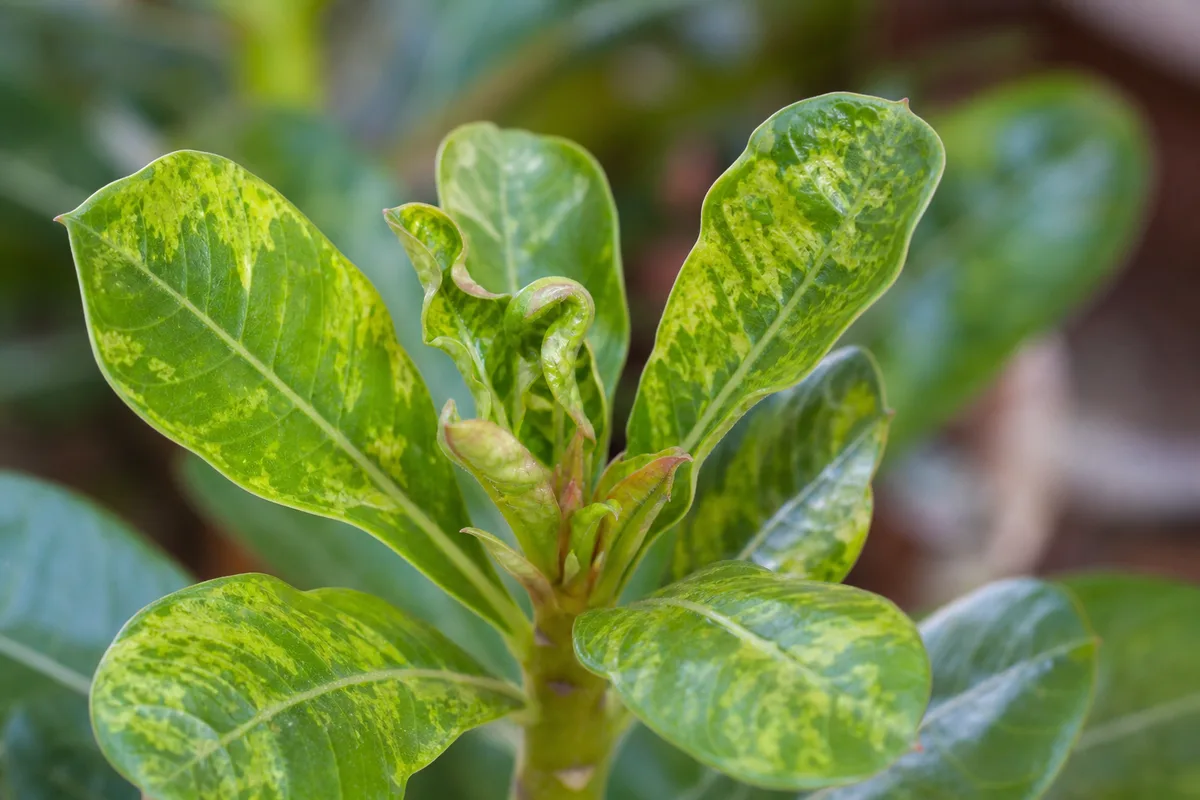
Close inspection can document pattern boundaries and distortion, but laboratory testing is needed when the virus identity changes the decision.
Cleaning Tools Without False Confidence
Remove soil and plant debris before applying a disinfectant, because organic material can reduce contact with the tool surface. Follow an Extension-recommended product, concentration, and contact time, and check whether the treatment corrodes metal. Rinse or oil tools when guidance requires it.
University of Florida IFAS guidance distinguishes physical cleaning from disinfection and explains that soil and organic residue can reduce disinfectant effectiveness (disinfecting garden tools). Follow the chosen product’s directions and build its required contact time into the workflow rather than dipping a dirty blade and immediately cutting the next plant. When repeated cuts are necessary, keeping several clean tools available can be simpler than rushing sanitation.
Use separate tools for a suspect plant while diagnosis is pending. A quick wipe on clothing or a dip that lasts only a second should not be treated as validated sanitation. Clean the work surface, trays, stakes, and reusable ties that contacted sap or debris.
Gloves do not replace hand hygiene. Contaminated gloves can transfer sap just as hands can. Change or clean them between plant groups and avoid touching phones, door handles, or healthy leaves during the session.
Conclusion
Mosaic-like color is a reason to investigate, not a verdict. Isolate the plant, document whether the pattern repeats in new growth, inspect for pests, review chemical and cultural history, and stop propagation. Those actions protect the collection without destroying a plant on the basis of one photograph.
If evidence continues to point toward a virus, laboratory testing offers the strongest basis for a high-consequence decision. There is generally no curative spray for a systemically infected plant; management means limiting vectors and sap transfer, then choosing testing, permanent isolation, or disposal according to risk.
Prevention depends on clean stock, quarantine, vector monitoring, and deliberate tool hygiene. The goal is not perfect certainty at first glance. It is a careful chain of decisions that keeps one suspicious pattern from becoming a collection-wide problem.
Plants commonly affected
These houseplants often struggle with mosaic virus. Open a care guide or plant-specific troubleshooting page for tailored fixes.
 Medium
Adenium
Likely causeViral infection causes leaf mottling and broken flower color; spread via sap and unsanitary tools.
Quick fixIsolate the plant, sterilize tools, and destroy severely infected specimens to protect the collection.
 Medium
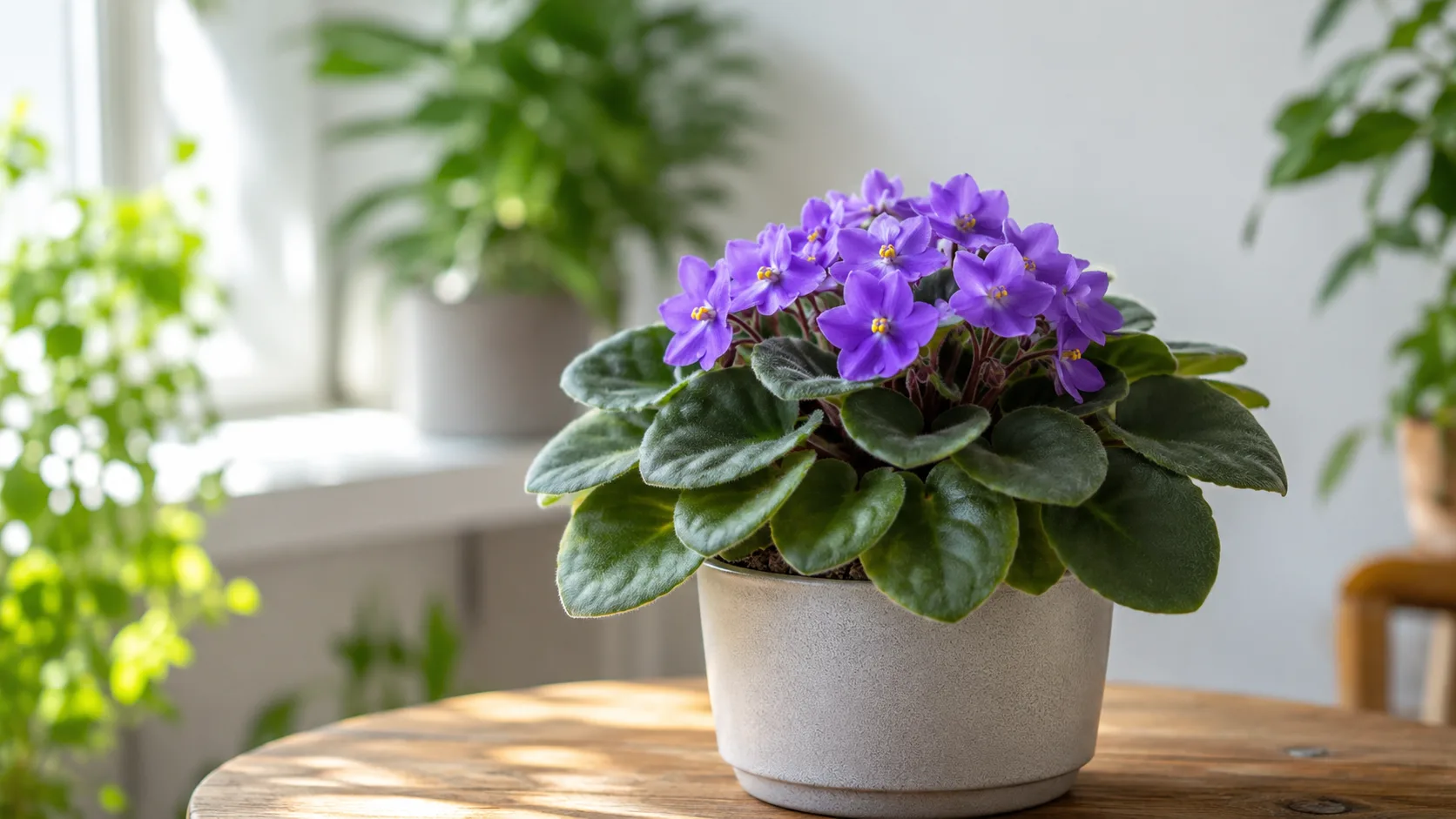
African Violet
Likely causeMosaic Virus on African Violet: Some of the most notorious viruses known to attack African Violets are Stunt and Tobacco Mosaic. These and other viruses often accompany other pests and pathogens. Such is the case with Aphids, Mealy
Quick fixInspect African Violet, confirm mosaic virus matches your symptoms, then adjust care or treat per authoritative guides.
 Medium
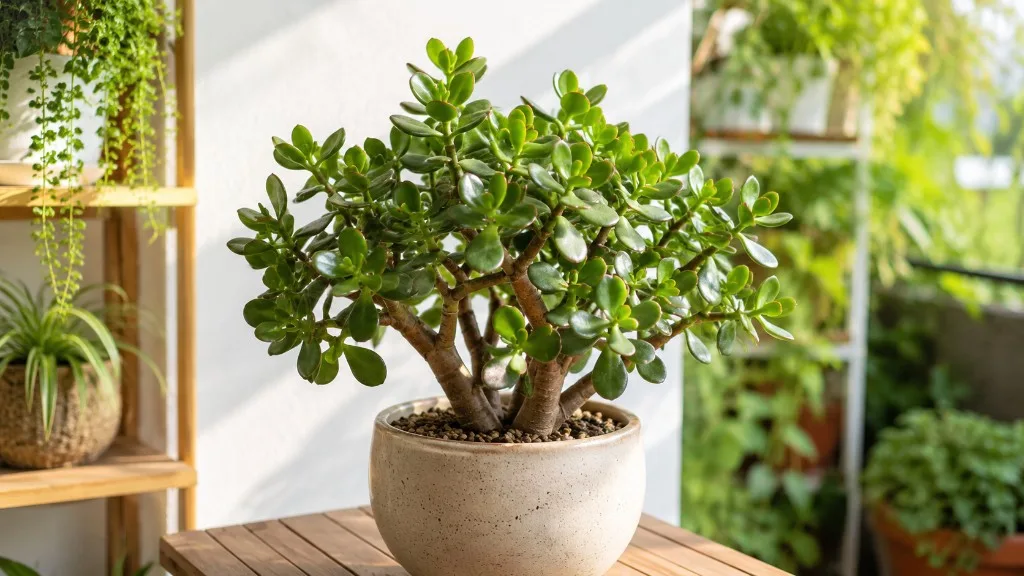
Jade Plant
Likely causeApr 9, 2021 · In March 2019, an adult jade plant, grown under the trellis system in an experimental area at the campus of the University of São Paulo, Piracicaba, state of São Paulo, was found showing mosaic symptoms typical of a virus infe
Quick fixConfirm diagnosis on your Jade Plant, then address the most likely care or pest factor described in current extension guidance.
 Medium
Jasmine
Likely causeFeb 22, 2024 · In May 2023, a symptomatic Angelwing jasmine sample from Miami-Dade County tested positive for both JMaV and JaVH. This is the first report of JMaV and JaVH in single or mixed infections in jasmine in Florida, adding to the k
Quick fixConfirm diagnosis on your Jasmine, then address the most likely care or pest factor described in current extension guidance.
 Medium
Lemongrass
Likely causeNov 25, 2025 · The Yellow Mosaic Virus (YMV) is a significant threat to lemongrass plantations worldwide. Symptoms of YMV infection include yellowing or mottling of leaves, stunted growth, and reduced plant yield.
Quick fixConfirm diagnosis on your Lemongrass, then address the most likely care or pest factor described in current extension guidance.
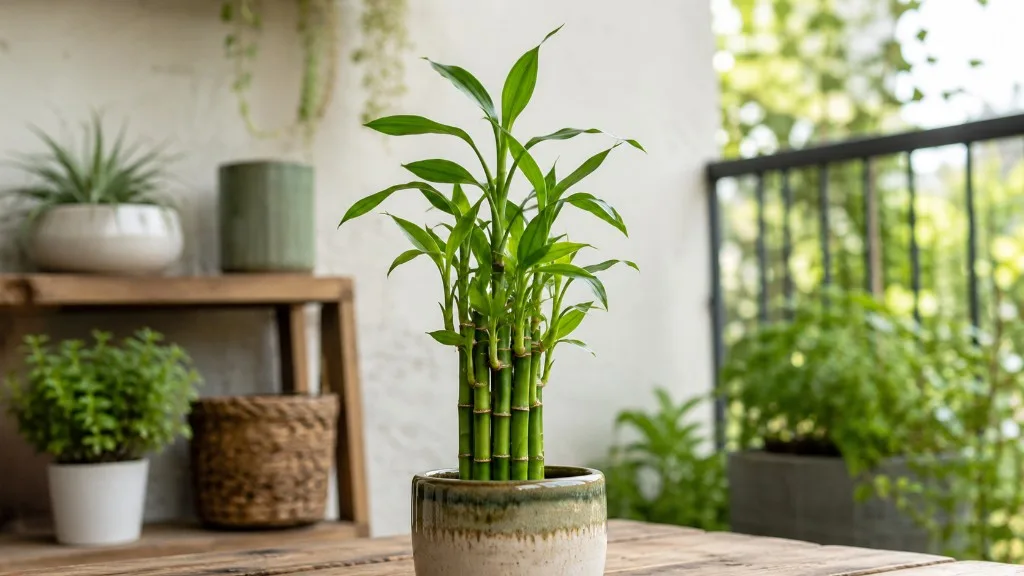 Medium
Lucky Bamboo
Likely causeNov 7, 2023 · In this article, I tried to give you a comprehensive list of lucky bamboo diseases with their images and names. I provided you with an overview of their symptoms and showed you how to treat your infected plant.
Quick fixConfirm diagnosis on your Lucky Bamboo, then address the most likely care or pest factor described in current extension guidance.
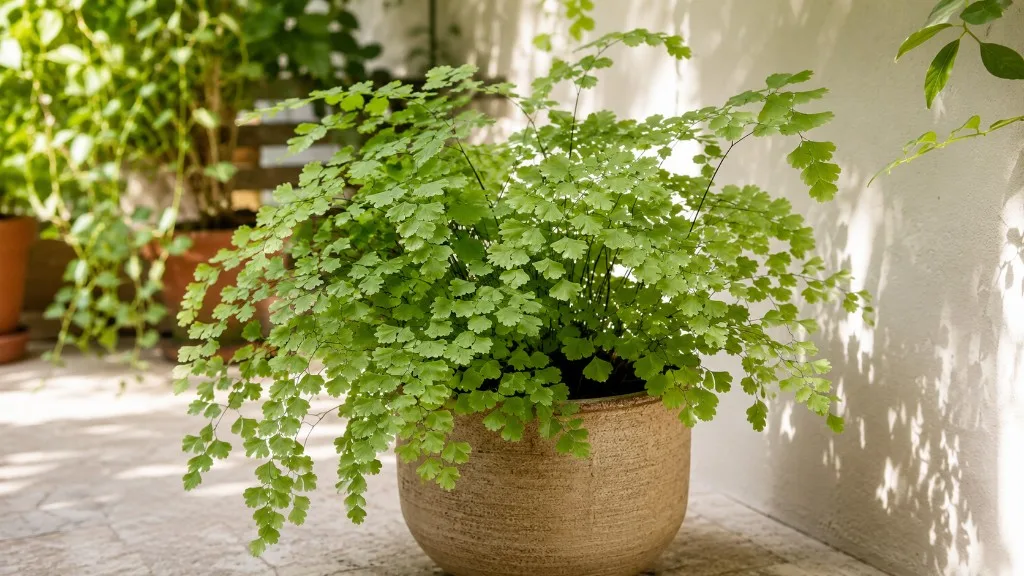 Medium
Maidenhair Fern
Likely causeFeb 28, 2007 · Maidenhair fern showing symptoms associated with possible virus infection were collected from the Chadwick Arboretum on the campus of The Ohio State University, Columbus. The leaves of the affected plants were slightly malfor
Quick fixConfirm diagnosis on your Maidenhair Fern, then address the most likely care or pest factor described in current extension guidance.
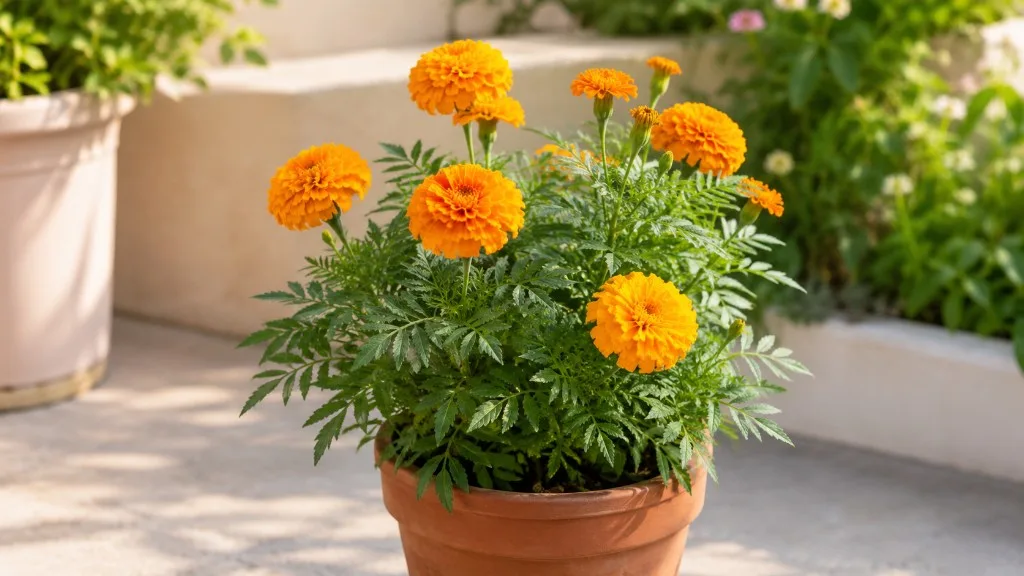 Medium
Marigold
Likely causeIn summary, mixed infection of five viruses infecting marigold was identified by deep sequencing, including TuMV and BBWV-2, first reported in marigold, and two new viruses, marigold mosaic virus in the Potyvirus and marigold cryptic virus
Quick fixFollow extension or botanical guidance for Marigold mosaic virus; adjust care before applying broad treatments.
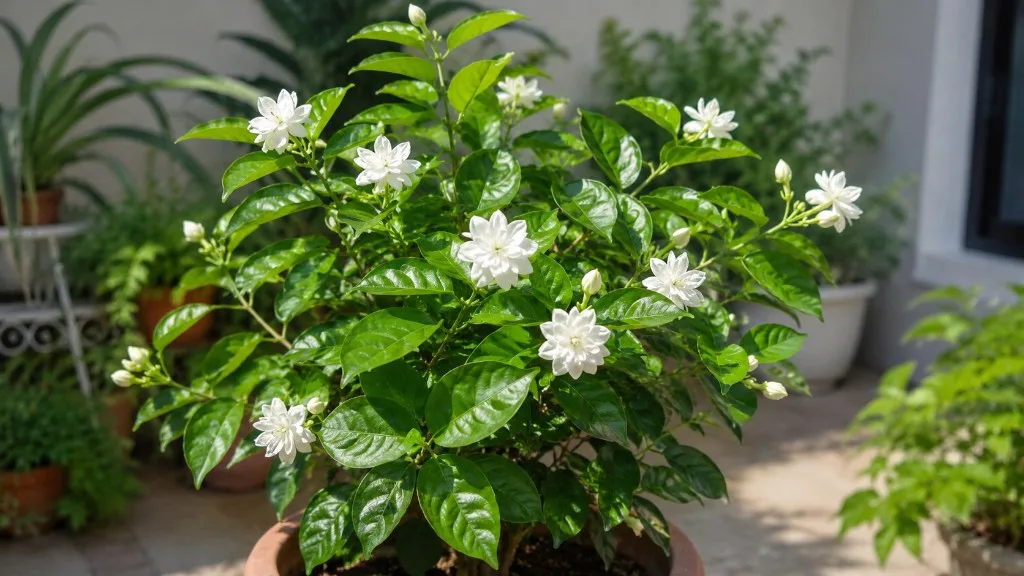 Medium
Mogra
Likely causeA virus isolate associated with yellow mosaic disease was purified from commercially cultivated jasmine (Jasminum sambac) from Andhra Pradesh, India and it contained flexuous filamentous particles of ~720 × 13 nm.
Quick fixFollow extension or botanical guidance for Mogra mosaic virus; adjust care before applying broad treatments.
 Medium
Petunia
Likely causeTobacco mosaic virus and related viruses cause mottled, distorted petunia leaves and flower color break.
Quick fixRemove and destroy infected plants; wash hands and tools after handling; control aphids and thrips vectors.
 Medium
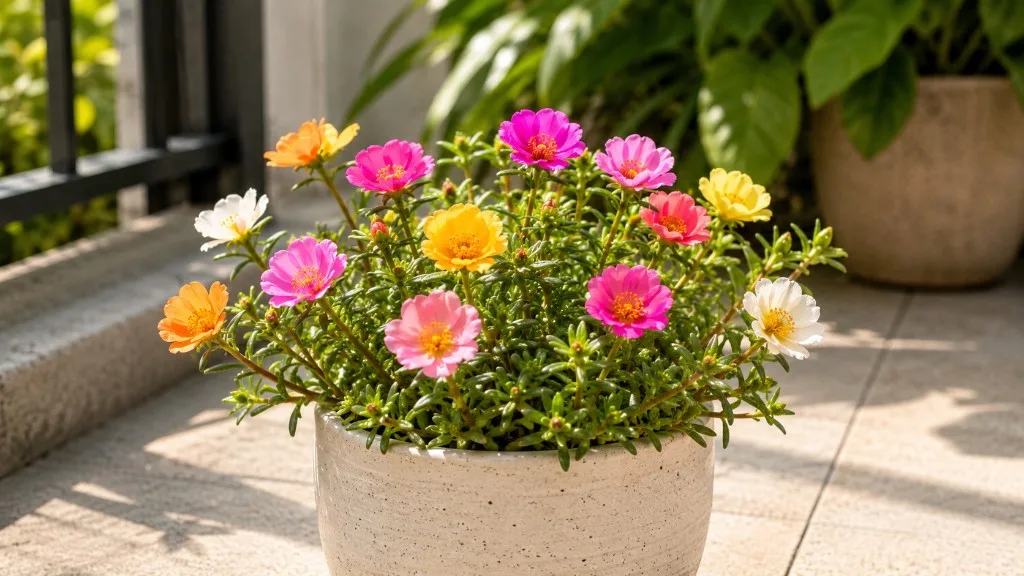
Portulaca
Likely causeA new isolate of Alternanthera mosaic virus (AltMV-MU) was purified from Portulaca grandiflora plants. It has been shown that the AltMV-MU coat protein (CP) can be efficiently reassembled in vitro under different conditions into helical RNA
Quick fixFollow extension or botanical guidance for Portulaca mosaic virus; adjust care before applying broad treatments.
 Medium
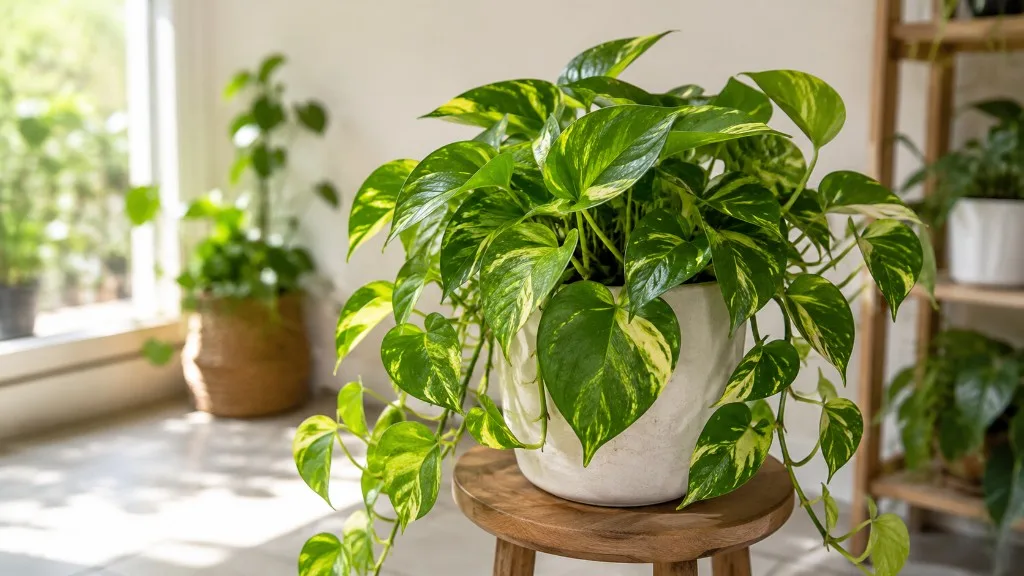
Pothos
Likely causePotyvirus infection in pothos (most commonly Dasheen Mosaic Virus , DMV) produces characteristic mosaic patterning with alternating light and dark green patches, leaf distortion, and stunted growth.
Quick fixConfirm diagnosis on your Pothos, then address the most likely care or pest factor described in current extension guidance.