Mosaic Virus on Petunia: Causes, Checks & Fixes
Quick answer
Mosaic viruses on petunias cause irregular yellow-green mottling, distorted new growth, and flower color break. There is no cure. First step: remove and destroy the entire infected plant, then wash hands and sterilize tools before touching healthy petunias.
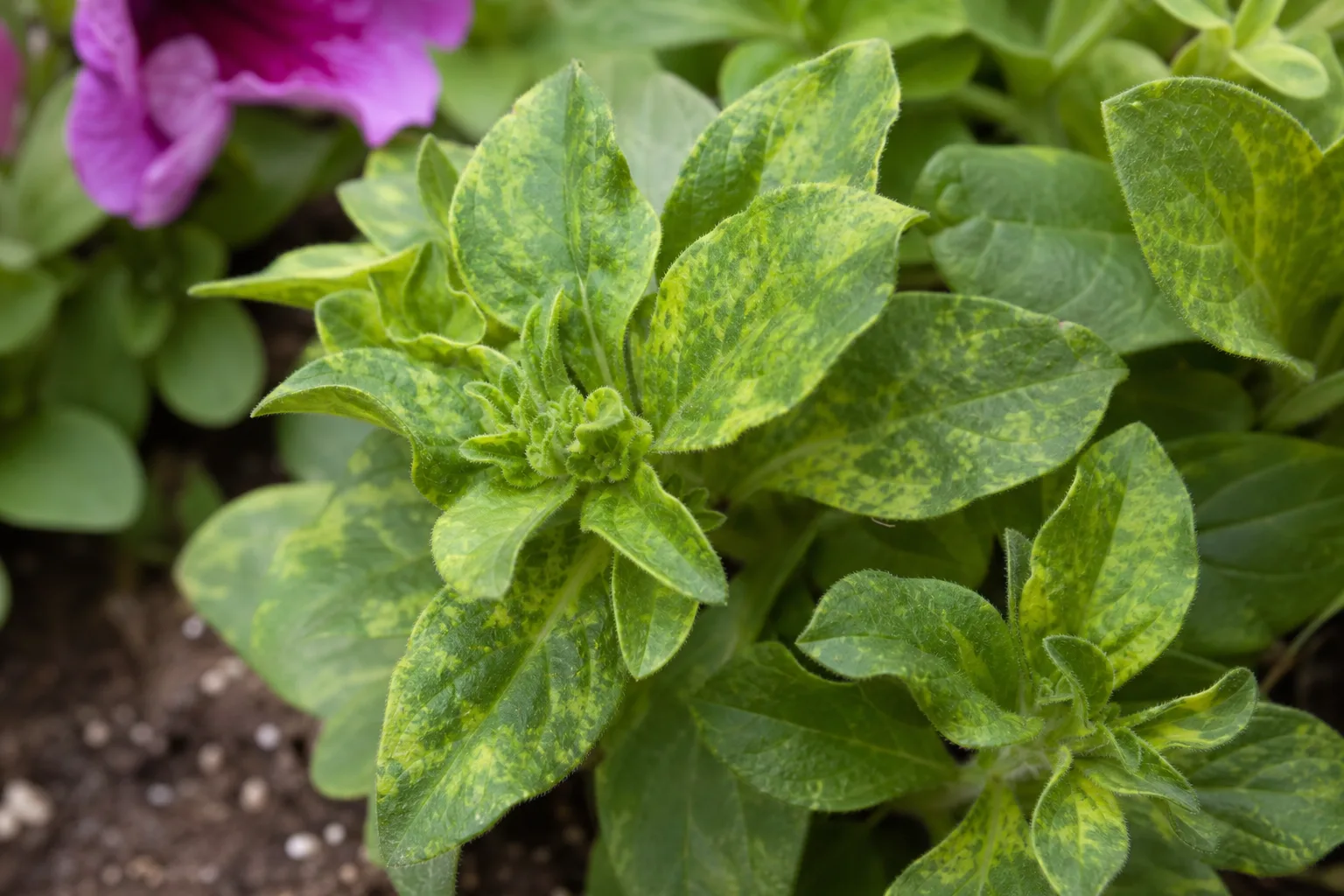
Mosaic Virus on Petunia: Causes, Checks & Fixes
This guide covers mosaic virus on Petunia. See also the general Mosaic Virus guide, watering, and light pages for this plant.
Mosaic Virus on Petunia: Causes, Checks & Fixes
Quick answer
Mosaic virus on petunia is a viral infection, not a fungus or watering mistake. Tobacco mosaic virus (TMV) and several related viruses cause irregular yellow-green mottling, crinkled or strap-shaped new leaves, stunted shoots, and flower color break-streaks or patches where petal color looks wrong.
Unlike powdery mildew or Botrytis, there is no spray that cures an infected petunia. Infected plants must be removed and destroyed-there is no cure. The virus lives inside plant cells. Infected tissue stays infected for the life of the plant.
First step: remove and destroy the entire plant-roots, potting mix, and all-before touching other containers. Then wash your hands and sterilize any tools that contacted the plant. That single action protects the rest of your baskets far more than trimming a few spotted leaves.
What mosaic virus looks like on Petunia
Symptoms vary by virus strain, weather, and how fast the petunia is growing, so one basket in Petunia light guide may look worse than a shaded neighbor carrying the same pathogen. Still, several patterns are typical on garden petunias and trailing Wave-type cultivars.
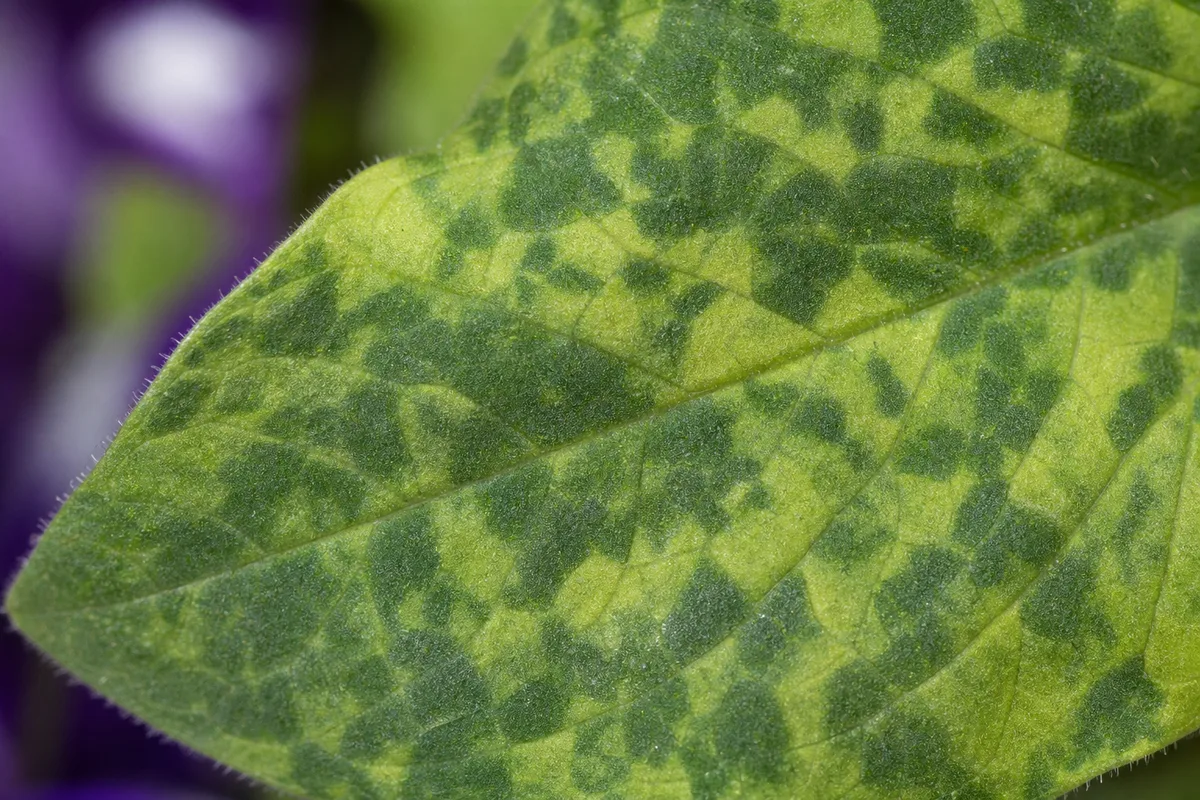
Mosaic Virus symptoms on Petunia - compare with healthy tissue on the same plant.
Leaf mottling is the hallmark sign. Infected leaves show patchy yellow and green areas that do not follow a neat vein pattern. Mottling can be bold or so subtle you notice it only when holding a leaf up to light. Some plants show almost no leaf symptoms while still carrying virus and spreading it to neighbors.
Distorted new growth appears on the soft shoots petunias push constantly during bloom season. Tips may look ferny, twisted, or narrow-sometimes described as strap-shaped or rat-tailed. One branch can be badly distorted while another on the same plant looks briefly normal.
Flower symptoms include deformed petals, streaking, and color break-a red petunia with white or pale patches, for example. Because petunias are grown for bloom impact, flower break is often what triggers a closer look at the foliage.
Stunting shows as a whole plant or single shoot that stops keeping pace with basket mates. Lower leaves may yellow while the problem climbs into new tips. Necrotic brown spots or tip dieback can appear on TMV-infected leaves in some cases.
On container petunias, mosaic often shows up mid-season after plants have filled out-when you handle them often for deadheading, when tools move between baskets, or after aphid or thrip activity peaks in warm weather.
Why Petunia gets mosaic virus
Petunias belong to the Solanaceae (nightshade) family-the same group as tomato, pepper, and tobacco-making them natural hosts for several mosaic-type viruses. They are also one of the most widely planted annual flowers, so infected stock, shared tools, and crowded mixed containers create plenty of opportunity for spread.
Tobacco mosaic virus (TMV) is the virus most often detected on petunias in production settings. TMV spreads mechanically: sap carries the virus from an infected plant to a healthy one on hands, gloves, scissors, support hooks, and bench surfaces. TMV particles are extremely stable and can survive on tools and greenhouse surfaces for months, and even persist in dried plant debris. Workers who use tobacco products can introduce TMV from contaminated hands-a real risk when deadheading dozens of basket plants in an afternoon.
Cucumber mosaic virus (CMV) and several other viruses also infect petunia. CMV is spread by aphids-aphids pick up the virus from one plant and can transfer it after brief feeding. That matters on petunias because they produce tender new growth aphids prefer, and because mixed window boxes often combine petunias with other CMV hosts.
Impatiens necrotic spot virus (INSV) and tomato spotted wilt virus (TSWV) are spread by western flower thrips; thrips feeding on petunia can move these viruses between greenhouse and garden plantings. Beet curly top virus, vectored by the beet leafhopper, causes stunting and mottled, deformed leaves on petunias in regions where the leafhopper is active.
Petunia-specific culture can raise exposure without causing the virus itself:
- Frequent deadheading and trimming moves sap between plants if tools are not cleaned.
- Dense trailing growth in hanging baskets makes it easy to brush infected leaves against healthy ones.
- Mixed containers place petunias beside tomatoes, peppers, calibrachoa, or marigolds-other common virus hosts.
- Seasonal replacement means gardeners often buy new transplants each year; one infected flat can seed an entire patio.
overwatering on Petunia, shade, or excess nitrogen do not cause true mosaic virus. They can yellow leaves or weaken plants, which makes misdiagnosis more likely-but the patchy mottling and distortion pattern points to infection, not culture alone.
How to confirm the cause
Work through these checks before you decide a petunia has mosaic virus. You are separating viral infection from nutrient problems, pest damage, and environmental stress-all common on container petunias.
- Pattern on the leaf - Hold several leaves up to light. Mosaic shows irregular islands of yellow and green. Iron chlorosis on petunias usually causes even yellowing between veins on new growth while veins stay green-not a random patchwork.
- Which tissue is affected - Virus distortion hits newest leaves and buds hardest. Older leaves alone turning uniform yellow more often suggest overwatering, root rot on Petunia, or iron deficiency at high substrate pH.
- Flowers - Streaked, blotchy, or misshapen blooms on the same plant as mottled leaves strongly support virus. Nutrient stress rarely breaks petal color in streaks.
- Pests present - Aphids or thrips on the plant do not prove virus, but they explain how CMV, INSV, or TSWV may have arrived. Treat vectors on neighbors after you remove a confirmed mosaic plant.
- Contact history - Did you prune multiple baskets with one pair of scissors? Handle plants after smoking? Buy a flat with one slightly mottled seedling? TMV fits mechanical spread patterns.
- Neighbors - Check tomatoes, peppers, snapdragons, marigolds, and calibrachoa in the same area. Shared virus hosts with similar mottling increase confidence.
Commercial growers use immunoassay test kits for confirmation. Home gardeners rarely need a lab test: if a petunia shows mottling plus distortion or flower break, treat it as infected and remove it. Waiting for proof while handling the plant risks spreading sap-borne TMV to every basket you touch next.
First fix for Petunia
Remove and destroy the entire infected plant immediately.
Pull the petunia from its container-or lift it from the window box-roots and all. Place it in a sealed bag or burn pile, not the compost bin. Discard the potting mix from that pot if it held only the infected plant. If the petunia shared a large mixed container, remove the symptomatic plant first, then watch remaining plants daily for two weeks.
Before touching any healthy petunia, wash hands thoroughly with soap or change disposable gloves. Sterilize scissors, snips, and support rings that contacted infected tissue. A 10% bleach solution or 20% nonfat dry milk are appropriate for disinfecting contaminated surfaces; plain ethanol alone may not fully inactivate TMV on tools.
Do not start with fungicide, fertilizer, extra water, or “just trimming the bad leaves.” Pruning infected petunias does not eliminate systemic virus and guarantees sap spread to tools and neighboring stems.
Step-by-step: what to do after removal
Once the sick plant is out, protect the rest of the display:
- Bag and trash the plant, tags, and dedicated potting mix. Do not reuse mix from a confirmed TMV pot.
- Scrub pots and saucers that held infected plants, or replace inexpensive containers.
- Disinfect tools used on the plant; keep one dedicated pair of snips for suspect baskets if you are mid-season.
- Scout neighbors daily for two to three weeks-mottling, strap-shaped new leaves, or flower streaking on other petunias, calibrachoa, or solanaceous crops.
- Control aphids and thrips on remaining clean plants so other viruses do not follow the same route.
- Do not take cuttings from any petunia that showed even mild mottling earlier in the season.
If only one plant in a mixed basket was affected and neighbors stay clean, you may keep the display. If mottling appears on a second plant, assume mechanical spread and remove all petunias in that container rather than chasing individual branches.
Recovery timeline and realistic expectations
Infected petunia tissue does not recover. You will not see mottled leaves “green back up” after a spray or feeding change. The useful timeline is about protecting clean plants, not rehabilitating the removed one.
- Same day - Removal and tool cleaning stop most new TMV spread from that plant.
- Days 1–14 - Watch neighboring plants for new mottling or distortion; early removal of a second case prevents a patio-wide outbreak.
- Rest of season - Clean petunias continue blooming normally. Replace removed plants with healthy transplants from a reputable source, ideally after a brief quarantine away from tomatoes and peppers.
Because petunias are seasonal annuals, many gardeners simply finish the season with remaining clean baskets and start fresh next year with stricter quarantine and tool hygiene-often the most practical path.
Lookalike symptoms on Petunia
Several common petunia problems mimic part of the mosaic picture:
| What you see | More likely cause | How to tell apart |
|---|---|---|
| Even yellow between green veins on new leaves | Iron chlorosis at high pH | Uniform pattern; no crinkled tips or flower streaking |
| White powder on leaf surfaces | Powdery mildew | Rubs off; no mosaic patchwork underneath |
| Grey fuzzy mold on wet flowers | Botrytis blight | Starts on spent blooms in humid weather |
| Fine stippling, webbing on undersides | Spider mites | No yellow-green mosaic; mites visible with lens |
| Silvery scars on petals | Thrips | Stippling without classic leaf mottle; inspect flowers |
| Twisted growth after herbicide drift | Chemical injury | Follows exposure event; not progressive sap-borne spread |
Nutrient deficiencies can stunt petunias and yellow leaves, but they rarely produce random mosaic mottling plus flower color break on the same shoot. When in doubt, assume virus and remove the plant-false alarm costs one annual; delay can cost a whole row of baskets.
Mistakes to avoid
- Pruning out “bad leaves” only - Leaves you leave still carry virus; sap from cuts contaminates tools.
- Composting infected petunias - TMV survives in dried tissue; home compost rarely heats enough to kill it.
- Reusing potting mix from a removed plant in another container.
- Deadheading across the whole patio with one unwashed pair of snips.
- Fertilizing or spraying fungicide hoping to cure a virus- wastes money and delays removal.
- Buying discounted flats with subtle mottling “to see if they recover.”
- Placing new petunias immediately beside tomatoes or peppers without a quarantine period.
How to prevent mosaic virus next season
Prevention on petunias is mostly sanitation and careful buying, not a special fertilizer program.
- Inspect transplants before purchase-reject any with mottled, crinkled, or streaked tissue, even if blooms look fine.
- Quarantine new baskets for two weeks away from vegetables and other ornamentals-especially tomatoes, peppers, and marigolds.
- Wash hands before grooming petunias; if you use tobacco, treat hand-washing as mandatory.
- Sterilize snips between plants when deadheading multiple containers.
- Control aphids and thrips early on Petunia on petunias so CMV and thrips-vectored viruses have fewer opportunities.
- Avoid saving cuttings from stock plants unless you are certain they never showed virus symptoms.
- Disinfect bench tops, rails, and hooks at season end if you had a confirmed case-TMV persists on surfaces.
Petunias still need full sun, even moisture, and well-draining mix for best bloom, but good culture does not prevent mosaic once sap-borne virus arrives. Hygiene and clean planting stock do.
When to worry
Act the same day if you see mottling with distorted new growth, flower color break, or stunting on one branch in a multi-plant basket. TMV and related viruses spread faster than most fungal leaf spots once you handle infected tissue.
Escalate to removing all petunias in the container if a second plant shows symptoms within two weeks, if tomatoes or peppers nearby develop mosaic, or if you cannot reliably sterilize shared tools between plants.
Do not wait for lab confirmation before isolating and removing a strongly suspect petunia-the cost of one replacement plant is lower than losing an entire mixed display.
Conclusion
Mosaic virus on petunia is a serious, incurable infection that shows up as patchy leaf mottling, twisted new growth, and streaked flowers-often after mechanical spread through sap on hands and tools. Petunias in crowded baskets and mixed patio plantings are especially vulnerable because they are handled often and share space with other virus hosts.
The right response is blunt: remove and destroy the plant, discard contaminated mix, and clean everything that touched it. No amount of trimming, feeding, or fungicide replaces that step. Protect remaining clean petunias with strict tool hygiene, aphid and thrip control, and careful inspection of every new flat you bring home.
When to use this page vs other Petunia guides
- Petunia watering guide - Use for routine moisture checks before assuming mosaic virus is the main issue.
- Petunia problems hub - Browse all 40 common issues on this species.