Petunia Care Guide: Sun, Deadheading & Containers
Petunia × atkinsiana
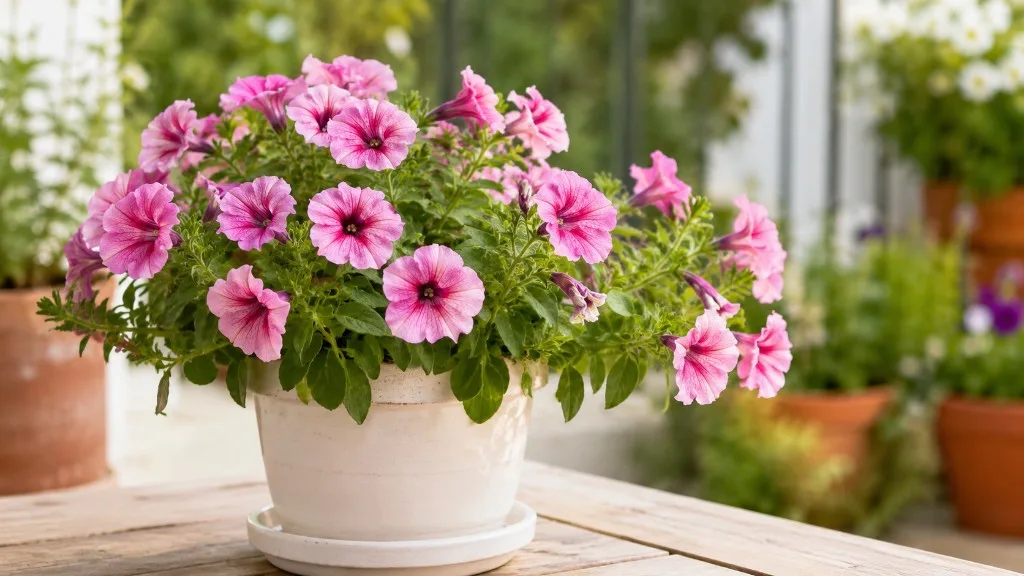
Petunias need full sun (5–6+ hours), base watering every 1–3 days, deadheading every 2–3 days, and biweekly feeding. Non-toxic to pets.
Petunia Care Guide: Sun, Deadheading & Containers
Start with wateringThe most common care mistake for PetuniaWatering guide →Petunia care essentials
Light
full sun - 5–6 hours of direct sun minimum; more sun = more blooms
Water
Every 1–3 days in hot weather - always at the base, never overhead. Check top 2–3 cm. Containers need frequent checking in heat.
Soil
Lightweight potting mix + 15–20 % perlite. Well-draining. pH 6.0–7.0.
Humidity
Low to moderate; high humidity causes botrytis on flowers
Temperature
15°C to 28°C (60–82°F)
Fertilizer
Use balanced liquid fertilizer with moderate potassium; or slow-release granules at planting and stop if the plant is stressed, newly repotted, or not actively growing.
About Petunia
Petunia is native to South America (Argentina), typically reaches 15–40 cm tall; 30–90 cm spread (trailing varieties much wider) indoors, with fast during cool growing season growth. Petunia has a trailing growth habit and part of the Solanaceae family. It is also known as Garden Petunia and Wave Petunia.
| Detail | Information |
|---|---|
| Also known as | Garden Petunia, Wave Petunia |
| Native region | South America (Argentina) |
| Mature size | 15–40 cm tall; 30–90 cm spread (trailing varieties much wider) |
| Growth rate | Fast during cool growing season |
| Growth habit | Trailing |
| Scientific name | Petunia × atkinsiana |
| Family | Solanaceae |
Petunia Care Guide: Sun, Deadheading & Containers
Petunias are the annual bedding plant people buy when they want color fast - and the annual bedding plant people abandon when the blooms stall, the stems stretch, or the basket dries out on a hot afternoon. The gap between those two outcomes is not complicated. It comes down to four decisions you make in the first week: enough Petunia light guide, the right Petunia watering guide for container or ground, consistent deadheading or grooming matched to your variety, and a feeding schedule that container plants actually need. Get those aligned and petunias are among the easiest flowering annuals you can grow. Miss one and you will blame the plant for being finicky when the placement was wrong.
This guide covers Petunia × atkinsiana - the modern garden petunia sold as bedding packs, hanging baskets, window boxes, and spreading groundcover - with practical emphasis on annual bedding culture, sun requirements, deadheading by type, and the real differences between container and in-ground care.
For related Petunia care, see Cold Damage on Petunia, Crispy Leaves on Petunia, Damping Off on Petunia.
What Garden Petunia Actually Is (and Why It Is an Annual)
Petunia (Petunia × atkinsiana, also called Garden Petunia) belongs to the Solanaceae family - the nightshade family that includes tomatoes, peppers, and potatoes. That family connection matters for care expectations: petunias want bright conditions, good drainage, and they punish soggy roots quickly. The species is a hybrid complex bred from South American ancestors, with modern breeding focused on flower size, color range, self-cleaning blooms, and spreading or trailing habits.
In most gardens, petunias are grown as annuals: you plant them for one display season and replace them when performance drops or frost arrives. They are not permanent landscape shrubs. Mature size in cultivation runs roughly 15–40 cm tall with a spread of 30–90 cm, though trailing and Wave-type cultivars can cascade 60–90 cm or more from a hanging basket by season’s end. Growth is fast during cool, bright weather and slows or stalls when nights stay hot and humid.
The single most useful mental model for petunia care is this: flowers are the report card. Leaves may stay green in mediocre light, but bloom count tells you whether the plant is truly getting what it needs. If you are troubleshooting, start with sun and water rhythm before reaching for fertilizer or a new pot.
The Four Petunia Types You Will Actually Buy
University of Minnesota Extension groups garden petunias into four practical categories based on flower size and growth habit. The category on your plant tag changes deadheading labor, spacing, water demand, and whether the plant belongs in a border, a pot, or a hanging basket.
Grandiflora and Multiflora Bedding Petunias
Grandiflora petunias carry the largest flowers - often 7–10 cm across on upright or slightly mounding plants that reach 30–40 cm tall. They are the classic bedding-pack petunia: big color, strong visual impact, and the most traditional deadheading requirement. Mississippi State University Extension notes that grandifloras are prone to looking open or tired by midseason and respond well to an all-over trim of up to one-third combined with a fertilizer boost. They are excellent in containers viewed up close, though very large double-flowered forms can be damaged by heavy rain.
Multiflora petunias produce more flowers at once with slightly smaller blooms than grandifloras. They tend to be more compact and weather-tough, which makes them a strong choice for massed garden color. Both grandiflora and multiflora benefit from pinching back when about 15 cm tall to encourage branching - but do not pinch milliflora or spreading types, per UMN Extension guidance.
Milliflora and Spreading or Wave Types
Milliflora petunias are miniature plants with flowers roughly 2.5–4 cm across. They work beautifully as edging, in mixed containers, and anywhere you want detail at close range. Space them 10–15 cm apart in beds.
Spreading or Wave petunias (including Tidal Wave and similar series) grow only 15–20 cm tall but spread aggressively - 60–120 cm or more in a season when sun, water, and feed stay consistent. Spreading types are self-cleaning: faded blooms dry and drop without manual removal. They still need frequent water and fertilizer compared with upright bedding types, and they are the default choice for hanging baskets, window boxes, retaining-wall spillover, and fast groundcover color.
Full Sun: The Non-Negotiable Bloom Requirement
Petunias are sun annuals. University of Minnesota Extension states they need at least 5–6 hours of good sunlight and perform best in full sun all day. Mississippi State Extension recommends full sun for peak bloom. The relationship is linear: more sun equals more flowers, tighter growth, and faster soil drying that reduces root disease. More shade equals fewer flowers, longer gaps between bloom flushes, and leggy stems reaching for light.
A practical placement test: if new growth is compact and heavily budded, sun is adequate. If stems stretch with wide gaps between leaves, if color washes out pale green, or if the plant blooms only on the side facing the sun, it needs a brighter position. Petunias tolerate light afternoon shade in very hot climates - Mississippi State notes partial shade can help in hot regions - but they are a poor fit for shaded balconies, north-facing window boxes, and permanent indoor display. For shade color, UMN Extension correctly points to impatiens, not petunias.
Rotate containers every week or two so all sides receive direct sun. Against a wall or railing, the back face often goes flowerless by midsummer simply because it never sees light.
Watering Petunias in Containers vs. In-Ground Beds
This is where most petunia failures happen: the watering approach that works in a garden bed will kill a hanging basket, and the daily container routine will drown an in-ground plant. Petunias have shallow, fibrous roots that dry quickly in limited soil volume but can reach deeper moisture in open ground once established.
In-ground petunias - except spreading types - are relatively drought-tolerant once rooted. University of Minnesota Extension recommends one thorough watering per week in normal summer weather, soaking 15–20 cm deep rather than sprinkling lightly every day. Light daily watering keeps roots in the hot top layer and weakens heat resistance. Extension guidance recommends a deep weekly soak rather than frequent shallow sprinkles. Spreading and Wave types in beds are the exception - they need more frequent watering because they cover more surface area and transpire heavily.
Container, window box, and hanging basket petunias dry faster - often every 1–2 days in summer, and sometimes twice daily for small baskets in full sun during peak heat, per UMN Extension. Always water at the base, not overhead. Wet flowers and foliage in humid weather invite botrytis and petal blight. Morning watering is ideal so any splashed leaves dry before evening.
How to Check Soil Moisture Before You Water
Do not water on a calendar. Push your finger 2–3 cm into the mix. If it feels dry at that depth, water thoroughly until it runs from drainage holes, then empty the saucer. If still cool and damp, wait. Lift the pot when you can - a dry container is noticeably lighter. For in-ground plants, check the top 5 cm; if dry, soak the root zone deeply.
Wilting is a signal, not an automatic command to water. Petunias wilt dramatically when dry but often recover within hours after a proper soak. Wilting on wet soil is different - that points to root damage, heat stress, or disease, and more water makes it worse.
Soil, pH, and Drainage for Annual Bedding
Petunias are not heavy soil feeders, but they are strict about drainage. UMN Extension says soil need not be terribly rich, but it must drain decently. In beds, work 5–8 cm of compost or aged manure into the top 20–25 cm before planting to open clay and help sand hold moisture. In containers, use lightweight potting mix with 15–20% perlite - a practical recipe is 60% quality potting mix, 20% perlite, 20% cocopeat. Target pH 6.0–7.0. Most commercial mixes already land in that range.
Avoid garden soil straight in pots. It compacts, drains poorly, and suffocates shallow annual roots. Every container needs a drainage hole. A beautiful sealed pot without one is a petunia short-timer. In hot climates, terracotta dries faster (good for overwaterers); plastic retains moisture longer (better for dry balconies with relentless sun).
Deadheading, Pinching, and Midseason Trimming
Deadheading means removing spent flowers including the small stem and seed pod below the bloom, not just pinching the petal tube. Seed formation diverts energy away from new buds. University of Minnesota Extension calls deadheading essential for container annuals and useful in beds when practical. For grandiflora and multiflora types, check every 2–3 days during peak bloom.
Deadheading technique: follow the flower stem down to the first side branch or set of leaves and snip or pinch cleanly. On double grandifloras, faded blooms can persist ugly on the plant - remove them before mould sets in. After rain, inspect containers closely; soaked spent flowers are botrytis entry points.
Midseason renewal is not deadheading - it is a haircut. When plants look open, leggy, or tired, Mississippi State Extension recommends trimming up to one-third of the plant volume with clean scissors, then applying water-soluble fertilizer. Recovery takes about a week, after which branching and bloom count jump. Repeat as needed through the season.
Self-Cleaning Wave Types Still Need Grooming Sometimes
Mississippi State Extension notes that Wave and spreading petunias do not require deadheading because blooms drop cleanly. That is true - but “self-cleaning” is not “self-perfecting.” Occasional removal of stuck faded flowers after wet weather still helps. More importantly, spreading types benefit from pinching leggy stems back 2.5–5 cm to force branching when they get thin in the center or stretch along railing edges. If your Wave basket looks long and stringy with blooms only at the tips, it needs a trim and a feed, not more patience.
Fertilizer Schedules That Match Your Planting Location
Petunias bloom heavily and exhaust soil nutrients fast - especially in containers, where frequent watering leaches fertilizer. UMN Extension recommends incorporating timed-release fertilizer into container mix at planting, then starting liquid fertilizer every 2 weeks from early to mid-July for flowering annuals. In garden beds, work a balanced granular fertilizer (such as 10-10-10) into soil at planting at roughly 1 kg per 10 square metres, then switch to liquid feed every 3 weeks. Spreading types need weekly feeding whether in beds or pots.
Mississippi State Extension suggests liquid feed every 2–3 weeks in summer containers. Spreading types need more frequent feeding and will not reach full spread potential on starving soil. Use a balanced or bloom-formula liquid feed at label rate; petunias are not picky about brand, but they are consistent about needing regular input.
Two rules: never fertilize bone-dry soil - water first, then feed - and pause feeding on severely stressed or root-rotted plants until they recover. Very high nitrogen alone can push leafy growth at the expense of flowers in containers.
Temperature, Humidity, and Seasonal Rhythm
Petunias prefer 15–28°C (60–82°F) for steady growth and bloom. They tolerate cool nights better than many summer annuals, which is why they excel as cool-season bedding in hot climates. Frost kills them - below 5°C is lethal - so plant after soil warms to about 16°C and frost danger passes. UMN Extension advises waiting until soil reaches roughly 16°C before transplanting.
In North India and similar hot-summer regions, petunias perform best October through March as cool-season annuals, then fade when sustained temperatures exceed 35°C. That is not a care failure - it is the plant’s thermal limit. Plan to replace or shift to heat-tolerant summer annuals when the cool window closes.
Humidity tolerance is low to moderate. High humidity plus wet flowers equals grey mould. Prioritize airflow in crowded baskets and avoid evening overhead watering.
Containers, Hanging Baskets, and Window Boxes
Containers are where petunias often look their best because you control mix, placement, and viewing distance. Plant more densely than in beds - UMN Extension notes containers must look full immediately. A 30–35 cm basket comfortably holds 4–5 trailing plants; a 25 cm pot suits 2–3 multiflora plants. Larger containers retain moisture longer and need less frantic watering.
Hang baskets where they receive unobstructed sun - not under deep eaves that block afternoon light. Window boxes on south- or west-facing rails perform well if you accept the watering commitment: daily checks are mandatory from late spring through summer. Self-watering containers reduce stress and can improve total flowering in trials, but they still need sun and feed.
Rotate baskets weekly. Trailing stems otherwise pile color on one side while the shaded face goes bare.
Planting Petunias in Garden Beds and Borders
In beds, petunias excel as seasonal color blocks along walkways, at bed fronts, and mixed with verbena, calibrachoa, or foliage fillers. Space grandiflora and multiflora 30 cm apart in full sun; milliflora 10–15 cm; spreading types 45–60 cm minimum so they have room to run.
Prepare soil with compost, plant at the same depth as the nursery cell, and water in well. Provide light midday shade protection for 2–3 days only at transplant if weather is hot and windy - not permanent shade. After establishment, full sun resumes.
Bedded petunias need less frequent watering than pots but more deadheading discipline if you want a polished look across a large area. Many gardeners deadhead containers meticulously and let bedded plants go more natural except for a midseason chop.
Propagation by Seed and Stem Cuttings
Petunias are easy from transplants and doable from seed or cuttings if you want variety choice or volume.
Seed: Petunia seeds are tiny and need light to germinate. Surface-sow on moist seed mix, do not bury. Maintain 20–25°C; germination often takes 5–10 days. Start indoors 10–12 weeks before outdoor planting in cold climates. UMN Extension recommends growing seedlings 10–15 cm below fluorescent lights for 16–18 hours daily. Pelleted seed is easier to handle.
Stem cuttings: Take 10–15 cm cuttings from non-flowering shoots in early season, strip lower leaves, and root in water or moist perlite mix. Move to bright sun after roots form. Cuttings preserve cultivar traits; seed from hybrids may not match the parent.
For most home gardeners, buying healthy cell packs is cheaper than seeding unless you want unusual colors or very large quantities.
Pet Safety: A Rare Non-Toxic Flowering Annual
Petunias are one of the few vividly colored annuals that is also pet-safe. The ASPCA lists Petunia species as non-toxic to dogs, cats, and horses. That makes them a strong choice for pet-aware balconies and garden borders where toxic ornamentals would be risky.
Pet safe is not chew-proof. The foliage has a pungent scent that deters most nibbling, but large ingestion of any plant material can cause mild stomach upset. Pets can also get sick from soil, fertilizer, mulch, or pesticides - not the flower itself. Use hanging baskets or raised planters if pets dig in soil. For rabbits, turtles, and tortoises, verification is less complete; treat as caution unless a veterinarian confirms suitability.
Common Petunia Problems and Real Fixes
Most petunia problems are environmental. Diagnose in this order: sun, then moisture rhythm, then spent flowers and airflow, then pests.
Leggy growth with few flowers - almost always insufficient sun or a plant that needs midseason trimming. Move to more light or cut back and feed.
Yellow leaves on wet soil - overwatering on Petunia or poor drainage. Let soil dry appropriately, improve mix drainage, and remove badly rotted plants if stems stay mushy.
Wilting with dry soil - underwatering on Petunia, especially in containers. Soak thoroughly; do not rely on light sprinkles.
Grey mould on flowers (botrytis) - the Pacific Northwest Pest Management Handbooks note Botrytis cinerea attacks senescent petals first, especially in humid, stagnant air. Remove spent blooms daily, improve spacing, water at the base in morning, and discard badly infected plants in sealed waste - do not compost.
Aphids and budworm - inspect buds and stem tips weekly. Aphids cluster on tender growth; budworm chews holes in buds. Insecticidal soap or targeted caterpillar control works if caught early.
Heat fade - bloom production stalls above 35°C sustained. In hot climates, shift to cool-season scheduling or accept a summer pause.
Cool-Season Annuals in Hot Summer Climates
If you garden where summers are brutal, treat petunias as a cool-season annual, not a year-round performer. Start seeds or buy transplants in September–October for winter-through-spring display in North India and similar regions. Give full winter sun, moderate watering as pots dry, and regular feed through the cool bloom window.
When temperatures climb past the plant’s comfort zone, performance drops even with perfect care. Replace with heat-loving portulaca, zinnia, or vinca for summer rather than fighting the thermometer. In temperate climates with mild summers, petunias run from last frost to first frost with midseason trims keeping them fresh.
Conclusion
Petunia care is not about memorizing a universal watering day. It is about matching a sun-loving annual to at least 5–6 hours of direct sun (more is better), watering containers frequently and beds deeply, deadheading grandiflora and multiflora every few days while grooming self-cleaning Wave types when they stretch, and feeding container plants regularly because leaching and limited soil volume demand it. Flowers tell the truth about your light. Soil moisture at 2–3 cm depth tells the truth about your watering. The plant tag tells the truth about whether you should be pinching, deadheading, or letting blooms drop.
Choose the right type for the job - grandiflora for big close-up color, multiflora for tough massed beds, milliflora for edging, Wave for baskets and spillover - put it in real sun, and renew tired plants with a third-off trim plus fertilizer rather than waiting for magic recovery. Do that and petunias deliver exactly what they promise: fast, generous, pet-safe color for one strong season.
When to use this page vs other Petunia guides
- Petunia overview - Canonical hub for this species - care topics and problems branch from here.
- Petunia problems - Symptom-first path when you already know something is wrong.
Related Petunia guides
How to care for Petunia?
How much light does Petunia need?
full sun - 5–6 hours of direct sun minimum; more sun = more blooms
- full sun - 5–6 hours of direct sun minimum; more sun = more blooms - full sun - 5–6 hours of direct sun minimum; more sun = more blooms.
When should you water Petunia?
Every 1–3 days in hot weather - always at the base, never overhead. Check top 2–3 cm. Containers need frequent checking in heat.
- Water when the top 2 cm of soil feels dry - Check top 2–3 cm.
- Drain excess water - Empty the saucer after watering so the roots are not sitting in standing water.
What soil works best for Petunia?
Lightweight potting mix + 15–20 % perlite. Well-draining. pH 6.0–7.0.
- 60% quality potting mix - Lightweight potting mix + 15–20 % perlite.
- 20% perlite - Lightweight potting mix + 15–20 % perlite.
- 20% cocopeat
Grower notes for Petunia
What matters most with Petunia
Petunia needs enough light and seasonal rhythm to bloom well. Leaves may stay alive in mediocre light, but flowers usually reveal whether the plant is truly getting what it needs. In practice, the care checkpoint is simple: full sun - 5–6 hours of direct sun minimum; more sun = more blooms. Pair that with lightweight potting mix + 15–20 % perlite. Well-draining; pH 6.0–7.0, and avoid changing water, pot size, and placement all at once.
Best placement in a real home
Petunia belongs where full sun - 5–6 hours of direct sun minimum; more sun = more blooms is realistic for most of the day, not only where the pot looks good. Every 1–3 days in hot weather - always at the base, never overhead. Check top 2–3 cm. Containers need frequent checking in heat. If the pot stays wet longer than expected, move the plant into better light or reassess the mix before watering again. Humidity target: Low to moderate; high humidity causes botrytis on flowers. Temperature comfort zone: 15°C to 28°C (60–82°F).
Before you buy this plant
Choose Petunia with firm new growth, clean leaf undersides, and soil that does not smell sour or feel compacted. Be cautious if you see leggy-growth, sticky residue, collapsed crowns, or a pot that is wet in poor light. Cosmetic old-leaf damage is less worrying than weak roots or active pests.
First month after bringing it home
Do not repot Petunia on day one unless the mix is failing or pests are obvious. Quarantine it, learn how fast the pot dries, and keep care boring while it adjusts. Watch especially for leggy-growth, yellow-leaves, and brown spots. If problems appear, correct the condition first rather than stacking fertilizer, repotting, and pruning together.
Pet-aware note for Petunia
Petunia is a better choice for pet-aware homes than toxic ornamentals, but pet safe does not mean the plant should be chewed. Use hanging, shelf, or room placement if pets dig in soil or shred leaves, and choose sturdier plants for high-traffic pet zones.
How to tell Petunia is settling in
Also sold as Garden Petunia and Wave Petunia, this plant should be judged by stable new growth rather than label names alone. If you plan to multiply it later, common methods include Seeds and Stem cuttings. Repot only when you see N/A - usually replaced each season. If yellow-leaves shows up early, inspect light, watering, and roots before assuming the plant is permanently weak.
Are petunias safe for pets?
Petunias (Petunia × atkinsiana) are listed as non-toxic to cats and dogs by ASPCA.
ASPCA lists Petunia species as non-toxic. The pungent foliage naturally deters most pets.
Watering Petunia
For Petunia, water when the top 2 cm of soil feels dry and water every 1–2 days in summer; every 3 days in cooler months. Reduce after main flowering season ends; restart watering for autumn crop.
| Detail | Information |
|---|---|
| How often | Every 1–2 days in summer; every 3 days in cooler months |
| How to check | Water when the top 2 cm of soil feels dry |
| Seasonal changes | Reduce after main flowering season ends; restart watering for autumn crop |
Signs of overwatering
- grey mould on flowers
- yellow leaves
- root rot in container
Signs of underwatering
- wilting mid-morning
- flowers fading quickly
- crispy leaf edges
Soil & potting for Petunia
Use a mix of 60% quality potting mix, 20% perlite, 20% cocopeat for Petunia. Excellent drainage needed - particularly important in containers. Target soil pH around 6.0–7.0. Repot annual - grown as seasonal plant, ideally in start seeds or transplants in September–October for winter display.
| Detail | Information |
|---|---|
| Recommended mix | 60% quality potting mix, 20% perlite, 20% cocopeat |
| Drainage | Excellent drainage needed - particularly important in containers |
| Soil pH | 6.0–7.0 |
| Repotting frequency | Annual - grown as seasonal plant |
| Best season to repot | Start seeds or transplants in September–October for winter display |
Signs it needs repotting
- N/A - usually replaced each season
Humidity & temperature for Petunia
Petunia prefers low to moderate; high humidity causes botrytis on flowers, though normal home humidity is usually fine. Keep temperatures around 15°C to 28°C (60–82°F).
| Detail | Information |
|---|---|
| Humidity | Low to moderate; high humidity causes botrytis on flowers - normal home humidity is fine. |
| Ideal temperature | 15°C to 28°C (60–82°F) |
Fertilizer & pruning for Petunia
Use use balanced liquid fertilizer with moderate potassium; or slow-release granules at planting and stop if the plant is stressed, newly repotted, or not actively growing. for Petunia.
| Detail | Information |
|---|---|
| Fertilizer type | Use balanced liquid fertilizer with moderate potassium; or slow-release granules at planting and stop if the plant is stressed, newly repotted, or not actively growing. |
Common problems on Petunia
Aphids
MediumLikely cause: Sap-sucking aphids colonize petunia leaves and stems, causing curled foliage, honeydew, and virus transmission.
Quick fix: Spray colonies with a strong water jet or insecticidal soap; repeat every 4–5 days until clear.
Full fix guide →Blight
HighLikely cause: Botrytis cinerea blight on senescent flowers and wet foliage, especially in humid or overhead-watered petunias.
Quick fix: Remove infected flowers and leaves; water at the base only and improve airflow around the plant.
Full fix guide →Brown Tips
MediumLikely cause: Underwatering in hot containers causes crispy brown leaf edges as petunias sacrifice outer tissue.
Quick fix: Check top 2 cm of soil; water deeply at the base when dry until water drains from the pot.
Full fix guide →Bud Drop
MediumLikely cause: Tobacco budworm boring into buds, or insufficient light/nutrition aborting developing flowers.
Quick fix: Inspect buds at dusk for holes and frass; move to full sun and switch to a bloom fertilizer with more phosphorus.
Full fix guide →Caterpillars
HighLikely cause: Tobacco budworm (Helicoverpa virescens) larvae feed inside petunia buds and chew petals at night.
Quick fix: Scout at dusk and hand-pick larvae; apply Bt or spinosad to buds and foliage in late evening.
Full fix guide →Cold Damage
HighLikely cause: Petunias are frost-sensitive annuals; temperatures below 5°C cause blackened, water-soaked tissue.
Quick fix: Move containers indoors before frost; replace plants if stems and buds collapse after a freeze.
Full fix guide →Crispy Leaves
MediumLikely cause: Chronic underwatering or heat-wave transpiration loss dries petunia leaves to a papery texture.
Quick fix: Water deeply in early morning; if soil repels water, submerge the basket 30 minutes to rehydrate.
Full fix guide →Damping Off
HighLikely cause: Pythium, Rhizoctonia, or Fusarium attack petunia seedlings in cold, wet, poorly drained seed-starting mix.
Quick fix: Use sterile mix, surface-sow without covering seeds, and let the medium dry slightly between waterings.
Full fix guide →Drooping Leaves
MediumLikely cause: Both underwatering and overwatered/root-rot conditions reduce turgor, causing petunia leaves to droop.
Quick fix: Check soil moisture 2 cm deep; water deeply if dry, or improve drainage and reduce watering if soggy.
Full fix guide →Likely cause: Natural aging plus drought or heat stress fade petunia blooms before they are deadheaded.
Quick fix: Deadhead spent flowers every 2–3 days and keep soil evenly moist during hot weather.
Full fix guide →Flowers Turning Brown
MediumLikely cause: Botrytis gray mold infects wet petunia petals, causing brown, water-soaked flower tissue.
Quick fix: Remove brown flowers immediately; stop overhead watering and increase spacing for airflow.
Full fix guide →Fungus Gnats
LowLikely cause: Fungus gnat larvae thrive in constantly wet petunia container soil and can spread damping-off pathogens.
Quick fix: Let the top 2 cm of soil dry between waterings; use yellow sticky traps and Bti drenches if larvae persist.
Full fix guide →Heat Stress
MediumLikely cause: Petunias fade and wilt above 35°C when roots cannot replace moisture lost to extreme transpiration.
Quick fix: Water deeply at dawn; provide afternoon shade during heat waves and trim back heat-damaged stems.
Full fix guide →High Humidity
MediumLikely cause: High humidity above 85% promotes Botrytis on petunia flowers and foliage in crowded containers.
Quick fix: Improve airflow, space plants apart, and water at the base only-never mist flowers.
Full fix guide →Holes in Leaves
MediumLikely cause: Tobacco budworm and slugs chew irregular holes in petunia leaves, buds, and petals.
Quick fix: Check for budworm frass on leaves at dusk; hand-pick caterpillars or apply iron phosphate bait for slugs.
Full fix guide →Iron Deficiency
MediumLikely cause: Petunias are iron-inefficient; substrate pH above 6.2 causes interveinal chlorosis on new growth.
Quick fix: Check container pH; apply an iron chelate drench and avoid chronic overwatering that raises pH.
Full fix guide →Leaf Miners
LowLikely cause: Serpentine leafminer larvae tunnel inside petunia leaves, leaving translucent stippled tracks.
Quick fix: Pinch off and discard mined leaves early; improve airflow but sprays rarely reach larvae inside tissue.
Full fix guide →Leggy Growth
MediumLikely cause: Insufficient direct sun causes petunias to etiolate with long bare stems and few side branches.
Quick fix: Move to full sun (5–6+ hours); cut stems back by one-third to one-half above a leaf node.
Full fix guide →Leggy Seedlings
MediumLikely cause: Indoor petunia seedlings stretch when grow lights are too weak, distant, or days are too warm without light.
Quick fix: Keep lights 5–8 cm above seedlings for 14–16 hours daily; pinch above the first true leaves.
Full fix guide →Mold on Soil
LowLikely cause: Surface mold grows on constantly wet petunia potting mix in poorly ventilated containers.
Quick fix: Scrape off mold, let the top 2 cm dry between waterings, and improve airflow around the basket.
Full fix guide →Mosaic Virus
HighLikely cause: Tobacco mosaic virus and related viruses cause mottled, distorted petunia leaves and flower color break.
Quick fix: Remove and destroy infected plants; wash hands and tools after handling; control aphids and thrips vectors.
Full fix guide →No Flowers
MediumLikely cause: Shade, excess nitrogen, or tobacco budworm damage prevent petunias from producing or opening blooms.
Quick fix: Move to 6+ hours of direct sun; switch to a low-nitrogen bloom fertilizer and scout buds for budworm.
Full fix guide →Not Enough Light
MediumLikely cause: Petunias need 5–6+ hours of direct sun; low light causes sparse blooms, pale growth, and legginess.
Quick fix: Relocate the pot to the sunniest available spot or replace with a shade-tolerant annual if light is inadequate.
Full fix guide →Overwatering
HighLikely cause: Frequent watering of slow-drying container petunias keeps roots oxygen-starved and invites Phytophthora.
Quick fix: Water only when the top 2 cm is dry; ensure drainage holes are open and soil drains within hours.
Full fix guide →Overfertilization
MediumLikely cause: Excess fertilizer salts or high-nitrogen feeds scorch petunia leaves and suppress flowering.
Quick fix: Stop feeding; flush the container with water until it runs freely from drainage holes several times.
Full fix guide →Poor Drainage
HighLikely cause: Heavy or compacted mix in petunia containers stays wet and triggers root rot and yellowing.
Quick fix: Repot into lightweight mix with 20% perlite; confirm water exits drainage holes within minutes.
Full fix guide →Powdery Mildew
MediumLikely cause: Podosphaera species cause chlorotic lower leaves and white fungal growth on petunia foliage.
Quick fix: Remove affected lower leaves, improve spacing and airflow, and avoid wetting foliage when watering.
Full fix guide →Root Rot
HighLikely cause: Phytophthora and Pythium rot petunia roots in waterlogged container or window-box soil.
Quick fix: Remove the plant, discard wet soil, trim brown roots, and replant in fresh draining mix; reduce watering.
Full fix guide →Slugs and Snails
MediumLikely cause: Slugs and snails chew petunia leaves and stems overnight, especially on ground-level plantings in spring.
Quick fix: Apply iron phosphate bait around container bases; hand-pick at dusk and remove hiding spots nearby.
Full fix guide →Slow Growth
MediumLikely cause: Shade, root rot, viral infection, or iron deficiency stall petunia growth and canopy fill.
Quick fix: Verify 6+ hours of sun, check roots for rot, and test for iron chlorosis on new leaves before feeding more.
Full fix guide →Likely cause: Insufficient sun, potassium-poor feeding, or heat stress produce smaller, weaker petunia blooms.
Quick fix: Move to full sun and feed every 1–2 weeks with a balanced liquid fertilizer moderate in potassium.
Full fix guide →Spider Mites
MediumLikely cause: Spider mites stipple and yellow petunia leaves in hot, dry, exposed basket locations.
Quick fix: Rinse leaf undersides with water in early morning; repeat every 2–3 days and improve airflow.
Full fix guide →Sticky Leaves
MediumLikely cause: Aphid and whitefly honeydew coats petunia leaves, sometimes followed by sooty mold.
Quick fix: Inspect leaf undersides for aphids or whiteflies; wash foliage and treat with insecticidal soap.
Full fix guide →Thrips
MediumLikely cause: Western flower thrips scar petunia petals and leaves and vector INSV and TSWV.
Quick fix: Scout for silvery stippling on leaves; use blue sticky traps and insecticidal soap on early infestations.
Full fix guide →Transplant Shock
MediumLikely cause: Newly planted petunias wilt when roots are disturbed or moved from greenhouse to harsh outdoor sun.
Quick fix: Water well before and after planting; transplant on a cloudy evening and shade for a few days.
Full fix guide →Underwatering
MediumLikely cause: Container petunias dry quickly in heat; drought causes mid-morning wilting and fast flower fade.
Quick fix: Water at the base when the top 2 cm is dry; in heat waves check hanging baskets morning and afternoon.
Full fix guide →Whiteflies
MediumLikely cause: Whiteflies cluster on petunia leaf undersides, causing yellowing, sticky honeydew, and sooty mold.
Quick fix: Shake stems to confirm whiteflies; spray undersides with insecticidal soap every 4–5 days.
Full fix guide →Wilting
MediumLikely cause: Petunia wilting in wet soil signals Phytophthora root rot; wilting in dry soil signals drought.
Quick fix: Check soil moisture and roots first; adjust watering or repot with fresh mix if roots are brown and slimy.
Full fix guide →Wrong Soil Mix
MediumLikely cause: Heavy garden soil or water-retentive mixes suffocate petunia roots in containers.
Quick fix: Repot into lightweight potting mix with 15–20% perlite at pH 6.0–7.0.
Full fix guide →Yellow Leaves
MediumLikely cause: Overwatering/root rot or iron chlorosis from high substrate pH yellows petunia foliage.
Quick fix: Check if soil is soggy or dry; improve drainage for rot, or test pH and apply iron chelate for chlorosis.
Full fix guide →