Fungus Gnats on Petunia: Causes, Checks & Fixes
Quick answer
Fungus gnats on petunias almost always point to surface soil staying too wet in containers or baskets. First fix: let the top 2 cm dry before watering again, empty standing saucer water, and use yellow sticky traps while you correct moisture and drainage.
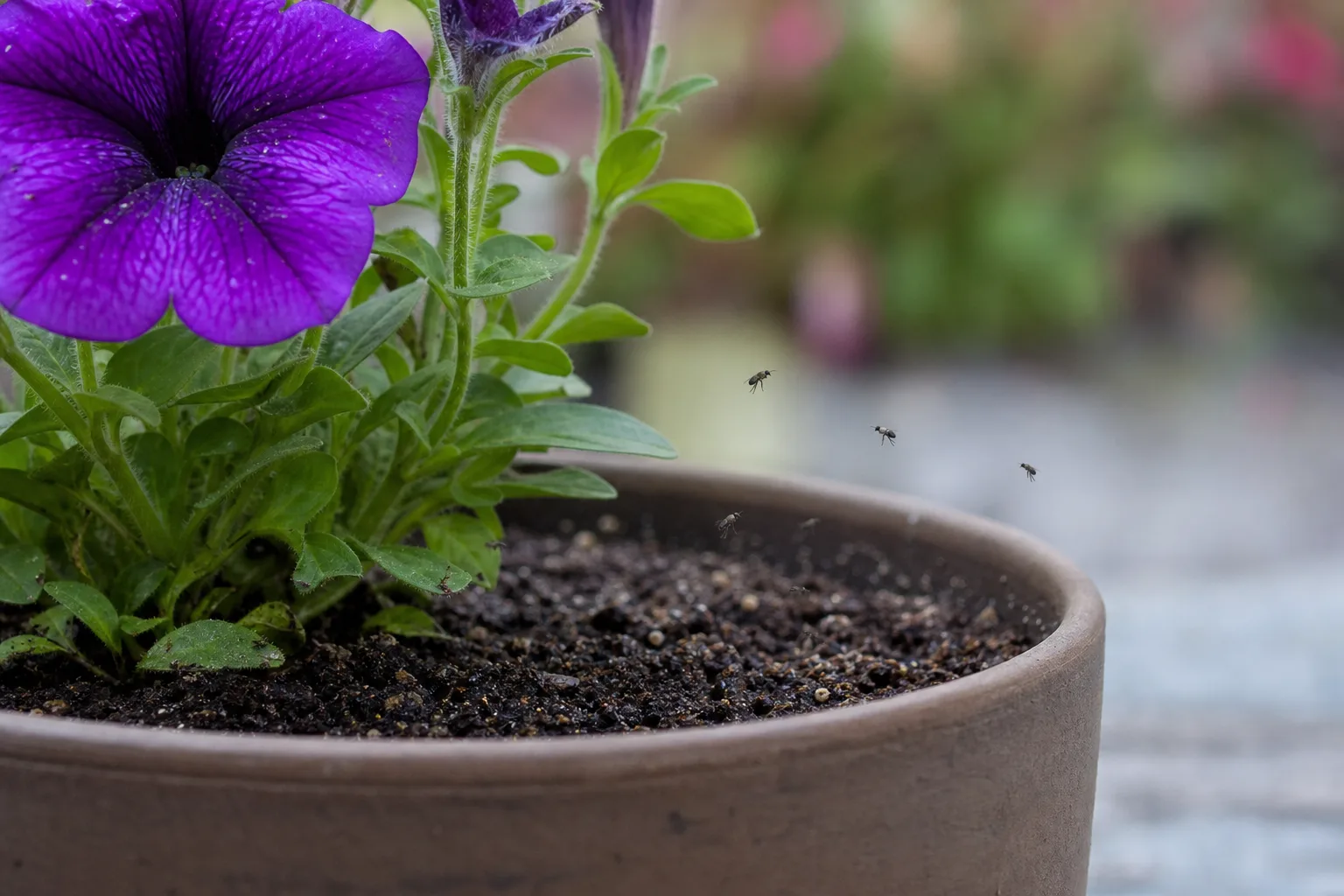
Fungus Gnats on Petunia: Causes, Checks & Fixes
This guide covers fungus gnats on Petunia. See also the general Fungus Gnats guide, watering, and light pages for this plant.
Fungus Gnats on Petunia: Causes, Checks & Fixes
Quick answer
Picture a common June setup: a Wave petunia hanging basket under a covered porch rail, still covered in pink blooms, but a cloud of tiny dark flies lifts off the soil when you deadhead. That pattern is almost always a moisture-management problem first, not a severe pest outbreak. Fungus gnats breed in consistently damp potting media and organic debris at the soil surface; their larvae feed in the upper root zone where moisture stays high.
First fix: let the top 2 cm (about 1 inch) of mix dry before the next watering, empty any standing saucer water, and place a yellow sticky card at pot-rim height to monitor adults. Sticky traps reduce breeding flies and show whether your dry-down is working-they are not the long-term cure. The cure is breaking the wet-surface cycle that lets eggs hatch and larvae develop.
For cultivar culture and basket watering rhythm, start with the petunia overview.
What fungus gnats look like on petunia
On container and basket petunias, fungus gnats show up as:
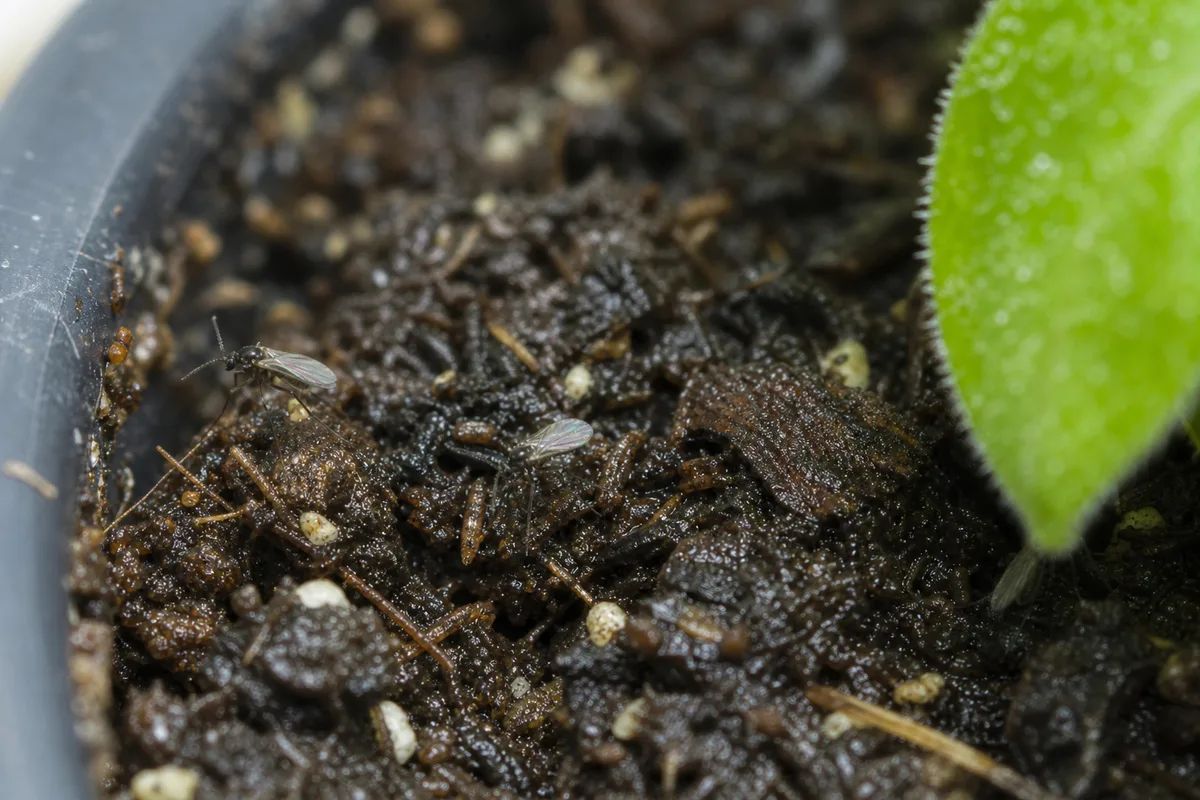
Fungus Gnats symptoms on Petunia - compare with healthy tissue on the same plant.
- Tiny dark flies (roughly 1/16 to 1/8 inch long) that lift off from the pot surface when you tap the rim or disturb spent petals sitting on the soil.
- Weak, drifting flight near soil, pot rims, and nearby windows-not fast room-wide flight like fruit flies heading to the kitchen UC IPM.
- Long legs and thin antennae on adults resting on damp mix or running across lower leaves; larvae are translucent with a shiny dark head capsule when you inspect beneath a potato slice or the soil surface.
- Often paired with persistently damp mix, green algae film, white surface mold, or decomposing organic bits at the rim-conditions that overlap mold on soil on the same basket.
Adults are mostly nuisance insects on established outdoor petunias. The root-stress risk comes from larvae in overly wet media, especially in seedlings, cuttings, or chronically saturated hanging baskets where fine feeder roots sit in the top inch of mix.
Why petunia containers get fungus gnats
Garden petunias are warm-season annuals built for full sun and a wet-dry watering rhythm. In real container setups, partial shade and covered porches slow surface dry-down-especially under dense trailing canopies-while growers keep a summer watering schedule that never lets the rim dry.
Several petunia-specific habits raise gnat risk:
Hanging baskets on covered porches. A blooming Wave basket may transpire heavily in afternoon sun yet hold a damp organic surface under trailing stems for days. Rain splash, overhead watering, and a full saucer recreate the saturated top layer where fungus gnat females lay eggs.
Spent blooms and leaf litter on the soil. Petunias need regular deadheading. Petals that drop into the pot decompose quickly and feed surface fungi and organic matter that larvae use-especially in crowded baskets where faded flowers land on mix instead of the ground below.
Calendar watering in partial shade. Petunias need ample direct sun to bloom and use water efficiently. A basket pushed into a dim corner dries slowly at the rim, so gnats persist even when you water less often than in full sun. Container plants in shade need moisture checks before every drink-not a fixed weekly schedule.
Peat-heavy mix without perlite. Organic potting blends hold surface moisture. Pure peat tops without coarse perlite stay wet at the rim while lower roots may still be acceptable-a pattern that masks stress until yellowing starts. See wrong soil mix and poor drainage when saucers and mix structure keep the surface soggy.
Dense planting in small containers. Three petunias crammed into a 25 cm basket shade their own soil line and slow evaporation-common on retail-ready porch pots watered daily out of habit.
That damp top layer is exactly where fungus gnats lay eggs and larvae develop. The pest did not arrive because petunias are uniquely susceptible; it arrived because your pot’s surface stayed wet long enough for the life cycle to complete.
How to confirm the cause
Use this quick confirmation sequence before treatment:
- Disturb test: Tap the container or brush spent petals off the soil. If tiny dark flies rise from the media-not from the fruit bowl or drain-fungus gnats are likely.
- Moisture test: Push a finger into the top 2 cm. If it stays wet for days between waterings, the breeding condition is present regardless of how healthy the blooms look.
- Trap test: Place a yellow sticky card horizontally at the rim or just above the soil surface for three to five days. Rising catch counts confirm active adults; falling counts after dry-down show your fix is working.
- Larva test (optional): Lay a small raw potato slice on media overnight and check beneath it for translucent larvae with dark heads. Presence confirms larvae in the top layer-not just stray flies from elsewhere.
- Root cross-check: If wilt or yellow lower leaves accompany gnats, slide the plant partly out of the pot. Firm white or tan roots with neutral-smelling mix point to a surface pest and moisture fix. Brown mushy roots mean escalate to overwatering and possibly root rot-gnats were a clue, not the whole story.
Fungus gnats vs lookalikes
Misidentification sends you to the wrong room of the house or the wrong treatment. Use this table before buying sprays:
| What you see | Where it appears | Flight habit | Larvae / source | First action on petunia |
|---|---|---|---|---|
| Fungus gnats | Potting mix, pot rims, damp basket soil | Weak, zig-zag flight near soil; long legs and antennae | Translucent larvae with dark head in top inch of mix; feed on fungi and root tissue | Dry top 2 cm, empty saucers, yellow sticky traps |
| Fruit flies (vinegar flies) | Kitchen counters, compost bins, ripening produce, drains | Strong flight toward food odors; often reddish eyes | Larvae in fermenting fruit or organic waste-not in your petunia mix | Clean kitchen source; still dry basket soil if gnats also present |
| Shore flies | Very wet surfaces with algae-saucers, bench slime, greenhouse floors | Faster, stockier flies; short antennae; dark wings with pale spots | Tan wedge-shaped larvae without distinct head capsule; feed on algae, not roots | Scrape algae, dry surfaces; same moisture fix as gnats |
| Drain flies (moth flies) | Bathroom or kitchen drains | Fuzzy moth-like wings; hover near sinks | Larvae in drain biofilm | Clean drain; do not drench petunia soil for sink pests |
If sticky traps catch only shore flies on a saucer full of green algae, scrub the tray and fix standing water before assuming your petunia roots are the food source.
First fix for Petunia
Do one thing first: break the wet-surface cycle.
- Water only when the top 2 cm is dry to the touch-not on the same calendar day as last week’s heat spell.
- Water thoroughly at the rim until excess drains, then fully discard saucer runoff within 30 minutes; do not leave standing water in cache pots.
- Remove spent petals and visible debris from the soil surface so organic matter does not keep the rim damp.
- Place yellow sticky traps at rim height to catch breeding adults and track trend-counts should fall within one to two weeks if dry-down is real.
On petunias, this often reduces populations quickly because adults are short-lived and larvae need moist organic matter in the upper media to complete development. You are not waiting for a pesticide to work-you are removing the habitat.
Do not spray broad-spectrum insecticides on open petunia flowers as a first move. Blooming baskets attract pollinators; sprays do not fix wet soil.
Escalation decision path
Work through this ladder in order. Skipping steps is the most common reason gnats persist on otherwise healthy-looking baskets.
Level 1 - Dry-down only (start here)
Use when: Adults appear, stems are firm, blooms continue, and moisture tests show the top 2 cm has been wet for days.
Actions: Dry-down protocol above, debris removal, saucer discipline, sticky traps for monitoring.
Stop condition: Trap catches drop to a few flies per week within 10–14 days.
Typical timeline: One to two weeks for adult counts to fall once the surface stays drier between waterings.
Level 2 - Dry-down plus BTI drench
Use when: Traps still catch many adults after 10–14 days of corrected watering, you are managing seedling trays or indoor starts near the basket, or larvae confirmed under a potato slice while stems are still firm.
Actions: Apply a soil drench containing Bacillus thuringiensis subsp. israelensis (BTI) per product label-commonly labeled for fungus gnat larvae in container media. BTI targets larvae in the mix, not adults on traps. Repeat on label intervals (often weekly for two to three applications) to catch newly hatched larvae as the life cycle completes. Continue dry-down and trapping throughout.
Fact vs recommendation: BTI is a biological larvicide with strong extension support for fungus gnat larvae in potting media; it is not a substitute for drying soil. Do not mix BTI with fertilizers or fungicides containing copper or chlorine unless the label allows-some formulations are incompatible.
Stop condition: Two full label cycles completed plus falling trap counts and no new larvae under test slices.
Level 3 - Root-zone rescue or replace
Use when: Wilt persists on wet soil, yellowing spreads up the plant, mix smells sour, or roots are brown and mushy on inspection. Also when Level 2 fails and trap counts rise again within days of every watering despite dry-down habits.
Actions: Unpot, trim mushy roots, repot into fresh airy mix with open drainage-follow root rot salvage steps. For a collapsed mid-season basket with mostly decayed roots, replace the plant rather than repeat BTI on a failing root system. Gnats will return on any mix that stays wet.
Stop condition: Firm new growth and stable trap counts after repot plus corrected watering rhythm.
| Stage | Symptoms | Primary action | Secondary action |
|---|---|---|---|
| Mild | Flies at soil only; firm stems; good bloom | Dry top 2 cm, traps, empty saucers | Remove surface debris |
| Moderate | Flies persist 10–14 days after dry-down; firm roots | BTI soil drench on label schedule | Continue traps and dry-down |
| Severe | Wilt on wet soil; mushy roots; sour mix | Repot or replace per root rot guide | BTI only after moisture and rot addressed |
Step-by-step recovery
Once the first dry-down is underway, work through these steps in order:
- Reset watering: Switch from calendar watering to finger tests at the top 2 cm. A full-sun balcony basket may need water every one to two days in July; a shaded porch pot may need three to five days between soaks-follow the pot, not the clock.
- Remove breeding cues: Clean algae crust, scrape moldy surface mix if present, and deadhead before petals fall into the pot. Cross-check mold on soil if white fuzz accompanies the gnats.
- Improve drainage and airflow: Confirm drainage holes are open; lighten future mixes with perlite per the soil guide. Space crowded baskets and trim trailing stems that block rim evaporation. Move toward brighter exposure per the light guide when placement allows.
- Trap and monitor: Replace sticky cards weekly and log whether captures are falling. A basket that still catches 30 flies per card after two weeks of dry-down is a Level 2 case, not a trap shortage.
- Escalate only if needed: BTI drenches for persistent larval cycles; repot only when roots fail inspection.
Recovery timeline
Expect adult counts on traps to drop within about one to two weeks once the surface stays drier between waterings. Plant recovery is slower: existing yellow leaves from chronic wetness often do not re-green, so judge progress by firmer stems, new flowering shoots, and falling trap counts-not by older foliage color.
For badly overwatered containers with early root damage, allow two to four weeks after moisture correction and any needed repot before deciding the basket is lost. Petunias are seasonal annuals; a rescue in August on a rootless stump is rarely worth heroic effort compared to starting fresh next season.
Signs you are on track:
- Fewer flies when you tap the pot
- Trap catches declining week over week
- New blooms opening on firm stems
- Top 2 cm drying predictably before you water again
Signs the problem is deepening:
- Wilt that does not recover overnight despite wet soil
- Yellowing climbing the plant while mix stays damp
- Mushy roots or sour smell at the drain hole
- Gnats plus damping-off collapse in seedling flats nearby
Mistakes to avoid
- Treating sticky traps as the only solution-they monitor and catch adults but do not dry soil.
- Continuing daily watering because blooms are heavy, even when the media surface is still wet.
- Leaving saucers full after watering or letting cache pots hold runoff through rainy weeks.
- Applying multiple pesticides or drenches before fixing moisture and drainage.
- Fertilizing hard during active root stress-fix water first, then resume balanced feeding per the overview.
- Drenching with BTI while keeping the top inch constantly moist-larvae need moisture, but chronic saturation is what caused the outbreak; dry-down and BTI work together.
- Confusing fruit flies in the kitchen with fungus gnats at the pot and treating the wrong source.
How to prevent fungus gnats on petunia next time
Preventive habits that work well for container petunias:
- Grow in high light where possible; strong sun helps containers dry at a healthy pace between irrigations. See the petunia light guide.
- Use a free-draining container mix with perlite and reliable drainage holes-not heavy garden soil in pots.
- Water based on moisture checks at the top 2 cm, not fixed frequency across sun and shade locations.
- Empty catch trays after every watering; do not leave water pooled under hanging baskets.
- Deadhead regularly so spent petals do not decay on the soil surface.
- Keep propagation trays on a separate dry-down schedule from mature baskets; seedlings attract faster intervention.
When to worry
Escalate quickly when you see fungus gnats plus:
- Continued wilt despite moist soil
- Yellowing that spreads rapidly during peak bloom season
- Stalled growth or aborted buds on an otherwise fed basket
- Root mush, blackening at the crown, or foul odor at the root ball
At that point, treat the pot as a root health problem first and a gnat problem second. Open the overwatering and root rot guides before buying another pest product.
Related petunia troubleshooting
- Overwatering on petunia - wet mix, wilt on damp soil, and saucer mistakes that breed gnats
- Root rot on petunia - mushy roots and repot salvage when gnats signal deeper saturation damage
- Mold on soil on petunia - white surface fuzz that often shares the same wet-rim cause
- Poor drainage on petunia - blocked holes and heavy mix that keep the top layer damp
- Damping-off on petunia - seedling collapse when larvae and fungi attack stressed starts
- Petunia watering - basket dry-down rhythm for sun versus shade placements
- Petunia overview - cultivar types, deadheading, and seasonal container culture
When to use this page vs other Petunia guides
- Petunia watering guide - Use for routine moisture checks before assuming fungus gnats is the main issue.
- Petunia problems hub - Browse all 40 common issues on this species.
- Overwatering on Petunia - Different entry point when symptoms overlap with fungus gnats.
- Mold on Soil on Petunia - Different entry point when symptoms overlap with fungus gnats.
- Root Rot on Petunia - Different entry point when symptoms overlap with fungus gnats.