Petunia Sun Requirements: Hours, Baskets & Warning Signs
Petunia Sun Requirements: Hours, Baskets & Warning Signs
Petunia Sun Requirements: Hours, Baskets & Warning Signs
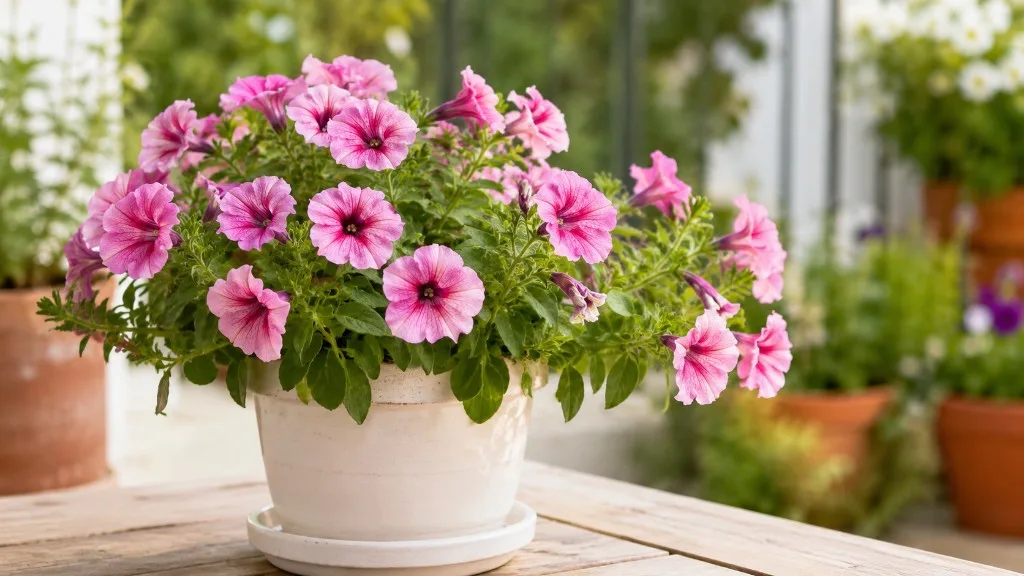
Petunias are bought for color, and color is a light report card. Petunia × atkinsiana - the modern garden petunia sold as bedding packs, Wave baskets, and window-box fillers - is a warm-season annual bred to flower heavily in bright outdoor conditions. When people ask why their petunias are leggy, pale, or blooming only on one side of a basket, the answer is almost always the same: the plant is getting enough light to survive, not enough direct sun to perform.
University of Minnesota Extension states petunias need at least 5 or 6 hours of good sunlight and perform even better in full sun all day. Rutgers NJAES lists a minimum of 6 hours per day for good flowering in full sun to partial shade. NDSU Extension notes petunias tolerate a lot of heat when sun is adequate but do best in full sun all day. The practical takeaway is not ambiguous: petunias belong in the sunniest outdoor placement you can give them - patio, balcony railing, south-facing bed, or open container spot - not in a dim living-room window where leaves may stay green while flowers disappear.
This guide covers hour counts, where to place baskets and beds, cultivar differences, seedling grow lights, transplant acclimation, and how to tell light deficit from heat stress before you misdiagnose a watering problem.
How Much Sun Petunias Actually Need
Petunias are high-light annuals - warm-season bedding plants in the nightshade family sold for outdoor color. Light drives photosynthesis, bud formation, and the compact branching that keeps bedding plants looking full instead of stringy. Extension guidance converges on a floor of roughly 5–6 hours of direct sun daily, with full-day sun producing the densest bloom display and tightest growth habit.
“Direct sun” means unfiltered sunlight hits the leaves and flowers - not a bright room where the plant sits ten feet from a window. A north-facing balcony that looks cheerful to your eyes may deliver zero direct hours at the pot rim. A south-facing patio with afternoon overhang shade may drop from eight hours in June to four hours by September as the sun angle shifts. Petunias do not average your intentions across the season; they respond to what reaches the canopy today.
The 5–6 Hour Minimum vs. Full-Day Sun
Think of 5–6 hours as the minimum for acceptable flowering, not the target for show baskets. In full sun all day, spreading Wave-type petunias can become so flower-covered that foliage nearly disappears - the look UMN Extension describes for groundcover petunias in bright placements. Grandiflora and multiflora bedding types spaced in full sunlight produce larger individual blooms and stronger upright form than the same cultivars tucked into afternoon shade.
If you must choose between “a little shade to be safe” and “full sun with careful watering,” petunias choose sun. Shade saves water briefly and costs blooms permanently.
Why Bloom Count Tracks Sun Hours
Petunias do not store bloom potential for later. Each day with insufficient light produces longer internodes (stems stretch), fewer buds, and slower recovery after rain or heat. Flowers are metabolically expensive; the plant allocates them where energy input is highest. That is why a basket under a deep eave blooms beautifully on the outer cascade and goes bare on the rim tucked under the roof - partial exposure within one container is common.
Judge light by bud count on new growth, not by whether yesterday’s flowers still look acceptable. Faded blooms can linger while the plant stops making new ones in shade.
Petunias Are Outdoor Sun Annuals, Not Houseplants
Petunias are short-lived seasonal display plants, not long-term houseplants. You can hold a basket indoors for a few days during a cold snap, but permanent indoor culture fails for the same reason office succulents stretch: window glass plus short day length rarely delivers the direct-hour tally petunias need for continuous bloom.
A south-facing indoor window might provide strong light for part of the day, but petunias in rooms without direct sunbeams on the leaves behave like shade-grown stock: weak stems, sparse flowers, and soil that stays wet too long. For indoor color in low light, extension sources point to impatiens and other shade annuals - not petunias. If you want petunias inside, treat it as a temporary display with a grow light delivering 14–16 hours of bright plant-facing illumination, not as a substitute for outdoor placement.
Counting Direct Sun Hours at the Pot Rim
The most reliable home method is crude and effective: stand at the pot at mid-morning, noon, and mid-afternoon on a clear day and note whether direct sun hits the rim where new shoots emerge. Count cumulative hours across the day, or use a simple sun calculator app at the pot coordinates. Do this in late spring when you install plants and again in early fall when sun angle drops.
June vs. September Sun Angles
A basket bracketed under a second-story balcony rail may receive eight hours of direct sun in June and four hours by September. Petunias that looked stellar in early summer can go leggy and flowerless in autumn without any care change - only light changed. Seasonal repositioning beats guessing: lower the hook, move the pot forward of the railing, or swap to a brighter fall crop.
Baskets, Eaves, and Railing Shade
Hanging baskets suffer self-shading and structure shading more than in-ground beds. The top of a full basket often shades its own center; the north side of a wall-mounted box may never see direct sun. Rotate baskets every few days so all sides receive direct light during the week. For wall boxes, center the spillover varieties on the outer edge and accept that the back row may bloom less - or choose a brighter mounting location.
Best Placement by Container Type
Placement rules differ by container because soil volume and exposure change how fast roots dry and how much leaf area transpires in sun.
Hanging Baskets and Window Boxes
Hang baskets where the lowest trailing stems receive direct sun for most of the day, not only where the hanger hook looks attractive. Wave and Supertunia types in full sun can trail 60–90 cm in a season when water and feed keep pace - but only if the canopy receives real sunbeams. Window boxes on north walls are decorative green; south- and west-facing boxes with no overhead awning are bloom engines.
Keep baskets away from dark walls that radiate heat without adding light. A box against hot brick in afternoon sun may show heat wilt even when hour counts are adequate - distinguish that from shade legginess by checking whether leaves recover after evening cool.
In-Ground Beds and Borders
In beds, space grandiflora and multiflora about 30 cm apart in full sunlight, per UMN Extension - closer only if you accept fewer flowers in shadier pockets. Spreading types need room to run; crowding in shade produces thin mats with gaps. Beds open to morning-to-evening sun outperform narrow strips between buildings where reflected light flatters your eye but direct hours stay low.
Cultivar Differences: Grandiflora vs. Wave and Spreading Types
All petunias want sun, but habit and flower load change how shade shows up.
Grandiflora types with large flowers are showiest in full sun and can look open or tired by midseason if light or nutrition slips. They are less forgiving of half-day shade than aggressive spreaders.
Multiflora types flower heavily in clusters and tolerate slightly more crowding, but they still need the hour minimum - shade produces fewer clusters, not “dainty charm.”
Milliflora mini types suit edging and mixed pots; they need the same sun totals in less soil volume, so containers dry fast in full sun - light and water rise together.
Wave, Supertunia, and spreading types are bred for groundcover and basket performance in full sun. UMN Extension notes they are so covered by flowers in full sunlight that foliage nearly disappears. NDSU Extension adds that spreading types like Wave withstand drought and heat very well - but only when they receive full sun. They are self-cleaning - faded blooms drop - but they are not shade plants. They demand more frequent water and fertilizer than upright bedding types because they cover more area in bright light.
When Partial Shade Is Acceptable
In very hot, low-humidity climates, light afternoon shade can reduce heat stress on grandiflora flowers without collapsing bloom count - if morning and midday still deliver five to six direct hours. Partial shade is a heat-management tool, not a default for cool-summer regions. If blooms drop and stems stretch, you have shade, not “gentle sun.”
Acclimating Transplants and Store-Bought Baskets
Greenhouse-grown petunias arrive soft: leaves formed under filtered high light, not your patio’s July sun. Sudden moves to all-day exposure cause bleached patches, wilt, and petal burn even though the plant “needs sun.” Acclimate over 5–7 days: start in bright morning sun or dappled full-day exposure, then increase hours.
UMN Extension recommends midday protection for the first few days when transplanting in hot or windy weather with few clouds. That is sun protection during adjustment, not a permanent shade location. After establishment, move to the target full-sun site. For store baskets already in bloom, hang them in final placement after a two-day partial step if leaves look tender.
Grow Lights for Petunia Seedlings
Starting petunias indoors? Light is the difference between stocky transplants and leggy seedlings that never recover outdoors. UMN Extension advises ordinary fluorescent tubes - not specialty grow bulbs required - positioned 4–6 inches above seedlings, raised as plants grow to maintain that gap. Run lights 16–18 hours daily until hardening off begins.
Insufficient seedling light produces thin stems and delayed flowering after transplant. Too much heat from lights touching leaves scorches tips. Pair bright light with cool room temperatures (roughly 13–18°C / 55–65°F nights) so growth stays compact before outdoor sun finishes the job.
Fluorescent Setup and Duration
A simple two-tube shop light over a seed tray beats a sunny windowsill that delivers uneven day length. Keep seedlings 2.5–5 cm below tubes as they grow. When outdoor lows stay above frost, harden off with increasing sun hours before planting in final full-sun beds or containers.
Hot Climates: Afternoon Shade vs. Too Little Light
Heat and light stress look similar from across the patio: wilted flowers, curled leaves, faded color. Heat stress often hits mid-afternoon in full sun on hot days, then recovers overnight when soil moisture is adequate. Light deficit shows as progressive stretch over weeks, worse on the shaded side, with no overnight tightening of internodes.
In subtropical or desert-summer gardens, 30–40% shade cloth or afternoon building shade after six morning hours can preserve flowers when air temperatures exceed 35°C / 95°F repeatedly. In temperate summer regions, default to full sun unless you observe petal scorch on acclimated plants.
Warning Signs of Wrong Light
Petunias tell you the placement is wrong before they die. Read new growth after any move; old burned petals do not heal, but new buds reveal today’s light.
Too Little Light Symptoms
- Leggy stems with wide gaps between leaves
- Few or no new buds while the plant greens up
- One-sided bloom on the only sun-facing branch
- Pale, soft growth and slow dry-down after watering
- Persistent fungus gnat pressure from soil staying wet in dim cool corners
If several signs appear together, move to more sun before fertilizing harder. Feed cannot replace photons.
Heat Stress and Sun Scald
- Bleached or crisp patches on flowers and sun-facing leaves after a sudden move
- Midday wilt that recovers by evening in well-watered plants
- Brown petal edges on grandiflora doubles after hot afternoons
- Collapsed tender transplants within 48 hours of greenhouse-to-patio jumps without acclimation
Pull back exposure temporarily, acclimate, then return to full sun. Permanent scorch on leaves and petals does not revert green.
Know Your Plant: Petunia Biology and Light
Petunia (Petunia × atkinsiana) belongs to the Solanaceae - the nightshade family shared with tomatoes and peppers. That lineage matters for light expectations: solanaceous ornamentals evolved for open, bright habitats, not deep shade. Modern garden petunias are a hybrid complex from South American ancestors, bred for flower size, color range, and spreading habits like Wave and Supertunia series.
Mature plants typically reach 15–40 cm tall with spreads of 30–90 cm, though trailing types cascade much farther from baskets. Growth is fast during cool, bright weather and slows when nights stay hot and humid - a seasonal rhythm that makes light placement in spring and early summer especially critical for establishing branch structure before heat arrives.
The petunia care overview covers deadheading by type, container vs. in-ground watering, and midseason recovery trims. Light is the first variable on that checklist: without adequate sun, watering and fertilizer adjustments rarely restore bloom density.
How Light Changes Your Watering Rhythm
Bright sun increases transpiration. A basket in full sun may need water every 1–2 days in summer, per UMN container guidance; the same cultivar in half-day shade dries slower and rots if you keep the sunny schedule. Light and water are coupled: when you move a pot to a brighter spot, check moisture more often; when shade is unavoidable, extend dry intervals and expect fewer flowers.
Wet flowers and foliage in humid, shaded corners invite botrytis blight - another reason bright, airy sun placement supports health beyond bloom count alone.
See the petunia watering guide for container vs. in-ground rhythms. For bloom failure after adequate sun, check leggy growth and not enough light problem pages.
Practical Placement Checklist Before You Buy or Hang
Use this quick audit before investing in baskets or packs:
Count direct hours at the exact hook or bed location on a clear day - not at your kitchen table guessing. Match cultivar to exposure: Wave types for all-day sun baskets; grandifloras for beds you can deadhead and trim. Plan rotation for wall boxes and railing hooks. Budget water for full-sun containers - light and irrigation rise together. Acclimate greenhouse packs for at least several days before final blast exposure.
Mississippi State Extension recommends full sun for peak bloom across modern cultivars, with partial shade noted only as a hot-climate compromise. In temperate gardens, treat partial shade as an exception you document and test, not the default placement.
First Week After Installation
Do not repot or heavily prune on day one unless the mix is failing. Watch new buds at the stem tips daily - they appear within days in adequate sun. If stems lengthen without buds by week two, the location is too dim regardless of how colorful the original blooms looked at the garden center under greenhouse light. Move the container before midseason when root mass makes relocation harder.
Midseason Recovery After Light Loss
Sometimes trees leaf out, a neighbor builds a fence, or a basket hook shifts in wind - and sun hours drop midseason. Petunias respond with open, leggy growth and a flower gap. Cut back up to one-third, move to brighter exposure if possible, water thoroughly if dry, and apply a balanced flowering fertilizer at label rate. Recovery takes roughly one to two weeks when light improves. Without more sun, recovery stalls after the trim.
Conclusion
Petunia sun requirements reduce to one outdoor rule: give direct sun first, adjust for heat second. Aim for at least 5–6 hours at the pot rim, with full-day sun as the default for baskets, boxes, and beds. Count hours in June and again in September, match cultivar expectations - Wave types drink light and water heavily; grandifloras punish shade with gaps - and acclimate greenhouse transplants before blasting them with July patio sun.
Flowers are the report card. If buds are abundant and stems stay compact, your placement works. If growth stretches and bloom stalls, move the pot before you change fertilizer, soil, or watering in circles. Petunias are not finicky when they see the sky; they are starved when they do not.
When to use this page vs other Petunia guides
- Petunia overview - Start here for whole-plant context before deep-diving this topic.
- Petunia problems hub - Jump to symptom-specific fix guides when this care topic does not resolve the issue.
- Not Enough Light on Petunia - Escalate here when light adjustments are not enough.
- Leggy Growth on Petunia - Escalate here when light adjustments are not enough.