Petunia Fertilizer: When, How, and Mistakes to Avoid
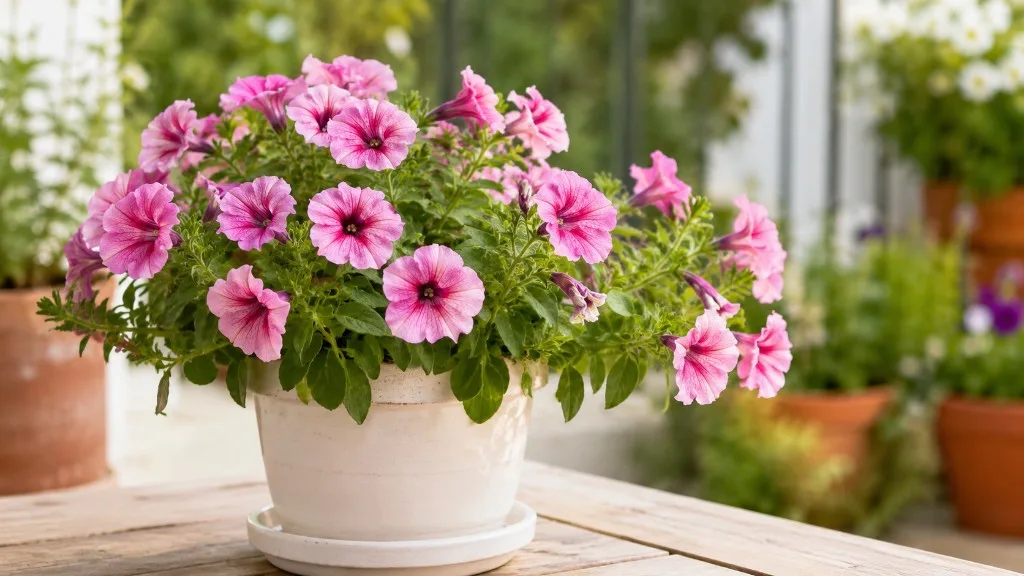
Petunia Fertilizer: When, How, and Mistakes to Avoid
Petunia Fertilizer: When, How, and Mistakes to Avoid
Petunia fertilizer is not a houseplant monthly drip-and-forget routine. Garden petunias - Petunia × atkinsiana, the hybrid bedding annual sold in packs, baskets, and window boxes - are heavy bloomers in the Solanaceae family that exhaust soil nutrients fast, especially in containers where daily watering leaches fertilizer salts. Get the schedule wrong and you get pale leaves, thin stems, and a basket that stalls mid-July. Get it right and the same plant blooms from spring until frost with only a midseason trim to refresh.
This guide is written for annual bedding growers in full sun - hanging baskets, window boxes, patio pots, and in-ground color beds - not for indoor permanent display. Schedules below default to the Northern Hemisphere (plant after last frost, feed through summer, stop before first frost). If you grow petunias as cool-season annuals in hot climates such as North India, see the seasonal callout later: your active feeding window runs roughly October through March, then you replace the plants when sustained heat arrives.
For the full picture on sun, water rhythm, and cultivar types, start with the Petunia care overview.
Quick Answer - Petunia Feeding Schedule by Context
| Context | At planting | Midseason liquid (from early–mid July) | Spreading / Wave types |
|---|---|---|---|
| In-ground bed | Work balanced granular (8-8-8, 10-10-10, or 12-12-12) into soil at ~1 kg per 10 m² (~2 lb per 100 sq ft) | Every 3 weeks | Weekly |
| Containers & baskets | Mix timed-release fertilizer into potting mix | Every 2 weeks with flowering-plant liquid | Weekly |
| After midseason trim | - | One water-soluble feed at label rate to restart growth | Same as row above |
Never feed bone-dry soil. Water first, then fertilize. Stop feeding when bloom performance drops for frost or when the plant is heat-stressed beyond recovery. Petunias are frost-tender annuals - there is no winter dormancy feeding pause in temperate gardens; the season ends when the plant dies or is pulled.
Why Petunias Need More Food in Containers Than in Beds
Petunias push flowers constantly during cool, bright weather. Each bloom, branch, and leaf draws nitrogen, phosphorus, and potassium from a finite root zone. In an open garden bed, roots can explore deeper soil and recover nutrients from earlier incorporation. In a 25–35 cm basket, the entire nutrient supply sits in a few litres of mix that you flush with water every one to two days in summer - per UMN Extension container guidance, repeated watering leaches nutrients even when you start with slow-release fertilizer in the mix.
That is why extension sources treat container petunias as high-feed annuals while in-ground plantings - once a balanced granular is worked in at planting - can go longer between liquid applications. Spreading and Wave types cover more surface area, transpire heavily, and need frequent watering and fertilizing whether they sit in beds or pots.
Solanaceae Hunger and Heavy Blooming
Petunias share the nightshade family with tomatoes and peppers - plants that look starving when phosphorus and potassium lag during fruit or flower production. A petunia basket in six or more hours of direct sun metabolizes nutrients faster than the same cultivar in partial shade. More sun means more flowers, which means more feed demand, provided water keeps pace. If you matched fertilizer to a shaded plant but moved the basket to full sun without increasing feed or water, pale leaves and reduced bloom size often follow within two weeks.
When to Fertilize Petunias From Spring Through Frost
In temperate climates, petunias go in the ground or containers after soil warms to about 16°C (60°F) and frost danger passes - the same transplant window UMN Extension recommends. Feeding aligns with active growth and bloom, not with calendar months copied from a houseplant template.
At-Planting Granular or Timed-Release
In-ground beds: Before transplanting, incorporate a balanced granular fertilizer such as 8-8-8, 10-10-10, or 12-12-12 at roughly 2 pounds per 100 square feet (about 1 kg per 10 square metres), per UMN Extension Growing Petunias. Work it into the top 20–25 cm with compost so roots encounter nutrients as they establish. This single incorporation carries most bedding types through the first flush of bloom.
Containers, window boxes, and hanging baskets: Do not rely on plain peat mix alone. UMN Extension advises incorporating timed-release fertilizer into container soil at planting. Follow the product label rate for flowering annuals in pots - typically a measured scoop mixed evenly through the batch before you fill the basket. Timed-release handles early-season hunger while you focus on watering and placement in full sun.
Midseason Liquid Feeds Starting Early to Mid-July
Even with at-planting fertilizer, nutrients wash out. UMN Extension recommends starting liquid fertilizer in early to mid-July for both beds and containers:
- In-ground (non-spreading types): liquid feed every three weeks
- Containers: liquid feed every two weeks with a product formulated for flowering plants
- Spreading / Wave types (beds or pots): weekly liquid feeding
Mississippi State Extension suggests liquid fertilizer every two to three weeks for summer containers - consistent with the UMN container interval. Use label rate for water-soluble products unless your label specifies half-strength for seedlings; mature basket petunias in peak bloom typically tolerate full label dilution when soil is moist.
If plants look open or tired before July, the problem is often spent blooms or leggy growth, not calendar timing. Trim up to one-third of the volume, water if dry, then apply one water-soluble feed to kickstart branching. Recovery takes about a week.
When to Stop Before Frost
Petunias are frost-tender annuals. When nights drop toward 5°C (41°F) and bloom quality fades, stop fertilizing and let the season finish. There is no benefit to pushing feed on a plant you will compost after first hard frost. In warm-winter regions where petunias continue blooming, maintain the active schedule until performance drops - then pull and replant rather than treating the plant like a dormant houseplant.
Cool-season growers (hot-summer climates): Plant in autumn for winter-spring display and feed on the same relative schedule while growth is active - typically October through March in regions where summer exceeds 35°C. Pause when heat stalls the plant, not because of “winter dormancy.”
How Often to Feed by Petunia Type
Cultivar category changes frequency more than brand choice. UMN Extension groups garden petunias into grandiflora, multiflora, milliflora, and spreading types - and spreading types always sit on the hungriest row of the schedule.
| Type | Examples | Liquid frequency (midseason onward) | Notes |
|---|---|---|---|
| Grandiflora | Large-flower bedding, many doubles | Every 2–3 weeks in pots; every 3 weeks in beds | Benefits from deadheading; midseason trim + feed refreshes open plants |
| Multiflora | Mass-bloom bedding packs | Every 2–3 weeks in pots; every 3 weeks in beds | Slightly tougher than grandiflora; same midseason liquid start |
| Milliflora | Miniature edging types | Every 2–3 weeks in containers | Small pots dry and leach fast - do not stretch to monthly |
| Wave / spreading | Wave, Easy Wave, Tidal Wave, Supertunia | Weekly in beds or pots | Self-cleaning but not self-feeding; starve them and spread stalls |
Grandiflora and Multiflora
These upright bedding types are the default cell-pack petunia. At-planting granular in beds plus a mid-July liquid every three weeks matches UMN guidance for non-spreading in-ground plantings. In containers, shift to every two weeks because leaching accelerates. If lower leaves yellow while top growth stays green, verify watering first - then confirm you started midseason liquid on time.
Wave and Spreading Types
Spreading petunias are bred to cover 60–120 cm or more in one season when watered and fertilized frequently. Weekly liquid feed is non-negotiable for full cascade performance in hanging baskets. Mississippi State notes that containers should use well-drained potting mix and regular summer feeding - starving a Wave basket is the most common reason growers report “it never trailed like the tag photo.”
Container vs. In-Ground vs. Hanging Basket
In-ground: One deep weekly watering (except spreading types) plus at-planting granular and three-week liquid interval suits most non-spreading cultivars. Nutrients stay in a larger soil volume; leaching is slower.
Containers and window boxes: Timed-release at planting, then two-week liquid from midseason. RHS notes that plants in containers need more feeding than those in open ground because of limited root volume and frequent irrigation.
Small hanging baskets (25 cm): Dry fastest and need the most attentive combination of water and feed - often daily water checks plus weekly liquid for spreading types. Large planters (40 cm+) hold moisture and fertilizer longer but still beat in-ground intervals.
See the petunia watering guide for how leaching and dry-down rhythm interact with feed timing.
Best Fertilizer Types and NPK for Bloom
At-planting granular: Balanced 8-8-8, 10-10-10, or 12-12-12 for beds. Timed-release mixed into container soil at planting.
Midseason liquid: Water-soluble flowering-plant or balanced formulas. Bloom-booster products with slightly higher phosphorus or potassium can support flower count after a trim, but balanced feeds work for maintenance. NC State Extension lists garden petunias as heavy feeders in fertile, well-drained soils - consistency matters more than exotic ratios.
What to avoid: Very high nitrogen alone pushes soft leafy growth at the expense of flowers in containers. Slow-release pellets are appropriate in containers at planting - contrary to generic houseplant advice - but additional midseason liquid is still required. Do not use fertilizer-plus-pesticide combo products on edibles-adjacent beds without reading label restrictions; keep concentrates away from pets and children (see safety note below).
Match soil prep with the petunia soil guide - fertilizer cannot fix waterlogged garden soil or compacted peat in a sealed pot.
Step-by-Step: How to Feed Container and Bed Petunias
For in-ground petunias at planting: Loosen bed soil, spread compost, broadcast balanced granular at label rate per area, incorporate to 20–25 cm, transplant at nursery depth, water in thoroughly without foliar feed.
For container planting: Pre-moisten potting mix, blend timed-release fertilizer evenly through the batch, fill the pot, plant densely for instant fullness (UMN recommends closer spacing in pots than in beds), water in, place in full sun - see the petunia light guide.
For midseason liquid (July onward): Water if the top 2–3 cm is dry. Mix water-soluble fertilizer at label strength in a watering can. Apply at the soil surface under the foliage canopy, not as overhead spray that soaks flowers. Let excess drain; empty saucers. Record the date and follow the cultivar interval from the table above.
After a renewal trim: Remove up to one-third of leggy volume with clean scissors, water, wait 24 hours if the plant was stressed, then feed once with water-soluble fertilizer. Details on trimming sit in the petunia pruning guide.
Signs Fertilizing Is Working
Healthy fed petunias show deep green leaves (without dark succulent puffiness), continuous bud set at stem tips, and stems sturdy enough to hold blooms upright in grandifloras. Spreading types should add lateral length weekly during peak season. After a midseason trim, new side shoots and buds should appear within seven to ten days when light, water, and feed align.
Flower count is the report card. If foliage looks fine but blooms thin out while sun and water are correct, you are likely under-feeding a container - especially a Wave basket on a daily watering schedule.
Signs of Over-Fertilizing and How to Recover
Over-fertilizing shows up as brown leaf tips and margins, white salt crust on the soil surface, sudden leaf drop, or wilting on wet soil when roots are burned. Fertilizer applied to dry roots or at double strength causes damage within days.
Recovery: Flush the container with plain water until it runs freely from drainage holes - repeat once after the pot drains if salts were heavy. Pause feed for four to six weeks. Remove badly burned leaves. Resume at half the previous frequency only when new growth looks normal. Badly crusted mix in small pots may need repotting into fresh mix without added fertilizer for two weeks - see the petunia repotting guide.
Common Petunia Fertilizer Mistakes
Feeding on dry soil. Always water first. Fertilizer on dry roots concentrates salts and burns fine petunia roots.
Using a houseplant monthly schedule. Petunias in peak bloom containers often need biweekly or weekly liquid, not once-a-month half-strength drip.
Ignoring cultivar type. Treating a Wave basket like a bedded multiflora - feeding every three weeks - produces thin trailers and gap centers.
High nitrogen alone. Pushes leaves over flowers. Use balanced or bloom-oriented formulas.
Feeding heat-collapsed plants. When sustained temperatures exceed 35°C and the plant has stopped setting buds, fertilizer will not restart bloom; shade or replace the planting.
Assuming slow-release replaces all summer feed. Timed-release at planting is a base layer; UMN still recommends midseason liquid for containers.
Seasonal Adjustments and Hot-Climate Notes
Late summer slowdown: If growth softens but weather stays mild, you can reduce liquid strength slightly or stretch the interval by a few days - but do not stop entirely while the plant is still blooming heavily into autumn.
Hot climates with cool winters: Grow as autumn-planted annuals. Feed on the active schedule through the cool bloom window, then replace when heat returns - the same cultivar logic applies; only the calendar months shift.
Temperate climates: Feed from transplant through first frost threat, aligned with the July liquid start for midseason push.
How Fertilizer Fits With Sun, Water, and Soil
Fertilizer only works when light and water are already correct. Petunias need at least five to six hours of direct sun, preferably more. In shade, reduce feed expectations - the plant cannot use extra nitrogen without photosynthesis to drive growth.
Water leaching and feed leaching are paired processes in baskets. Daily watering without matching feed schedule depletes potassium first - often showing as pale leaves with green veins or reduced flower size. Align with the watering guide rhythm: containers frequently, beds deeply but less often.
Well-drained mix - pH 6.0–7.0, perlite-amended potting soil, no garden clay straight in pots - lets roots access both oxygen and nutrients. Starting from seed or cuttings? The propagation guide covers when seedlings are mature enough for first dilute feed.
Pet and Child Safety Note
Petunia flowers and foliage are non-toxic to dogs and cats per the ASPCA - one reason they are popular on pet-aware balconies. Concentrated fertilizer solution is not pet-safe. Store bags and mixing jugs out of reach; water after feeding so pets do not walk through runoff. Children should not handle undiluted product.
How we reviewed this guide: Written by sai-ananth and reviewed by the LeafyPixels Review Board. Feeding schedules were checked against University of Minnesota Extension - Growing Petunias, UMN container fertilizing guidance, and Mississippi State Southern Gardening. Methodology: botanical and extension references plus LeafyPixels plant-care data. Reviewed 2026-06-15.
Conclusion
Petunia fertilizer success comes down to three decisions: incorporate balanced or timed-release feed at planting, start midseason liquid in early to mid-July at the interval your cultivar type demands, and feed weekly if you grow spreading Wave baskets in full sun. Containers out-feed in-ground beds because water carries nutrients away. Grandiflora and multiflora types tolerate longer gaps; Wave types do not.
Water before you feed, stop before frost ends the annual season, and pair this schedule with real sun and the right watering rhythm from the overview, watering, soil, and light guides. When blooms stall midseason, trim one-third, feed once, and wait a week - that combination refreshes petunias faster than doubling fertilizer alone.
When to use this page vs other Petunia guides
- Petunia overview - Start here for whole-plant context before deep-diving this topic.
- Petunia problems hub - Jump to symptom-specific fix guides when this care topic does not resolve the issue.
- Overfertilization on Petunia - Escalate here when fertilizer adjustments are not enough.
- No Flowers on Petunia - Escalate here when fertilizer adjustments are not enough.