Overfertilization on Petunia: Causes, Checks & Fixes
Quick answer
Excess fertilizer salts or high-nitrogen feeds scorch petunia leaves and suppress flowering. Stop feeding immediately and flush the container with clear water until it runs freely from drainage holes two to three times on successive days.
Overfertilization on Petunia: Causes, Checks & Fixes
This guide covers overfertilization on Petunia. See also the general Overfertilization guide, watering, and light pages for this plant.
Overfertilization on Petunia: Causes, Checks & Fixes
Quick answer
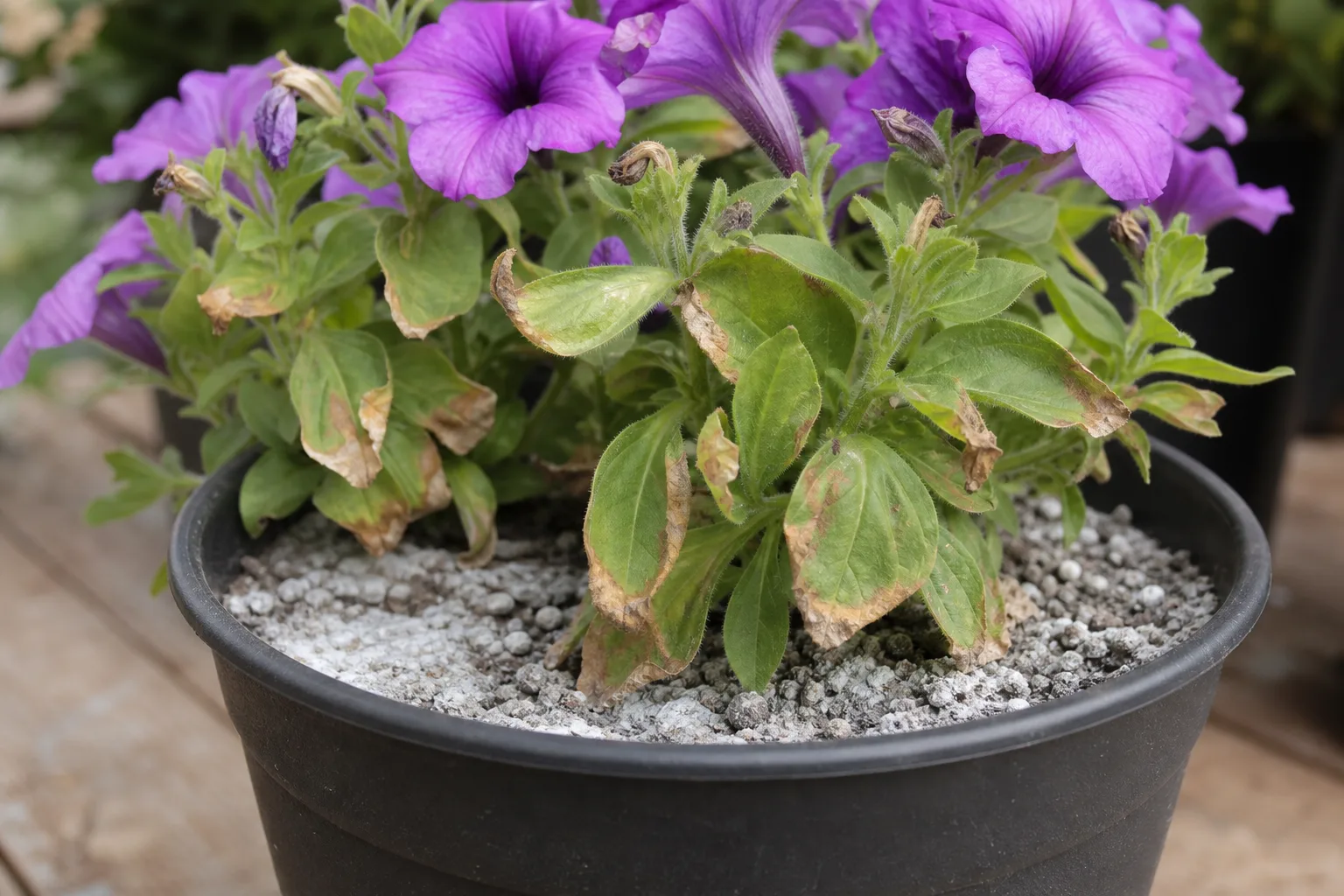
Overfertilized petunias show salt-scorched leaf edges, dark lush foliage with few flowers, or a white crust on the soil after heavy or repeated feeding. Petunias are hungry bloomers in containers, but concentrated salts burn roots faster in small pots than in garden beds when you exceed label rates.
First step: stop all fertilizer immediately and flush the container. Run clear water through the pot until it drains freely from the bottom two to three times on separate days. Do not feed again until new growth looks normal for at least two weeks.
What overfertilization looks like on Petunia
Symptoms usually appear within days of a heavy feed or after weeks of overlapping products. On container petunias and hanging baskets, watch for:
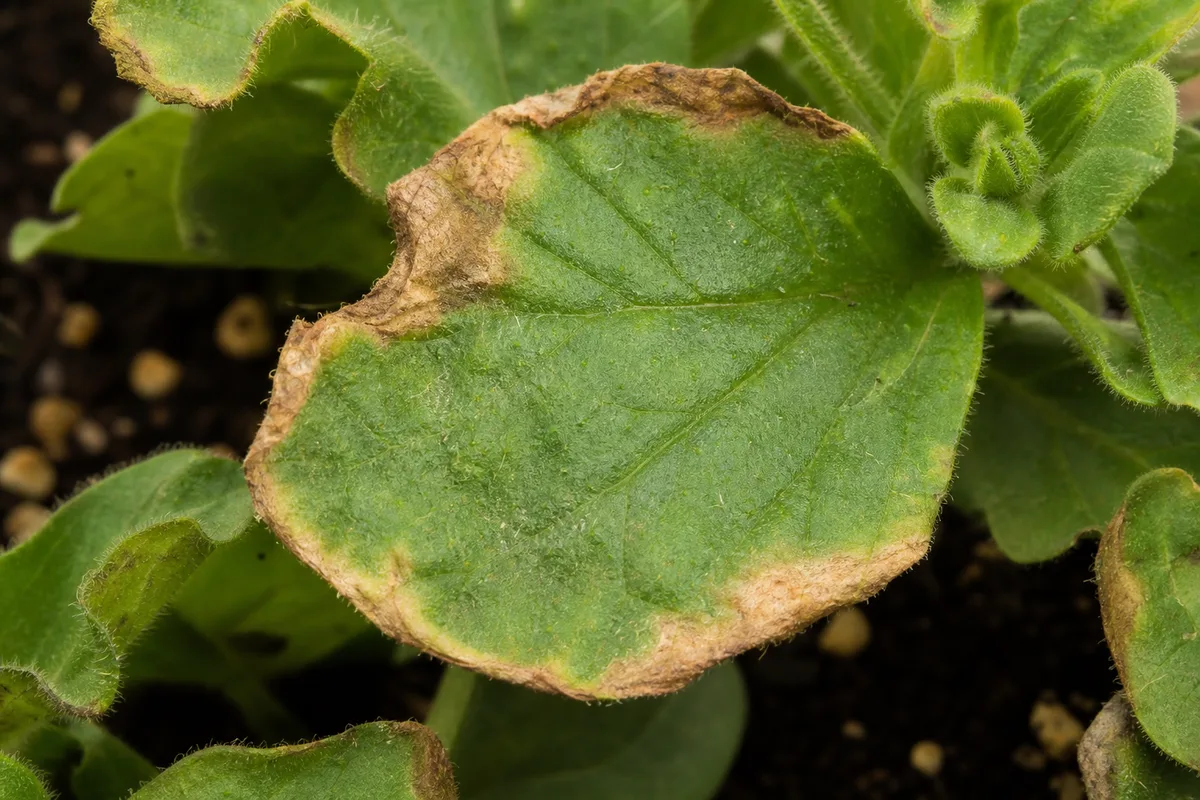
Overfertilization symptoms on Petunia - compare with healthy tissue on the same plant.
- Brown or crisp leaf margins and tips, sometimes spreading inward from edges
- Dark green, soft, fast stem growth with long gaps between leaves
- Few or no flower buds despite vigorous foliage - classic excess-nitrogen pattern on annual bloomers
- White or tan mineral crust on the soil surface or pot rim
- Lower leaves yellowing and dropping after a recent fertilizer application
- Wilting midday even when soil feels moist - salt-damaged roots cannot take up water efficiently
Petunias in Petunia light guide with firm stems and dry pots that show crispy edges are more likely underwatering on Petunia. Overfeeding usually pairs with recent feeding history and often lush top growth without blooms.
Wave and other spreading types push growth quickly when overfed - they can look healthy and green while producing almost no color along trailing stems.
Why Petunia gets overfertilized
Petunias are heavy feeders during bloom season. Gardeners chasing continuous color sometimes exceed what roots can process, especially in containers where salts have nowhere to go.
Common triggers on petunias:
Double feeding. Slow-release granules mixed into potting soil at planting plus weekly liquid fertilizer is the most frequent mistake. Both release nitrogen on overlapping schedules until salts accumulate.
High-nitrogen products. Lawn fertilizers, fresh manure teas, or feeds with a very high first N-P-K number push leaf and stem growth at the expense of flowers. Petunias need balanced fertilizer to support rapid growth and heavy blooming, not nitrogen-heavy lawn blends.
Full label strength in small pots. Hanging baskets and window boxes hold limited soil volume. A dose calculated for a large planter concentrates in a 25 cm basket and burns margins within days.
Feeding dry or heat-stressed plants. Fertilizer applied when mix is bone-dry or during peak heat stress moves salts into roots without enough moisture to dilute them.
Skipped leaching in long seasons. Frequent summer watering drains some nutrients, but synthetic feeds leave salts behind unless you periodically flush the mix with clean water. Saucers that recapture runoff return dissolved salts to the root zone.
Petunias in partial shade plus heavy nitrogen produce the same all-leaves-no-flowers look as true salt burn - light and feed both need correction.
How to confirm the cause
Work through this order before Petunia repotting guide or pruning hard:
- Feeding log - Note product, dose, and date of last three applications. Symptoms within 48–72 hours of liquid feed or two weeks after granules strongly implicate fertilizer.
- Soil surface - White crust or shiny crystals on dry mix confirms salt buildup. Absence does not rule out burn; salts may sit deeper.
- Moisture and drainage - Insert a finger 2 cm deep. Wilting with wet mix after recent feeding points to root injury, not drought.
- Flower status - Dark green leaves, long stems, zero buds in full sun after regular feeding fits excess nitrogen.
- Light check - Fewer than five to six hours of direct sun reduces bloom regardless of feed; shade alone does not cause white soil crust.
- Root peek - Slide the plant partly out. Salt-stressed roots may look brown at tips but stay firm; rot roots are mushy and smell sour.
If crispy edges follow several dry days with no fertilizer and the pot is light, switch to the underwatering path instead.
First fix for Petunia
Stop all fertilizer for two to three weeks, then flush salts from the container.
Place the pot in a sink, lawn, or over a bucket. Water slowly with plain tap water until excess runs freely from drainage holes. Wait 30 minutes and repeat. Do this two to three times on successive days for badly crusted baskets.
If liquid fertilizer splashed leaves, rinse foliage with plain water the same day.
Do not resume feeding until new leaves emerge without scorch and the plant holds stable moisture. For mild cases, that may take two weeks; heavy crust cases can take three to four weeks before half-strength feed is safe.
Step-by-step recovery
For mild tip burn after one heavy dose:
- Stop fertilizer immediately.
- Flush once thoroughly; discard all saucer runoff.
- Return to a dry-down Petunia watering guide - water when the top 2 cm feels dry.
- Snip only fully brown leaf tips if they look unsightly; leave partial green tissue.
- After two weeks of clean new growth, resume half-strength liquid feed every two weeks.
For lush green plants with no flowers from excess nitrogen:
- Stop high-nitrogen products entirely.
- Flush containers two to three times over three days.
- Move to full sun if the basket was shaded.
- Deadhead spent blooms and pinch leggy stems back by one-third to redirect energy.
- Resume with a balanced or bloom-oriented formula at half strength once new side shoots appear.
For severe crust, wilting on wet soil, or widespread leaf drop:
- Flush as above, then let the top 3 cm dry before the next watering.
- Remove yellowed lower leaves and spent flowers to reduce stress.
- If crust is thick or roots look dark and stunted, repot into fresh lightweight mix without adding new slow-release fertilizer.
- Water once lightly after repotting; keep slightly drier than usual for ten days.
- Hold all feed until new growth is obvious - usually three to four weeks.
Recovery timeline
Scorched leaf edges will not green up again - track recovery by new foliage and returning buds. Mild tip burn often stabilizes within one week after flushing. Bloom suppression from excess nitrogen typically improves two to three weeks after switching to proper light and a balanced feed schedule.
Wave-type petunias may need a light prune to restart branching before flowers return. If new leaves still scorch within ten days of flushing, salts remain high - repeat leaching or repot into fresh mix.
Seasonal petunias with more than half the root mass damaged may not recover enough to justify continued feeding - replacement is reasonable late in the season.
Causes to rule out
Several problems mimic overfertilization:
- Underwatering - Dry, light pot; wilting that resolves after a deep drink; crispy edges without fertilizer crust or recent feed.
- Iron chlorosis - Interveinal yellowing on new leaves at high substrate pH; roots usually firm; no white crust.
- root rot on Petunia from overwatering on Petunia - Sour smell, mushy roots, wet wilt; not tied to feeding date.
- Shade alone - Leggy stretch and few flowers without dark green lushness or soil crust.
- Heat stress - Midday wilt in extreme heat with otherwise normal feed history; often recovers overnight when temperatures drop.
What not to do
Do not add more fertilizer to force blooms on a scorched plant - that deepens salt injury. Do not use lawn fertilizer or uncomposted manure on container petunias. Avoid feeding when mix is completely dry; water first, then feed at half strength on a separate day if needed.
Do not assume wilting means drought and water repeatedly when soil is already wet - that compounds root stress. Do not repot into an oversized container on day one unless crust and root damage are severe; extra wet soil volume slows recovery.
How to prevent overfertilization next time
Match feed to container reality. Incorporate slow-release at planting or use liquid on schedule - not both at full rates unless the product label specifies compatibility.
Use half-strength liquid feed every one to two weeks during active bloom, or follow a bloom-oriented product at reduced dose. Spreading Wave types need more frequent feeding but still at diluted rates compared with upright multifloras.
Leach pots monthly during long bloom seasons by watering heavily until runoff is clear. Empty saucers promptly so salts do not wick back.
Pause fertilizer during heat waves when the plant wilts despite moist soil, and after hard pruning until new shoots appear. Petunias replaced each season start fresh - discard crust-heavy mix rather than reusing it.
Petunia care cross-check
Overfeeding often stacks with other care errors. Petunias in full sun use fertilizer efficiently and bloom harder; the same feed in shade produces leaves without flowers that look like pure nitrogen excess.
Align watering with the top-2-cm dry test - frequent shallow watering without leaching concentrates salts in the upper root zone where petunia feeder roots sit in baskets.
Deadhead spent blooms on non-self-cleaning cultivars so energy goes to new flowers rather than seed, especially after you resume light feeding post-recovery.
When to worry
Treat as urgent when the plant wilts on wet mix, drops more than a third of its leaves within a week of feeding, or new growth continues to scorch after two flush cycles. Repot into fresh mix without new granules if white crust covers most of the surface.
Mild margin browning on an otherwise blooming basket is manageable with stop-and-flush. A basket that stays limp with firm stems removed and wet soil after flushing may not be worth saving late in the season.
Conclusion
Overfertilization on petunias shows up as scorched leaf edges, salt crust on soil, lush foliage with few blooms, or wilting on wet mix after heavy feeding. Confirm with your recent feed history and soil surface before chasing pests or drought. Stop fertilizer, flush containers two to three times, correct sun and watering, then resume at half strength only when new growth looks clean.
When to use this page vs other Petunia guides
- Petunia watering guide - Use for routine moisture checks before assuming overfertilization is the main issue.
- Petunia problems hub - Browse all 40 common issues on this species.
- Brown Tips on Petunia - Different entry point when symptoms overlap with overfertilization.
- Root Rot on Petunia - Different entry point when symptoms overlap with overfertilization.