Brown Tips on Petunia: Causes, Checks & Fixes
Quick answer
Brown tips on petunias usually trace to underwatering, inconsistent watering, or root stress from wet mix - confirm with a moisture check at 2 cm depth, light hours on the pot, and a quick root inspection before changing care.
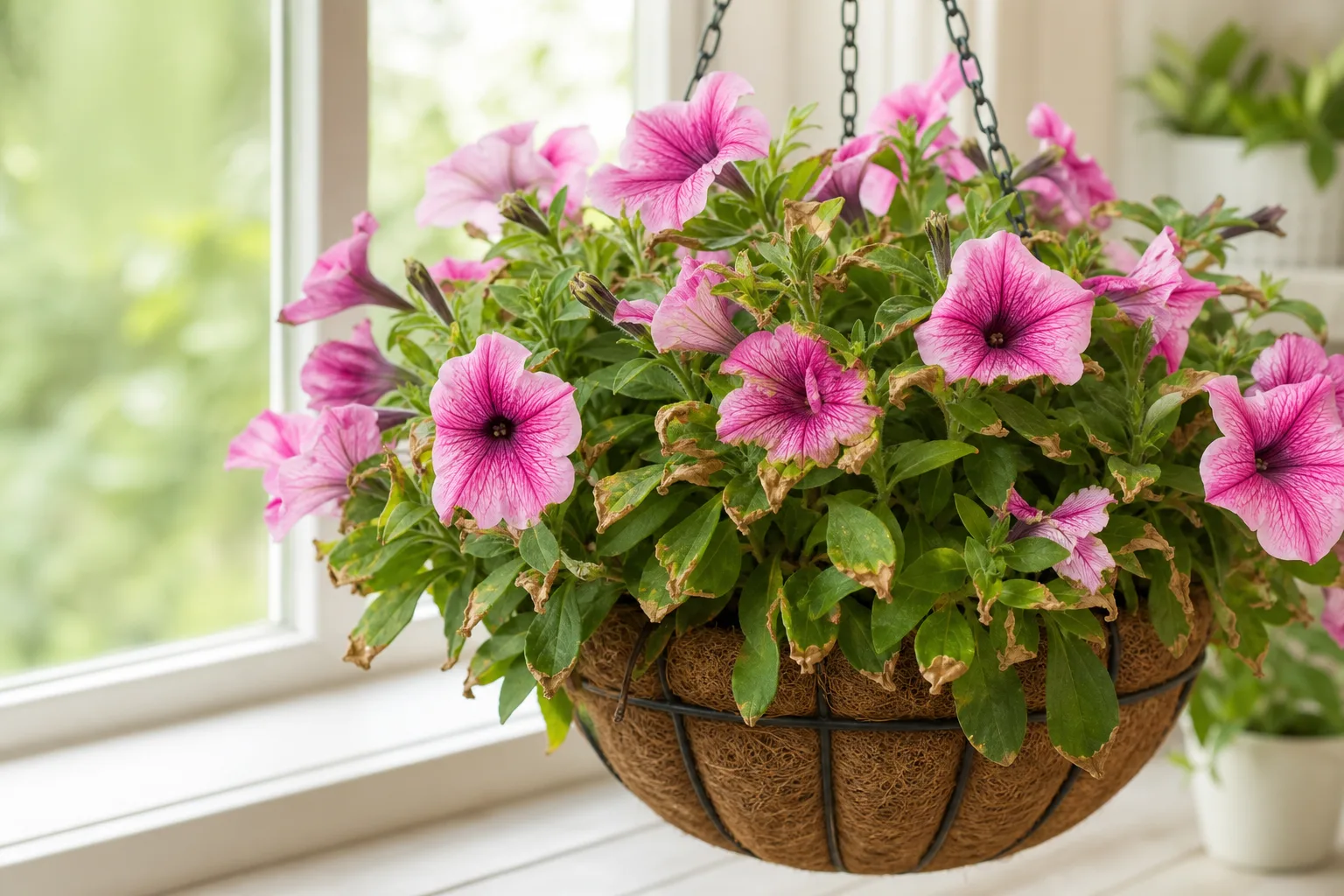
Brown Tips on Petunia: Causes, Checks & Fixes
This guide covers brown tips on Petunia. See also the general Brown Tips guide, watering, and light pages for this plant.
Brown Tips on Petunia: Causes, Checks & Fixes
Quick answer
Brown tips on Petunia are common and rarely mean one single disease. Confirm with recent watering, light, and root checks before treating. Crispy brown edges usually mean the pot dried too long; brown tips with wet soil and wilting often mean roots are failing.
Petunias lose moisture quickly from thin leaves in hot sun - especially in hanging baskets - so tip browning is often the first visible sign of water stress. The same symptom appears when overwatered roots cannot supply leaves, producing drought-like edges despite damp mix. Your job is to tell those patterns apart before watering more or less at random.
What brown tips look like on Petunia
Brown tips on petunias usually start at leaf margins - dry, tan, or crispy edges while the leaf center stays green for a while. underwatering on Petunia produces evenly crisp tips, sometimes with slight leaf curl or midday wilting that recovers after a deep drink.
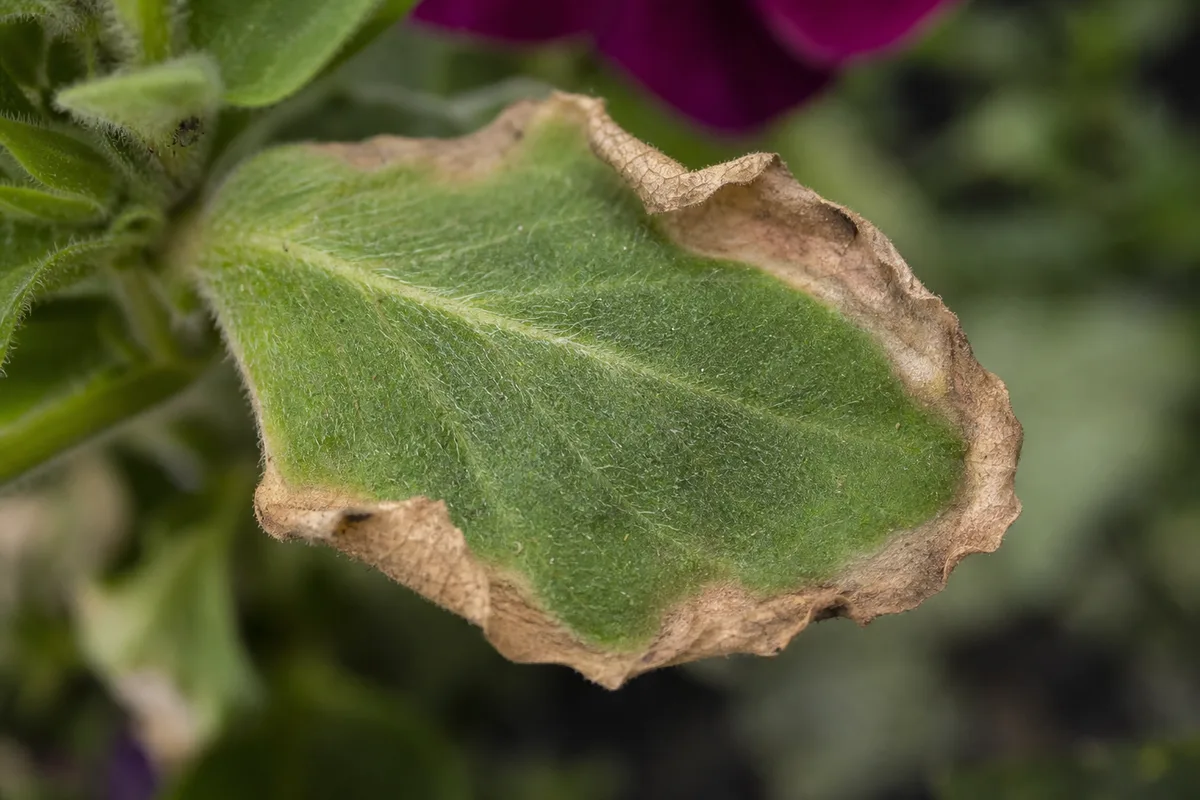
Brown Tips symptoms on Petunia - compare with healthy tissue on the same plant.
Root-stress browning may look similar at first but pairs with yellow lower leaves, heavy wet pots, or wilt that does not recover overnight. Sun scorch shows bleached or brown patches on the sun-facing side of leaves after a sudden move to harsh afternoon exposure, not just fine tip lines.
Botrytis and other fungal issues on petunias more often hit flowers first - grey mould on flowers in rainy, humid weather - but crowded, wet foliage can show irregular brown spots rather than uniform tip crisping.
Why Petunia gets brown tips
Underwatering and uneven dry-down are the most common causes in containers. Petunias in Petunia light guide can need frequent watering in hanging baskets depending on size and heat. When the top 2 cm dries completely and the whole pot lightens, leaves sacrifice tip tissue first.
overwatering on Petunia and root rot on Petunia produce a confusing mirror image: roots in saturated mix cannot absorb water, so tips brown as if the plant were dry. Root rot on petunias is a listed problem on susceptible cultivars in poorly drained conditions. Wilting with wet soil plus brown edges strongly implicates roots, not drought.
Light stress contributes both ways. Too little light slows water use and keeps mix wet longer, amplifying rot risk. Too much unacclimated sun scorches exposed leaf surfaces. Petunias want full sun to light shade with well-drained soil - placement should match that range.
Salt or fertilizer burn at leaf tips appears after heavy feeding on dry roots or accumulated salts in small pots. Less common than water issues but worth noting if you recently fed heavily on a drought-stressed basket.
How to confirm the cause
Use this diagnostic flow - watering, light, roots - before changing multiple variables:
Watering check
Insert a finger or skewer 2 cm deep. Dry and crumbly with a light pot → underwatering likely. Cold, soggy, or sour-smelling with a heavy pot → overwatering or rot likely. Evenly moist and firm plant → look to light or salt burn instead.
Review the last week: did hot days coincide with missed checks? Did rainy weeks leave saucers full?
Light check
Count direct sun hours on the pot. Fewer than five hours with stretched stems suggests the plant uses water slowly - your summer schedule may be too much. Sudden move to harsh west-facing sun after shade can scorch tips within days.
Root check
If soil has been wet and tips brown with wilt, slide the plant partly out. Firm pale roots support an underwatering or scorch diagnosis depending on moisture. Mushy brown roots confirm rot - repot path, not deeper watering.
First fix for Petunia
Correct the most likely single stressor identified above - do not stack repot, prune, feed, and relocate simultaneously.
For dry pots: water thoroughly at the base until excess drains, then empty saucers. Resume checking daily in heat; containers may need watering more than once per day in hot, dry weather only when the top 2 cm is actually dry.
For wet pots: pause watering until the top 2 cm dries. Clear drain holes and discard runoff. Most container plants prefer moist, not soggy, soil.
For root rot signs: unpot, trim decay, repot in fresh perlite mix - see the root rot guide for full steps.
For sun scorch: move to slightly filtered afternoon light or acclimate gradually over a week.
Trim purely cosmetic crispy tips only after the plant holds stable moisture for several days.
Step-by-step recovery
- Run watering, light, and root checks in that order; write down pot weight and moisture.
- Apply one correction - deep drink for dry pots, dry-down for wet pots, or shade for scorch.
- Remove heavily damaged leaves only if mould or pests are present; otherwise leave minor tip burn while monitoring new growth.
- Wait 5–7 days before a second major change so you can read the plant’s response.
- Deadhead spent blooms and avoid wetting foliage when watering to reduce secondary disease on stressed leaves.
New leaves without browning confirm you fixed the right cause.
Recovery timeline
Crispy tip tissue does not green up again. Underwatering cases often show perky leaves within hours of a proper drink; new clean foliage follows in one to two weeks. Root rot recovery takes longer and may never restore full bloom display in late-season plants.
If tips keep browning on fresh leaves after corrected watering, re-run the root and light checks - mixed stress is common on crowded balconies.
Lookalike symptoms
Brown tips can mimic:
- Whole-leaf brown from botrytis - fuzzy grey mould on flowers or stems in humidity; not tip-only crisping.
- Yellow leaves from overwatering on Petunia - often precedes or accompanies tip browning when roots fail.
- Leggy shade growth - sparse blooms plus pale leaves; tips may crisp if underwatered while stems stretch.
- Heat stall - temporary wilt in extreme heat; soil may be dry or evenly moist; plant revives in cooler evening air if roots are healthy.
What not to do
Do not assume brown tips always mean “needs water” - wet rot produces the same edge burn. Do not overhead-water in the evening on humid patios. Do not fertilize to “green up” tips on drought-shocked or rotting roots. Avoid pruning half the plant while correcting water; reduce stress incrementally.
How to prevent brown tips next time
Water when the top 2 cm of soil feels dry, at the base, with full drainage. In heat, check daily; in cool cloudy weather, stretch intervals.
Place baskets in full sun with well-drained mix so the plant uses water predictably. Acclimate before moving to the harshest afternoon exposure.
Use lightweight perlite mix in containers; avoid saucers that hold standing water through rainy spells. Deadhead regularly and maintain airflow around trailing stems.
Petunia care cross-check
Brown tips are a symptom checkpoint, not a diagnosis by themselves. Align three variables:
- Water - dry-down at 2 cm, saucers emptied, base watering only.
- Light - enough direct sun for bloom without scorching unacclimated leaves.
- Roots - firm and pale in moist-not-soggy mix.
When all three match petunia’s seasonal rhythm, tip browning on new growth stops.
When to worry
Escalate if brown tips spread to whole leaves with fuzzy mould, stems soften at soil level, or wilt persists with wet mix - those signs overlap with Phytophthora and crown issues on petunias. Isolated crispy margins on a firm plant in a dry pot are routine and fixable with steadier watering.
Conclusion
Brown tips on petunias demand a short triage: moisture at 2 cm, sun hours on the pot, and root firmness. Crispy edges in dry baskets need thorough base watering and daily checks in heat. Brown tips with wet soil and wilt need drainage and possible Petunia repotting guide, not more water. Fix one confirmed cause, watch new leaves, and trim old damaged tips only after the plant stabilizes.
When to use this page vs other Petunia guides
- Petunia watering guide - Use for routine moisture checks before assuming brown tips is the main issue.
- Petunia problems hub - Browse all 40 common issues on this species.
- Underwatering on Petunia - Different entry point when symptoms overlap with brown tips.
- Overwatering on Petunia - Different entry point when symptoms overlap with brown tips.
- Yellow Leaves on Petunia - Different entry point when symptoms overlap with brown tips.