Overwatering on Petunia: Causes, Checks & Fixes
Quick answer
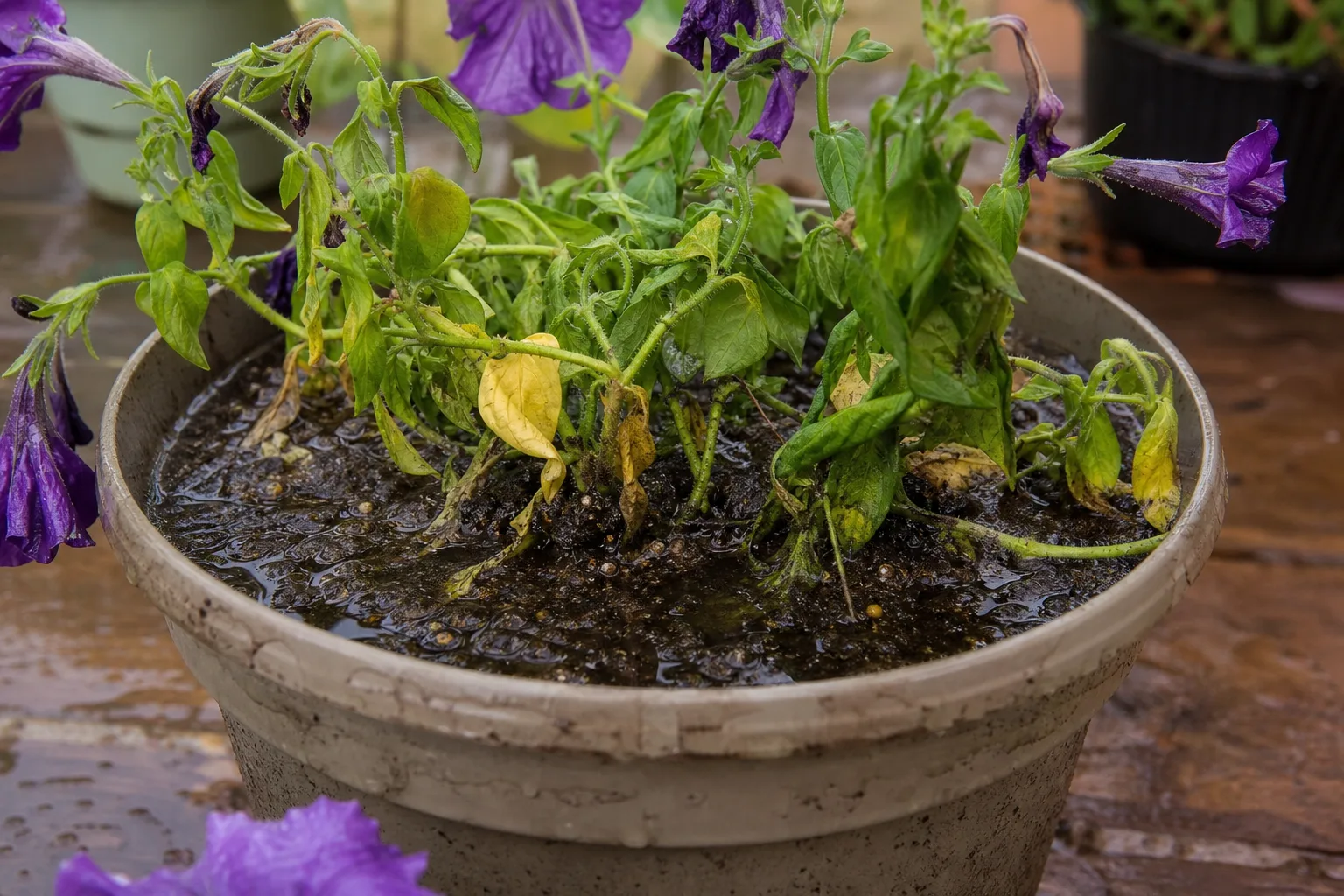
Overwatered petunias sit in wet mix too long, causing yellow leaves, wilting on wet soil, and root rot. Stop watering until the top 2 cm dries, confirm drainage, and water deeply only when that layer is dry again.
Overwatering on Petunia: Causes, Checks & Fixes
This guide covers overwatering on Petunia. See also the general Overwatering guide, watering, and light pages for this plant.
Overwatering on Petunia: Causes, Checks & Fixes
Quick answer
Picture a heavy hanging basket in mid-June: blooms still open, but lower leaves are yellow and stems droop even though the mix feels cool and wet when you press your finger in. That is the hallmark of overwatering on petunia-not a single extra drink on a hot afternoon, but a root zone that stays saturated too long for Petunia × atkinsiana to use water at a healthy pace.
First fix: stop watering until the top 2 cm of mix feels dry, then confirm drainage holes are open and saucers are empty before the next deep soak at the base.
Use this quick decision path before you add more water:
- Pot heavy + wilt + yellow lower leaves → overwatering likely; dry-down first.
- Pot light + dry top 2 cm + crispy edges → see underwatering on petunia instead.
- Wet soil + sour smell or soft stem base → escalate toward root rot on petunia.
- Afternoon wilt only, moderate pot weight, firm by morning → may be heat stress, not excess water.
For routine basket rhythm and the 2 cm moisture check, start with the petunia watering guide.
Overwatering vs. other petunia problems - why wilt on wet soil matters
The symptom that sends most growers wrong is wilting while soil is moist. Petunias are heavy bloomers in bright light with shallow, fibrous roots in seasonal containers. When those roots sit in anaerobic wet mix, they stop absorbing water efficiently-so the plant looks thirsty while the pot is actually waterlogged.
That wet-soil wilt paradox is different from:
- Underwatering - light pot, dry probe depth, crispy leaf margins.
- Normal midday droop - temporary softening in peak heat on adequately watered soil; stems firm overnight.
- Root rot pathogens - same wet trigger, but with mushy roots, crown softening, or rapid collapse once Phytophthora or black root rot takes hold.
This page covers early and moderate chronic overwatering-fixing rhythm, drainage, and dry-down before roots fail. When inspection shows advanced decay, switch to the root rot guide rather than repeating shallow dry-down on a collapsing plant.
What overwatering looks on Petunia
Early signs
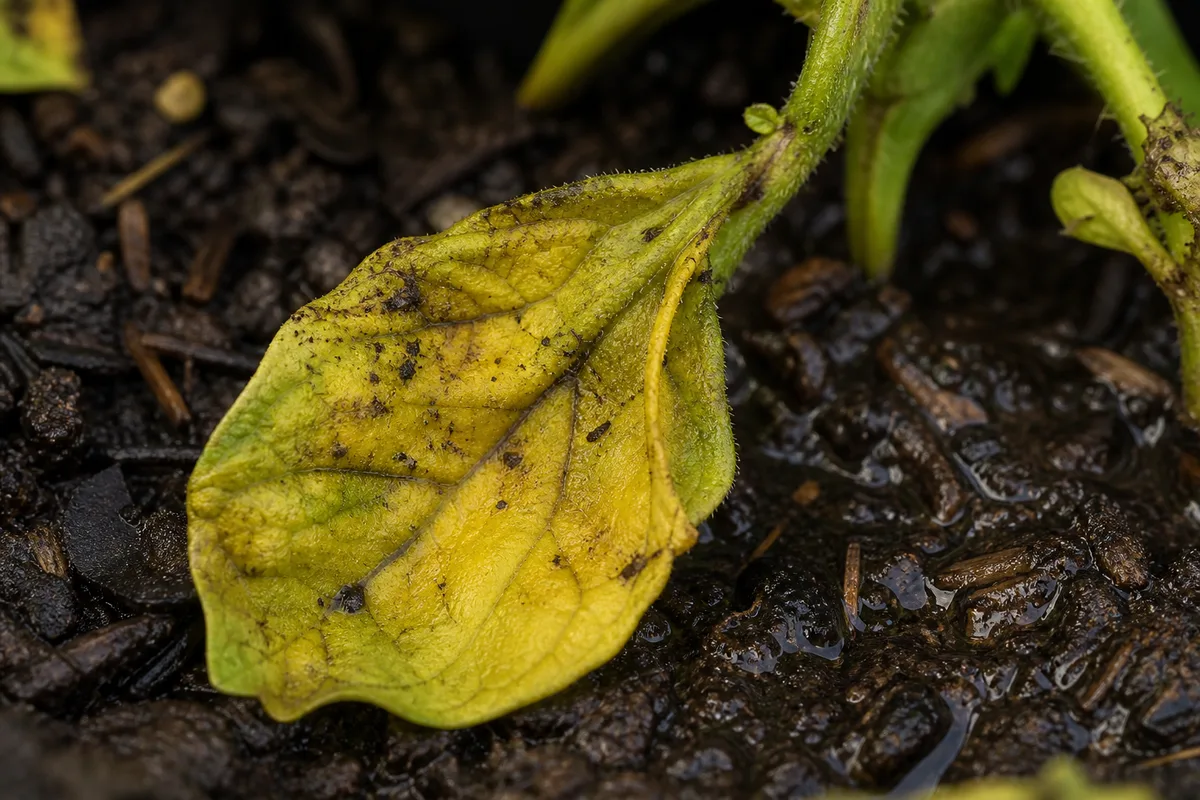
Overwatering symptoms on Petunia - compare with healthy tissue on the same plant.
- Mix stays wet for days after watering; pot feels heavy when lifted.
- Wilting or drooping leaves while the top 2 cm is still moist-not dry.
- Lower leaves yellowing; flowers fade faster than neighbors on the same rail.
- Gray fuzzy mold on spent petals or flower edges after wet weather or overhead watering.
- Fungus gnats lifting off the rim when you deadhead-surface mix has stayed damp too long (see fungus gnats on petunia).
- Green algae or white film on the soil surface; sour smell when you sniff near the drain hole.
Advanced signs
- Stem softening at the base; one plant in a window box collapses while others look fine (poor corner drainage).
- Slow growth or sudden flop of a previously full trailing basket.
- Hydrophobic crust-surface looks dry while the core below stays saturated after weeks of shallow watering.
A single afternoon wilt on a light, dry pot is not overwatering. The diagnostic pair is wet soil plus unhappy foliage.
Why Petunia gets overwatered
Shallow watering in Petunia light guide and cool-weather schedule mismatch
Petunias in full sun use a lot of water in summer, which tempts gardeners into frequent shallow splashes. That wets the surface while the basket core stays saturated-or it maintains constant wetness in cool, cloudy weeks when transpiration drops. Keeping a July daily schedule through a rainy May week is a common overwatering trap.
Baskets, saucers, cache pots, and heavy mix
Container culture concentrates risk. Extension guidance on container watering emphasizes checking moisture before each application rather than following a fixed calendar. Blocked drainage holes, peat-heavy mix without perlite, and saucers holding runoff all extend wet periods. A decorative outer pot that hides standing water is especially common on patio displays.
In-ground vs. container
In-ground bedding petunias in well-drained soil rarely show chronic overwatering unless clay beds hold water or sprinklers run daily. Overwatering intent on this page is overwhelmingly pots, window boxes, and hanging baskets-limited soil volume, no side drainage, and saucers that recreate greenhouse bench conditions. In-ground plants with yellow leaves on wet clay need drainage improvement in the bed, not the same dry-down protocol as a ten-inch basket.
Trailing vs. mounding cultivars
Wave, Supertunia, and Surfinia trailing types fill baskets fast and transpire heavily in sun-so they tempt daily watering. In partial shade or cool spells, that same frequency keeps the rim saturated under dense canopy. Grandiflora and multiflora mounding types in smaller pots can also stay wet when foliage shades the soil line. Trailing baskets dry faster on the surface in heat but hold saturation longer in the core when overwatered in cool weather; mounding types in window boxes show yellow lower leaves sooner when one corner of the box drains poorly.
How to confirm the cause
Work through this sequence:
- Finger or skewer at 2–5 cm. Consistently cool, wet soil while leaves yellow points to overwatering or poor drainage-not drought.
- Pot weight compared to a properly watered neighbor on the same rail.
- Drainage flow after a test soak-water should exit holes within minutes; none pooling in a cachepot.
- Dry-vs-wet triage. If the pot is light and mix crumbles dry at 2 cm, open underwatering on petunia before withholding water further.
- Root check if symptoms persist after three to five days of dry-down: mushy brown roots confirm damage from wetness; firm pale roots suggest a milder correction may suffice.
- Weather context. Cool cloudy weeks reduce uptake; resume summer frequency only when the top 2 cm actually dries at your current temperatures.
First fix for Petunia
Stop watering until the top 2 cm of mix is dry.
If soil has been soggy for a week, unpot, inspect roots, trim mushy sections, and repot into fresh airy mix per the repotting guide. Clear drainage holes and empty saucers before the next deep watering at the base.
Do not “balance” wet soil with fertilizer or Epsom salts-fix moisture first. Do not water wilted petunias automatically; confirm soil moisture and pot weight first.
Step-by-step recovery
- Withhold water until the top 2 cm dries; for severe cases, tip the pot to drain trapped water from the bottom.
- Loosen crusted surface gently to help evaporation-do not dig deep and damage roots.
- Unpot if wilt persists on wet mix; rinse roots and cut brown mushy tissue with clean scissors.
- Repot with fresh mix containing perlite per the soil guide; use the same or slightly smaller pot if root mass is reduced-trailing baskets rarely need upsizing after a rot trim.
- Place in full sun so the plant uses water at a healthy rate once roots recover (five to six hours of direct sun minimum).
- Resume watering deeply when the top 2 cm is dry; discard saucer runoff within thirty minutes.
Judge recovery by firm new stems and fresh blooms, not re-greening of old yellow leaves-those lower leaves usually stay blemished.
Recovery timeline
Minor overwatering may correct within several days of dry-down if roots are still firm. Yellow lower leaves may not re-green; watch for new growth from stem tips.
Root damage from prolonged saturation takes two to four weeks to show clear recovery signs-new buds holding color, stable trap counts if gnats were present, and neutral-smelling mix. Replace plants with mostly rotten roots rather than nursing a collapsed seasonal basket through August.
What not to do
Do not water wilted petunias automatically-check soil moisture and pot weight first.
Do not use garden soil in pots; well-drained potting mix suits container petunias better than heavy garden soil.
Do not leave pots in full saucers “so they won’t dry out.”
Do not overhead water in humid evenings; wet flowers invite Botrytis blight on petals already stressed by soggy mix.
Do not resume summer watering frequency during cool rainy spring weeks-match checks to current evaporation, not last month’s heat wave.
Causes to rule out
| Pattern | Likely cause | First step |
|---|---|---|
| Wet soil, yellow, wilt | Overwatering | Dry-down; check roots |
| Dry soil, wilt midday | Underwatering | Deep water - underwatering guide |
| Wet corner in box, one dead plant | Poor box drainage | Fix drainage; refresh soil - poor drainage |
| Sticky leaves, distortion | Pests | Inspect before blaming water |
| Afternoon wilt only, moderate weight | Heat transpiration | See heat stress |
| Tiny flies at rim, wet surface | Fungus gnats | Dry top 2 cm - fungus gnats |
| White fuzz on soil surface | Surface mold | Often same wet cause - mold on soil |
Petunia care cross-check - baskets, window boxes, and in-ground
Match watering to light, container type, and season:
- Hanging baskets in full sun may need checking every 1–2 days in summer-but only water when the top 2 cm is dry, not on autopilot.
- Shaded window boxes need less; cool weeks can mean several days between drinks.
- In-ground beds typically need one deep weekly soak when established-not the same daily basket rhythm.
- Trailing types in small baskets: verify water reaches the center, not just the rim, without leaving the core soggy.
Always confirm with the top 2 cm dry test rather than a calendar. Full culture notes live on the petunia overview.
How to prevent it next time
Water at the base when dry, not on a schedule. Use perlite-rich mix with open drainage. Size pots realistically-three petunias crammed into a small porch pot shade their own soil line and slow dry-down.
Empty saucers every time. Reduce frequency in cool rain. Deadhead so spent petals do not decay on wet mix.
For yellow leaves without wet soil, see yellow leaves on petunia. For general wilt triage, see wilting and drooping leaves.
When overwatering becomes root rot
Chronic saturation opens the door to water-molds and root pathogens. Phytophthora crown rot may cause petunias to wilt rapidly or partially collapse while roots appear brown to black or mostly decayed-often after prolonged irrigation, poor drainage, or standing water.
Black root rot on petunia produces yellow lower leaves, stunting, and roots that turn dark brown to flat black-often firm rather than mushy compared with Pythium-type decay.
Escalate to the root-rot protocol when:
- Stem bases soften or smell musty at the soil line.
- More than half the root mass is mushy or discolored on rinse.
- Several plants in one saturated box fail together.
- Dry-down for a week did not stop progressive yellowing.
Mild cases with mostly firm roots after trim often recover in fresh mix with reduced watering. Mostly rotten roots on a mid-season basket rarely support a full trailing display through the season-replace and fix box drainage before replanting.
Related petunia troubleshooting
- Petunia watering - canonical 2 cm moisture check and basket vs. bed rhythm
- Underwatering on petunia - dry-vs-wet triage when wilt confuses the diagnosis
- Root rot on petunia - mushy roots, Phytophthora, and salvage calculus
- Wilting on petunia - midday droop vs. root failure
- Drooping leaves on petunia - soft stems and posture changes
- Yellow leaves on petunia - lower-leaf pattern when moisture is not the only cause
- Mold on soil on petunia - white surface fuzz on chronically wet mix
- Fungus gnats on petunia - flies at the rim signaling surface saturation
- Heat stress on petunia - afternoon wilt on otherwise adequate moisture
- Petunia overview - cultivar types, deadheading, and seasonal culture
When to worry
Urgent when stem bases soften, rot smell is strong, or multiple plants collapse in saturated mix. Repot or replace promptly and improve box drainage before replanting.
For mild lower yellowing on firm roots, lengthening the dry interval between drinks often stabilizes the plant within one to two weeks. Petunias forgive early overwatering when you break the wet cycle before crown tissue is involved.
Conclusion
Overwatered petunias tell a consistent story: a heavy pot, yellow lower leaves, and wilt that does not match dry soil. Stop watering until the top 2 cm dries, fix drainage and saucer mistakes, and inspect roots if the mix has been soggy for days. Gray mold on wet flowers, fungus gnats at the rim, and one dead plant in a saturated window-box corner all point to the same moisture mistake-correct rhythm before you chase disease sprays. When stems soften or roots are mostly gone, escalate to root-rot salvage or replace the basket and start fresh with the watering guide’s check-first habit.
When to use this page vs other Petunia guides
- Petunia watering guide - Use for routine moisture checks before assuming overwatering is the main issue.
- Petunia problems hub - Browse all 40 common issues on this species.
- Root Rot on Petunia - Different entry point when symptoms overlap with overwatering.
- Yellow Leaves on Petunia - Different entry point when symptoms overlap with overwatering.
- Wilting on Petunia - Different entry point when symptoms overlap with overwatering.