Wilting on Petunia: Causes, Checks & Fixes
Quick answer
Wilting petunias need a pot check first: dry top 2 cm means underwater; wet heavy mix with yellow leaves means overwatering or root rot. Midday wilt that recovers overnight with moist soil is often normal heat stress in full sun.
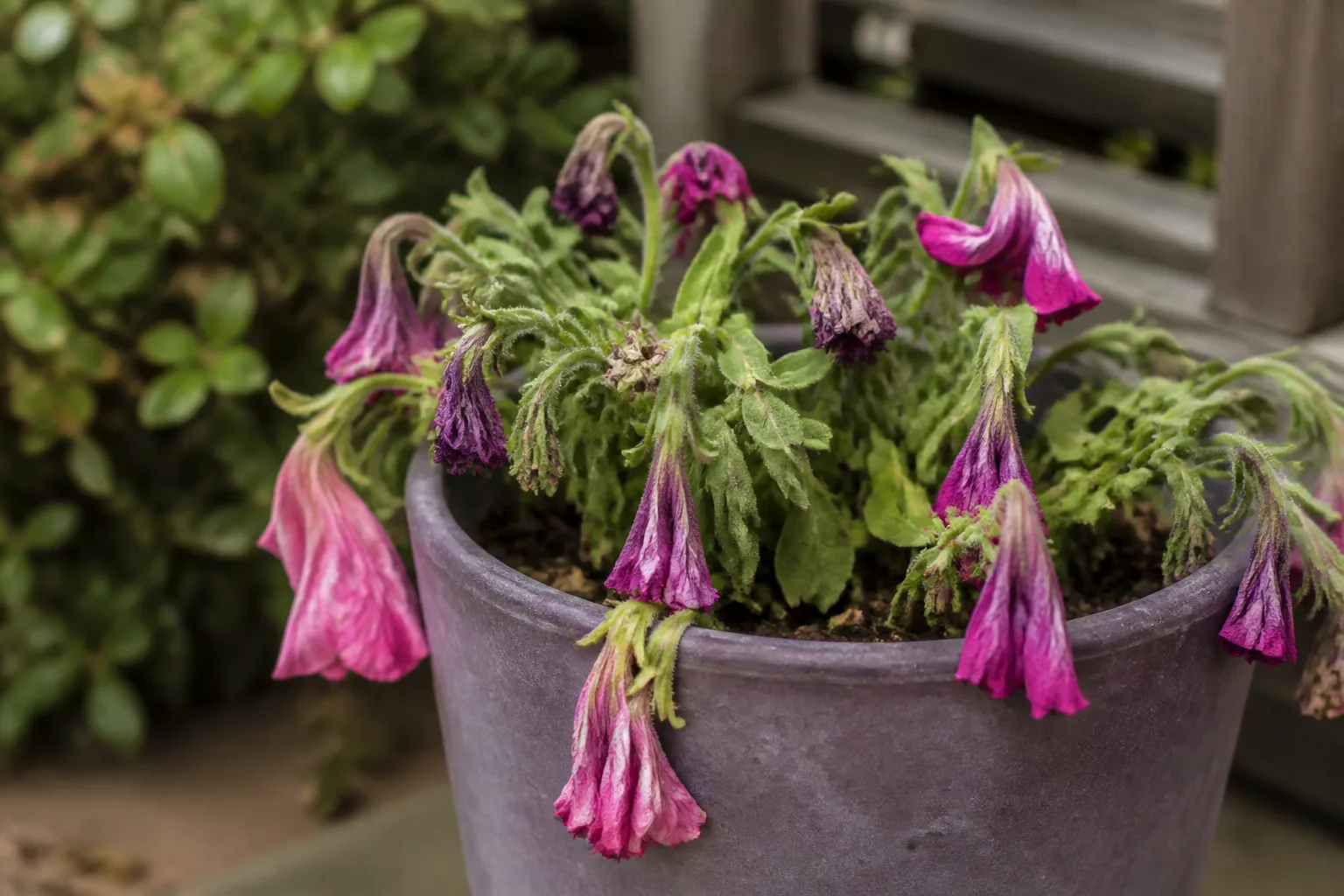
Wilting on Petunia: Causes, Checks & Fixes
This guide covers wilting on Petunia. See also the general Wilting guide, watering, and light pages for this plant.
Wilting on Petunia: Causes, Checks & Fixes
Quick answer
Wilting on petunia always demands one question first: is the root zone too dry or too wet? Petunias in full sun containers wilt from drought mid-morning when the top 2 cm dries out-but they also wilt when overwatering on Petunia destroys roots, because damaged roots cannot absorb water from soggy mix. Check pot weight and moisture at 2 cm before you water or withhold water.
Why Petunia wilts
Wilting is the visible sign that petunia cells lack turgor pressure-water is leaving leaves faster than roots replace it, or roots are too damaged to supply water at all. On Petunia overview, four causes cover most cases:
underwatering on Petunia. Fast-growing petunias in at least five or six hours of sun transpire heavily. Small baskets can dry within one hot day. Mid-morning wilt with a light pot and dry top 2 cm fits this pattern.
Overwatering and root rot on Petunia. Saturated mix deprives roots of oxygen. Pathogens such as Pythium and Thielaviopsis black root rot further destroy feeder roots. The plant wilts while soil stays wet-often with yellow lower leaves.
Heat transpiration. Normal physiology on hot afternoons in full sun. Soil moist at depth, recovery by evening or morning, no yellowing or mould-usually harmless.
Disease. Botrytis, white mold, and vascular wilts can blight stems and leaves. University of Minnesota Extension lists root rot, white mold, and grey mold among causes of wilting and browning on petunias.
Petunias are not drought succulents and not bog plants-the wilt cause usually sits at one extreme or the other.
What wilting looks like on Petunia
Symptoms vary by cause:
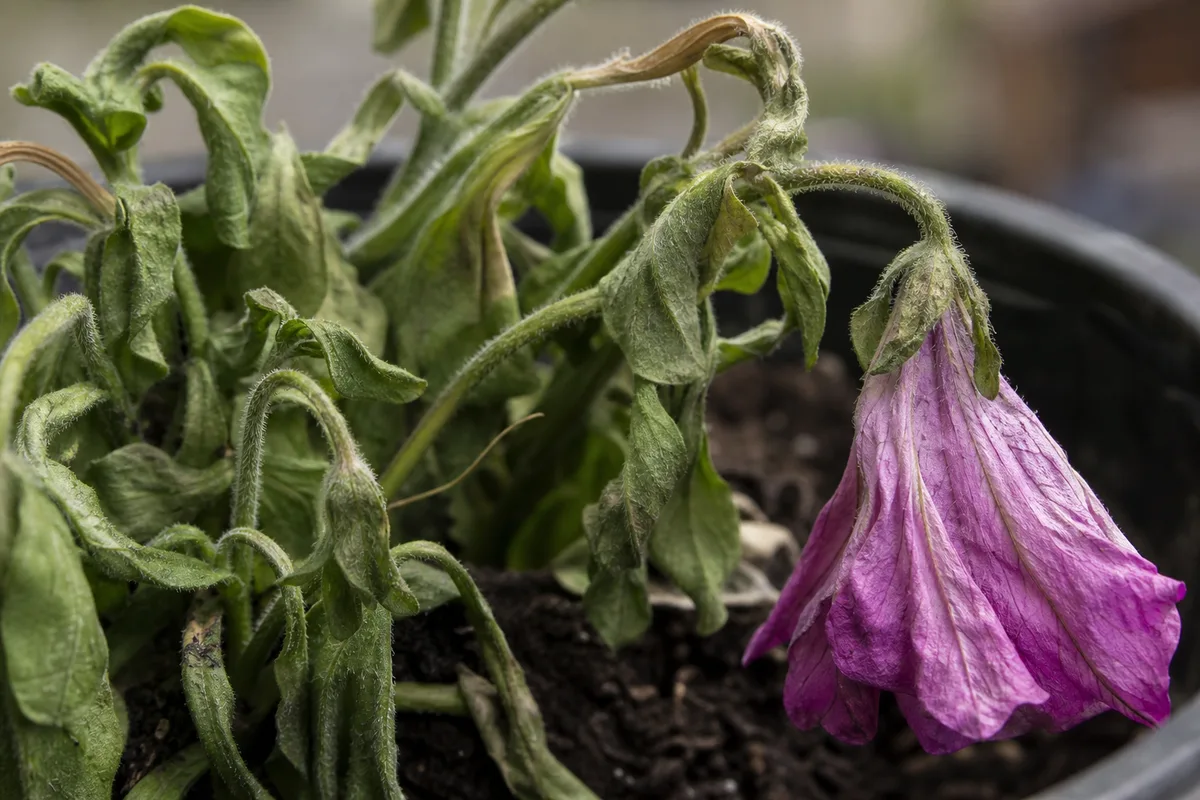
Wilting symptoms on Petunia - compare with healthy tissue on the same plant.
Drought wilt
- Limbs soft and drooping by mid-morning.
- Pot light; top 2 cm dry or pulling from rim.
- Flowers fade quickly; leaf edges turn crispy.
- Recovery within hours after deep base watering.
Rot-related wilt
- Limp stems despite heavy, wet pot.
- Lower leaves yellow; possible grey mould on old blooms.
- Sour smell from mix; mushy or black roots when inspected.
- No recovery after watering-often worsens.
Heat wilt
- Afternoon droop only in direct sun.
- Pot moderately heavy; soil moist below surface.
- Firm stems by next morning.
- No progressive yellowing or stem rot.
Disease wilt
- Brown patches on leaves or stems; fuzzy grey or white growth in humid weather.
- One branch or section may fail before the rest.
- Pattern matches PNW disease guides more than a dry pot.
How to confirm the cause
Follow this triage order every time:
- Time of wilt. Note whether collapse happens mid-morning (drought), all day on cool days (rot or disease), or mainly mid-afternoon (heat).
- Pot weight and 2 cm test. Dry and light = underwater. Heavy and damp days after watering = overwater.
- Recovery overnight. Perks by morning with no extra water = likely heat. Still limp with wet soil = root problem.
- Leaf color and flowers. Yellow lower leaves plus wet mix = rot stress. Crispy edges plus dry mix = drought. Grey mould on petals = botrytis, often linked to wet flowers and overhead water.
- Root peek if still unclear. Slide plant out gently. Firm pale roots support drought diagnosis after rehydration. Mushy brown roots confirm rot-stop watering.
Write down which pattern matched before treating. Stacking guesswork causes repeat wilt within days.
First fix for Petunia
Match the first action to the confirmed cause:
- Dry pot: Water thoroughly at the base until drainage runs; empty saucers.
- Wet pot with rot signs: Stop watering; improve drainage and airflow; repot into fresh perlite-rich mix if roots are mushy.
- Heat wilt with moist soil: No immediate water; verify depth moisture tomorrow morning instead.
- Botrytis on blooms: Remove affected flowers; water at base only; improve spacing for air movement.
One correction only-do not prune, repot, and fertilize the same afternoon unless rot is advanced.
Step-by-step recovery by cause
After drought
- Deep soak at base; submerge small pots if water runs off dry mix.
- Shade fully collapsed baskets for one to two hours post-soak.
- Resume top-2-cm checks daily in heat.
After overwatering
- Stop irrigation until top 2 cm dries.
- Deadhead mouldy blooms; remove yellow leaves more than half damaged.
- Repot with trimmed roots if sour smell or mushy tissue present.
After heat stress
- Confirm moisture at 2–3 cm depth; water only if dry.
- Consider slight afternoon shade only if wilt is extreme and repeated daily-petunias still need strong sun for bloom.
Suspected disease
- Remove affected tissue; do not overhead water.
- Isolate basket from neighbors if mould is spreading.
- Replace plant if stem base is girdled-petunias are inexpensive to restart seasonally.
Recovery timeline
Drought wilt often reverses within two to four hours of proper soaking. Flowers already faded will not reopen; new buds should hold color within a week if checks improve.
Rot-related wilt may stabilize in one to two weeks after Petunia repotting guide if less than one-third of roots were lost. Severe rot rarely restores a full trailing basket.
Heat wilt needs no tissue recovery-only consistent depth moisture through hot spells.
What not to do
Do not water automatically every time you see droop-confirm dryness first.
Do not withhold water from a dry wilted basket because “petunias tolerate heat.” They tolerate heat with adequate root moisture.
Do not overhead spray wilted foliage; Botrytis favors wet senescent tissue.
Do not fertilize limp plants before identifying the wilt cause.
Do not assume wilting is always underwatering-wet-soil wilt is common on overwatered container petunias.
Causes to rule out
| Wilt pattern | Pot / soil | Likely cause |
|---|---|---|
| Mid-morning, crispy edges | Dry, light | Underwatering |
| All day, yellow lower leaves | Wet, heavy | Overwatering / root rot |
| Afternoon only, firm by AM | Moist at depth | Heat transpiration |
| Branch-by-branch, fuzzy mould | Variable | Botrytis or white mold |
| One-sided yellow, vascular brown | Moist | Vascular wilt (rare) |
Lookalike symptoms
Drooping leaves vs full collapse. Drooping may affect leaves while stems stay partly firm; severe wilt collapses the whole shoot. Both can share causes-moisture check still comes first.
Leggy stretch in shade. Weak stems in low light lean and look tired but are not true wilt from water stress. Move to more sun before increasing water.
Normal post-prune droop. Hard cutback causes temporary softening for twenty-four to forty-eight hours. Hold watering steady unless top 2 cm is dry.
Petunia care cross-check
Stable petunias pair:
- Light: Full sun, five to six hours minimum.
- Water: When top 2 cm is dry; containers may need daily checks in heat-not daily soaking regardless of need.
- Soil: Lightweight mix with perlite.
- Technique: Base watering; prompt deadheading.
Wilting often appears when one element drifts-extra sun without extra checks, or shade without reduced watering.
How to prevent wilting next time
Build a morning habit: lift the pot, probe the top 2 cm, note sun and forecast. Water only when dry at that depth.
Use pot size matched to cultivar spread. Ten-inch baskets with massive Wave petunias dry faster than expected.
Improve drainage before rot develops-open holes, empty saucers, avoid overhead irrigation.
After heat waves, inspect roots if wilt ever occurred with wet soil-early rot is easier to fix than advanced collapse.
When to worry
Escalate if:
- Wilt persists through cool mornings with wet soil.
- Stems darken or soften at the base.
- Grey mould moves from old flowers onto living leaves.
- Plant fails to perk within four hours after confirmed drought watering.
- Entire basket collapses over a weekend.
For afternoon-only wilt with moist soil and morning recovery, worry less-adjust checks, not panic. For wet-soil wilt, act before roots are gone.
When to use this page vs other Petunia guides
- Petunia watering guide - Use for routine moisture checks before assuming wilting is the main issue.
- Petunia problems hub - Browse all 40 common issues on this species.
- Underwatering on Petunia - Different entry point when symptoms overlap with wilting.
- Overwatering on Petunia - Different entry point when symptoms overlap with wilting.
- Root Rot on Petunia - Different entry point when symptoms overlap with wilting.