Drooping Leaves on Petunia: Causes, Checks & Fixes
Quick answer
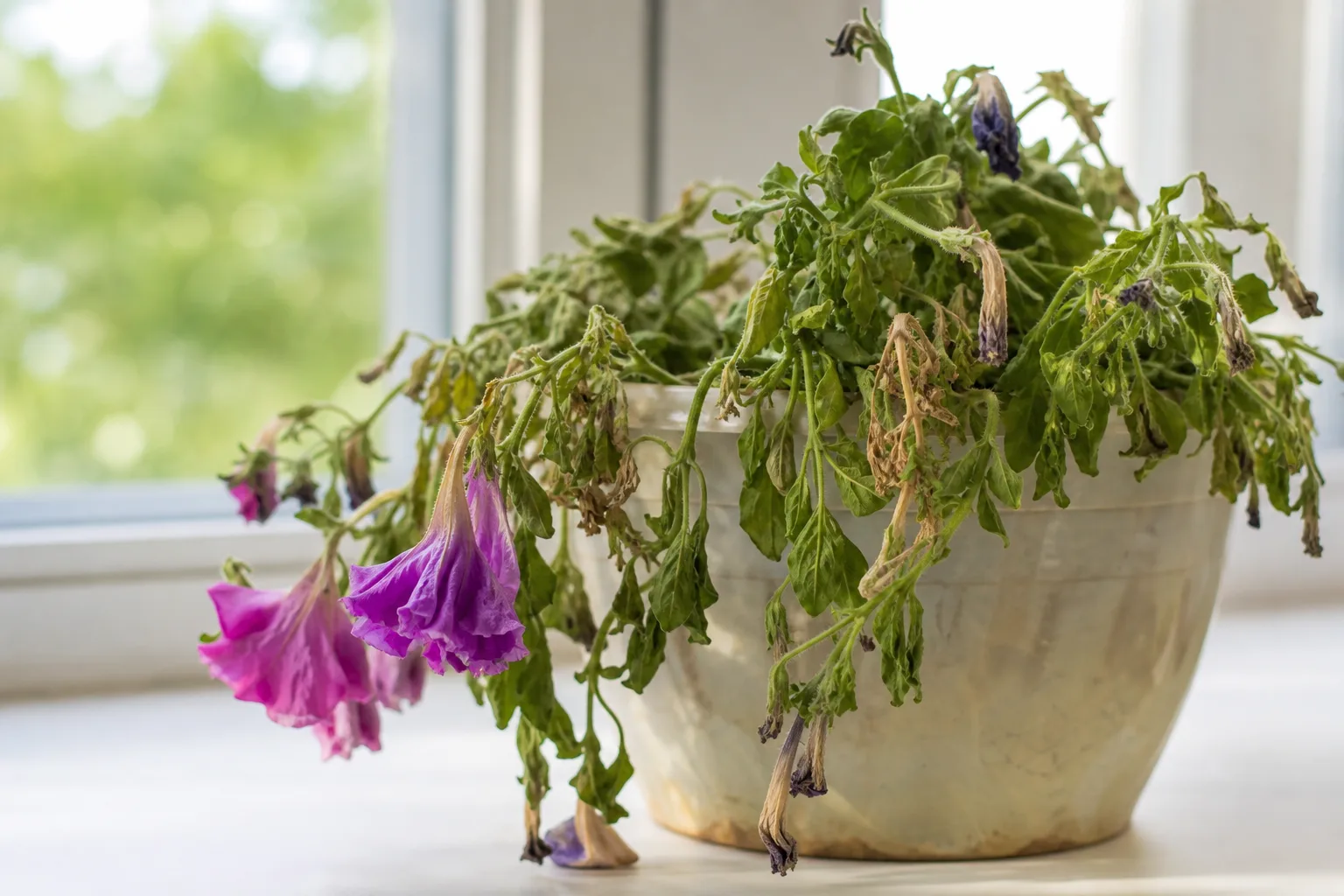
Drooping petunia leaves mean leaf blades lost turgor while stems may still be partly firm-an earlier warning than full shoot collapse. Read the fold pattern first: soft flag on dry rim mix is drought; yellow lower leaves on wet mix is root stress; afternoon-only fold on moist soil is often heat. Probe center depth and pot weight before you soak or withhold water.
Drooping Leaves on Petunia: Causes, Checks & Fixes
This guide covers drooping leaves on Petunia. See also the general Drooping Leaves guide, watering, and light pages for this plant.
Drooping Leaves on Petunia: Causes, Checks & Fixes
Quick answer
Drooping leaves on petunia mean leaf blades lost turgor-the tissue folds soft like a flag-even when stems are still partly firm. That is an earlier signal than full wilting on petunia, where whole shoots collapse. Start by reading the fold pattern, then confirm with pot weight and a 2–3 cm moisture probe.
First fix: match water to what the fold pattern shows. Dry, light pot with a soft leaf flag → deep base soak. Wet, heavy pot with yellow lower leaves → stop watering and inspect roots. Afternoon-only fold on moist mix → wait until morning; likely heat stress, not drought.
On a south-facing deck in mid-July, a ten-inch Supertunia basket often tells the story before you touch a hose: outer trailers fold by 9 a.m. while the center surface still feels cool-rim mix was dry, center was not. A tray soak after a base watering restored flat leaves by noon without any leaf loss.
Drooping leaves vs. wilting on petunia
| What you see | Likely stage | Read next |
|---|---|---|
| Soft folded leaf blades; stems mostly upright | Early droop | Stay on this page |
| Whole shoots limp; stems collapse along length | Advanced wilt | Wilting on petunia |
| Outer rim stems fold first in a Wave basket | Uneven dry-out | Rim probe + petunia watering |
| Afternoon fold only; firm by dawn | Heat transpiration | Heat stress on petunia |
Leaf droop is the canary; shoot wilt is the alarm. Both share drought, wet roots, heat, and disease pathways-but catching fold early prevents flower loss and crown damage.
Why Petunia leaves droop
Petunia leaves droop when transpiration outpaces uptake, or when damaged roots cannot deliver water. On this fast-growing Solanaceae annual, blade fold often appears hours before stems go limp-especially in hanging baskets where outer trailers dry first.
Underwatering and rim dry pockets. Spreading Wave types trail far from a dense canopy that shades the basket center. Outer leaves fold while inner mix still holds moisture. Hot mornings accelerate the pattern; margins turn crispy within twenty-four hours if dry-out continues.
Overwatering and root decline. Lower leaves yellow and fold while mix stays wet. Saturated roots lose oxygen; pathogens finish feeder roots. Leaves hang soft even though you watered yesterday-see overwatering on petunia and root rot on petunia when repot is needed.
Heat and high transpiration. In at least five or six hours of direct sun, afternoon blade droop on moist soil is common physiology. Grandiflora types with larger flowers may show more visible afternoon fold than compact milliflora; spreading cultivars in small dark pots overheat at the root zone faster than foliage alone suggests.
Botrytis and foliar disease. Grey mould on senescent petals spreads to adjacent leaves under humidity. Drooping leaves show brown spots or fuzzy growth-not the uniform soft fold of drought. Escalate on the blight guide if mould reaches living tissue.
Sap-sucking pests. Aphids and mealybugs on new shoots drain sap from petunias and distort tender growth; limp tips without dry soil or wet-soil paradox point to pest pressure, not watering rhythm.
Root-bound stress. Overcrowded roots in a pot too small for a vigorous spreading cultivar dry unevenly and recover slowly after watering-outer fold persists even when you soaked yesterday. Upsize or root-prune at repot rather than chasing more water.
Recent transplant or hard prune. Temporary fold for one to two days while roots or cuts equilibrate. Keep moisture steady-not soggy, not bone dry.
What drooping leaves look like on Petunia
Read the fold before defaulting to a moisture check:
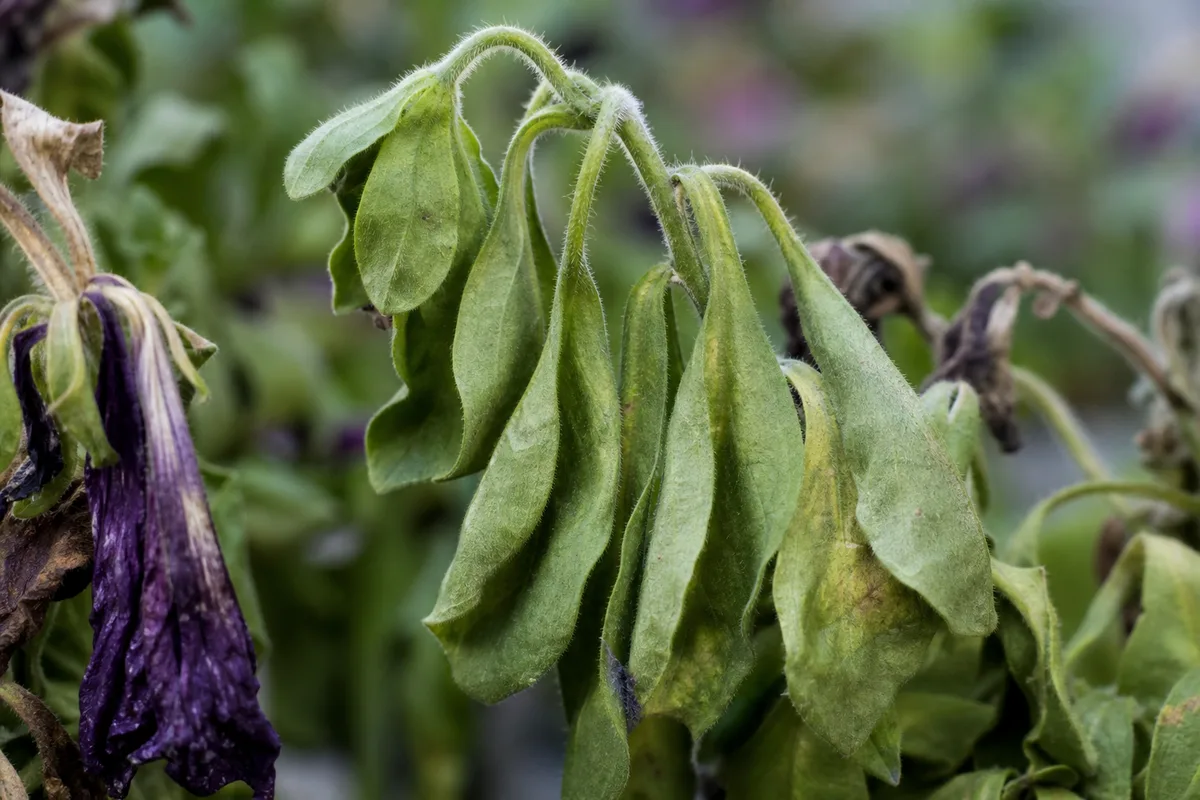
Drooping Leaves symptoms on Petunia - compare with healthy tissue on the same plant.
Drought droop
- Leaf blade hangs like a soft flag; stem may still feel somewhat firm.
- Rim or outer basket stems affected first on Wave types.
- Surface mix dry; pot noticeably lighter than after watering.
- Margins turn crispy if drought continues.
Rot-related droop
- Lower leaves yellow then fold; upper blades may follow.
- Mix wet and heavy; finger stays cool at 2 cm days after watering.
- No perking after water-roots cannot absorb it.
- Possible sour smell when lifting the plant.
Heat droop
- Mainly afternoon; blades relax downward along the stem.
- Mix has moderate weight; probe at 2–3 cm shows moisture.
- Stems turgid again by next morning.
- Flowers may still look acceptable if depth moisture is fine.
Disease droop
- Localized patches; one section of basket folds first.
- Brown lesions or grey fuzz on affected tissue.
- Matches Botrytis blight patterns on ornamentals.
Pest-linked limp tips
- New growth curls or sticks; honeydew or white wax visible.
- Soil moisture normal; fold follows shoot tips, not whole basket evenly.
Lookalike symptoms to rule out
Wilting vs. drooping leaves. Wilting collapses whole shoots; drooping starts with blades while stems stay partly firm. Same moisture triage applies-see wilting on petunia when collapse is advanced.
Leggy soft stems in shade. Insufficient light produces weak stretch that looks tired but is not the acute fold of drought. Increase sun before increasing water-not enough light compounds wet-soil droop.
Faded flowers. Quick flower fade accompanies drought but can follow heat; leaf fold plus dry pot confirms water stress.
Underwatering crash vs. early droop. Underwatering on petunia covers full collapse after a missed hot day; this page is for the softer fold stage before stems fail.
How to confirm the cause
- Name the fold pattern using the section above-drought flag, yellow-lower wet fold, afternoon-only, localized lesion, or pest tip.
- Separate leaf droop from stem collapse. Stem flop usually means advanced wilt; leaf-only droop is often earlier drought or heat.
- Probe 2–3 cm at rim and center-trailing stems hide dry pockets under dense Wave canopies.
- Weigh the pot against your memory of fully watered weight. A heavy wet basket that still folds often signals root failure, not thirst-as commercial growers learn when spot-checking rows of baskets.
- Time it. Morning droop in sun + dry soil = water. All-day droop + wet soil = rot check. Afternoon-only = heat likely.
- Water test if dry. Deep base soak; drought droop should improve within hours. No change with wet soil confirms root issue.
Document which pattern matched before changing care-petunias respond quickly when the fix matches the cause.
First fix for Petunia
If the top 2 cm is dry and the pot is light: water thoroughly at the base until a little drains, then discard runoff. Aim moisture through the full root zone-container petunias need enough water to reach depth, not a surface sprinkle.
If the mix is wet and leaves still droop: stop watering. Improve airflow, remove spent blooms, and inspect roots if yellow lower leaves are present. Follow root rot on petunia if roots are mushy or smell sour.
If soil is moist and droop is afternoon-only: wait until morning. Do not add water by reflex.
If pests are visible on new tips: isolate, rinse undersides, and see aphids or mealybugs before fertilizing stressed tissue.
Step-by-step recovery
Dry-mix droop
- Water at base with slow steady flow until drainage.
- For hydrophobic dry baskets, soak bottom of pot in a tray ten minutes after initial pass.
- Trim leaves that are more than half crispy to reduce water demand.
- Check daily until hot spell ends.
Example: On a 92°F porch in late June, outer Wave stems folded by 10 a.m. with a light pot; center surface felt cool but rim probe was dry at 2 cm. Tray soak after base watering perked blades within three hours-no stem loss.
Wet-mix droop
- Withhold water until top 2 cm dries.
- Remove yellow leaves and mouldy flowers.
- Unpot, trim rotten roots, refresh mix with 15–20% perlite if needed-full repot protocol on root rot.
- Resume watering only on dry-down rhythm from the watering guide.
For shoot collapse and sour-smelling wet mix, use the wilting recovery paths rather than repeating full stem-collapse steps here.
Heat droop
- Verify moisture at depth each morning.
- Relocate dark pots that overheat the root zone-not reducing sun on foliage unless extreme. Cultivar notes and afternoon-shade timing live on heat stress.
Disease-linked droop
- Cut out affected leaves and flowers; bag debris.
- Space baskets for airflow; avoid evening overhead water.
- Replace plant if crown is infected-petunias are seasonal replacements.
Root-bound droop
- Slide plant out; if roots circle heavily and dry within hours of watering, upsize one pot size with fresh mix.
- Water to weight after repot; outer fold should stop cycling daily once roots have room.
Recovery timeline
Drought-related leaf droop often reinflates within two to four hours. Crispy tips remain damaged permanently.
Rot-related droop may take one to two weeks to stabilize if roots were partially saved. Lower yellow leaves will not flatten again.
Heat droop needs no leaf recovery timeline-only consistent depth moisture.
New leaves emerging after correction should look flat and firm within seven to fourteen days.
What not to do
Do not mist drooping leaves instead of watering soil-petunias need root uptake, not foliar humidity for turgor.
Do not pour water on an already wet drooping plant-that deepens rot.
Do not remove all drooping leaves immediately; confirm cause first. Heat and drought leaves recover; diseased tissue should be removed.
Do not move a drought-stressed basket into deep shade to “help droop”-petunias need sun for recovery bloom; shade only briefly after emergency rehydration if fully collapsed.
Do not fertilize until leaves are turgid and the watering issue is resolved.
Causes to rule out
| Leaf appearance | Soil | Action |
|---|---|---|
| Soft fold, crispy tips starting | Dry, light | Deep soak |
| Yellow lower leaves, limp | Wet, heavy | Stop water; inspect roots |
| Afternoon fold, firm by AM | Moist | Monitor; likely heat |
| Brown spots, grey fuzz | Variable | Remove tissue; improve air |
| Limp new tips, pests visible | Normal | See aphids/mealybugs guides |
| Drooping after hard prune | Evenly moist | Wait 48 hours |
Petunia care cross-check
Prevent repeat droop by aligning:
- Light: Five to six hours direct sun minimum-more bloom, more water use.
- Water: Top 2 cm dry-down rule; daily checks in heat for baskets per petunia watering.
- Soil: Lightweight mix with perlite for even wetting and draining.
- Deadheading: Remove spent blooms so rot and moisture loss stay separate issues.
Outer trailing stems on Wave-type petunias are the canary-drooping there while you only touch the dry surface center means probe deeper next time. In September, the same basket may need every-other-day checks where July demanded twice-daily rim probes.
How to prevent drooping leaves next time
Check center and rim moisture, not just the visible surface under dense foliage.
Water at the base early enough for splashed leaves to dry before evening-prolonged wet foliage favors Botrytis.
Right-size baskets for cultivar vigor; overcrowded roots in tiny pots dry unevenly.
Track pot weight through one week of normal weather to learn your plant’s dry and wet weights by feel.
After Petunia repotting guide or heavy prune, keep mix evenly moist for several days-extremes cause temporary droop.
When to worry
Treat as urgent when:
- All leaves droop before noon with a dry pot in Petunia light guide-same-day soak needed.
- Drooping worsens after watering a wet basket.
- Lower stem softens or darkens at soil line.
- Grey mould spreads from flowers to living leaves.
- No reinflation within four hours after confirmed drought watering.
For mild afternoon leaf droop with morning firmness, adjust monitoring rather than replacing the plant. When crown tissue is involved or most roots are mushy, replacing a mid-season annual often costs less effort than extended salvage-start fresh with corrected drainage and the watering guide’s check-first habit.
Related petunia troubleshooting
- Wilting on petunia - whole-shoot collapse and wet-soil wilt paradox
- Heat stress on petunia - afternoon fold physiology and cultivar tolerance
- Underwatering on petunia - dry pot differentiation and hydrophobic mix
- Overwatering on petunia - yellow lower leaves on wet mix
- Root rot on petunia - mushy roots, repot, and salvage calculus
- Blight on petunia - Botrytis escalation from spent blooms
- Aphids on petunia - sap loss on new shoots
- Mealybugs on petunia - wax and limp growing tips
- Petunia watering - canonical 2 cm moisture check
- Petunia overview - cultivar types and basket culture
Conclusion
Drooping petunia leaves reward pattern reading before reflex watering. Soft flags on a light dry rim point to soak; yellow lowers on wet mix point to dry-down and root inspection; afternoon-only fold on moist soil points to heat monitoring-not another drink. Outer Wave stems fold first because exposure and canopy physics dry the rim before the center-probe both, weigh the basket, and link forward to wilting or root-rot guides when blades do not reinflate within hours. Catch fold early and you keep the bloom show; ignore wet-soil fold and you chase crown rot by August.
When to use this page vs other Petunia guides
- Petunia watering guide - Use for routine moisture checks before assuming drooping leaves is the main issue.
- Petunia problems hub - Browse all 40 common issues on this species.
- Underwatering on Petunia - Different entry point when symptoms overlap with drooping leaves.
- Overwatering on Petunia - Different entry point when symptoms overlap with drooping leaves.
- Root Rot on Petunia - Different entry point when symptoms overlap with drooping leaves.