Blight on Petunia: Causes, Checks & Fixes
Quick answer
Blight on petunias is usually Botrytis gray mold on wet flowers and foliage in humid baskets. First step: remove infected blooms and leaves, water at the base only, and improve airflow.
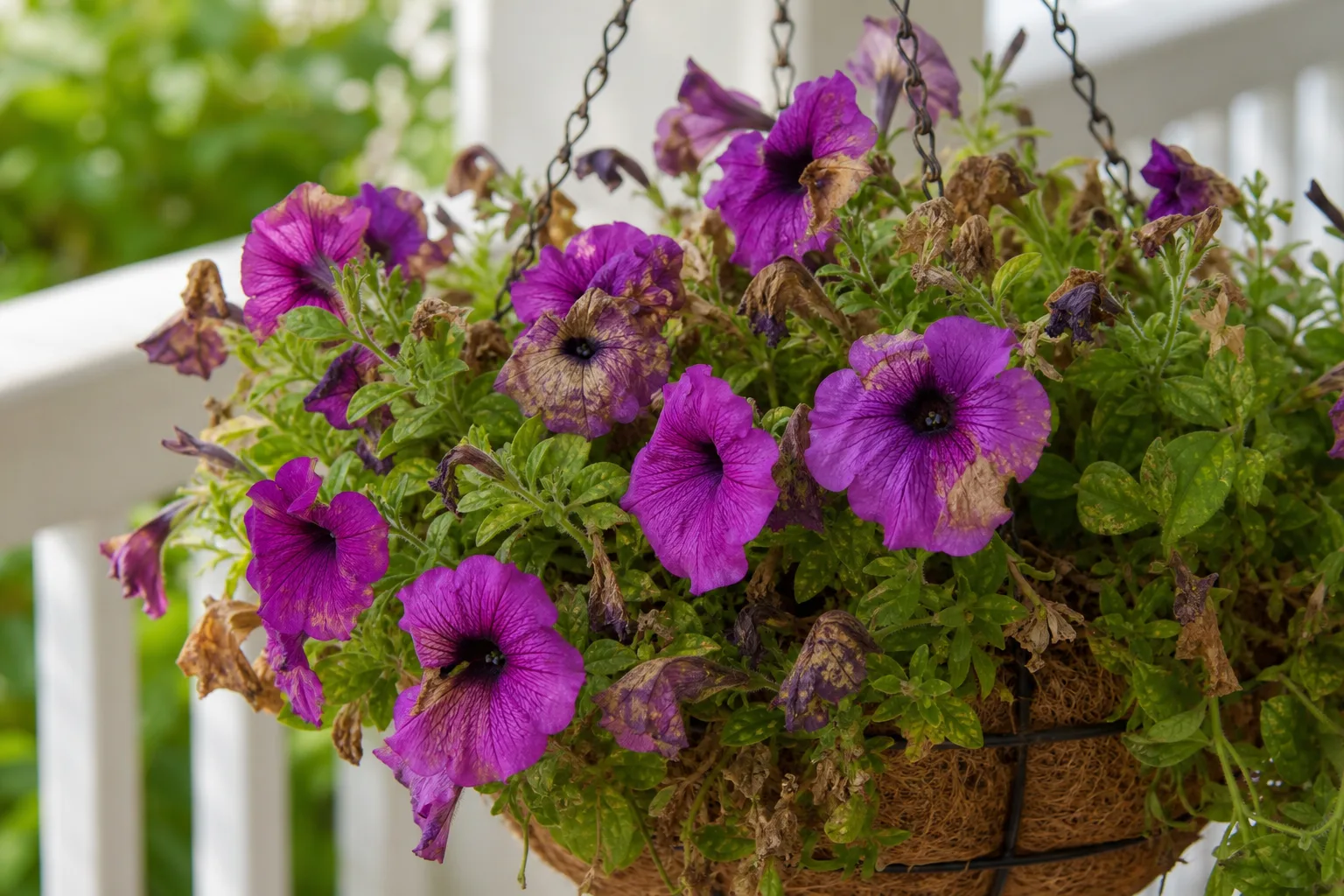
Blight on Petunia: Causes, Checks & Fixes
This guide covers blight on Petunia. See also the general Blight guide, watering, and light pages for this plant.
Blight on Petunia: Causes, Checks & Fixes
Quick answer
Blight on petunia is almost always Botrytis cinerea attacking wet, senescent tissue-not a mysterious leaf disease. Hanging baskets with crowded stems, evening overhead watering, and high humidity create the perfect setup. First step: pick off infected flowers and leaves, then switch to base watering only.
Why Petunia gets blight
Petunias bloom heavily and hold spent petals on trailing stems. Botrytis blight often starts on dead flowers and spreads to nearby buds and leaves when foliage stays wet overnight. Container plantings packed tight on porches trap humid air. Cool, cloudy weeks slow drying while gardeners keep watering on schedule.
Overhead sprinklers and misting wet both blooms and the dense interior of basket plants-exactly where Botrytis sporulates on senescent petunia flowers. Unlike root diseases, blight is visible on the surface first.
What blight looks like on Petunia
- Tan, brown, or gray fuzzy spots on petals and leaf margins.
- Water-soaked patches on spent flowers that never dry.
- Buds turning brown before opening in humid weather.
- Rapid dieback on one side of a crowded basket.
- Grey mold visible with a hand lens on infected tissue.
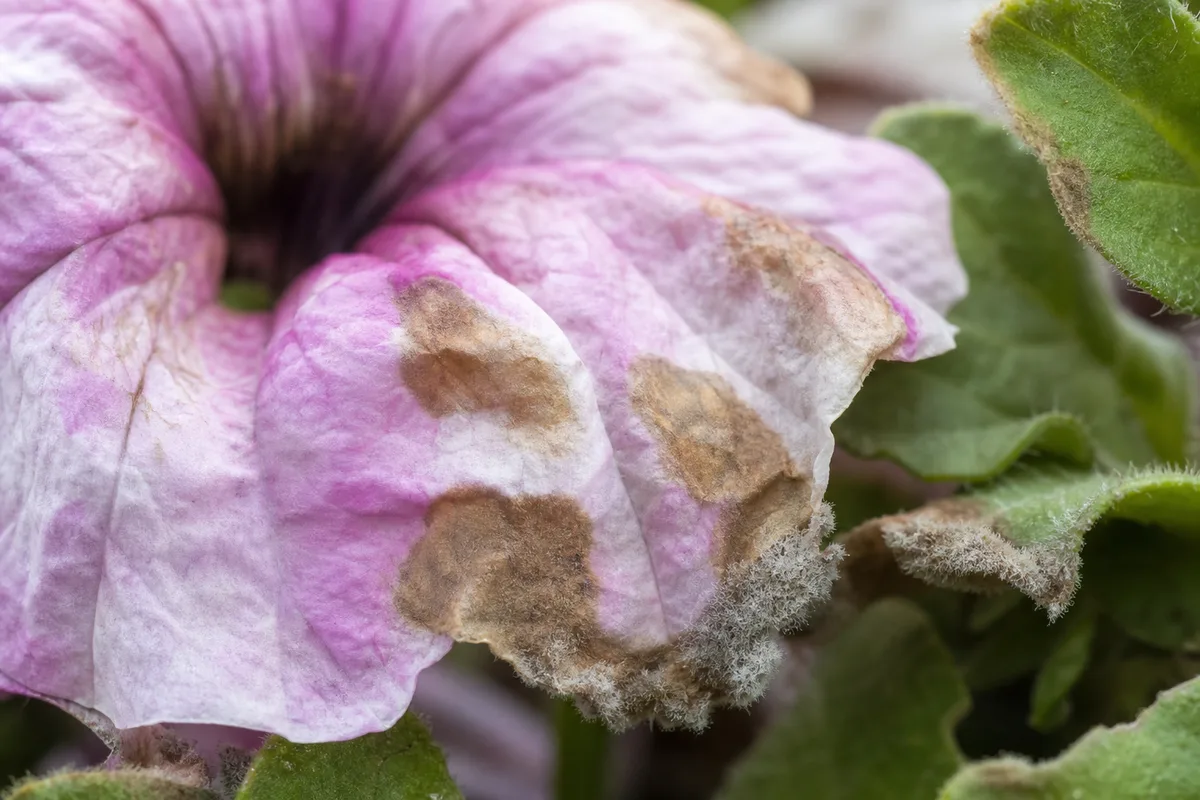
Blight symptoms on Petunia - compare with healthy tissue on the same plant.
This differs from flowers turning brown from drought-those petals are dry and papery, not water-soaked and fuzzy.
How to confirm the cause
- Check timing: did spots appear after rain, misting, or several humid days?
- Inspect spent blooms first-dead flowers are common Botrytis entry points.
- Feel tissue: blight patches are soft and wet; sun scorch is crisp and dry.
- Smell: musty odor near infected flowers supports Botrytis.
- Rule out root rot on Petunia: if stems are firm and only flowers show mold, blight-not Phytophthora-is likely.
First fix for Petunia
Remove all brown flowers and affected leaves into the trash-not compost. Water at the soil line in morning so foliage dries by night. Space or trim overlapping stems in dense baskets to let air move. Hold fertilizer until new growth looks clean for a week.
Step-by-step recovery
- Deadhead every two to three days during humid spells.
- Move baskets slightly apart on railings for airflow.
- Avoid evening watering entirely until symptoms stop spreading.
- If blight keeps returning on one plant, isolate it from mixed containers.
- Replace severely defoliated plants mid-season rather than fighting chronic mold.
Botrytis vs other petunia blights
Most home gardeners searching “blight on petunia” are dealing with Botrytis cinerea, but two other diseases can look similar on trailing baskets. Alternaria blight produces small dark brown spots with yellow halos on leaves rather than the fuzzy grey mold of Botrytis, and it spreads fastest when foliage stays wet after rain. Phytophthora blight attacks stems at the soil line and causes sudden collapse of entire branches—quite different from flower-first Botrytis that starts on spent petals.
The distinction matters because stem-collapse blight needs drainage fixes and possibly fungicide, while flower Botrytis usually responds to sanitation alone. If only petals and leaf edges show grey fuzz and stems stay firm, stay on the Botrytis path. If a whole side of the basket wilts overnight with dark lesions at the crown, check the root rot on Petunia guide instead.
Basket and porch conditions that worsen blight
Hanging petunias on covered porches create a greenhouse microclimate: warm days, cool nights, and trapped humidity between the basket liner and the house wall. Wave and Supertunia varieties trail heavily, so interior stems never see direct air. During peak bloom in late spring, a single basket can hold dozens of spent flowers at once—each one a potential infection site if rain or sprinkler spray keeps them wet.
Spacing baskets six inches apart on a railing, trimming back stems that touch the porch ceiling, and running a small fan on low during humid weeks all reduce Botrytis pressure without chemicals. For mixed containers where petunias share space with calibrachoa or verbena, remove the petunia first if blight recurs—those companions often have denser foliage that traps moisture against petunia flowers.
When fungicide is worth considering
Sanitation and dry-foliage habits fix most home petunia blight. Consider a fungicide only when grey mold keeps returning after two weeks of deadheading and base watering, or when you are growing petunias for a show or market where cosmetic damage matters. Botrytis management in greenhouse ornamentals recommends starting with cultural controls before chemical sprays.
If you do spray, target the product label for Botrytis on ornamentals, apply in morning so foliage dries, and never spray open flowers you plan to enjoy visually. Most container gardeners never need fungicide when deadheading is consistent and evening watering stops.
What not to do
Do not mist flowers to “refresh” them-this worsens Botrytis. Do not leave spent blooms on trailing stems. Do not interpret fuzzy flowers as needing more water; saturated mix plus humidity accelerates blight.
How to prevent blight next time
Petunias need full sun and well-drained soil with deadheading as routine care. Water at the base; avoid wetting foliage and flowers. In greenhouse-like porches, run a fan on low or trim back growth so interior stems dry. Remove faded flowers before they collapse onto buds below.
When to worry
Escalate if grey mold moves into live stems, crowns soften, or entire basket sides collapse in days. Mild flower spotting after one rainy week is manageable with sanitation and dry foliage habits.
When to use this page vs other Petunia guides
- Petunia watering guide - Use for routine moisture checks before assuming blight is the main issue.
- Petunia problems hub - Browse all 40 common issues on this species.