Bud Drop on Petunia: Causes, Checks & Fixes
Quick answer
Bud drop on petunia means developing flower buds abort before opening-usually from moisture swings, heat on hanging baskets, tobacco budworm, or pests on tender bud tissue. First step: check soil moisture at 2 cm depth with the top-dry test, then scout unopened buds at dusk for caterpillar holes.
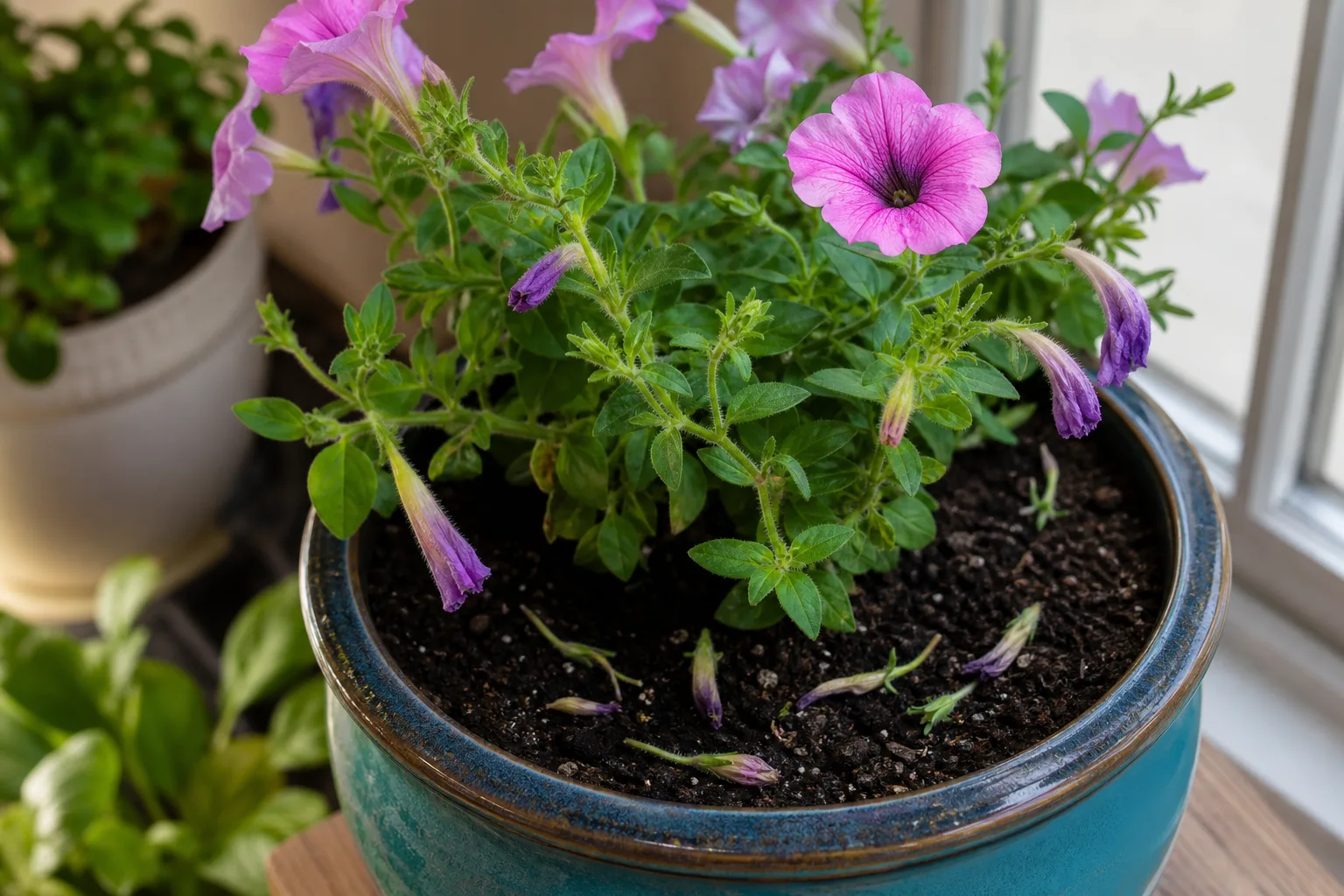
Bud Drop on Petunia: Causes, Checks & Fixes
This guide covers bud drop on Petunia. See also the general Bud Drop guide, watering, and light pages for this plant.
Bud Drop on Petunia: Causes, Checks & Fixes
Quick answer
Bud drop on petunia means developing flower buds detach before petals open-you find small tight buds on the pot rim or soil while older blooms may still look fine. On container and hanging-basket petunias, this usually traces to moisture swings during bud swell, heat desiccation on shallow roots, tobacco budworm tunneling into unopened buds, or pests and botrytis on wet bud tissue.
First step: check soil moisture at 2 cm depth before you fertilize, spray, or move the basket. Stick a finger into mix beside the stem. If the top 2 cm is dry and leaves wilt in afternoon sun, water deeply at the base. If soil stays wet and heavy for days, hold water and check drainage-saturated roots abort buds too. Then scout unopened buds at dusk for small holes and frass pellets that point to tobacco budworm rather than simple stress.
Even full-sun annuals bred for heavy bloom drop buds when roots cannot supply water fast enough during the rapid cell expansion that bud development demands-or when caterpillars destroy buds from the inside.
What bud drop looks like on Petunia
Bud drop on petunias is about what falls and when, not just fewer flowers at season end.
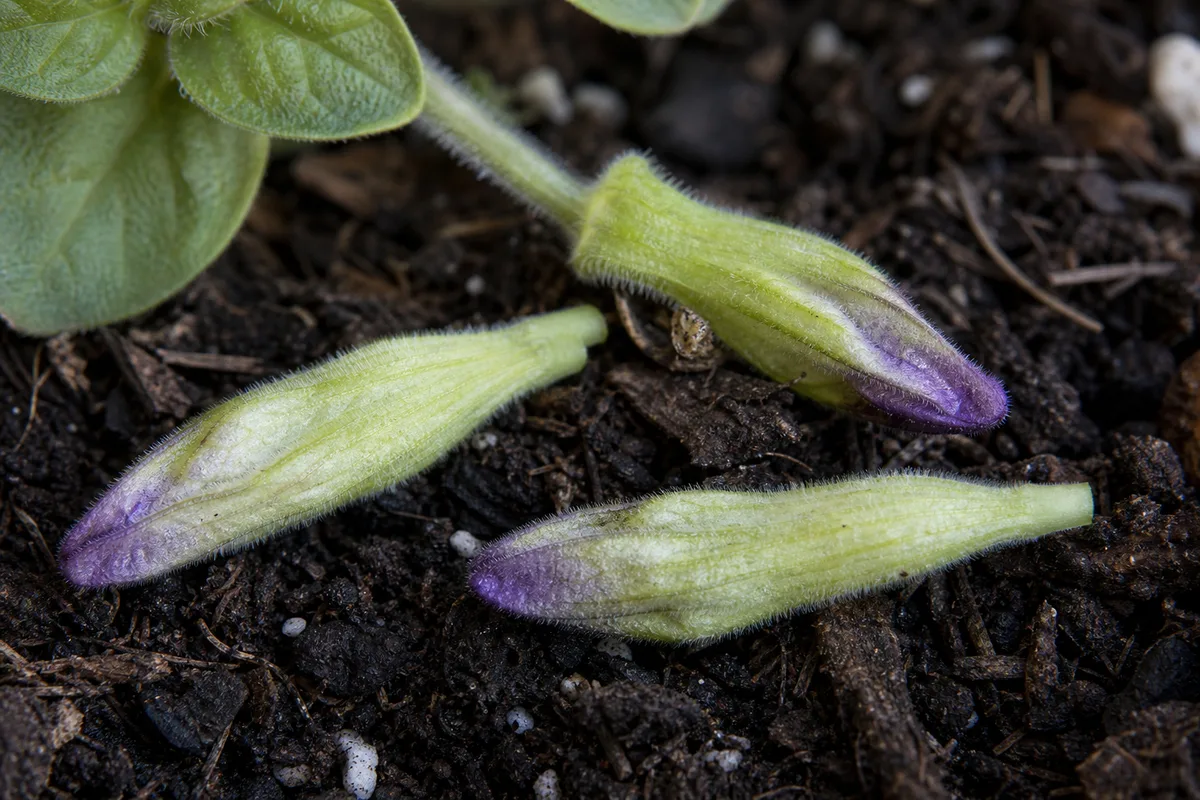
Bud Drop symptoms on Petunia - compare with healthy tissue on the same plant.
Typical bud-drop signs:
- Small unopened buds-often pea-sized or smaller-lying on the soil, pot rim, or caught in trailing stems below the cluster
- Bare pedicels where a bud was attached; the tiny stem tip may look cleanly broken or slightly dry
- Open flowers still present while newer buds in the same cluster are missing-the plant looks partly in bloom but stops producing fresh color
- Afternoon wilting on the same basket, especially when soil dries fast in full sun
- Sticky bud tips or honeydew on soft shoot tissue when aphids cluster on developing buds
Stress abort vs. budworm vs. botrytis vs. spent blooms:
| Pattern | What you see | Likely cause |
|---|---|---|
| Clean green or yellow fallen buds, no holes | Buds drop whole; leaves mostly green | Drought, heat, or transplant shock |
| Small round holes in unopened buds; frass below | Buds fail to open or open ragged; holes visible at dusk | Tobacco budworm |
| Grey fuzzy tips on wet buds in humid porches | Buds brown in place; mould on petals | Botrytis on wet flowers |
| Faded open blooms on the plant | Petals dry after opening normally | Spent flowers-deadheading, not bud drop |
| Bud loss within 48 hours of planting | Firm stems, moist soil, recent nursery move | Transplant shock |
Grandiflora petunias with large flowers abort buds more noticeably during heat waves than spreading Wave or Supertunia types bred for heat tolerance-cultivar choice matters when baskets sit in reflected afternoon heat.
Why Petunia drops buds
Petunias are fast summer annuals for bright sites with at least five or six hours of direct sun. Flower buds are the first reproductive tissue sacrificed when the plant cannot balance water uptake with transpiration in heat-or when pests destroy buds before they open.
Water swings and root stress
Developing buds are the most sensitive tissue. Drought followed by recovery, or chronic overwatering with failing roots, both trigger abort. Small hanging baskets with limited soil volume dry at the surface in hours while deeper mix may still feel cool-roots cannot keep pace, and buds drop even when you watered yesterday.
Boom-bust cycles-bone dry for days, then flooded-cause repeated bud loss through midsummer. See the petunia watering guide for dry-down rhythm on baskets vs in-ground beds.
Heat and hanging-basket desiccation
Extreme heat on exposed baskets desiccates buds faster than fibrous, shallow container roots can supply water. Petunias may wilt mid-afternoon with moderate pot weight-the problem is transpiration exceeding uptake, not empty soil. This overlaps with dedicated heat stress on petunia physiology; bud drop is often the first sign before flowers bleach or pause entirely.
Light acclimation shock
Sudden relocation from nursery shade to intense afternoon sun burns soft buds. Greenhouse-grown packs moved to west-facing rails without acclimation often drop buds within days while stems stay firm. Brief shade for three to five days and even moisture-not drought-bridges the transition.
Aphids and thrips on bud tips
Aphids on stem tips and bud scales drain sap and distort developing buds. Sticky honeydew and clustered soft insects at shoot tips confirm pressure. Thrips scar bud scales in hot dry weather-silvery streaking on petals and failure to open cleanly. Heavy feeding can abort buds without obvious wilting if soil moisture looks adequate. See aphids on petunia and thrips on petunia for treatment after moisture is stable.
Tobacco budworm
Tobacco budworm larvae are a primary cause of petunia bud failure in home gardens. Caterpillars tunnel into unopened buds and feed on developing flower tissue at night. Damaged buds fail to open, producing bare stems and ragged petals when blooms do emerge. Petunias and geraniums are among the most commonly attacked hosts.
Scout at dusk when larvae are active-check for small holes in buds, striped caterpillars, and black frass pellets on leaves beneath damaged buds. Daytime inspection misses larvae feeding inside closed buds. Damage often peaks in late summer as second-generation numbers build.
Humidity and botrytis on wet flowers
High humidity with wet flowers damages bud tissue in enclosed porch conditions. Overhead evening watering that soaks buds and petals invites grey mould on wet tissue-buds brown in place rather than falling cleanly green. Remove affected flowers and switch to base watering in humid weather.
Transplant shock
Nursery packs planted into full sun mid-season often drop buds within 48 hours while roots recover from disturbance. This is not the same as no flowers on petunia from chronic shade-here buds formed, then aborted after planting. Even moisture and brief afternoon shade until new growth appears; do not flood stressed roots.
Cultivar sensitivity (Wave vs. grandiflora)
Grandiflora types with large flowers struggle more in hot, humid summers than spreading Wave, Easy Wave, or Supertunia series. During sustained highs above about 32–35°C (90–95°F), grandiflora baskets may abort buds while soil is still moderately moist-heat stall, not drought. Wave types tolerate heat better but still need dawn deep watering and optional afternoon shade during spikes.
Excess nitrogen
Heavy nitrogen fertilizer pushes vegetative growth at the expense of bloom retention. While this more often causes sparse bud formation than mid-season drop, newly forming buds may abort on heavily fed container petunias when the plant prioritizes foliage. See overfertilization on petunia if leaves are lush and dark green with failing buds.
Cold-night bud blast
Nights below about 10°C (50°F) after warm days can damage developing buds on frost-tender annuals. Sudden cold after heat produces water-soaked or blackened bud tissue-not clean green fallen buds. See cold damage on petunia when weather timing fits.
How to confirm the cause
Work through these checks in order-the answer usually appears before you need sprays:
- Soil moisture at 2 cm depth - Dry with afternoon wilt confirms drought stress. Wet and heavy for several days with limp plant suggests overwatering or poor drainage. Follow the top 2 cm dry test.
- Pot weight and heat context - Moderate weight with afternoon wilt during a heat wave points toward heat stall. Very light weight fits drought. Sustained highs above 32°C with moist soil implicates heat-see heat stress.
- Recent transplant timeline - Bud loss within 48 hours of planting, with firm stems and moist soil, fits shock. Gradual loss over a dry week fits drought.
- Bud and pest inspection - Look at bud scales and shoot tips. Soft aphid clusters, thrips scarring, or sticky honeydew confirm insect pressure. Clean green fallen buds with no spots support stress.
- Dusk budworm scout - Peel back or inspect unopened buds at dusk. Small round holes, frass pellets on leaves below, or striped caterpillars inside buds confirm tobacco budworm-not water stress.
- Botrytis check - Grey fuzzy mould on wet bud tips in humid enclosed porches after evening overhead watering. Brown buds hanging in place rather than falling cleanly.
- Weather and ethylene context - Record heat waves, missed watering days, cold nights, or proximity to ripening fruit on porches (ethylene can stress buds in enclosed spaces).
If soil was dry, plants wilted afternoons, and buds fell cleanly without holes or mould, drought stress is the working diagnosis-fix water before anything else.
First fix for Petunia
Check soil moisture at 2 cm depth, then water deeply at the base if dry-or stop watering if soil stays soggy.
For dry soil: soak at soil level until water runs from drainage holes on baskets. Water in the morning so roots recharge before peak afternoon heat. Do not mist foliage or flowers over buds in humid evenings.
For wet soil: skip watering until the top 2 cm dries. Improve drainage, empty saucers, and inspect for root rot on petunia if lower yellow leaves and sour smell accompany wet wilt.
If dusk scouting finds budworm holes: hand-pick larvae and infested buds when numbers are low. Apply spinosad to buds and foliage in late evening when caterpillars are active-repeat per label. Bacillus thuringiensis works poorly once larvae tunnel inside buds.
Do not apply fertilizer as a first response. Bud drop from stress is not fixed by feeding; nitrogen can make the problem worse.
Step-by-step recovery
Once the first moisture or pest fix is done, follow this sequence:
- Maintain even moisture for two weeks - Check daily in heat waves on baskets. Water when the top 2 cm dries; avoid drought-and-flood cycles.
- Acclimate if recent move shocked the plant - Provide brief afternoon shade for three to five days after transplanting from nursery packs; even moisture, not bone dry.
- Treat confirmed aphids or thrips - Rinse shoot tips with strong water in early morning if insects are visible; see dedicated pest guides after moisture stabilizes.
- Scout for budworm at dusk every three to four days - Remove chewed buds and hand-pick larvae when populations are low; one rinse does not end a season-long budworm cycle.
- Deadhead aborted bud stubs cleanly - Remove spent open blooms separately from pre-open abort. Do not strip healthy unopened buds unless they show brown disease or mould.
- Resume light balanced feed - After one week of stable moisture and visible new bud swell, use petunia fertilizer guidance at half strength-not while stems are limp from active stress.
- Trim tired trailing stems after heat breaks - Midsummer cutback by one-third on Wave or Supertunia types spurs fresh growth when heat stall paused buds.
Recovery timeline
Drought- or heat-related bud drop: New buds typically appear within 7 to 14 days after moisture stabilizes and peak heat eases. Afternoon wilting should ease within 24 to 48 hours of proper deep watering when drought was the driver. Fallen buds never reopen.
Transplant shock: Expect three to seven days before fresh bud swell when roots were moderately disturbed and soil stays warm and evenly moist. Heavily budded nursery starts may take two to three weeks.
Budworm damage: Recovery begins when new buds open cleanly without holes-often one to two weeks after consistent dusk scouting and treatment, but second-generation numbers peak in late summer on repeat plantings in the same bed.
Botrytis-affected buds: Remove infected tissue and improve airflow; expect 10 to 14 days before clean new buds dominate if humidity drops.
Judge success by new clean bud swell, not by old leaves returning to perfect form. If petunias dry out and wilt repeatedly, flowering can shut off for up to two weeks even after correction.
Lookalike symptoms
Several petunia problems overlap with bud drop. Separating them avoids wrong fixes:
No flowers / buds never formed - Shade, excess nitrogen, or wrong placement produce leafy plants with few buds from the start. Bud drop implies buds formed then fell. See no flowers on petunia.
Heat stress without fallen buds - Afternoon wilt that recovers overnight without fallen buds is early heat warning; act before buds abort. Full heat physiology on heat stress.
Underwatering - Light pot, dry mix throughout, wilt that resolves within hours of a deep soak. Always check moisture before assuming pests.
Root rot wilt - Yellow lower leaves, sour smell, wet heavy pot, wilt that does not recover overnight. Adding water worsens damage.
Spent bloom fade - Open flowers that dry on the plant after normal aging; deadhead per pruning guidance, not stress rescue.
What not to do
Do not alternate flood and drought-boom-bust watering causes repeated bud loss on full-sun baskets.
Do not move baskets daily between deep shade and blazing sun-each shock aborts developing buds.
Do not fertilize immediately when buds fall, hoping to boost blooms.
Do not assume all fallen green buds mean drought when holes, frass, or grey mould are present-scout at dusk first in mid-summer.
Do not overhead water in humid evenings over buds and open flowers-invites botrytis on porch baskets.
Do not spray insecticide before confirming moisture, budworm, or aphid presence.
Petunia care cross-check
Bud drop recovery goes faster when baseline care matches what petunias expect:
- Light: Five to six hours of direct sun minimum; afternoon shade only during heat spikes, not permanent deep shade.
- Water: When top 2 cm is dry; in peak summer that may mean checking every day on small baskets-sometimes twice during heat waves.
- Soil: Lightweight mix with perlite so water penetrates but roots have enough volume between soaks.
- Temperature: Best performance roughly 15°C to 28°C; expect bud pause when sustained highs exceed about 35°C despite good care.
- Cultivar: Choose heat-tolerant Wave or Supertunia series for hot exposed sites; save grandiflora large-flower types for cooler spring windows or partly shaded placements.
For full culture context, see the petunia overview guide.
How to prevent it next time
Water on dry-down rhythm using the top 2 cm test-not a fixed calendar that lets baskets crash to wilt in full sun.
Scout buds weekly at dusk from mid-June through August when tobacco budworm numbers build-petunias are a primary host.
Acclimate nursery packs gradually before moving to harsh afternoon exposure.
Water at the base in humid weather; avoid soaking buds and flowers in enclosed porches.
Choose appropriate cultivars for your site-spreading heat-tolerant types for south-facing baskets; grandiflora for cooler spring displays.
Group care with cluster guides-stable watering prevents most stress abort before pests become the main story.
When to worry
Ordinary bud drop from a missed watering or hot afternoon is firm stems, fallen green buds, and recovery within two weeks after moisture fixes. Escalate when:
- Every new bud shows holes for weeks despite dusk scouting-budworm infestation may need replacement late in season
- All buds drop plus wet wilt and stem softness - inspect roots for rot before watering more
- Grey mould spreads on wet buds in humid porches-remove flowers and improve airflow
- No new buds for three weeks after correcting care - reassess sun exposure, roots, or virus
- Repeated total bud loss after August - recovery window shrinks in short-season climates; refresh baskets may be more practical than rescue
A single petunia basket that dropped buds after one dry spell rarely needs replacement. Repeated bud loss every heat wave means your watering rhythm, basket size, or cultivar choice-not individual plant weakness-needs adjustment.
Related Petunia guides
- Petunia watering - top 2 cm dry test and basket vs bed rhythm
- Heat stress on petunia - afternoon wilt with moist soil
- No flowers on petunia - buds never formed vs formed then fell
- Aphids on petunia - sticky tips and sap drain on buds
- Transplant shock on petunia - 48-hour post-planting bud loss
- Thrips on petunia - silvery scarring on bud scales
- Root rot on petunia - wet wilt with bud abort
- Petunia overview - cultivar types and full-sun culture
Conclusion
Petunia bud drop is a diagnostic problem-not a single cause. Developing buds abort first when water swings, heat on shallow basket roots, transplant shock, aphids, botrytis, or tobacco budworm attack tender tissue. Check moisture at 2 cm depth before anything else, scout unopened buds at dusk in mid-summer, and match your fix to the pattern you confirm. Most firm-rooted petunias in full sun push new buds within one to two weeks once stress lifts or pests are controlled-honest limits apply when rot, late-season timing, or heavy budworm infestation has already narrowed the bloom window.