How to Prune Petunias: When, Where, and What to Cut
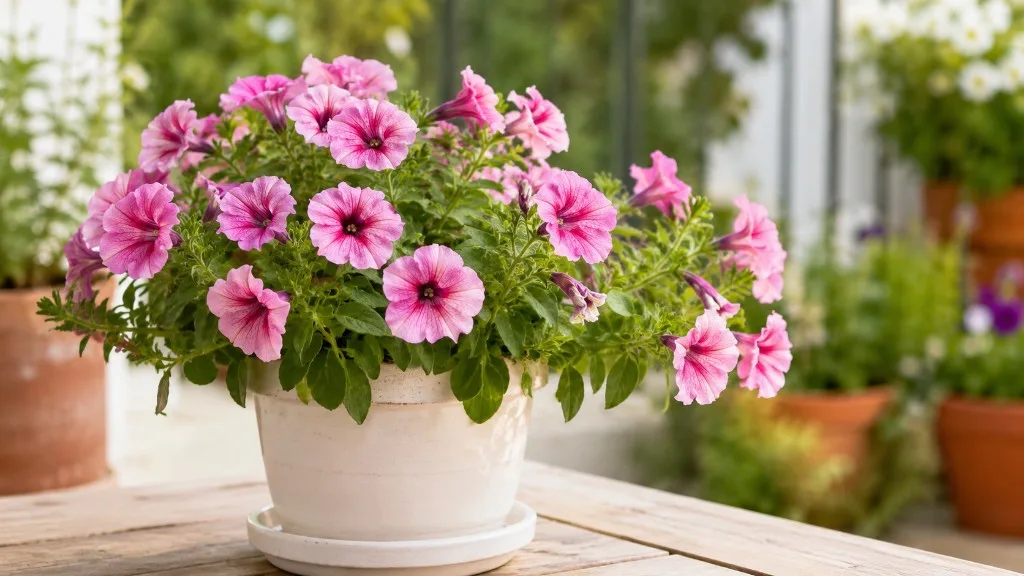
How to Prune Petunias: When, Where, and What to Cut
How to Prune Petunias: When, Where, and What to Cut
Quick Answer - Deadhead the Spent Bloom at the Calyx First
First action: Pinch or snip each faded petunia flower at the base of its green calyx-the small star-shaped collar below the petals-rather than pulling off wilted petals alone. That removes the developing seed pod so the plant keeps putting energy into new buds instead of seed formation.
Once spent blooms are cleared, decide whether the plant needs anything beyond deadheading. Young grandiflora or multiflora petunias may need a one-time tip pinch; Wave and other spreading types usually do not. Leggy, sparse stems mid-season call for a separate cutback-not more deadheading.
What Pruning Does for Petunias
Petunia × atkinsiana and the garden cultivars sold as grandiflora, multiflora, milliflora, and Wave types are fast-growing flowering annuals built to bloom heavily over a long season. Pruning on petunias is less about permanent shape and more about redirecting bloom energy, removing diseased spent tissue, and restarting sparse stems before the season fades.
Left alone, petunias still flower-but faded blooms left on the plant can harbor Botrytis on wet petals, and seed set signals the plant to slow new bud production. University of Minnesota Extension notes that deadheading encourages blooming by preventing seed formation and keeps container plants looking fresh. Regular removal of spent flowers is the highest-return pruning task for most home growers.
Pruning cannot fix a petunia in deep shade, chronic overwatering on Petunia, or root rot on Petunia. It can, however, stretch a basket’s peak display by weeks when paired with Petunia light guide and steady watering at the soil line.
Deadheading, Pinching, and Cutbacks Are Different Jobs
- Deadheading - remove individual spent flowers (with calyx) every few days through the bloom season.
- Pinching - remove the top inch or so of young stem tips on upright grandiflora/multiflora types to force side branches early.
- Cutback / rejuvenation - trim long bare stems by one-third to one-half mid-season when flowering slows and stems stretch.
Treat these as separate decisions. A Wave basket that looks tired usually needs a cutback and feeding-not repeated tip pinching.
What to Check Before You Cut
Scan the plant in good light before any session:
- Spent flowers - look for wilted petals, brown calyx tissue, or sticky seed pods forming below blooms.
- Cultivar type - spreading Wave-type labels on the pot mean skip pinching; grandiflora/multiflora labels mean early pinching may help.
- Stem condition - soft, blackened stems after frost or heat collapse should be removed entirely, not partially trimmed.
- Pests - check buds at dusk for tobacco budworm holes; clean up chewed tissue before reshaping.
- Plant stress - wilting in wet soil (possible root rot) or dry heat-stressed baskets need watering or shade fixes before heavy cutbacks.
- Tool cleanliness - wipe snips with rubbing alcohol if you recently cut diseased plant material.
Plan to work stem by stem in containers. Step back after every few cuts on a rejuvenation pass so the basket does not end up lopsided.
When to Prune Petunias
Petunias bloom from transplant until frost or peak heat ends the run, depending on your climate. Pruning timing follows that active flowering window-not a dormant season like woody shrubs.
Deadheading Through the Flowering Season
Deadhead whenever faded flowers appear-roughly every two to three days on heavily blooming containers, or about once a week as a minimum during peak bloom. Mississippi State University Extension recommends weekly deadheading and stresses removing the stalk at the base, not just the wilted petals, because seeds form below the flower head.
Large-flowered and double cultivars benefit most; many smaller-flowered types are marketed as self-cleaning and drop spent blooms on their own, though a quick tidy pass still helps in humid weather.
Pinch Timing for Grandiflora and Multiflora
When grandiflora or multiflora petunias reach about 6 inches (15 cm) tall after transplant, pinch or snip the top inch above a leaf node to encourage flowering side shoots. University of Minnesota Extension advises this pinch for those types only.
Do not pinch milliflora or spreading petunias-including Wave series. They branch naturally and pinching removes the very growth that fills baskets quickly. UF/IFAS Gardening Solutions notes you can pinch the top inch on petunias to encourage branching, but that guidance applies to upright types-not self-branching spreaders already selected for trailing habit.
Mid-Season Rejuvenation When Stems Go Leggy
If stems stretch with fewer leaves and flowers thinning out-common when light slips or heat peaks-cut shoots back by one-third to one-half, just above a healthy leaf node. Clemson HGIC guidance for leggy petunias recommends pruning shoots to about half their length, then fertilizing and watering well to push new growth and flowers.
Schedule rejuvenation during cool morning hours in active growth, not during a heat wave when the plant is already wilting by midday.
When Not to Prune
Hold off on heavy cutbacks when:
- The plant was transplanted within the last few days-let it settle unless removing clearly dead tissue.
- Heat stress above about 35°C (95°F) has the plant wilting despite moist soil-provide afternoon shade and water first.
- Frost is forecast-petunias are frost-sensitive; a hard cut before cold nights removes protection tissue without time to regrow.
- Root rot or viral mottling is present-remove and discard infected plants rather than trying to prune them back to health.
Light deadheading of dry spent blooms is fine almost anytime. Structural cutbacks should wait for vigor.
How to Prune Petunias Step by Step
- Remove spent blooms first - trace each faded flower down to its calyx and pinch or snip cleanly.
- Identify the cultivar goal - deadhead only on spreaders; add a tip pinch only if the plant is a young upright grandiflora/multiflora under about 6 inches.
- Locate a leaf node on any stem you plan to shorten - the point where leaves meet the stem.
- Cut one-quarter to one-half inch above the node with sharp snips or a firm fingernail pinch on soft tips.
- Step back and assess basket shape before removing more tissue.
- Water at the base after a major cutback; hold off on fertilizer for a few days unless the plant is actively growing in cool weather.
Deadheading: Where Exactly to Cut
Follow the flower stem down past the petals to the green calyx-often star-shaped and slightly swollen when a seed pod is forming. Pinch or cut just below the calyx where it meets the main stem, taking the entire spent flower and seed base in one motion.
Pulling petals alone leaves the seed-forming tissue in place, which is why blooms slow down even when the plant looks “tidied.” In humid baskets, removing brown, wet flowers promptly also reduces Botrytis risk on senescent petals.
Pinching Young Plants for Branching
On a young upright petunia with a single dominant tip, remove roughly 1 inch (2.5 cm) from the top of each main stem, directly above a set of healthy leaves. Two side shoots typically emerge from buds in the leaf axils below within one to two weeks in full sun.
Skip this step on Wave, Supertunia, and other spreading labels-the breeding already favors lateral fill.
Cutting Back a Leggy Basket or Bed
When long bare stems outnumber flowers:
- Choose the longest, weakest stems first.
- Cut each back by one-third to one-half above a node with leaves still attached lower on the stem.
- Leave enough foliage on each stem to photosynthesize-do not cut to bare sticks unless the lower leaves are still healthy and the stem is otherwise sound.
- Rotate cuts around the basket so one side is not stripped bare.
New shoots and buds usually appear within two to three weeks during cool, bright weather. Peak summer heat may slow recovery; shade and consistent moisture help.
How Much You Can Safely Remove
For deadheading, remove only the spent flower and calyx-never strip healthy buds farther down the stem.
For pinching, take about 1 inch from soft tip growth once when the plant is roughly 6 inches tall.
For rejuvenation cutbacks, limit each session to one-third to one-half of an individual stem’s length, and avoid removing more than about one-third of the plant’s total foliage at once across the whole basket. If the display is still sparse after three weeks, repeat another light pass rather than scalping everything in one day.
Petunias in containers depend on remaining leaf area to rebound quickly. A hard cut on a heat-stressed plant can stall blooming for a month or more.
What Not to Cut
- Healthy unopened buds below a faded flower - follow the stem to the spent bloom only.
- Spreading or milliflora types for pinching - you lose the plant’s natural trailing architecture.
- All leaves on a stem during rejuvenation - leave lower foliage unless it is yellow, diseased, or frost-blackened.
- Soft new growth during extreme heat - wait for cooler weather when possible.
- Stems showing mosaic mottling or distorted new leaves - virus-infected plants should be removed, not trimmed for shape.
Emergency removal of frost-blackened, mushy, or clearly diseased stems is always allowed regardless of season.
Aftercare and Recovery
After deadheading, no special aftercare is needed beyond your normal Petunia watering guide-check the top 2 cm of mix and water at the base, not over the flowers.
After a mid-season cutback:
- Water deeply at the base once soil dries slightly on top.
- Resume light feeding after one to two weeks if new shoots are expanding-use a balanced liquid fertilizer for flowering annuals in containers.
- Keep full sun - at least 5–6 hours of direct light; legginess returns quickly in shade.
- Improve airflow in crowded baskets to dry foliage after watering.
Do not repot and cut back heavily on the same day unless roots are clearly failing.
Signs Pruning Worked
- New buds forming within one to three weeks below cut nodes on rejuvenated stems.
- Side branches appearing after an early pinch on grandiflora types.
- Fresh flower waves following consistent calyx-level deadheading.
- Cleaner basket appearance with fewer brown, wet spent blooms clinging to the plant.
Signs Something Went Wrong
- Black, mushy cut ends - dull tools, cuts made during wet disease pressure, or stems already rotting before the cut.
- No new growth after three weeks in warm, sunny conditions - cut may be too high (dead stub), plant may be root-bound or diseased, or light may be insufficient.
- Sudden wilt after a hard cutback during heat - reduce afternoon sun and verify soil moisture; avoid further trimming until recovery.
- Sticky buds with holes - tobacco budworm may be inside flowers; pruning alone will not stop larvae-scout at dusk and treat if needed.
Mistakes to Avoid
- Pulling petals only - leaves the seed pod and slows rebloom.
- Pinching Wave petunias - removes growth the cultivar was bred to keep.
- Waiting until stems are bare - rejuvenation works better when some leaves remain on each cut stem.
- Cutting between nodes - leaves a bare internode with no buds to activate.
- Overhead watering after pruning - wet flowers and cut surfaces invite Botrytis; water at soil level.
- Pruning and fertilizing heavily the same day on a stressed plant - pick one recovery lever at a time.
Keeping Petunias Full Next Season
Petunias are typically replaced each season rather than carried over as long-lived perennials in most home gardens. Within a single season, the maintenance rhythm that keeps baskets full is simple: deadhead at the calyx every few days, pinch upright types once early, and cut back leggy stems by one-third to one-half before the display collapses completely.
Match pruning to cultivar habit-spreading types want deadheading and occasional cutbacks, not repeated tip pinching. Pair every pruning pass with full sun, base watering, and container drainage so new growth has the resources to respond.
When to use this page vs other Petunia guides
- Petunia overview - Start here for whole-plant context before deep-diving this topic.
- Petunia problems hub - Jump to symptom-specific fix guides when this care topic does not resolve the issue.
- Leggy Growth on Petunia - Escalate here when pruning adjustments are not enough.
- Slow Growth on Petunia - Escalate here when pruning adjustments are not enough.
- Brown Tips on Petunia - Escalate here when pruning adjustments are not enough.