Leggy Growth on Petunia: Causes, Checks & Fixes
Quick answer
Leggy petunias usually lack enough direct sun or missed a mid-season cutback. Move the pot to full sun, then prune stems back by about half to force compact side branches and fresh flowers.
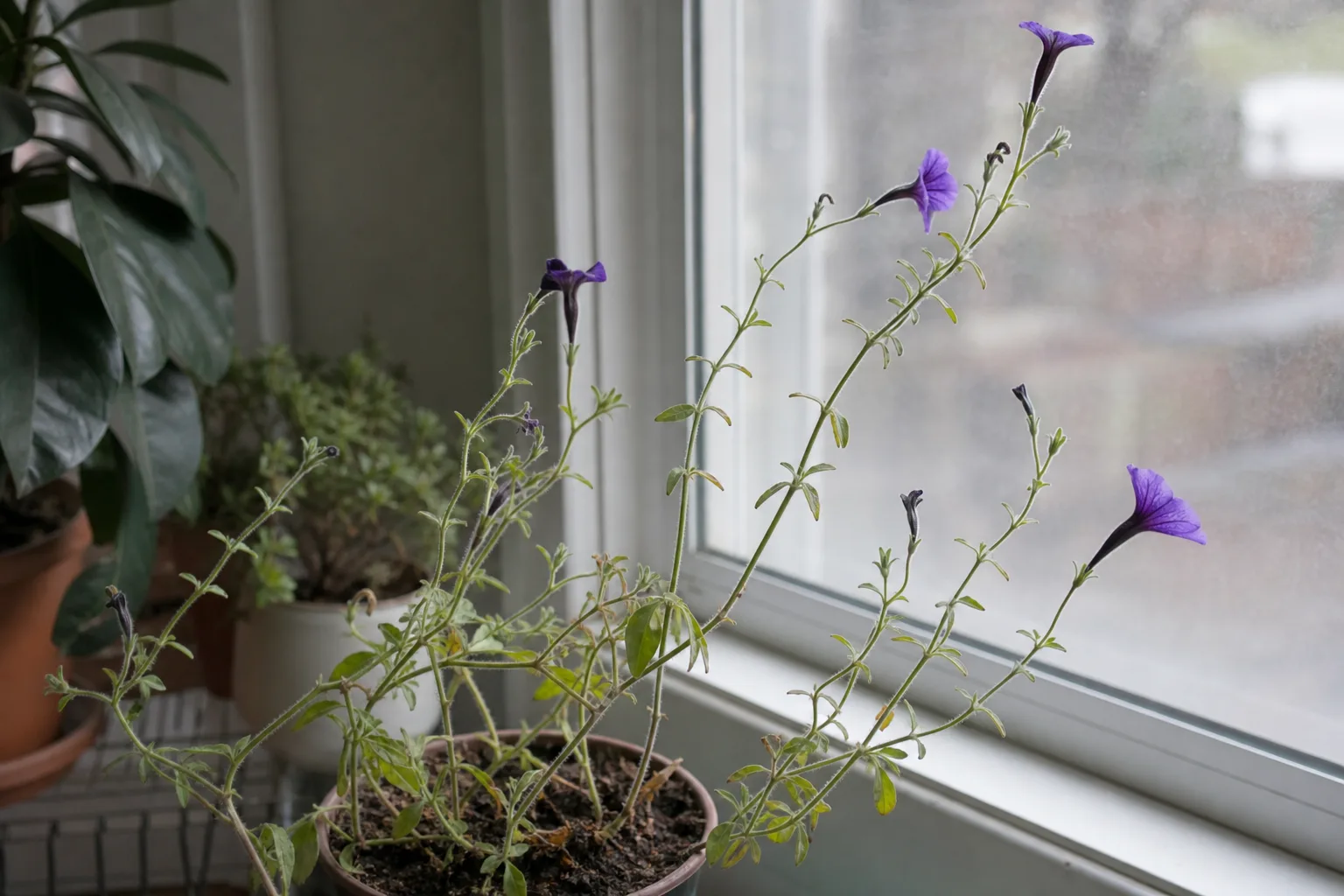
Leggy Growth on Petunia: Causes, Checks & Fixes
This guide covers leggy growth on Petunia. See also the general Leggy Growth guide, watering, and light pages for this plant.
Leggy Growth on Petunia: Causes, Checks & Fixes
Quick answer
Leggy growth on Petunia is usually tied to insufficient sun or skipping a mid-season prune. First step: move the plant to Petunia light guide, then cut all stems back by about half to restart compact branching.
Petunia is a bloom-driven annual that tells you quickly when light or pruning rhythm is off. Stems stretch, internodes lengthen, and flowers cluster at the tips while the middle of the plant looks bare. That pattern is different from a healthy trailing Wave petunia, which is meant to spill - leggy growth looks thin, weak, and flower-poor instead of full and floriferous.
What leggy growth looks like on Petunia
On petunias, legginess shows up as long, wiry stems with wide gaps between leaves. Lower foliage may yellow and drop as the plant puts energy into reaching light. Flowers appear mostly at stem tips, and the basket or window box looks hollow in the center.
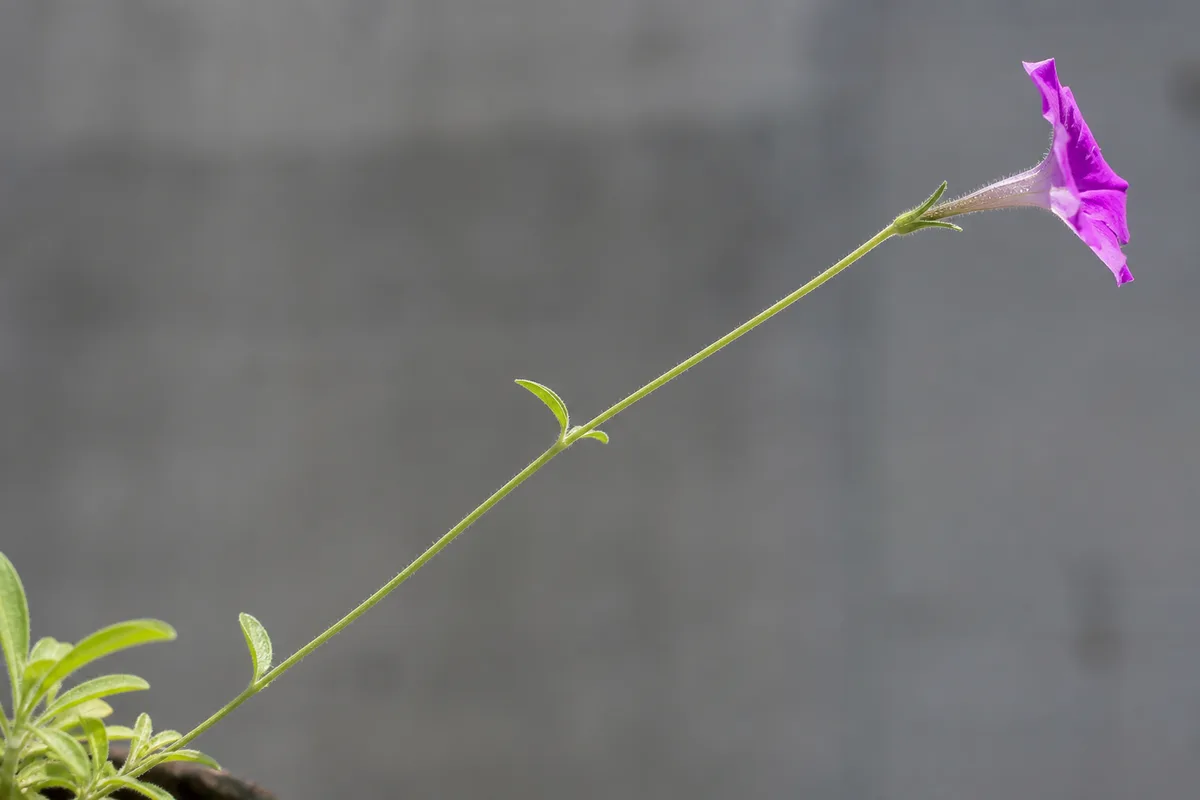
Leggy Growth symptoms on Petunia - compare with healthy tissue on the same plant.
Trailing cultivars like Wave can look naturally long, but leggy plants lack the dense flower cover that defines a healthy spreader. Grandiflora and multiflora types should form mounded, bushy plants roughly 15–40 cm tall with flowers along the stems - not lollipop-shaped shoots.
Compare new growth with old: if only the newest tips look acceptable while everything below is bare, you are seeing a structural problem, not normal aging.
Why Petunia gets leggy growth
Petunias need strong light to stay compact. Petunias need at least 5 or 6 hours of good sunlight and perform best in full sun all day. The more shade they receive, the fewer flowers they produce - and stems elongate as the plant searches for light.
In partial shade or on a bright indoor sill that never gets direct sun, petunias survive but do not bloom or branch well. They will become spindly and have few flowers if grown in shade, which is the classic leggy pattern.
Skipping mid-season maintenance is the second common cause. Petunias bloom heavily from spring until frost, and spent flowers left on the plant signal it to slow down. Without deadheading or periodic stem cuts, stems keep extending while side branches fail to form. Cut back plants that become leggy to stimulate later bloom - Missouri Botanical Garden lists this as standard petunia culture.
Container placement matters too. A hanging basket under an eave, on a north-facing balcony, or crowded against a wall may look “bright” to you but deliver far less direct sun than an open railing or south-facing spot.
How to confirm the cause
Work through these checks before pruning or moving the pot:
- Sun hours - Note direct sun on the pot from mid-morning through afternoon. Fewer than five hours strongly points to light as the cause.
- Stem pattern - Light-starved plants lean toward the brightest direction. Prune-neglected plants may still stand upright but have long bare sections between old flower nodes.
- Flower density - Shade-stressed petunias produce small or fewer blooms. Overfed plants in low light may stay green but flower poorly.
- Variety type - Milliflora and some Wave series need less midsummer pruning; grandiflora types often need extra care and periodic cutback to stay full.
- Root check - If stems are leggy and the pot stays wet, rule out root stress before fertilizing heavily.
Confirmed leggy growth from light shows pale, stretched new leaves. Confirmed leggy growth from missed pruning shows long stems with old seed heads or bare nodes still attached.
First fix for Petunia
Move the plant to full sun, then cut stems back by about half.
Full sun means the leaves receive direct light for most of the day - on a balcony, window box, or open hanging hook, not tucked under a deep overhang. Acclimate gradually if the plant has been in deep shade: increase exposure over several days to avoid sudden leaf scorch.
Once light is corrected (or if the plant already had adequate sun), prune. Prune the shoots back to about half their length when plants become leggy or stop flowering. Make cuts just above a leaf node so new side branches can form. You can cut back to within a few inches of the base if needed, but leave some foliage on each stem.
Water thoroughly after pruning and apply a diluted liquid fertilizer for flowering plants if the plant was not fed recently. Deadheading encourages blooming by preventing seed formation - keep removing spent blooms as new growth appears.
Step-by-step recovery
Follow this sequence for baskets and containers:
- Move to the sunniest feasible spot with good airflow.
- Remove dead flowers and any yellow or damaged lower leaves.
- Cut each long stem back by one-third to one-half, angling cuts above healthy nodes.
- Water at the base until excess drains; empty saucers.
- Feed lightly every two weeks during active growth if your routine already includes fertilizer.
- Deadhead new flowers every two to three days to keep the plant branching.
Expect new side shoots within 7–14 days in warm weather. Blooms typically return on fresh growth within two to three weeks. Wave and spreading types may recover faster than large-flowered grandifloras.
Recovery timeline
Stretched tissue does not shrink back - only new growth will look compact. After a proper cutback in full sun, most healthy petunias show fresh shoots within a week. Flower production resumes on side branches, not on the old bare stem sections.
If nothing sprouts after two weeks in warm sun, inspect roots. Leggy appearance plus stagnant growth can mean root rot on Petunia or severe nutrient depletion, not light alone.
Causes to rule out
Leggy growth is easy to confuse with these lookalikes:
- Normal trailing habit - Wave and Surfinia types trail by design; judge by flower density, not stem length alone.
- Heat stall - In extreme summer heat, petunias may pause blooming without true legginess; stems stay firm and leaves remain green.
- Nitrogen excess - Very high nitrogen produces leafy, soft growth with delayed flowers; usually in well-lit plants, not shaded ones.
- Root rot - Wilting with wet soil and yellow lower leaves suggests roots, not light; do not prune heavily until drainage is fixed.
What not to do
Do not leave a leggy petunia in the same shady spot and expect fertilizer to fix structure - more shade means fewer flowers, regardless of feed. Do not remove every leaf when pruning; petunias need foliage to recover. Avoid pruning during extreme heat if the plant is already drought-stressed. Do not repot and prune and relocate all on the same day; change light first, then prune once the plant is stable.
How to prevent leggy growth next time
Start with short, compact transplants rather than leggy, thin plants that are slow to adjust outdoors. Pinch the top inch at planting to encourage branching. When grandifloras or multifloras grow about six inches tall, pinch them back to promote flowering side shoots.
Plan a mid-season cutback around early to mid-July in many climates - or whenever stems outgrow the basket and flowers thin at the center. Deadhead containers regularly; deadheading is a must for flowering annuals in containers.
Match variety to site: choose spreading types for long trails in full sun, and avoid large-flowered cultivars in partly shaded spots where they will stretch and rot in humid weather.
Petunia care cross-check
Leggy growth often appears when light, water, and pruning drift out of sync. Petunia wants full sun to light shade with well-drained soil, base watering when the top 2 cm of mix dries, and lightweight potting mix with perlite for containers.
If the pot stays wet in mediocre light, fix drainage and placement together - wet roots plus weak light produce weak, stretched stems that no amount of pruning fully corrects until both issues are resolved.
When to worry
Leggy growth alone is a maintenance issue, not an emergency. Escalate if stems collapse at the base, the crown feels soft, or wilting persists despite moist soil - those signs point to crown or root rot rather than simple stretching. Replace severely compromised seasonal plants rather than repeatedly cutting back a failing root system.
Conclusion
Leggy petunias are telling you they need more direct sun, a mid-season haircut, or both. Confirm sun hours on the actual pot, move to full sun, cut stems back by about half, then deadhead and feed lightly as new branches appear. Judge success by compact fresh growth and flowers along the stems - not by whether old stretched sections fill in.
When to use this page vs other Petunia guides
- Petunia watering guide - Use for routine moisture checks before assuming leggy growth is the main issue.
- Petunia problems hub - Browse all 40 common issues on this species.
- Not Enough Light on Petunia - Different entry point when symptoms overlap with leggy growth.
- Slow Growth on Petunia - Different entry point when symptoms overlap with leggy growth.
- Yellow Leaves on Petunia - Different entry point when symptoms overlap with leggy growth.