Slow Growth on Petunia: Causes, Checks & Fixes
Quick answer
Slow petunia growth usually means light, root moisture, temperature, pests, or feeding are out of sync-not a mystery disease. First move the plant into full sun, then confirm root health and moisture before you fertilize.
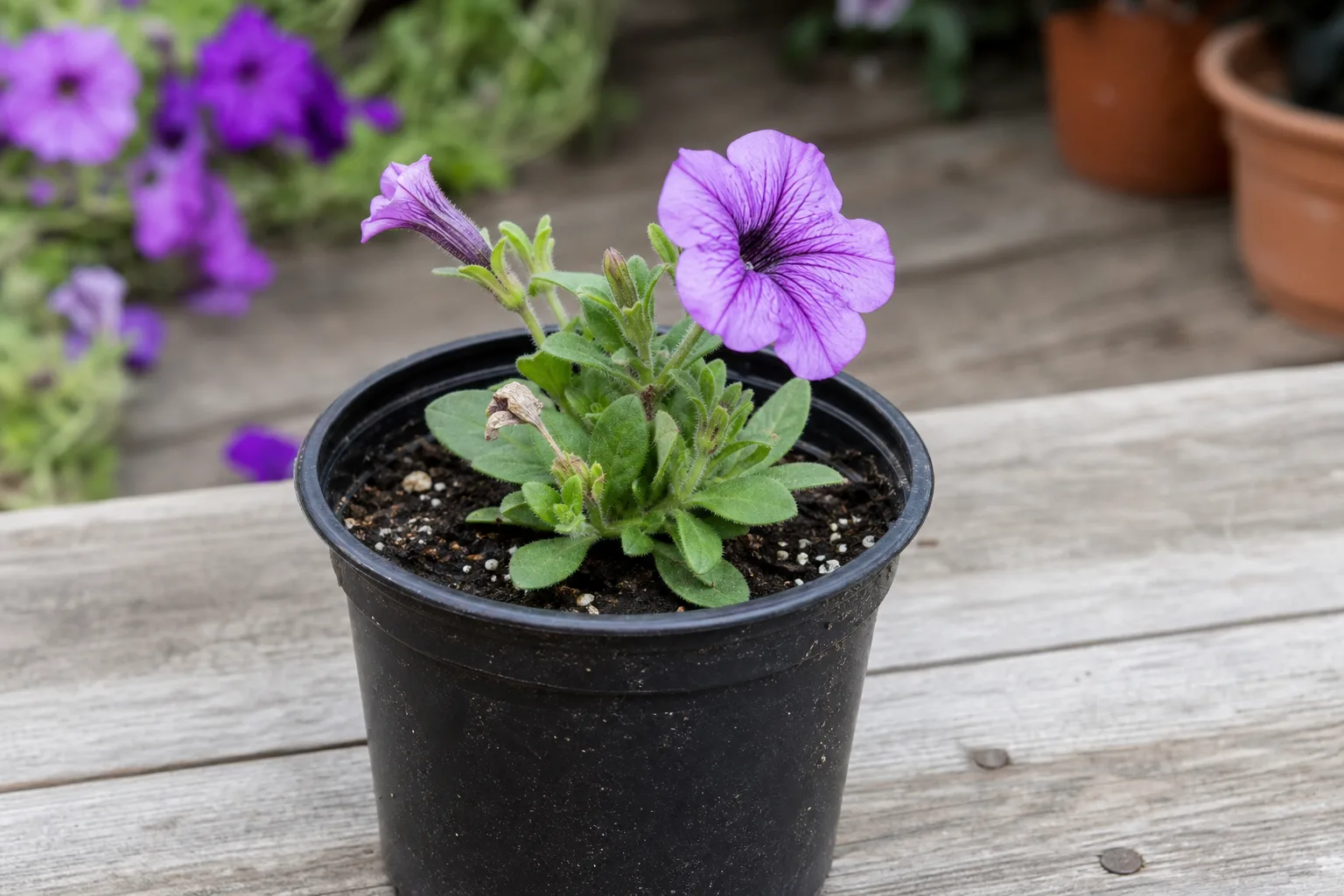
Slow Growth on Petunia: Causes, Checks & Fixes
This guide covers slow growth on Petunia. See also the general Slow Growth guide, watering, and light pages for this plant.
Slow Growth on Petunia: Causes, Checks & Fixes
Quick answer
A Wave petunia basket that looked vigorous at the garden center in May can stall by mid-June-same watering routine, same hook, but suddenly the tips stop moving and new buds disappear. That pattern is slow growth: the plant is alive but not building the stem length, leaf size, or flower load you expect from a warm-season annual.
Petunias need at least five to six hours of direct sun and perform best in full sun. Spreading types can cover large areas in one season when light, water, and feeding align-but containers and hanging baskets dry fast, shade shifts as trees leaf out, and wet mix after rain can stall roots before collapse is obvious.
First action: move the plant to the sunniest available spot, then check root condition and moisture before adding fertilizer. Light is the gate for petunia momentum; feeding or pruning cannot replace it when direct rays are insufficient.
What slow growth looks like on Petunia
Slow growth on petunias is distinct from healthy trailing spill on Wave types or temporary heat stall in midsummer. Match these patterns before you treat.
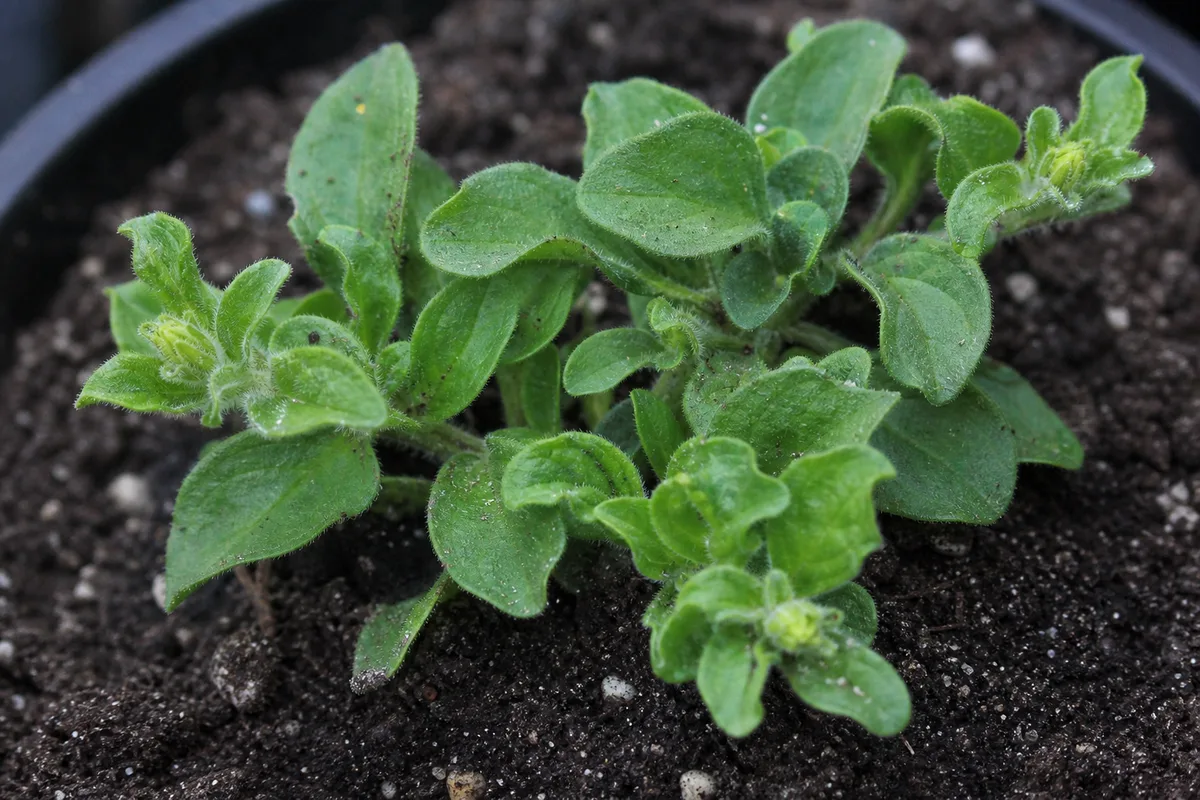
Slow Growth symptoms on Petunia - compare with healthy tissue on the same plant.
Stalled tips despite warm weather. Very little new stem extension for 7 to 14 days when nights are mild and neighbors of the same cultivar are pushing fresh growth.
Fewer buds than expected. Smaller leaves and weaker color without major leaf drop-especially on the upper canopy where you would normally see new flower buds forming.
Post-rain or post-overwatering pause. Growth stalls after heavy rain, automatic irrigation cycles, or a week of cool wet weather. The basket may still look green while momentum flatlines.
Container-specific stall. Hanging baskets and window boxes need more frequent watering than in-ground plantings, but swings between bone-dry and saturated mix both suppress steady growth. A basket that dries completely on a hot afternoon, then sits wet for days after a storm, often shows tip stall before obvious wilt.
Not the same as leggy stretch. If stems are elongating quickly with wide internodes but few blooms, that points to light chase-not generalized slow growth. See leggy growth on petunia and not enough light when stretch is the dominant pattern.
Why Petunia grows slowly
Petunias are fast warm-season annuals bred for continuous bloom in open sun. When growth rate drops, one or more limiting factors are usually obvious once you inspect the basket-not a single mystery pathogen.
Insufficient direct light
In partial shade, petunias often stay pale, make fewer buds, and slow stem production because photosynthesis cannot support the energy cost of heavy flowering. They become spindly and produce few flowers in shade, and the more shade they receive, the fewer flowers they produce-stem extension slows before bloom failure becomes obvious.
Root stress from wet media
Petunia is listed among annuals susceptible to Phytophthora root and crown problems under prolonged wet conditions. Crown rot can cause rapid wilt and collapse, but even before that stage you may see stalling, weak color, and low bud production on persistently saturated mix.
Dense trailing stems shade the basket interior. Overhead watering, poor drainage holes, or a saucer that holds water all create the humid, wet root zone Phytophthora favors.
Temperature pause
Petunias are warm-season annuals. Wait until soil warms to about 60°F before transplanting; cool nights and persistently cold, wet root zones slow root function and delay new growth. Early spring transplants and late-season baskets both pause when soil stays cold. Conversely, extreme heat can temporarily reduce flower pace in containers-especially small pots on hot pavement.
Nutrient depletion in containers
Fast-blooming annuals in containers need periodic nutrition through the season. Spreading types in baskets may need weekly feeding during peak growth. No feed for many weeks can produce undersized, slow plants even when light and moisture look acceptable.
Sap-feeding pests
Aphids may become a problem on petunias, and twospotted spider mites reduce vigor by piercing-sucking sap from leaf undersides. Mites cause stippling and bronzing; severe feeding can stunt plant growth when populations rise on stressed baskets in hot, dry microclimates.
Lookalike symptoms to rule out
Not every stalled petunia has the same bottleneck. Use this table before stacking fixes.
| What you see | Most likely cause | Key differentiator | Where to read next |
|---|---|---|---|
| Little new growth; pale tips; sun-map under 5–6 hours | Insufficient light | Stems not elongating fast; few buds in partial shade | Not enough light |
| Fast stem stretch; wide internodes; buds only at tips | Leggy growth / light chase | Stems grow long but flower-poor | Leggy growth |
| Growth pause after chilly nights; resumes when warm | Cold damage pause | Temporary stall; no root decay smell | Cold damage |
| Wet-soil wilt; brown mushy roots; sour smell | Root rot / Phytophthora | Collapse in saturated mix | Root rot |
| Fewer flowers in heat; pot on hot pavement | Heat stress pause | Temporary bloom slowdown; firm roots | Heat stress |
| Persistent stunting; mosaic patterning on new leaves | Virus stunting | Does not recover with sun or feed | Mosaic virus |
| Stippling under leaves; fine webbing in hot dry basket | Spider mites | Sap-feeding damage on undersides | Spider mites |
| Curled new growth; sticky residue; aphid clusters | Aphids | Distorted tips; pest visible on shoots | Aphids |
How to confirm the cause
Work through these checks in order. Stop when one cause fits clearly.
Run a two-day sun audit-including midsummer shade drift
Track direct sun hours where the container sits-not ambient brightness on the porch. Petunias need roughly six good hours of direct rays for strong growth; full sun all day performs best.
Midsummer trap: A basket that received adequate sun in May may stall in June when overhead trees leaf out, a west wall stops reflecting afternoon light, or a neighbor’s container garden grows tall enough to shade your rail. Re-map exposure mid-season when growth suddenly flatlines without any other change in care.
Compare your count to a blooming petunia in open sun nearby. If you are below five to six hours, treat light as the primary limiter until proven otherwise after a move.
Check root-zone moisture pattern
Insert a finger or moisture probe several centimeters into the mix. Repeatedly saturated media or a sour smell suggests root stress. Bone-dry baskets that wilt and recover on a daily cycle also suppress steady growth-especially spreading types that need frequent water and feed to cover their habit.
Inspect roots directly if stalling persists
Tip the basket gently and slide the root ball partly out. Healthy roots are light-colored and firm. Brown, black, or mushy roots support a rot diagnosis-treat roots before expecting fertilizer to help.
Review feeding history
Container petunias exhaust timed-release fertilizer by mid-season. If you planted with slow-release in spring and never supplemented, undersized growth in July often traces to nutrient depletion-not disease.
Scout pest undersides
Inspect the undersides of new leaves and stem tips. Aphids cluster on soft growth; mites leave stippling and fine webbing in hot, dry basket locations.
Confirmation decision table
| Your findings | Confirmed cause | First fix priority |
|---|---|---|
| Sun under 5–6 hours; pale tips; no stretch | Light deficit | Move to full sun |
| Wet mix + sour smell + brown roots | Root stress / rot | Stop saturation; repot if severe |
| Firm roots; good sun; no feed for 4+ weeks | Nutrient gap | Light balanced feed after moisture stable |
| Stippling + webbing on undersides | Spider mites | Rinse; improve vigor; treat if spreading |
| Curled tips + visible aphids | Aphid sap-feeding | Rinse; isolate; gentle suppression |
| Pause after cold nights; firm roots; adequate sun | Temperature | Wait for warmth; avoid overwatering cold mix |
| Stunting + mosaic on new growth | Virus | Replace plant; sanitize pot |
First fix for Petunia
Move the plant into full sun first. Do this before changing fertilizer rate, pruning heavily, or repotting.
Outdoor south- or west-facing rails, open balcony hooks, and unobstructed bed edges qualify. If the basket cannot reach six hours of direct sun, growth will stay limited no matter how much you feed-consider relocating or replacing with a shade-tolerant species for that spot.
After relocation, stabilize moisture so the root zone stays evenly moist but not saturated. Check containers daily in hot weather rather than watering on a fixed calendar.
If roots are firm and light-colored, you can start a light, regular feeding program once new tip growth resumes. If roots are damaged, treat root conditions first and delay feeding until you see fresh shoots.
Step-by-step recovery
Follow this sequence based on what you confirmed-not all steps apply to every stalled basket.
Light correction (confirmed or suspected shade)
- Relocate to the sunniest feasible spot. Rotate hanging baskets weekly so all sides receive direct rays.
- Re-map after tree canopy fills in. A rail that worked in early spring may need a new hook by July.
- Acclimate if moving from deep shade to intense afternoon sun. Provide brief protection for three to five days to avoid scorch on soft tissue, then return to full exposure.
Moisture stabilization (swings or saturation)
- Normalize watering. Water when the top 2 cm of mix feels dry-often daily for baskets in heat. Avoid leaving saucers full or letting mix stay soggy for days after rain.
- Improve drainage if needed. Confirm holes are open; elevate pots slightly if they sit in standing water on decks.
Root-damaged recovery (brown or mushy roots)
- Stop chronic saturation immediately. Let mix dry to slightly moist-not dust-dry-before the next drink.
- Repot into fresh, draining mix if more than roughly one-third of roots are decayed. Trim obviously dead roots; do not fertilize until new white root tips appear.
- Expect slower timeline. Root-damaged petunias may not return to peak basket display if correction comes late in the season. Track new shoots from nodes, not old marked leaves.
Pest recovery (aphids or mites)
- Rinse undersides thoroughly with a strong water stream early in the day so foliage dries before evening.
- Improve plant vigor conditions-full sun and even moisture-before reaching for harsh sprays on a seasonal annual.
- Treat only if populations rebound after two rinse passes. Isolate badly infested baskets from mixed displays.
Nutrition and pruning (after light and roots are stable)
- Resume light feeding with a balanced or bloom-phase liquid fertilizer at half label strength every one to two weeks during active growth. Spreading basket types may need more frequent light feeds during peak summer.
- Pinch weak tips strategically after light is corrected to encourage branching-do not hard-prune a root-stressed plant on the same day you repot.
Recovery timeline
With healthy roots, better sun and moisture control usually produce visible tip movement in 1 to 2 weeks, followed by stronger budding in week 2 to 3.
Root-damaged plants recover more slowly-allow 3 to 4 weeks before judging failure. You may see new side shoots while old leaves stay small or marked.
Moving from partial shade to full sun in warm weather often shows the first firm new leaves within 7 to 10 days. Flower buds typically follow on side branches after the second week if roots stayed healthy.
Late-season correction after August may not leave enough warm weeks for a full basket show. Honest replacement beats repeated interventions on a non-responsive annual.
Track improvement by new growth, not old leaves. Older damaged tissue often stays marked even after conditions improve.
Worsening signs: wet-soil wilt despite correction, stem collapse at the crown, white growth climbing into buds, or mosaic distortion on new leaves despite good culture.
Causes to rule out if progress is poor
- Severe root disease: Continued wilt in moist media plus root decay needs an aggressive root-level response-not more fertilizer.
- Persistent shade drift: Summer tree canopies or building shadows can reduce direct sun compared with spring without you changing anything else.
- Nutrient depletion: Long-season container displays exhaust fertilizer reserves; undersized plants in August with firm roots often need feed, not repotting.
- Chronic pest pressure: Repeating aphid or mite flare-ups keep plants in low-vigor mode until undersides are cleaned and vigor improves.
- Virus stunting: If growth remains severely suppressed with unusual patterning despite corrected care, replacement is often the most practical seasonal choice.
What not to do
Do not push high fertilizer on shaded or root-stressed plants. Extra salts cannot compensate for poor light or damaged roots and can worsen stress.
Do not diagnose by one symptom alone. Slow growth with no other signs can be mild stress, while slow growth plus wilt in wet soil can indicate root disease.
Do not repot, relocate, hard-prune, and fertilize all on the same day unless roots are clearly rotted. Change light first; address roots or pests in sequence.
Do not keep spending weeks on non-responsive plants late in peak display season if roots are badly compromised-annual baskets rely on momentum.
Do not assume a Wave or Supertunia type will outgrow shade because it is vigorous. Spreading habit requires even more sun and feed to perform-not less.
How to prevent it next time
Site containers for long direct sun from day one. Choose south- or west-facing rails, not spots you plan to move “when summer arrives.”
Re-check sun exposure after nearby plants, awnings, or maturing trees change seasonal shade patterns-especially between May and July.
Use fresh, draining potting media with open drainage holes. Monitor moisture actively during hot spells; avoid letting baskets swing between drought stress and chronic saturation.
Incorporate timed-release fertilizer at planting for containers, then supplement with liquid feed through peak bloom. Spreading types in baskets benefit from consistent light feeding rather than one heavy dose after a stall.
Deadhead or trim lightly to keep branching dense. Scout lower interior leaves and root-zone moisture weekly on trailing baskets where the canopy shades itself.
When to worry
Escalate quickly when slow growth is paired with wet-soil wilt, stem collapse at the crown, widespread root decay, or mosaic-like distortion on new growth. In those cases, focus on diagnosis and sanitation before adding more fertilizer or irrigation.
Petunias are seasonal annuals. If more than half the root system is decayed mid-season and tips stay stalled after three weeks of corrected care, replacing the basket often delivers a better display than chasing recovery on aging tissue.
If needed, seek local extension diagnostic support for confirmation when crown rot or virus is suspected.
Related Petunia guides
- Not enough light on petunia - sun-map workflow, shade traps, and relocation targets
- Leggy growth on petunia - when stems stretch fast but bloom stays sparse
- Root rot on petunia - Phytophthora crown and root decline in wet baskets
- Heat stress on petunia - midsummer bloom pause on hot pavement
- Cold damage on petunia - spring chill stalls before warm weather returns
- Aphids on petunia and spider mites on petunia - sap-feeding stalls on stressed baskets
- Petunia watering guide - container dry-down and saturation avoidance
- Petunia overview - cultivar types, deadheading, and basket culture
Conclusion
Slow growth on petunias is a momentum problem, not a death sentence-stalled tips in an otherwise green basket usually trace to fixable culture limits. Sun-map the pot through a full day (and again after midsummer shade shifts), move to full sun before fertilizing, and match moisture to container dry-down rather than a calendar. Use the confirmation table to separate light deficit, wet roots, feed gaps, and sap-feeding pests before stacking treatments. Most firm-rooted petunias push new tips within one to two weeks once light and moisture align; root-damaged or late-season plants may need replacement instead of repeated rescue passes.