Cold Damage on Petunia: Causes, Checks & Fixes
Quick answer
Petunias are frost-sensitive warm-season annuals; near-freezing nights cause water-soaked, blackened leaves and mushy stems on exposed basket edges first. Move containers under cover before the next cold night, wait 48–72 hours before hard pruning, and replace plants if the crown turns black and soft.
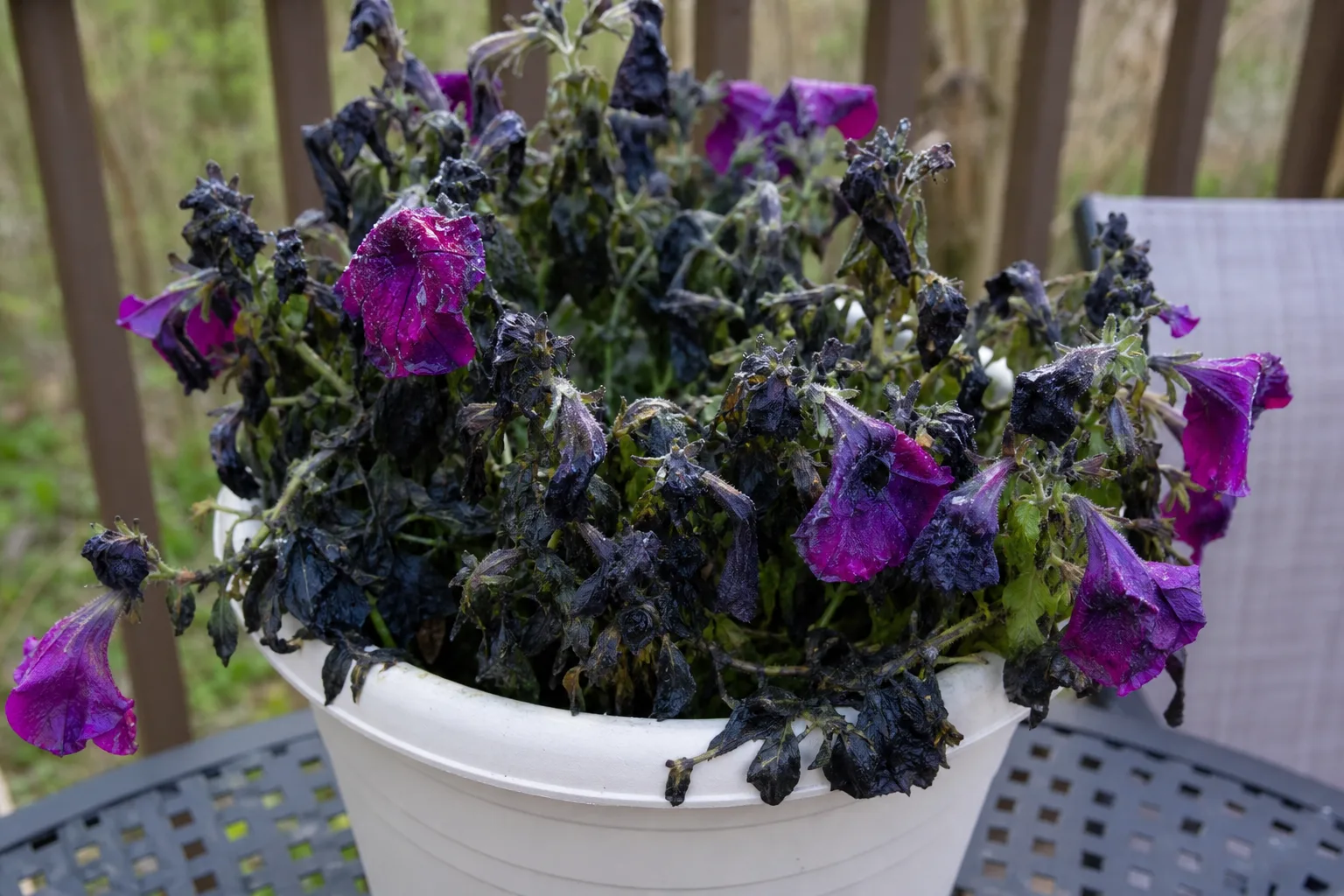
Cold Damage on Petunia: Causes, Checks & Fixes
This guide covers cold damage on Petunia. See also the general Cold Damage guide, watering, and light pages for this plant.
Cold Damage on Petunia: Causes, Checks & Fixes
Quick answer
You left a trailing petunia basket on an open railing; the forecast dipped to 2°C overnight, and by morning the stems hanging over the pot rim are black, water-soaked, and limp while sheltered interior growth still looks green. That rim-first pattern is classic cold damage on petunias-tender perennials grown as annuals that cannot survive freezing tissue. First step: move the pot under cover before the next cold night and wait 48–72 hours before aggressive pruning so you can see where firm green wood remains.
What cold damage looks like on Petunia
Symptoms follow a frost event or a night when air temperatures drop near freezing. University of Maryland Extension describes frozen annual tissue as limp, water-soaked, and quickly blackish brown-exactly what petunia growers see after an unprotected cold snap.
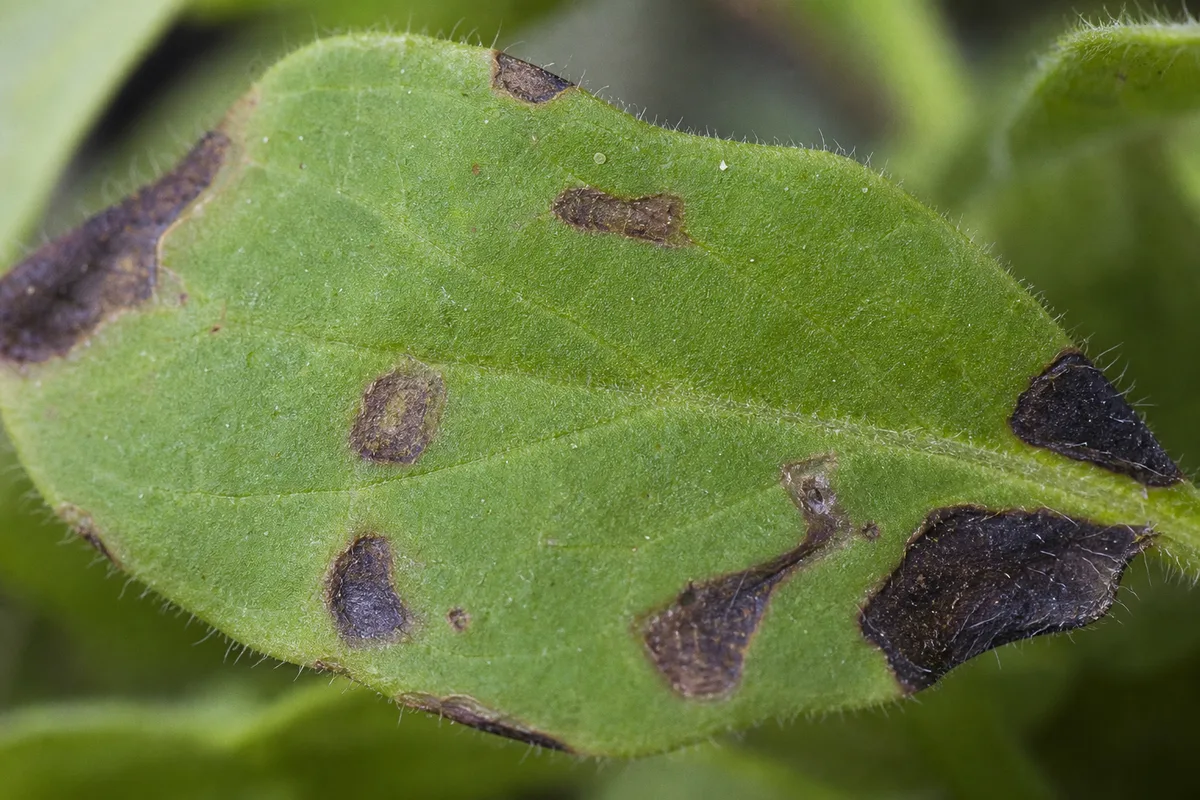
Cold Damage symptoms on Petunia - compare with healthy tissue on the same plant.
Light chill (marred leaf edges)
Borderline cold without a hard freeze may produce:
- Pale or bleached patches on outer leaf edges that later brown.
- Slower new growth for several days without total stem collapse.
- Buds on sheltered interior stems still firm while exposed tips look dull.
Missouri Extension classifies petunias as half-hardy annuals that tolerate light frosts but suffer when temperatures fall into the 20s °F (−6 °C and below). A brief light frost may only mar foliage; repeated or deeper cold causes worse injury.
Hard freeze (blackened stems and mushy crown)
A hard freeze at or below 32°F (0°C) produces more severe damage:
- Entire leaves turn dark, translucent, and water-soaked, then black.
- Stems collapse and feel mushy from the tips inward.
- Flower buds brown and rot on exposed clusters.
- The crown at soil level softens and blackens-recovery is unlikely.
Basket-specific patterns (rim-first freeze)
Hanging baskets on open railings cool faster than in-ground beds. Potted plants face greater frost risk than those planted in the ground because the small soil mass loses heat quickly. Trailing Wave, Supertunia, and other cascading types expose the most stem length beyond the pot lip-those segments freeze first. One side of a basket facing open wind may collapse while the leeward interior looks briefly healthy. Petunias do not enter winter dormancy like hardy perennials; they simply die back when chilled beyond their tolerance.
Why Petunia gets cold damage
Plant petunias outdoors only after danger of frost has passed and soil warms to about 60°F (16°C). They are bred for full sun and warm-season performance-roughly 15°C to 28°C (60–82°F) for best growth and continuous bloom until fall frost .
Common triggers:
- Early spring plant-out before the last frost date in your area.
- Late cold fronts after a warm spell pushes soft new growth.
- Forgotten baskets left on porches, mailboxes, or balcony rails.
- Wet-cold compounding - cold wet soil limits nutrient uptake and can cause temporary leaf purpling and stalled growth even before visible frost burn appears.
Wave and spreading cultivars in baskets are not more frost-hardy than grandiflora types-all garden petunias share the same fundamental cold sensitivity as warm-season annuals.
Confirm cold damage: step-by-step checks
Work through these five checks before you prune or replace:
- Match timing to a frost event - Symptoms appeared suddenly after a recorded frost or near-freezing night, not gradually over weeks.
- Assess exposure pattern - Damage on basket rims, trailing tips, and windward sides first points to cold, not root disease.
- Test stem firmness after thaw - Wait until plants thaw naturally in morning sun. Scratch lower stems; firm green tissue under the surface means live wood remains. Mushy black tissue through the crown does not recover.
- Rule out drought wilt and root rot on Petunia - Drought wilt on petunia recovers within hours after the top 2 cm of mix was dry and you water deeply. Root rot on petunia follows chronically wet soil with sour smell and mushy roots-not a single cold night across all exposed tissue.
- Watch new growth after 7–14 days - Cold damage stops spreading when nights stay above frost. New shoots from firm nodes confirm recovery; continued blackening into the crown confirms failure.
If you planted petunias outdoors within days of purchase and cold hit immediately, also consider transplant shock on petunia-but frost timing and water-soaked black tissue still point to cold as the primary cause.
Cold damage vs. drought wilt vs. root rot vs. transplant shock
| Clue | Cold damage | Drought wilt | Root rot | Transplant shock |
|---|---|---|---|---|
| Timing | After frost or near-freezing night | After hot dry days | Builds over weeks of wet soil | Days after planting out |
| Leaf look | Water-soaked, then black | Crispy, dull green | Yellow lower leaves, limp | Wilted but not blackened |
| Stem feel | Mushy black tips after thaw | Firm when rehydrated | Soft at base in wet mix | Firm; may recover with care |
| Recovery after water | No | Yes, within hours | No-worsens | Slow over 1–2 weeks |
| Pot weight | Any moisture level | Light, dry top | Heavy, wet | Variable |
The first fix to try
Move containers to shelter before the next cold night - a garage, porch, or indoors near a bright window. Do not rush frozen baskets into a hot greenhouse; let tissue thaw gradually in sheltered cool air to avoid thermal shock on already stressed cells.
Then wait 48–72 hours before hard pruning. Damage boundaries are clearer once tissue fully shows live vs. dead wood.
Step-by-step recovery
- Shelter tonight - Bring baskets inside or under a roof overhang when frost is forecast again.
- Wait for clear damage lines - After 48–72 hours, identify black mushy stems vs. firm green lower wood.
- Trim to firm tissue - Cut mushy black stems back to green, firm nodes with clean scissors. Remove collapsed flowers and buds on damaged tips.
- Hold fertilizer - Do not feed stressed petunias until active new growth resumes.
- Resume normal care - Return to [full sun and standard watering rhythm](/plants/petunia/Petunia overview/) once nights stay reliably above frost.
- Replace if crown is black - When stems are mushy through the crown at soil level, start fresh. Petunias rarely regrow from a frozen crown in the same season.
Recovery timeline: what improvement looks like
- Days 1–3 - Damaged tissue darkens fully; do not prune yet. Shelter from repeat frost.
- Days 4–7 - Live lower stems stay firm; you can trim dead tips to clean nodes.
- Weeks 1–2 - New leaves and side shoots emerge from firm wood after mild chill damage.
- Weeks 2–3 - Basket form returns on plants that kept a healthy crown; severely frozen baskets may still look thin.
- Beyond 3 weeks - No new growth from firm-looking lower stems means replace the plant.
Badly damaged leaves and flowers do not turn green again-recovery means new clean growth, not cosmetic repair of frozen tissue.
Mistakes to avoid after a chill event
- Pruning immediately - You may cut live wood that only looks damaged until it fully thaws.
- Moving into intense heat - Hot greenhouse air on frozen tissue adds stress.
- Plastic sheeting covers - Traps moisture and can worsen cold injury; use breathable row cover instead.
- Fertilizing stressed plants - Wait for new growth before feeding.
- Assuming all cultivars are hardier - Wave, Supertunia, and heirloom types share the same frost sensitivity.
Prevent cold damage next season
- Wait until after last frost to set out petunias and soil reaches about 60°F at planting depth.
- Harden off seedlings - Place plants outside two to three hours daily and gradually increase exposure over one week before permanent outdoor placement.
- Monitor forecasts - Pull baskets indoors when lows approach freezing; grouping containers against a south-facing wall adds minor radiant warmth on borderline nights.
- Use row cover, not plastic - Missouri Extension recommends reusable row cover cloth for brief protection; avoid non-breathable plastic that holds moisture against foliage.
- Know your local frost dates - USDA and state extension frost-probability guides are averages, not guarantees-build in a buffer after the listed last-frost date.
For full planting timing, sun requirements, and cultivar types, see the petunia overview guide.
When to worry - and when to replace
Replace rather than wait when:
- Crown tissue at soil level is black, soft, and mushy through.
- Stems collapse from tips to base within 48 hours after a hard freeze.
- No new shoots appear from firm lower nodes after three weeks of frost-free nights.
Lower urgency - observe first when:
- Only outer leaf edges are marred and lower stems scratch green.
- Damage is one-sided on a basket rim while interior growth stays firm.
- A single light frost hit half-hardy tissue without crown involvement.
Escalate to replacement if wet-cold soil after freezing rain produces sour smell and basal rot-overlap with root rot on petunia is possible when baskets sat saturated through a freeze.
Conclusion
Cold damage on petunias is a timing and exposure problem more than a mystery disease. Basket rims and trailing stems freeze first; water-soaked black tissue after frost confirms the diagnosis. Shelter before the next cold night, wait to prune, trim only to firm green wood, and replace when the crown turns mushy. Match outdoor planting to your frost-free window and harden off seedlings so spring enthusiasm does not meet one more late freeze.
When to use this page vs other Petunia guides
- Petunia watering guide - Use for routine moisture checks before assuming cold damage is the main issue.
- Petunia problems hub - Browse all 40 common issues on this species.
- Drooping Leaves on Petunia - Different entry point when symptoms overlap with cold damage.