Root Rot on Petunia: Causes, Checks & Fixes
Quick answer
Petunia root rot in containers almost always starts with waterlogged mix. Unpot, trim mushy roots, repot in fresh draining soil, and water only when the top 2 cm of mix is dry.
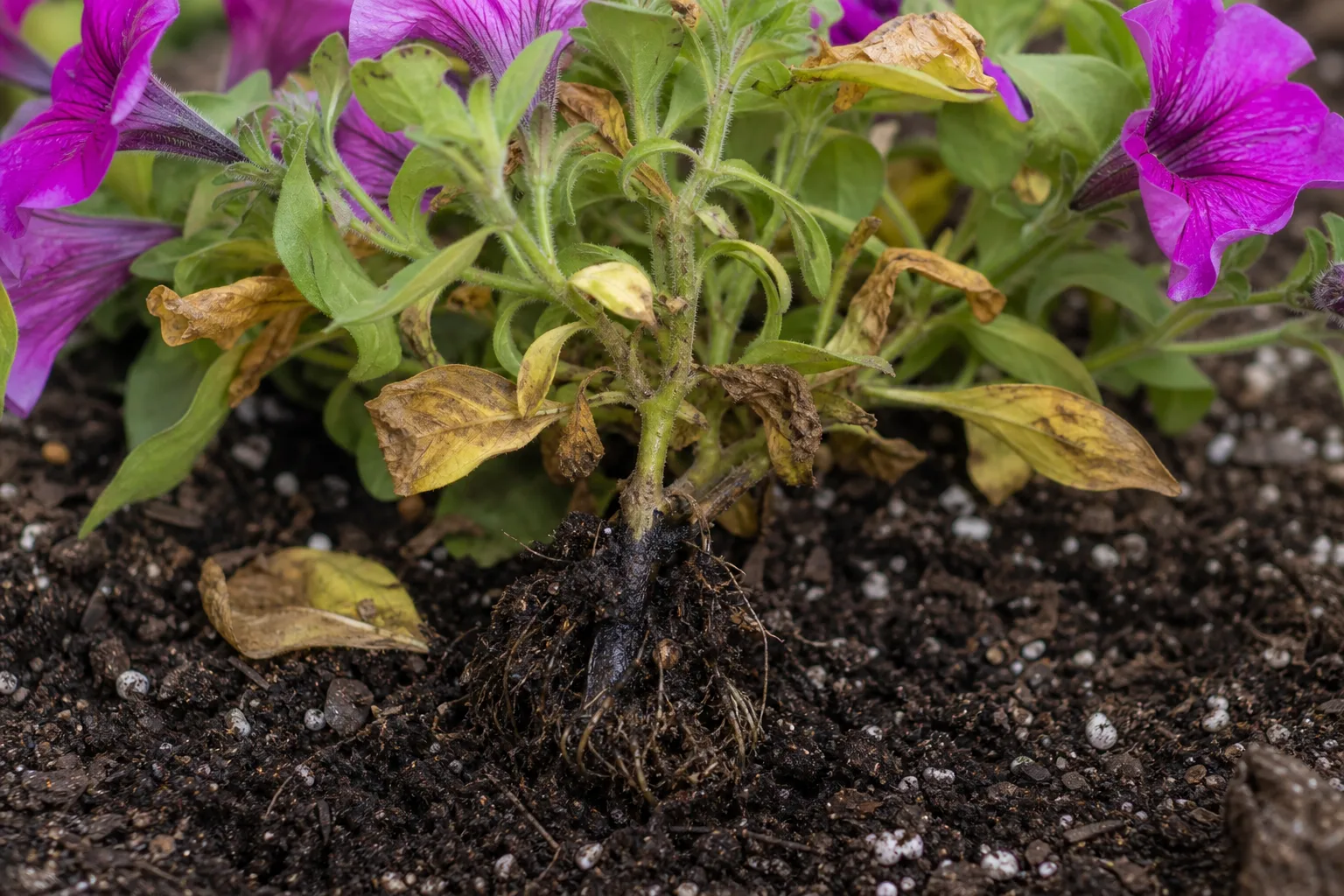
Root Rot on Petunia: Causes, Checks & Fixes
This guide covers root rot on Petunia. See also the general Root Rot guide, watering, and light pages for this plant.
Root Rot on Petunia: Causes, Checks & Fixes
Quick answer
Root rot on Petunia is usually tied to waterlogged container soil. First step: repot in fresh draining mix after trimming damaged roots, then reduce watering until the top 2 cm of soil feels dry before the next drink.
Petunias are seasonal annuals with fibrous, shallow roots that need steady moisture but not saturation. In hanging baskets and window boxes, mix that stays wet for days invites fungi and water-molds that destroy roots - then leaves wilt and yellow even though the surface looks damp.
What root rot looks like on Petunia
Above ground, root rot often masquerades as drought stress. Leaves wilt midday, lower foliage yellows, and flowers fade early - yet the pot feels heavy and mix near the surface is moist. That mismatch is a key clue: damaged roots cannot take up water.
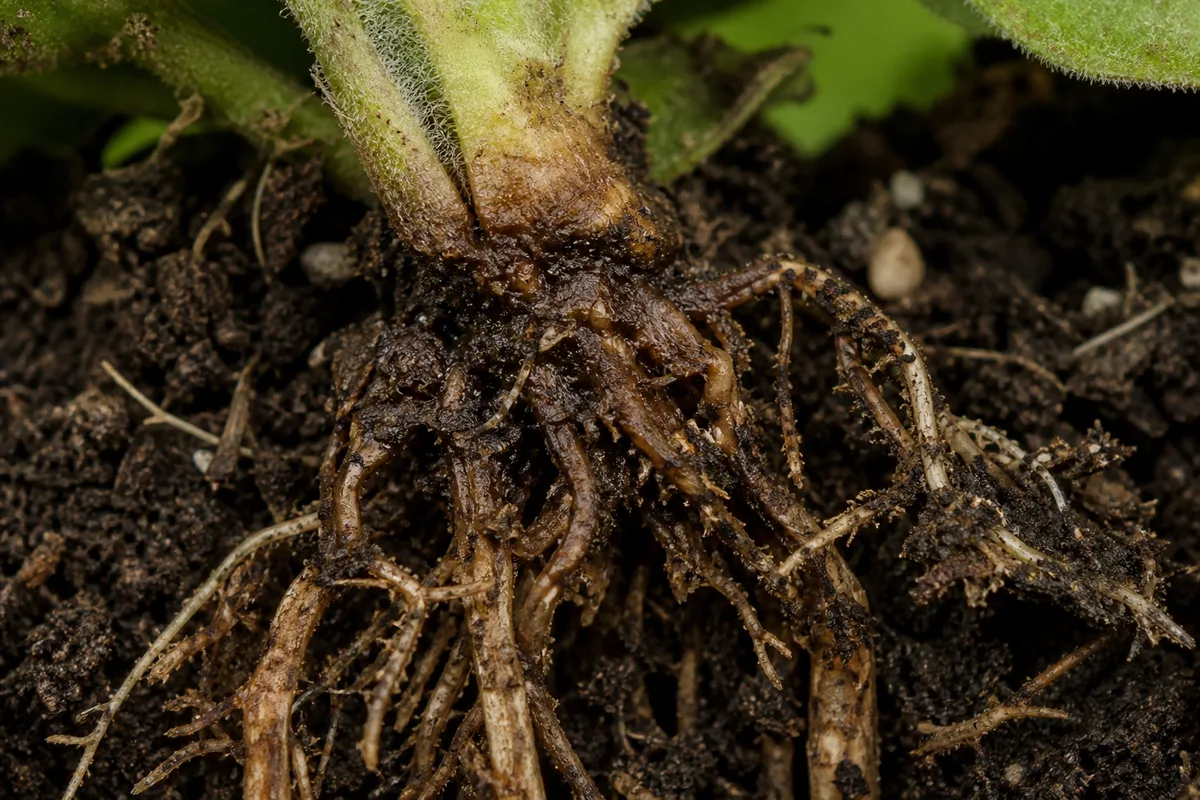
Root Rot symptoms on Petunia - compare with healthy tissue on the same plant.
Advanced cases show soft stems at the soil line, collapsed branches, and a sour or musty smell from the drain hole. On petunias, Phytophthora crown rot may cause plants to wilt rapidly or partially collapse while roots appear brown to black or mostly decayed.
Black root rot on petunia produces yellow lower leaves, stunting, and roots that turn dark brown to flat black - rot that is often firm rather than mushy compared with Pythium-type decay. Symptoms may hide until heat or drought stress exposes weak roots.
Below ground, healthy petunia roots are pale, firm, and fibrous. Rotting roots are slimy, brown, or black and pull away easily when rinsed.
Why Petunia gets root rot
Container culture concentrates the risk. Prolonged irrigation, poor drainage, and standing water all favor Phytophthora disease. Petunias in saturated baskets - especially after cool, cloudy weeks - sit in exactly those conditions.
Waterlogged mix is the direct trigger. Most container plants prefer moist, not soggy, soil. Trays and saucers that retain runoff keep the bottom of the root ball anaerobic. Heavy potting soil without perlite holds water too long in large decorative pots.
Overhead watering and wet foliage add stress. Avoid wetting foliage and flowers when watering to limit disease entry when roots are already compromised. Humid balconies with poor airflow accelerate botrytis on blooms and crown issues at the stem base.
Petunias prefer well-drained soils in full sun. Shade plus frequent watering - common on indoor sills or covered patios - keeps mix wet while the plant uses little water, a recipe for rot.
How to confirm the cause
Do not treat every wilting petunia as root rot. Confirm in this order:
- Soil moisture history - Has the mix been wet for three or more days without drying? Was the plant watered daily in cool weather?
- Drainage check - Are holes blocked by roots or pebbles? Does a cachepot hold water above the drain line?
- Wilting vs. moisture - Wilting with wet soil strongly suggests root dysfunction.
- Root inspection - Unpot carefully. Compare firm pale roots with mushy or discolored tissue.
- Stem base - Soft, dark crown tissue indicates advanced crown rot; root trimming alone may not save the plant.
- Smell - Sour or swampy odor from mix supports rot over simple underwatering on Petunia.
Underwatering shows dry, light pots and crispy leaf edges with firm roots - the opposite pattern.
First fix for Petunia
Unpot, trim rotted roots, and repot in fresh draining mix - then water less often.
Slide the plant out and rinse away old wet mix. Cut away brown, black, or mushy roots with sterilized scissors until only firm tissue remains. If more than half the root mass is gone, consider replacing the plant; seasonal petunias rarely rebuild extensive roots late in the display season.
Repot into clean containers with open drainage using lightweight mix plus perlite. Soil must drain decently; do not reuse soggy substrate or contaminated saucers without cleaning.
Water lightly once after Petunia repotting guide, then let the top 2 cm dry before watering again. Keep the plant in bright sun and good airflow while it recovers - not in a damp corner.
Step-by-step recovery
Follow this rescue path for container petunias:
- Remove the plant from wet mix; discard saturated soil.
- Trim all soft or discolored roots; optionally dip remaining roots in clean water only - skip heavy fungicide unless extension guidance for your region recommends it.
- Choose a pot sized to the remaining root mass, not dramatically larger.
- Fill with fresh perlite-enhanced potting mix; plant at the same depth as before.
- Water until a small amount drains, then empty saucers completely.
- Hold fertilizer until new leaves appear and roots have two weeks to heal.
- Resume watering only when the top 2 cm is dry; in recovery, err slightly dry rather than wet.
Trim yellow leaves and spent blooms to reduce stress on the reduced root system.
Recovery timeline
Petunias with mild rot and most roots intact may show new tips within 10–14 days in warm sun. Flower production pauses during recovery - judge success by firm new growth, not immediate blooms.
Severe crown involvement often kills the plant within days despite repotting. Avoid over-watering plants after rescue; recurrence is common if drainage is not fixed.
Causes to rule out
Root rot symptoms overlap with:
- Underwatering - Dry pot, crispy tips, roots white and firm.
- Heat collapse - Temporary midday wilt in extreme heat with dry soil; recovers overnight.
- Transplant shock - Temporary wilt after planting; roots intact when checked.
- Black root rot vs. Pythium - Black root rot favors high soil moisture above 70%; firm black roots vs. mushy brown decay.
- Botrytis on flowers - Surface mould on blooms; may coexist with wet culture but starts above soil.
What not to do
Do not water wilting plants automatically - check roots first. Do not repot into oversized pots filled with heavy garden soil. Do not leave the plant in standing saucer water “so it won’t dry out.” Avoid overhead sprinkling on humid evenings. Do not fertilize stressed roots immediately after repotting.
How to prevent root rot next time
Start with well-drained, light soil of medium fertility in containers with multiple drain holes. Use perlite or similar amendments for baskets that dry quickly in sun but still hold moisture briefly.
Water at the base when the top 2 cm dries - containers may need daily checks in heat but not constant saturation. Dump saucers after every watering.
Improve airflow around hanging baskets; space plants so stems dry after rain. Replace mix each season rather than reusing waterlogged substrate from a prior rot event.
Petunia care cross-check
Root rot prevention aligns with full sun, fast dry-down, and base watering. A petunia in weak light with a summer daily watering habit will stay wet and rot even in “good” mix. Move baskets to sunnier, airier spots before increasing water frequency in hot weather.
When to worry
Escalate immediately if the crown is soft, stems blacken from soil upward, or the plant collapses within 48 hours of wilting. Petunia is listed among annuals susceptible to Phytophthora - advanced crown rot is often fatal for display-season plants. Early root browning with a firm crown still allows repotting rescue.
Conclusion
Petunia root rot in containers begins with waterlogged mix, not mysterious wilt. Confirm by inspecting roots, trim decay, repot into fresh draining substrate, and water only after the top 2 cm dries. Prevent recurrence with drainage, base watering, and saucers emptied after every drink - not by watering wilting plants on autopilot.
When to use this page vs other Petunia guides
- Petunia watering guide - Use for routine moisture checks before assuming root rot is the main issue.
- Petunia problems hub - Browse all 40 common issues on this species.
- Overwatering on Petunia - Different entry point when symptoms overlap with root rot.
- Yellow Leaves on Petunia - Different entry point when symptoms overlap with root rot.
- Wilting on Petunia - Different entry point when symptoms overlap with root rot.