Poor Drainage on Petunia: Causes, Checks & Fixes
Quick answer
Heavy or compacted mix in petunia containers stays wet and triggers root rot and yellowing. Repot into lightweight mix with 20% perlite and confirm water exits drainage holes within minutes.
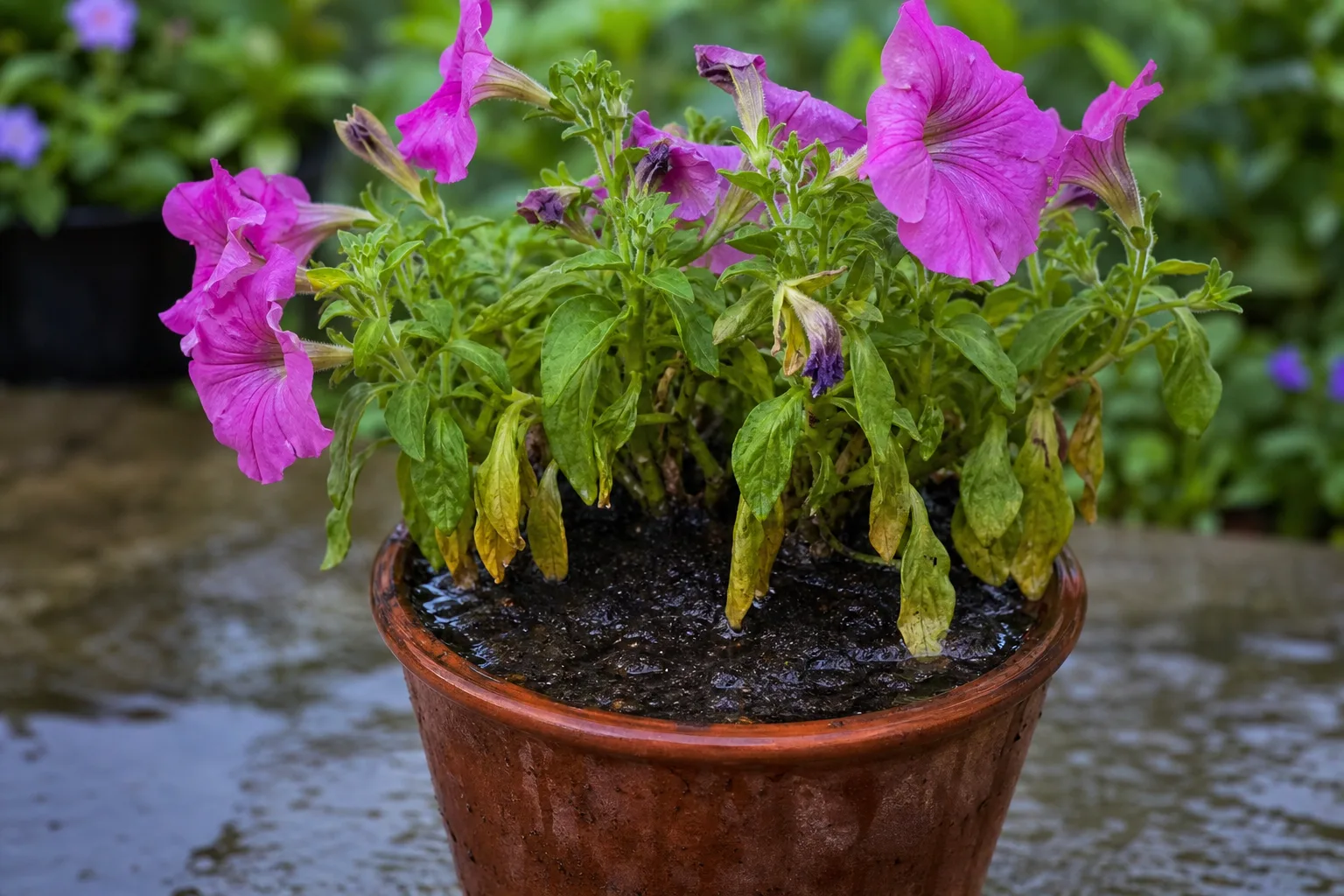
Poor Drainage on Petunia: Causes, Checks & Fixes
This guide covers poor drainage on Petunia. See also the general Poor Drainage guide, watering, and light pages for this plant.
Poor Drainage on Petunia: Causes, Checks & Fixes
Quick answer
Poor drainage on Petunia is a container and soil problem, not just a watering mistake. Heavy mix, blocked holes, saucers holding runoff, or garden soil in a pot keeps the root zone saturated long after you stop watering. Petunias need oxygen around fibrous roots; when mix stays wet for days, leaves yellow, flowers fade, and Phytophthora root rot can follow.
First step: run a drainage test, then repot into fresh lightweight mix with about 20% perlite. Water until runoff appears and confirm it exits the holes within minutes. If water pools on the surface or the pot stays heavy for days, the mix or setup-not your calendar-is the problem.
What poor drainage looks like on Petunia
Above soil, chronic poor drainage mimics overwatering on Petunia and root rot. Watch for:
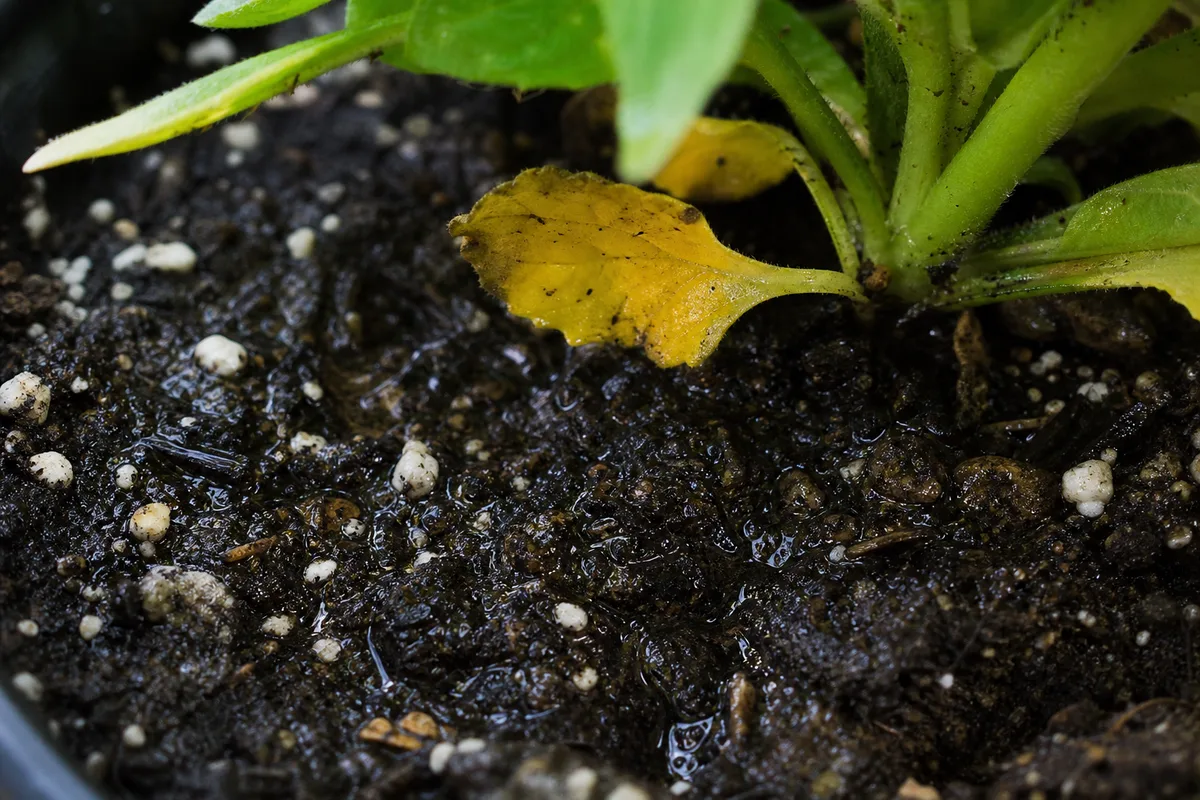
Poor Drainage symptoms on Petunia - compare with healthy tissue on the same plant.
- Water sitting on the surface or running down the outside of a dry-looking core.
- Pot still heavy when lifted days after the last drink.
- Lower leaves yellowing while upper growth wilts or looks limp.
- Flowers fading early; grey mold on wet petals in humid weather.
- Green algae or moss on constantly damp soil surface.
- Sour, compost-like, or swampy smell from the drain hole.
Petunias in hanging baskets and window boxes show these signs fast because their shallow root balls sit in a small wet zone. One corner of a long box staying soggy can kill a single plant while neighbors look fine-a classic blocked-drain or heavy-mix pattern.
Below soil, roots in poorly drained mix turn brown, slimy, or pull away when rinsed. Healthy petunia roots are pale and firm. If you unpot and find mostly decay, poor drainage has already progressed to rot; fix the mix before any other treatment.
Why Petunia gets poor drainage
Petunias are bred for full sun and well-drained soils. In containers, that requirement shifts entirely to what you put in the pot and whether water can leave it. Several setup choices trap moisture around petunia roots:
Heavy or wrong mix. Garden soil, topsoil, or dense peat without perlite compacts in pots and holds water far longer than in-ground beds. Petunias thrive in rich, well-draining potting soil-not water-retentive field soil scooped into a decorative planter.
Reused or degraded mix. Old basket soil compacts, sheds water on the surface while staying wet inside, and may harbor pathogens from prior seasons. Extension troubleshooting of smelly containers links overwatering and low oxygen to root rot in wet conditions.
Blocked or missing drainage. Decorative cachepots without holes, pebbles wedged over drain holes, or roots matting against the bottom seal the pot base. Placing rocks at the bottom does not improve drainage; it can raise the wet zone closer to roots.
Saucers and standing water. Trays that catch runoff keep the bottom of the root ball anaerobic. Most container plants prefer moist, not soggy, soil; prolonged saturation favors disease and nitrogen loss.
Window boxes and low spots. Long boxes with inadequate slope or few drain holes hold water in one end. Petunias planted where runoff collects behave like bog plants even if you water sparingly.
Shade plus slow dry-down. Petunias in weak light use less water. The same mix that works in full sun on a hot balcony stays wet for days on a shaded sill-poor drainage plus low uptake.
Prolonged irrigation, poor drainage, and standing water all favor Phytophthora disease on annuals including petunia. For petunia, crown rot may cause plants to wilt rapidly or partially collapse while roots appear brown to black.
How to confirm the cause
Separate poor drainage from overwatering habit, underwatering on Petunia, and active rot:
- Drainage test - Water slowly until moisture reaches the bottom. Runoff should appear within minutes. No exit, or a trickle only after flooding the surface, confirms inadequate drainage.
- Pot weight timeline - Note weight 24 and 48 hours after watering. A properly drained petunia pot lightens noticeably; a chronically heavy pot means internal wetness.
- Finger test at depth - Top 2 cm may crust dry while mix 5 cm down stays cold and wet. That split pattern points to structure failure, not drought.
- Hole inspection - Lift the pot. Are holes open? Is it sitting in a full saucer or submerged cachepot?
- Mix texture - Slide the plant out. Crumbly, airy mix with visible perlite differs from dense, muddy, or brick-like substrate.
- Root check if smell or wilt persist - Mushy roots mean rot has started; firm pale roots with a heavy pot still mean drainage must be fixed before the next wet cycle.
Underwatering shows a light pot, dry mix throughout, and crispy leaf edges-opposite weight and smell clues. Overwatering on good mix is a schedule problem; poor drainage is a setup problem. Both can coexist.
First fix for Petunia
Repot into fresh lightweight mix with about 20% perlite and verify open drainage before the next full watering.
Knock the plant out of the old substrate. If roots are firm, tease away compacted outer mix and replant without packing the new soil tight. If more than half the roots are mushy, trim decay first (see recovery steps) or replace severely collapsed plants.
Use a container with clear drain holes. Elevate the pot so holes are not pressed against a deck or saucer rim. Do not add a gravel layer-use airy mix instead.
Hold deep watering until you confirm runoff exits freely, then resume watering only when the top 2 cm dries.
Step-by-step recovery
Work in this order for container petunias with poor drainage:
- Drainage test on current setup - Document whether water exits; photograph blocked holes for reference.
- Unpot and assess roots - Rinse gently. Trim brown or slimy roots with clean scissors. Discard saturated old mix entirely.
- Clean or replace the container - Scrub pots; drill additional holes in window boxes if needed. Sanitize reused plastic with dilute bleach if prior rot or smell occurred.
- Mix fresh substrate - Combine quality potting mix with 15–20% perlite. Target pH 6.0–7.0. Pre-moisten slightly so dry peat does not repel the first watering.
- Repot at correct depth - Set the root ball so the crown sits at the soil line; do not bury stems deeper to “stabilize” a floppy plant.
- First water lightly - Water until runoff appears, then stop. Empty saucers immediately.
- Full sun and airflow - Move baskets to the sunniest spot so the plant uses water at a healthy rate once roots heal.
- Monitor dry-down - Check the top 2 cm daily for two weeks. Adjust frequency to weather, not habit.
Seasonal petunias rarely rebuild a large root mass late in the display year. Early Petunia repotting guide after drainage correction gives the best chance of recovery blooms.
Recovery timeline
Mix and drainage fixes should show within several days: the pot lightens on schedule, surface water no longer pools, and smell fades if rot was not advanced.
Yellow lower leaves from weeks of wetness usually do not re-green. New growth at stem tips is the reliable signal-expect visible improvement in two to three weeks if roots remained mostly firm.
Root damage from prolonged saturation needs three to four weeks of stable dry-down before judging success. Replace plants with soft crowns or mostly decayed roots rather than repeating rescue on collapsed baskets.
Worsening signs: crown softening after repot, blackening at the stem base, or collapse within 48 hours of wilting-escalate to treating as active rot or replace.
Lookalike symptoms
- Overwatering on good mix - Wet soil from frequent drinks; mix is airy when unpoted and drains well in a test. Fix the schedule, not necessarily the substrate.
- Underwatering - Light pot, dry crumbly mix, midday wilt that recovers overnight after one deep drink.
- Root rot (advanced) - Same wet-soil wilt, but crown is soft and roots mostly decayed; drainage fix alone comes too late without trimming and dry repot.
- Iron chlorosis - Yellow new leaves with green veins on firm roots in moist but not soggy mix; test pH rather than only adding perlite.
- Heat collapse - Temporary wilt in extreme heat with dry soil; pot is light, roots firm.
What not to do
Do not add rocks or charcoal at the pot bottom “for drainage”-use proper mix and holes instead.
Do not reuse sour, compacted mix from a failed basket; pathogens and anaerobic conditions persist.
Do not plant petunias in garden soil in containers; it compacts and drains poorly in pots.
Do not leave pots in full saucers through rainy weeks.
Do not water more because leaves wilt while the pot is already heavy-that deepens saturation.
Do not fertilize stressed roots immediately after repotting; fix drainage and moisture rhythm first.
How to prevent poor drainage next time
Start each season with fresh potting soil in containers with drainage holes. Mix in perlite for baskets that dry quickly in sun.
Soil must drain decently in beds and pots; in containers, drainage is entirely your responsibility.
Water at the base when the top 2 cm is dry. Dump water-catching trays regularly so soil does not stay waterlogged.
Elevate window boxes slightly so holes clear the mounting surface. Drill extra holes every 15–20 cm on long boxes.
Match watering to weather-cool cloudy weeks need far less water than hot sunny weeks, even in the same mix.
Replace mix annually for display baskets rather than topping off compacted soil.
Petunia care cross-check
Poor drainage prevention aligns with full sun, base watering, and fast dry-down. A petunia in shade with heavy mix and a summer daily watering habit will stay wet regardless of “good intentions.” Move baskets to sunnier, airier positions before blaming the plant for failing to bloom.
Trailing varieties in small pots dry faster than grandiflora in large urns-adjust mix porosity and hole count to container size, not a single recipe for every basket.
When to worry
Treat as urgent when stems wilt on saturated mix, the crown feels soft, several plants in one box fail together, or rot smell is strong. Petunia is among annuals susceptible to Phytophthora; advanced crown involvement is often fatal for seasonal display plants.
Mild yellowing with firm stems and a fixable blocked hole can wait for repot and drainage correction without panic.
Conclusion
Poor drainage on container petunias starts with mix and pot setup-not mysterious wilt. Confirm with a drainage test, repot into fresh perlite-rich substrate, keep holes open, and empty saucers after every drink. Petunias recover when roots stay firm and new growth returns within a few weeks; replace collapsed plants rather than fighting saturated soil through the season.
When to use this page vs other Petunia guides
- Petunia watering guide - Use for routine moisture checks before assuming poor drainage is the main issue.
- Petunia problems hub - Browse all 40 common issues on this species.