Underwatering on Petunia: Causes, Checks & Fixes
Quick answer
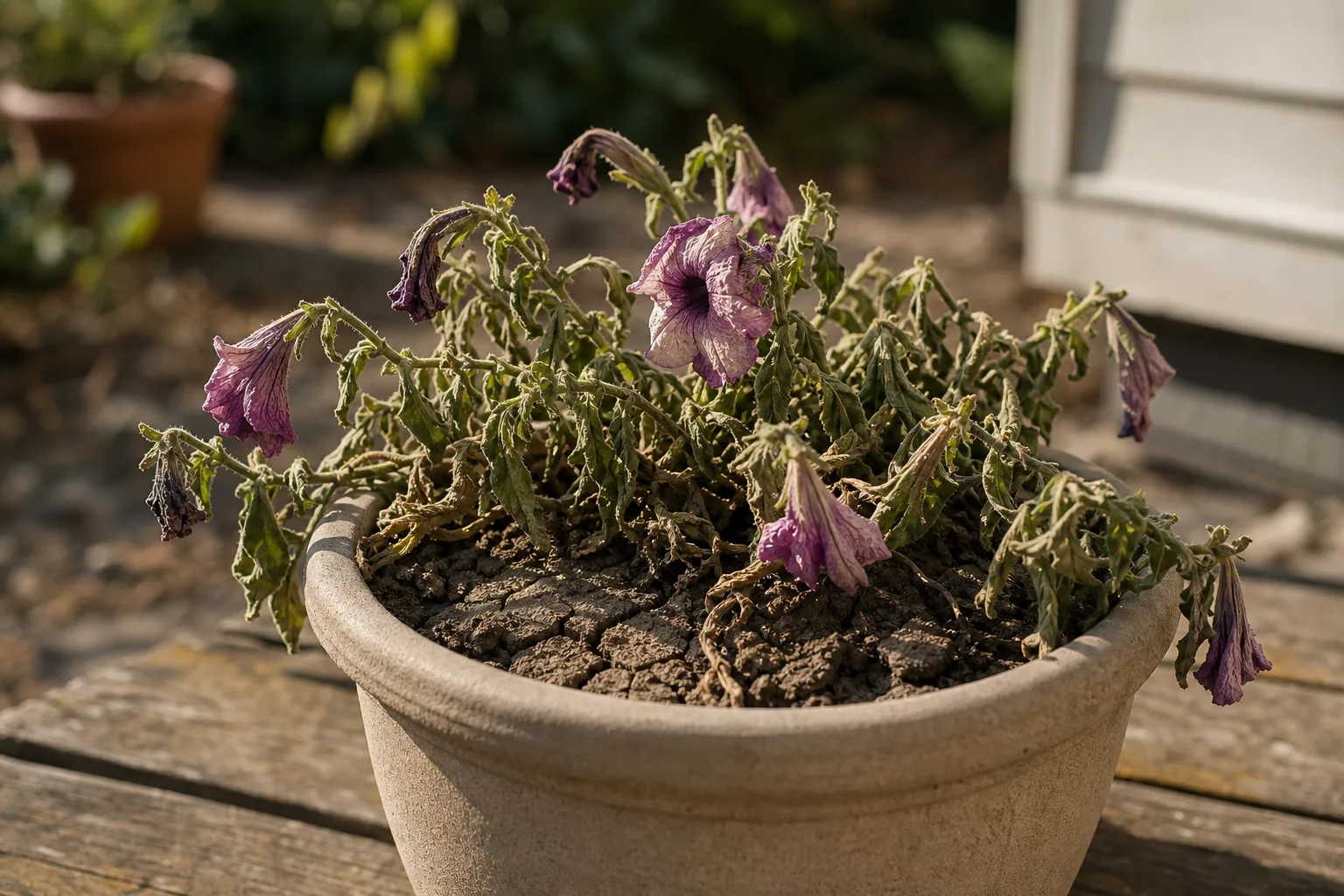
Underwatered petunias wilt mid-morning, fade flowers fast, and develop crispy leaf edges when the top 2 cm stays dry too long. Water thoroughly at the base until drainage runs, then wait only until the top 2 cm dries again.
Underwatering on Petunia: Causes, Checks & Fixes
This guide covers underwatering on Petunia. See also the general Underwatering guide, watering, and light pages for this plant.
Underwatering on Petunia: Causes, Checks & Fixes
Quick answer
Underwatering on petunia shows as mid-morning wilting, flowers that fade almost as soon as they open, and crispy brown edges on leaves-usually after the top 2 cm of mix has been dry too long. Petunias in full sun containers can need checking every day in heat. First step: water thoroughly at the base until moisture drains from the bottom, then resume the rhythm of watering only when the top 2 cm feels dry.
Why Petunia gets underwatering
Petunias are heavy bloomers in bright light. They transpire heavily when receiving at least five or six hours of direct sun-exactly the exposure that produces the best flower show. That combination makes container petunias one of the faster-drying annuals on a balcony or patio.
Common underwatering triggers on petunias:
- Small hanging baskets with limited soil volume dry in a single hot afternoon.
- Calendar-based skipping-watering every two or three days because “petunias are easy” while heat and wind pull moisture faster than expected.
- Surface-only sips that wet the top inch but never reach deeper roots in a full trailing basket.
- Hydrophobic dry mix after a long drought-water runs down the inside wall of the pot while the core stays dry.
- Competition from spreading types-Wave and Surfinia cultivars cover the soil surface and can hide how dry the mix is below.
Unlike succulents, petunias do not store much reserve water in stems. Once fine roots desiccate, the plant wilts quickly and flowers abort to conserve moisture.
What underwatering looks like on Petunia
Petunia drought stress has a fairly consistent signature:
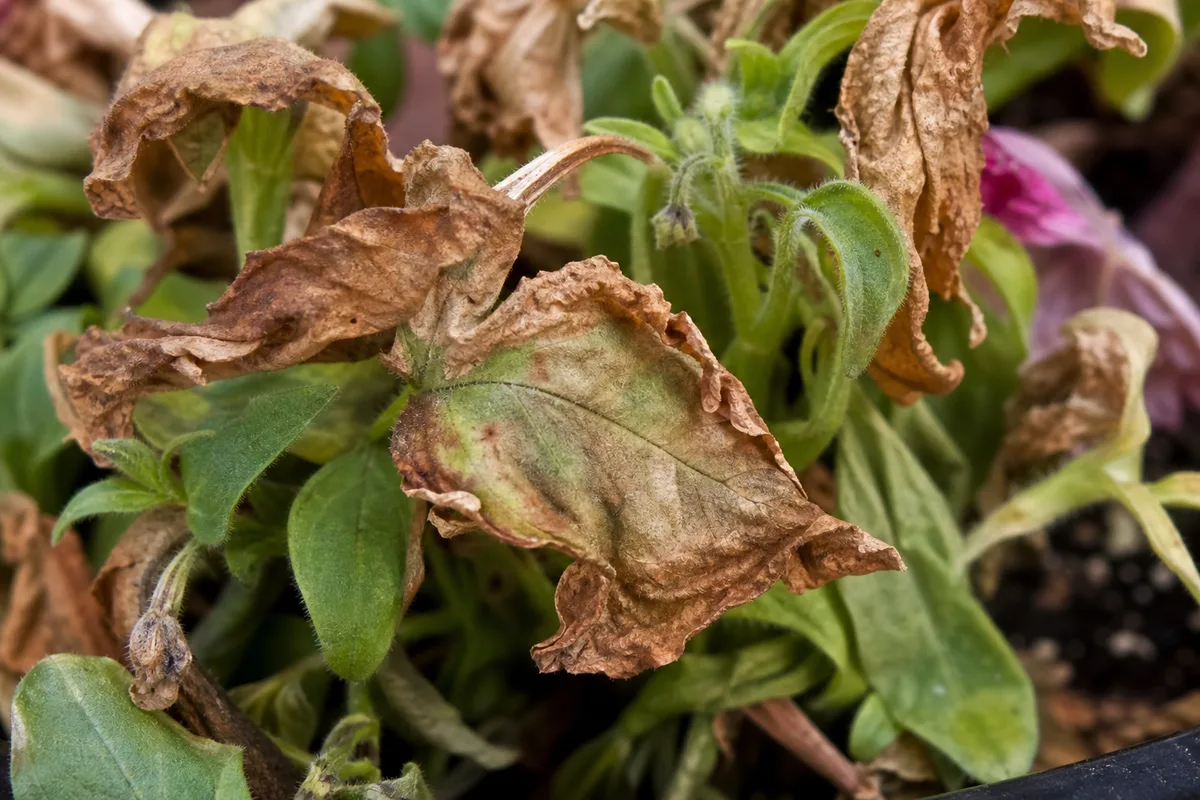
Underwatering symptoms on Petunia - compare with healthy tissue on the same plant.
- Wilting mid-morning on Petunia in full sun, before the worst heat of the day.
- Flowers fading quickly-blooms that should last several days collapse or bleach after one hot dry cycle.
- Crispy brown edges on leaves, often starting at tips and margins of lower foliage.
- Light pot weight and dry, pale mix at the top 2 cm; sometimes shrinkage gap between mix and pot wall.
- Temporary recovery overnight after a deep soak-then repeat wilt the next sunny day if checks are still too infrequent.
- Reduced new buds after repeated drought; the plant prioritizes survival over bloom.
Compare with overwatering on Petunia: underwatered petunias have dry, light pots and wilt with crispy tissue, not yellow leaves on soggy mix with grey mould.
How to confirm the cause
Use this inspection order:
- Finger or skewer at 2–3 cm. Dry, dusty, or warm soil confirms drought. Cool damp soil means look elsewhere-possibly root rot on Petunia mimicking wilt.
- Pot weight. Lift the basket. Noticeably lighter than after a full watering points to underwatering.
- Time of wilt. Mid-morning to early afternoon wilt on sunny days fits drought. Wilting all day on a cool cloudy day with wet soil does not.
- Flower behavior. Petals that shatter or fade within twenty-four hours of opening often follow missed watering in heat.
- Recovery test. Water deeply at the base. Underwatered petunias typically perk within two to four hours if roots are still healthy. No response with wet soil suggests rot or disease-see the wilting guide.
If multiple baskets sit together and only one wilts, compare sun exposure and pot size before treating pests.
First fix for Petunia
Water thoroughly at the base-not a quick splash on the surface. Soak until water runs from drainage holes, then empty the saucer or cachepot so roots are not left sitting in stale runoff.
For a badly dry basket, you may need two passes: first pass opens the mix; a second slow soak five minutes later ensures the core rewets. Hanging baskets and containers need more frequent watering than in-ground plantings-sometimes daily in extreme heat.
After recovery, return to checking the top 2 cm and watering only when dry at that depth. One deep correction beats repeated shallow sips that never reach trailing roots at the basket bottom.
Step-by-step recovery
- Move wilted baskets out of direct midday sun briefly if stems are fully collapsed-shade for one to two hours after soaking reduces further water loss through damaged leaves.
- Water at the base with a narrow spout or drip stake aimed at the soil, not the foliage.
- Submerge small pots in a bucket of water for ten to fifteen minutes if mix has pulled away from the sides and initial water runs off the surface.
- Trim fully crispy leaves and spent flowers so the plant does not waste moisture on dead tissue.
- Resume daily checks for three to five days after a drought event; one missed recovery cycle often causes repeat wilt.
- Apply balanced liquid feed only after turgidity returns-usually three to seven days later-not while leaves are still limp from stress.
Spreading petunias in large baskets may need supplemental water at two points-near the rim and at the center-because dense foliage sheds irrigation to the edges.
Recovery timeline
Expect visible firming within two to four hours of a proper soak if roots are intact. Flowers already faded will not reopen; look for new buds holding color within five to seven days.
Crispy leaf margins remain brown permanently. New growth should emerge clean from stem tips. After severe repeated drought, flower count may stay lower for two to three weeks while roots regenerate.
What not to do
Do not mist leaves instead of watering the mix-petunias need root-zone moisture, not foliar humidity.
Do not assume afternoon wilt always means drought. Check soil first; overwatered plants also wilt when roots fail.
Do not water on a fixed weekly schedule in July heat. Containers may need daily attention depending on size and sun.
Do not fertilize heavily on the same day as drought recovery. Wait until leaves are turgid.
Do not repot a wilted petunia immediately unless the mix is hydrophobic brick-rehydrate first, then assess.
Causes to rule out
| Pattern | Likely cause | First step |
|---|---|---|
| Mid-morning wilt, dry light pot | Underwatering | Deep base soak |
| Wilting, heavy wet pot | Overwatering / root rot | Stop watering; inspect roots |
| Afternoon wilt only, moist soil | Heat transpiration | Usually no extra water |
| One-sided wilt, brown vascular streak | Wilt disease | Isolate; compare wilting guide |
| Slow wilt, webbing on leaves | Spider mites | Inspect undersides |
Lookalike symptoms
Normal midday droop in extreme heat. Petunias in full sun may soften slightly at peak heat even when adequately watered. If the pot has moderate weight and plants are firm by morning, extra water is unnecessary.
Root rot wilt. Yellow lower leaves plus wet mix and sour smell indicate too much water, not too little. Adding water worsens the problem.
Transplant shock. Newly planted petunias wilt for a few days while roots establish. Keep mix evenly moist-not bone dry and not soggy-until new growth appears.
Petunia care cross-check
Underwatering prevention matches how petunias are normally grown:
- Light: Five to six hours of direct sun minimum; more sun increases water use and bloom.
- Water: When top 2 cm is dry; in hot weather that may mean checking every day.
- Soil: Lightweight mix with perlite so water penetrates quickly but the basket still holds enough moisture between checks.
- Placement: Dark pots and south-facing walls accelerate dry-down-adjust checks, not just the calendar.
Trailing types in ten-inch baskets dry faster than grandiflora in large floor tubs. Match check frequency to pot volume, not plant name alone.
How to prevent it next time
Make the top 2 cm finger test part of your morning routine when temperatures exceed 28°C (82°F) or baskets sit in all-day sun.
Water at the base until drainage appears. Shallow top watering trains roots toward the surface where they dry out fastest.
Use mulch sparingly on container surfaces only if it still allows you to probe moisture-dense matting can hide dry soil below.
Group smaller baskets where you will see wilt early, or upgrade pot size if the same plant dries before noon every summer day.
Deadhead on schedule so the plant is not supporting seed pods that consume extra water during heat waves.
When to worry
Underwatering becomes urgent when:
- Stems are fully limp and silvery-green by afternoon.
- Flowers drop in clusters and no new buds form for more than a week after correction.
- Leaves feel papery and do not regain turgor within four hours of soaking-possible root death from repeated drought.
- The entire basket collapses over a single hot weekend away.
For occasional mid-morning wilt that resolves after one deep soak, the plant usually recovers fully. Petunias are forgiving if you catch dry cycles early in the season.
When to use this page vs other Petunia guides
- Petunia watering guide - Use for routine moisture checks before assuming underwatering is the main issue.
- Petunia problems hub - Browse all 40 common issues on this species.
- Wilting on Petunia - Different entry point when symptoms overlap with underwatering.
- Brown Tips on Petunia - Different entry point when symptoms overlap with underwatering.
- Yellow Leaves on Petunia - Different entry point when symptoms overlap with underwatering.