Yellow Leaves on Petunia: Causes, Checks & Fixes
Quick answer
Yellow leaves on petunias usually mean the roots are too wet - from overwatering, poor drainage, or early root rot. Pause watering, check drainage holes and root firmness, then adjust so the top 2 cm of mix dries before the next drink.
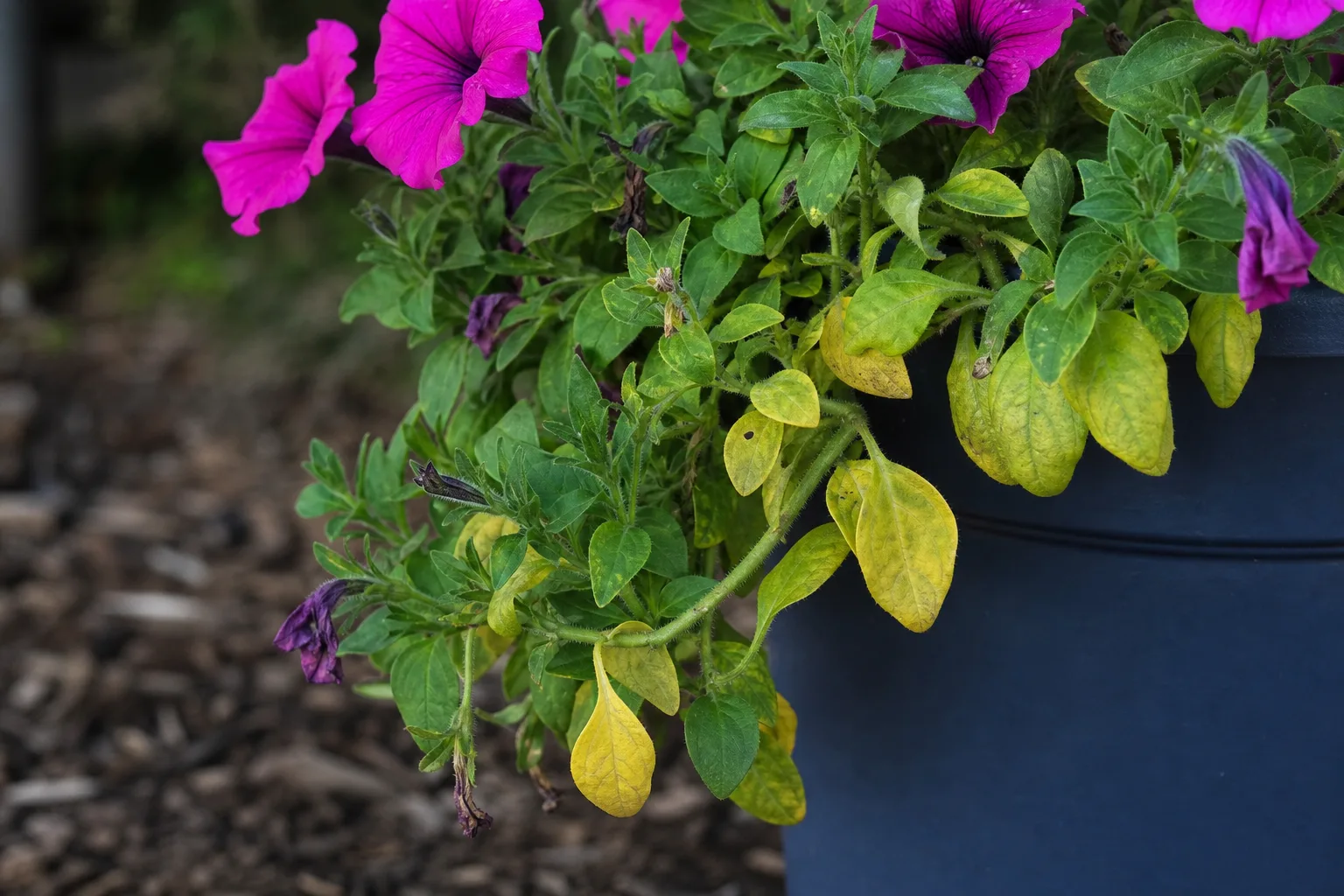
Yellow Leaves on Petunia: Causes, Checks & Fixes
This guide covers yellow leaves on Petunia. See also the general Yellow Leaves guide, watering, and light pages for this plant.
Yellow Leaves on Petunia: Causes, Checks & Fixes
Quick answer
Yellow leaves on Petunia are usually tied to overwatering on Petunia or root rot on Petunia in container mix. First step: improve drainage and reduce watering until the top 2 cm of soil feels dry before you water again.
Petunias are fast-growing annuals that use a lot of water in Petunia light guide - but they still need oxygen at the roots. When container mix stays saturated, lower leaves yellow first, then stems may wilt oddly despite wet soil. That combination is classic root stress, not simple aging.
What yellow leaves look like on Petunia
Yellowing often starts on older, lower leaves while tips stay green briefly. Leaves may look pale chartreuse before turning fully yellow, then brown and crisp at the edges. In advanced cases, entire branches yellow while the plant wilts midday even though you watered recently.
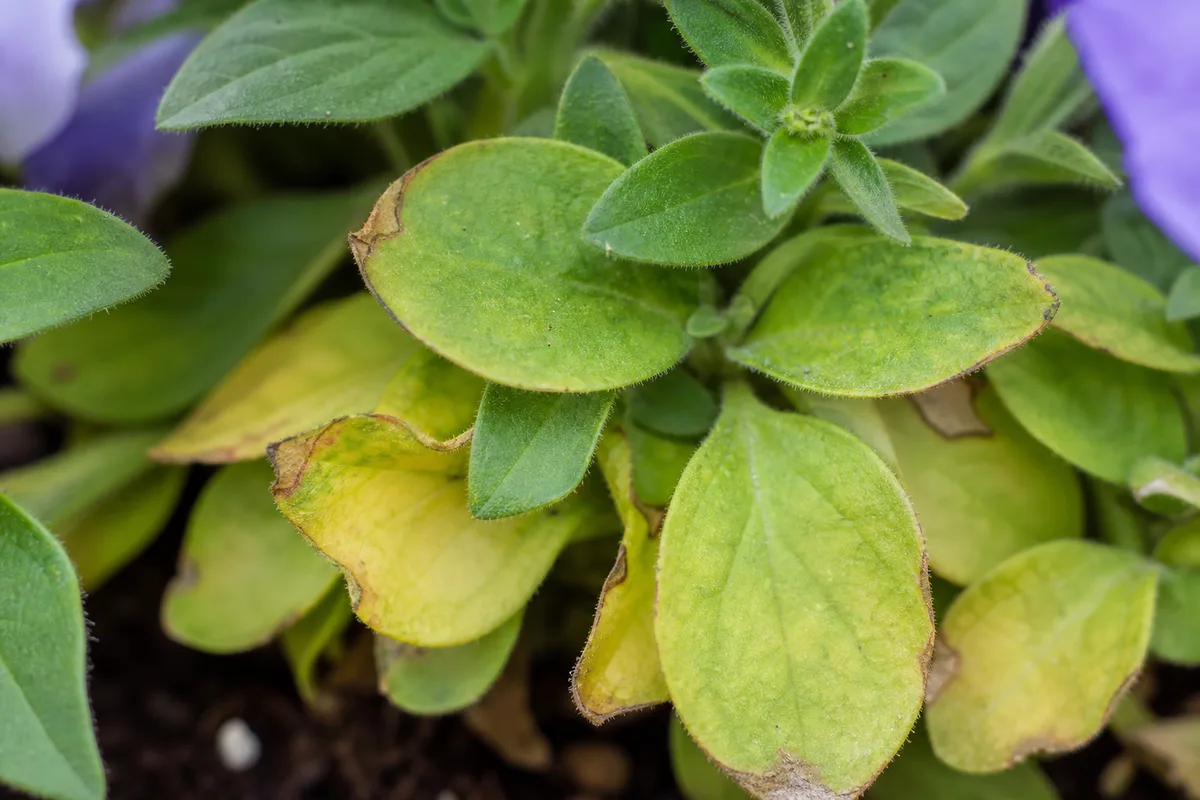
Yellow Leaves symptoms on Petunia - compare with healthy tissue on the same plant.
Overwatered petunias in hanging baskets sometimes show yellow leaves with grey mould on spent flowers when humidity is high - a sign that foliage and blooms stay damp too long. Yellow leaves with firm stems and dry, light pots point away from rot and toward underwatering on Petunia or nutrient issues instead.
Separate normal senescence: a few bottom leaves yellowing on an otherwise blooming plant in late season is normal. Worry when yellowing is widespread, accelerating, or paired with wet soil and stalled flowers.
Why Petunia gets yellow leaves
Container petunias are vulnerable to waterlogged mix. Most container plants prefer moist, not soggy, soil, and prolonged saturation drives nitrogen loss and root damage. Saucers that hold runoff, cachepots without drainage, or heavy garden soil in pots all keep roots anaerobic.
Overwatering is the top cultural mistake. Petunias need regular moisture in heat, but hanging baskets and containers may need frequent watering depending on size - frequency is not the same as keeping soil constantly wet. Watering on a calendar without checking the pot causes yellow leaves when weather cools or the plant moves to partial shade.
Root rot pathogens thrive in saturated conditions. Phytophthora affects petunias, causing crown rot that makes plants wilt rapidly or partially collapse. Black root rot on petunia turns lower leaves yellow, stunts growth, and discolors roots dark brown to black - often after prolonged high soil moisture.
Poor drainage amplifies the problem. Petunias perform well in well-drained soils in full sun; dense or compacted mix in a large pot dries slowly and yellows leaves even when you water “correctly” by clock.
How to confirm the cause
Use this inspection order before Petunia repotting guide or fertilizing:
- Moisture at 2 cm - Insert a finger or skewer. Soggy or cold wet mix with yellow lower leaves confirms excess water.
- Pot weight - A heavy pot days after watering means slow dry-down; check blocked drain holes and saucer water.
- Wilting pattern - Wilting with wet soil suggests root dysfunction, not drought.
- Root sample - Slide the plant partly out. Healthy roots are firm and pale; rotting roots are brown, black, or mushy.
- Light context - Shaded petunias use less water; yellow leaves plus wet soil in low light strongly implicates overwatering.
- Stem base - Soft, dark tissue at the crown suggests crown rot, not nutrient deficiency alone.
If soil is dry and light and leaves yellow with crispy edges, switch to the underwatering diagnostic path instead.
First fix for Petunia
Stop watering until the top 2 cm of mix dries, then clear drainage paths.
Empty saucers and cachepots after every watering. Confirm drain holes are open - roots often plug holes in baskets by midseason. If the outer pot holds standing water, prolonged waterlogged soil harms container plants and should be corrected immediately.
Water at the base, not over flowers and foliage. Avoid wetting foliage and flowers when watering to reduce disease pressure that worsens when roots are already stressed.
Move the basket to brighter air flow if it sits in a damp, shaded corner - petunias dry faster and use water more efficiently in proper sun, which helps roots recover.
Step-by-step recovery
For mild yellowing without mushy roots:
- Pause watering until the top 2 cm is dry; let the pot lighten noticeably.
- Remove yellow leaves and spent blooms to reduce mould and pest habitat.
- Water thoroughly once, until excess runs free, then discard all runoff.
- Wait for dry-down again before the next watering - in cool weather this may take several days.
- Resume a check-first schedule: water when the top 2 cm feels dry, not on fixed weekdays.
For yellowing with foul smell or soft roots:
- Unpot gently and rinse away wet mix from roots.
- Trim mushy or black roots with clean scissors; keep only firm tissue.
- Repot into fresh lightweight mix with perlite; use a clean container with drainage.
- Water once lightly, then keep slightly drier than usual until new growth appears.
- Do not fertilize until the plant holds new leaves for at least two weeks.
Recovery timeline
Lower yellow leaves will not green up again - look for new growth at stem tips within one to two weeks after watering correction. Mild overwatering cases often stabilize quickly once dry-down returns. Root rot recovery takes longer; severely stripped root systems may not support a full basket through the rest of the season.
If yellowing climbs the stem or the crown softens within a week of drying the mix, discard the plant and replace the mix rather than retrying fertilizer or fungicide alone.
Causes to rule out
Yellow leaves share symptoms with several other problems:
- Underwatering - Dry, light pot; wilting that resolves after a deep drink; yellow edges more than whole-leaf yellowing.
- Nitrogen deficiency - Uniform pale yellow on newer leaves in very old, leached mix; roots firm and soil dry.
- Natural aging - Few bottom leaves only, on a heavy-blooming plant late in season.
- Black root rot vs. Pythium - Black root rot rots tend to be firm; Pythium-related decay is often mushy. Both follow wet soil.
- Botrytis on flowers - Grey mould on flowers in humid weather; may accompany overwatering but starts on blooms, not roots.
What not to do
Do not keep watering because leaves look wilted when the soil is already wet - that deepens rot. Do not fertilize a yellowing, wet-rooted plant; salts stress damaged roots further. Do not overhead-water in the evening on humid balconies. Avoid repotting into an oversized container “to help it recover” - extra wet mix volume slows dry-down.
How to prevent yellow leaves next time
Use lightweight potting mix with perlite and pots with open drainage. Soil must drain decently for good petunias; amend heavy mixes before planting baskets.
Water by pot check, not habit. In heat, containers may need daily watering - but only when the top 2 cm is dry. In cooler or cloudy stretches, stretch intervals to prevent soggy mix.
Elevate hanging baskets so air reaches the bottom. Space plants for airflow, especially where humidity is high. Replace seasonal basket mix each planting cycle rather than reusing compacted, pathogen-loaded substrate.
Petunia care cross-check
Yellow leaves often trace back to a mismatch between sun, water, and mix. Petunias in full sun dry faster and rarely yellow from drought if you check daily in summer. The same plant in partial shade with a summer Petunia watering guide stays wet and yellows.
Align with base watering every 1–3 days in hot weather only when the check confirms dryness - not automatically every morning regardless of weather.
When to worry
Treat as urgent when the plant wilts with wet soil, stems blacken at the soil line, or more than one-third of roots are mushy on inspection. Phytophthora crown rot on petunia can cause rapid collapse. Mild lower-leaf yellowing on a firm plant is manageable with drying and drainage fixes.
Conclusion
Yellow petunia leaves in containers usually mean roots have been too wet too long - from overwatering, blocked drainage, or early rot. Confirm with soil moisture at 2 cm, pot weight, and root firmness. Dry the mix, fix drainage, water at the base only when needed, and judge recovery by clean new growth rather than old yellow foliage.
When to use this page vs other Petunia guides
- Petunia watering guide - Use for routine moisture checks before assuming yellow leaves is the main issue.
- Petunia problems hub - Browse all 40 common issues on this species.
- Overwatering on Petunia - Different entry point when symptoms overlap with yellow leaves.
- Underwatering on Petunia - Different entry point when symptoms overlap with yellow leaves.
- Not Enough Light on Petunia - Different entry point when symptoms overlap with yellow leaves.