Spider Mites on Petunia: Causes, Checks & Fixes
Quick answer
Spider mites on petunias flare fastest on hot, dry hanging baskets-especially south-facing rails where reflected heat and afternoon wilt cycles stack. Confirm stippling plus underside webbing with a tap test, isolate the basket, and rinse undersides every day or two before escalating to soap or oil.
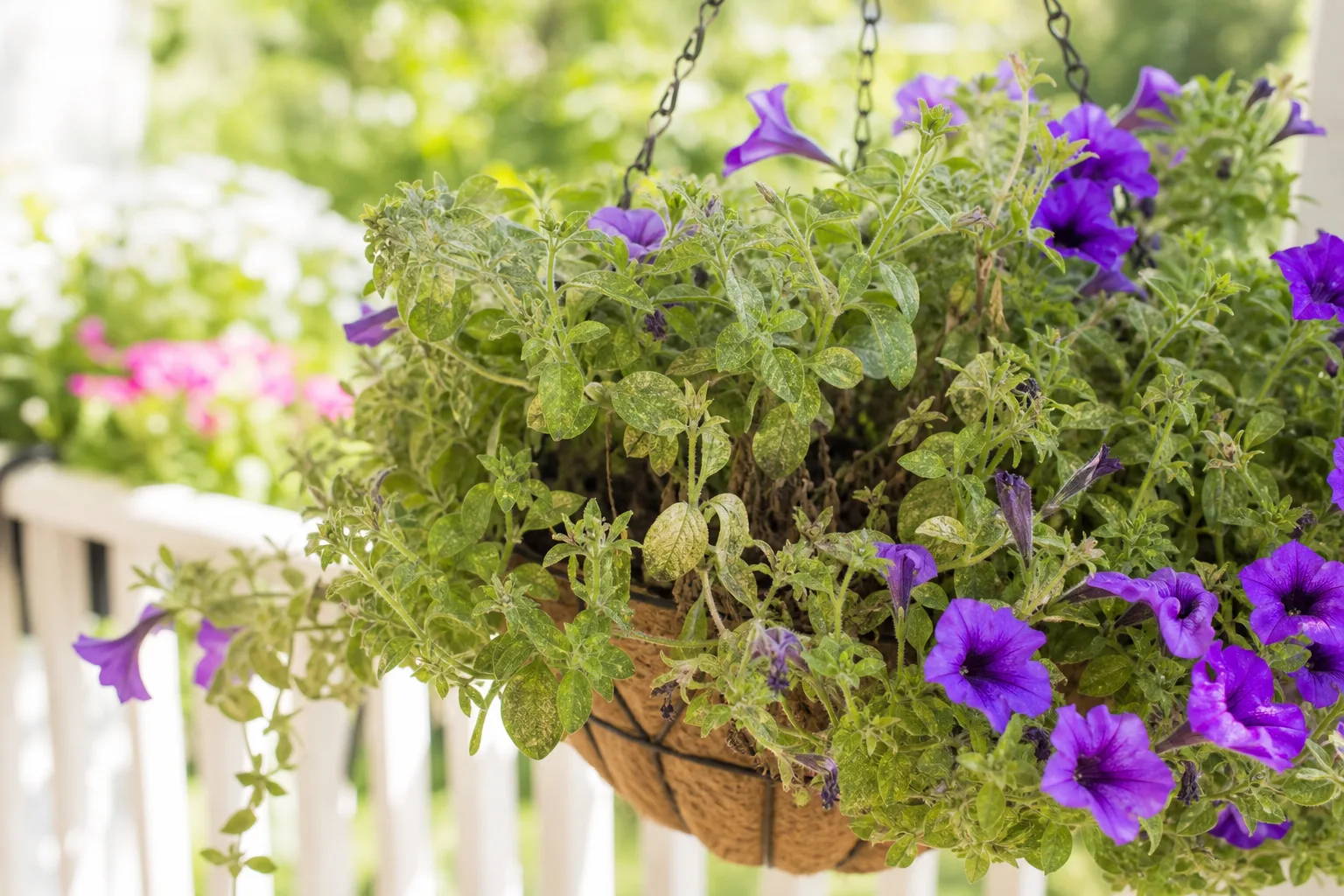
Spider Mites on Petunia: Causes, Checks & Fixes
This guide covers spider mites on Petunia. See also the general Spider Mites guide, watering, and light pages for this plant.
Spider Mites on Petunia: Causes, Checks & Fixes
Quick answer
Picture a south-facing balcony: a purple Wave petunia in a 30 cm coco-lined basket, rail hot enough to sting your hand by noon, afternoon wind drying the trailing stems before the mix re-wets. That setup is where spider mites on petunias usually explode-not because the plant is “weak,” but because hot, dry conditions and water stress favor rapid mite buildup.
First fix: isolate the basket, then rinse all foliage-especially leaf undersides and dense stem junctions-with a firm water stream early in the day. Repeat every one to two days for at least a week before deciding rinsing failed.
Two-spotted spider mite (Tetranychus urticae) is an arachnid, not an insect, so broad-spectrum insecticides aimed at aphids can flare outbreaks by removing natural enemies. In favorable heat, a generation can complete in as few as five to seven days, which is why stippling on Monday can become basket-wide bronzing by the following weekend.
What spider mites look like on Petunia
Spider mite injury on petunia follows a recognizable sequence:
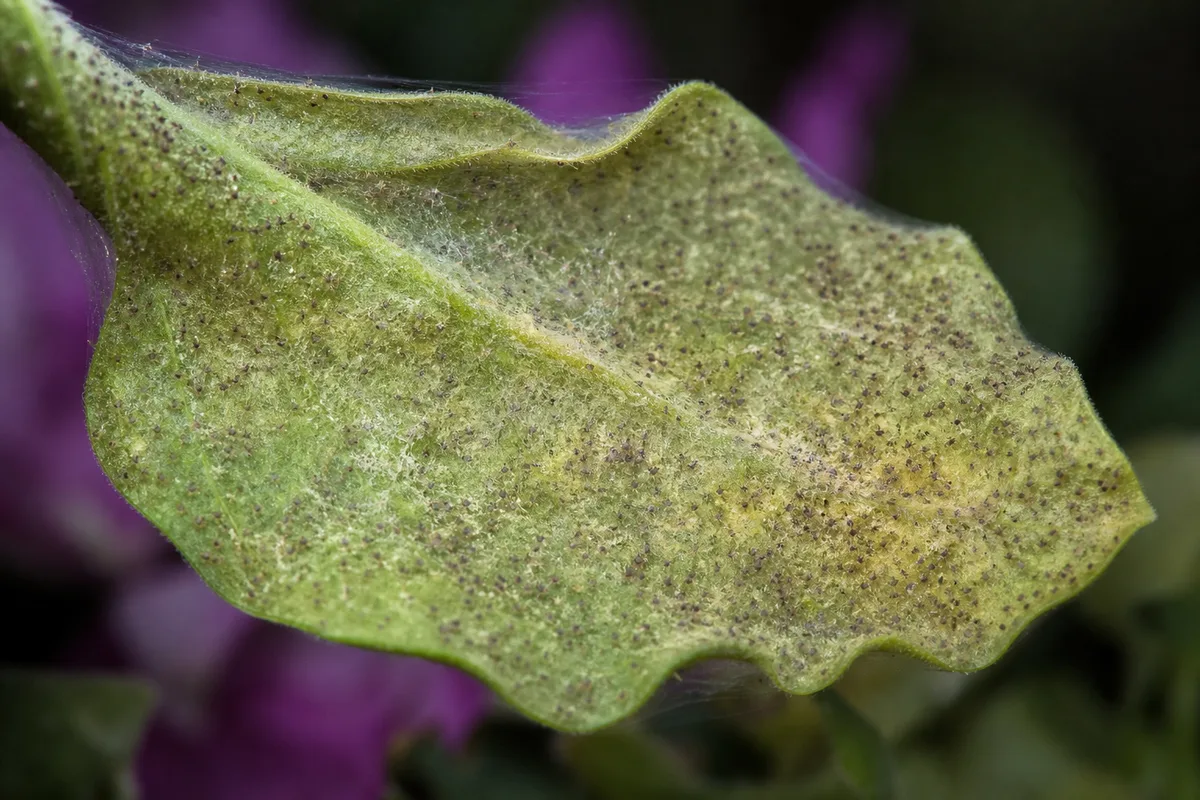
Spider Mites symptoms on Petunia - compare with healthy tissue on the same plant.
- Early: fine pale stippling on upper leaf surfaces, easiest to spot on darker purple or red cultivars against the green
- Mid-stage: yellowing or bronzing as feeding continues, often starting on outer trailer stems exposed to sun and wind
- Heavy: fine silk webbing between tips, leaf undersides, and spent bloom stems; dusty cast skins caught in the webbing
On hanging baskets, damage often appears on the outer curtain of trailers first-the stems baking on the sunny side of the basket-while inner growth still looks green until populations spread. That one-sided pattern is a petunia-container clue; uniform whole-basket scorch without webbing points more toward heat stress or a severe underwatering crash.
Most ornamental outbreaks involve two-spotted spider mite, which is nearly invisible without a hand lens but leaves the stipple-and-web signature behind.
Why petunia baskets flare faster in heat and dry wind
Petunias are bred for full-sun bloom production in containers. UMN Extension notes they are commonly grown in baskets and window boxes where root zones heat up and dry faster than in-ground beds. NC State lists Petunia × hybrida as a full-sun annual preferring evenly moist, well-drained soil-a profile that conflicts with real balcony life during July heat waves.
Three petunia-specific stress stacks drive mite flareups:
- Reflected heat - white walls, glass railings, and dark decking raise leaf temperature above air temperature.
- Basket physics - small volumes dry from top and sides; outer mix can be dust-dry while the center still holds moisture, so foliage wilts even when you “watered this morning.”
- Bloom load - heavy flowering pulls water through stems fast; a basket pushing constant color is transpiring at peak rate when mites also reproduce fastest.
Kansas State greenhouse guidance specifically flags hanging baskets as hotter microclimates where mite populations develop ahead of bench plants-and home rails behave the same way.
Confirming mites fast: tap test, lens check, and lookalike filter
Work through this order so you do not spray the wrong pest or misread drought bronzing:
- Tap test - Hold a stippled leaf over white paper and flick the surface. Moving specks that smear green when crushed support live mites.
- Underside lens check - Inspect lower leaf surfaces and stem forks with a 10× hand lens for mites, eggs, cast skins, and early silk.
- Pattern check - Mites: stippling plus webbing. Thrips: silvery scrape marks with black fecal specks, usually little webbing.
- Moisture context - If the basket went repeatedly dry in heat during the same week stippling appeared, mite escalation is more likely.
- Neighbor scan - Check every basket on the same rail; mites rarely stay isolated once trailers touch.
Mite vs thrips vs drought on petunia - quick decision table
| What you see on petunia | More likely cause | Open this page when… |
|---|---|---|
| Stippling + fine webbing on undersides + moving tap-test specks | Spider mites | You are on the right page-start rinsing |
| Silvery streaks on pale petals, black varnish-like specks, tight buds scarred | Thrips | Petal scarring dominates; webbing is absent or minimal |
| Sticky leaves, curled soft tips, visible pear-shaped clusters | Aphids | Honeydew or insects are obvious; stippling is secondary |
| Afternoon wilt that recovers by evening, no mites, no silk | Heat stress or underwatering | Tap test negative; soil was dry and pot was light |
| Yellow lower leaves on wet, heavy mix without pests | Overwatering or yellow leaves | Roots may be stressed; pest signs absent |
Scope note: This page is for confirmed or strongly suspected spider mites. If you are unsure after two checks, compare thrips on petunia before buying sprays.
First 72 hours: isolate and rinse protocol
Day 0 (today): Move the basket away from neighbors-ideally downwind and out of trailer contact. Rinse undersides until water runs clean off the lowest trailers. Do this in morning so petunia flowers and foliage dry quickly; avoid soaking blooms at dusk during humid spells.
Days 1–2: Repeat the rinse. Target stem junctions where mites cluster and webbing starts. In this window, also stabilize watering-soak at the base until runoff, drain fully, and stop letting the basket crash to wilt between drinks.
Day 3 checkpoint: Tap-test three leaves from different sides of the basket. If mite counts are falling and no new webbing appeared on the freshest tips, continue rinsing only.
What this means in a real basket: Rinsing is not a single shower-it is repeated mechanical knockdown. One pass may remove adults while eggs on undersides hatch in about three days. That is why the first week matters more than the first spray.
Escalation after failed rinsing: soap, oil, and safety
Escalate when active mites and fresh webbing persist after five to seven daily or near-daily rinses with good coverage.
| Step | Action | Petunia-specific note |
|---|---|---|
| 1 | Insecticidal soap or horticultural oil, label rates | Contact products need full underside coverage and repeat per label |
| 2 | Spray early morning or cool evening | Avoid applications near 32°C (90°F) or on drought-stressed baskets |
| 3 | Second cycle 5–7 days later | Overlapping life stages mean one spray rarely clears a basket |
| 4 | Protect blooms if possible | Shield bee-active flowers or accept sacrificing a few blooms for coverage on trailers |
Do not stack soap, oil, and unrelated insecticides the same week. Pick one contact program, execute it completely, then judge.
Optional path: biological control on sheltered patios
For enclosed or semi-sheltered patios-not windy exposed rails-UC IPM lists predatory mites such as Phytoseiulus persimilis and western predatory mite as commercial options. They require humidity, absence of broad-spectrum sprays, and enough pest density to sustain predators. Most balcony growers get faster, more predictable results from rinsing plus moisture stabilization; treat biocontrol as an advanced branch, not the default first fix.
Rescue vs replace: decision thresholds
Use this table after you have run at least one full treatment cycle (rinse week, or rinse plus two labeled soap/oil applications).
| Basket condition | Mite status after treatment | Recommended action | Realistic outlook |
|---|---|---|---|
| Light stippling on outer trailers only; blooms still opening | Tap tests improving; little new webbing | Continue rinse protocol; scout neighbors | Good-often stable within 7–14 days |
| Bronzing on 30–50% of foliage; some webbing at tips | Mites still active after rinse week | Add soap/oil cycle; prune worst webbed tips only | Moderate-2–3 weeks to clean new growth |
| Most trailers bronzed; bloom count crashed | Mites rebound within 7 days after two contact cycles | Replace basket; protect remaining planters | Poor for display-rescue rarely worth cost |
| Heavy defoliation; stems bare at center | Any | Remove and bag; rinse neighbors aggressively | Replacement only |
| Late August basket, early frost region | Persistent mites | Replace unless you need color for a specific event | Seasonal economics favor fresh basket |
When replacement is the lower-risk choice: you are past peak display season, the basket lost most leaves, new tips are not pushing after 14–21 days of correct control, or mites are spreading to every neighbor despite isolation.
Recovery checkpoints by day and week
Judge recovery by new growth and pest counts, not by old leaves greening up. Mite-damaged foliage typically does not return to perfect color.
Days 4–7: Success looks like no new webbing on the freshest tips, fewer mites on tap tests, and stable afternoon turgor when watering is even. Failure looks like bronzing climbing inward and silk on new bloom stems.
Days 8–14: Success looks like clean new trailer length and resumed flowering on treated stems. Failure looks like repeated webbing after you stopped rinsing for two days.
Days 15–21: If you still need daily knockdown to hold the line, either commit to another full contact cycle or replace the basket before mites re-infect neighbors.
Old stippled leaves can stay blemished until you deadhead or trim them for appearance-that is normal, not a sign treatment failed.
Observed in practice
During LeafyPixels petunia basket reviews, one recurring midsummer pattern stands out: a 30 cm Wave petunia on a west-facing metal rail above concrete, watered once each morning, with afternoon wilt on the outer trailers by 3 p.m. during a five-day stretch above 32°C.
Presentation (day 0): Pale stippling on sun-side trailers only; owner assumed drought. Tap test showed moving specks; lens check found early silk at two stem forks.
Intervention: Basket moved to a shadier hook away from neighbors. Daily morning underside rinses for six days. Base watering shifted to soak-until-runoff when top 2–3 cm dried, not a fixed morning cup.
Timeline: New webbing stopped by day 5. First clean trailer length visible by day 10. Blooms on old bronzed stems stayed small; fresh stems from the crown carried normal flowers by day 18. Owner trimmed worst bronzed trailers for appearance at day 21.
Lesson: The rail microclimate mattered as much as the pest. Until watering matched basket heat load, rinsing alone would have been a holding action.
Mistakes that make petunia mite outbreaks worse
- One rinse and done - overlapping life stages need repeated knockdown.
- Broad-spectrum “kill everything” sprays - can remove predatory mites and flare Tetranychus populations.
- Evening soak on dense blooms - prolonged flower wetness raises botrytis blight risk on petunia in humid weather.
- Treating one basket in a touching row - trailers bridge mites across rails.
- Fertilizing hard while foliage is bronzed - does not fix pest injury and can stress roots further; stabilize pests first.
Prevention plan for the next heat cycle
Petunia mite prevention is mostly stress and scouting management, not preventive chemical sprays:
- Water to basket weight, not clock time - in peak summer, many baskets need twice-daily checks; see petunia watering for container depth rules.
- Rinse dust off foliage during hot dry spells-dusty, dry leaf surfaces favor mites.
- Scout undersides weekly from June through August, especially on hot walls and rail exposures.
- Quarantine new baskets for one week before hanging them against existing color.
- Avoid insecticide flares - if you treated aphids recently, watch for mite rebound two weeks later.
If your next symptom is…
- Wet heavy mix, yellow lower leaves, no pests → Yellow leaves on petunia or overwatering
- Afternoon wilt, dry light pot, no webbing → Underwatering or wilting
- Silvery petals with black specks → Thrips on petunia
- Sticky honeydew on stems → Aphids on petunia
When to worry
Escalate immediately when webbing jumps to multiple growing tips within 48 hours, bronzing spreads to the basket center while blooms abort, or mites appear on every planter on the same rail. Those patterns mean population doubling is outpacing rinsing.
Also treat as urgent if you recently applied a broad-spectrum insecticide and stippling appeared two weeks later-that classic flare sequence needs rinse-first control and strict avoidance of repeat broad-spectrum products.
When to use this page vs other Petunia guides
- Petunia watering guide - Use for routine moisture checks before assuming spider mites is the main issue.
- Petunia problems hub - Browse all 40 common issues on this species.
- Slow Growth on Petunia - Different entry point when symptoms overlap with spider mites.
- Thrips on Petunia - Different entry point when symptoms overlap with spider mites.