Thrips on Petunia: Causes, Checks & Fixes
Quick answer
Western flower thrips scar petunia petals and can vector INSV and TSWV. Dark ringed lesions around feeding scars mean virus-not cosmetic silvering. First step: tap open blooms over white paper to confirm slender insects, hang blue sticky traps above the canopy, and remove heavily scarred flowers.
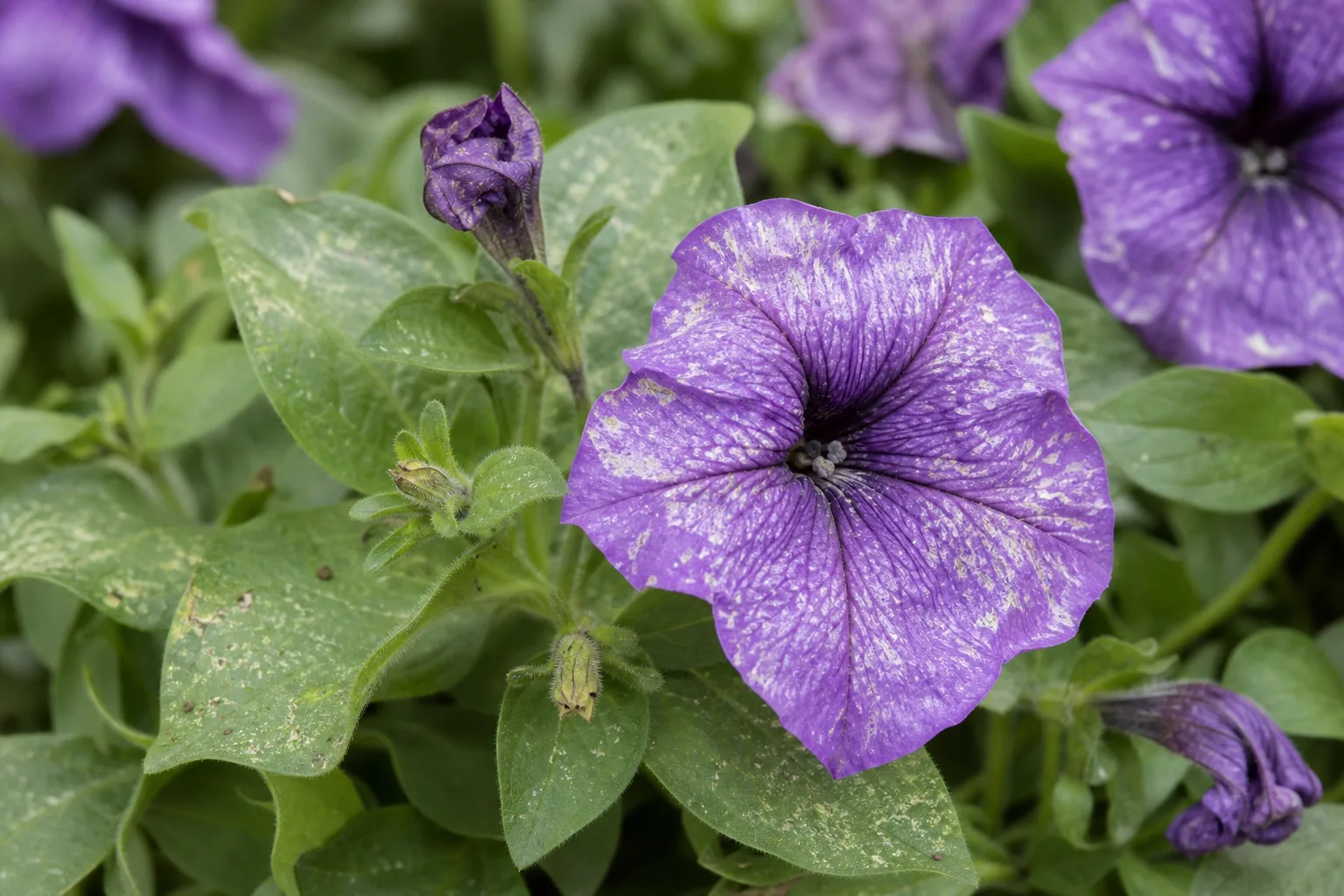
Thrips on Petunia: Causes, Checks & Fixes
This guide covers thrips on Petunia. See also the general Thrips guide, watering, and light pages for this plant.
Thrips on Petunia: Causes, Checks & Fixes
Quick answer
Western flower thrips are slender sap-feeding insects that scar petunia petals with silvery streaks and can spread impatiens necrotic spot virus (INSV) and tomato spotted wilt virus (TSWV). They hide inside buds where sprays often miss them.
If you see dark ringed lesions around pale feeding scars on leaves, treat that as a virus warning-not ordinary cosmetic silvering. Petunias are used as indicator plants in commercial greenhouses because they show those ring spots when a tospovirus is present without becoming a long-term reservoir. For cosmetic thrips scarring only, the first fix is simpler: tap an open bloom over white paper. If tiny yellow-brown insects fall out, you have thrips-not drought stress or a nutrient problem. Hang a blue sticky trap just above the canopy to monitor adults, and pinch off the worst scarred flowers so you can watch whether new blooms stay clean.
Why Petunia gets thrips
Petunias are a favorite host for western flower thrips. The pest feeds on soft, rapidly growing tissue-and petunias push new flowers constantly through the cool-season bloom window. Thrips slip into unopened buds and under ruffled petals, where they are hard to see until petals open with silver scars already baked in.
Container petunias in Petunia light guide face another risk factor: warm, dry spells on exposed balconies and hanging baskets. Thrips populations build quickly when plants are heat-stressed and natural predators are scarce. Mixed greenhouse combos and nursery flats often arrive with low-level thrips that explode once plants are grouped on a railing-see the petunia overview for how Wave trailers and grandiflora mounds behave differently in tight rail rows.
The virus angle matters on petunia specifically. Western flower thrips is the confirmed vector for INSV on ornamentals, and it spreads TSWV as well. Home growers should treat any ring-spot pattern on leaves as a serious escalation and cross-check the mosaic virus on petunia page if mottling or distortion appears alongside petal scarring.
Thrips also travel on wind and hitchhike on clothing or tools after handling infested plants. Skipping quarantine on a new basket is one of the fastest ways to spread thrips across a row of window boxes.
What thrips damage looks like on Petunia
On flowers-the most obvious site on blooming petunias:
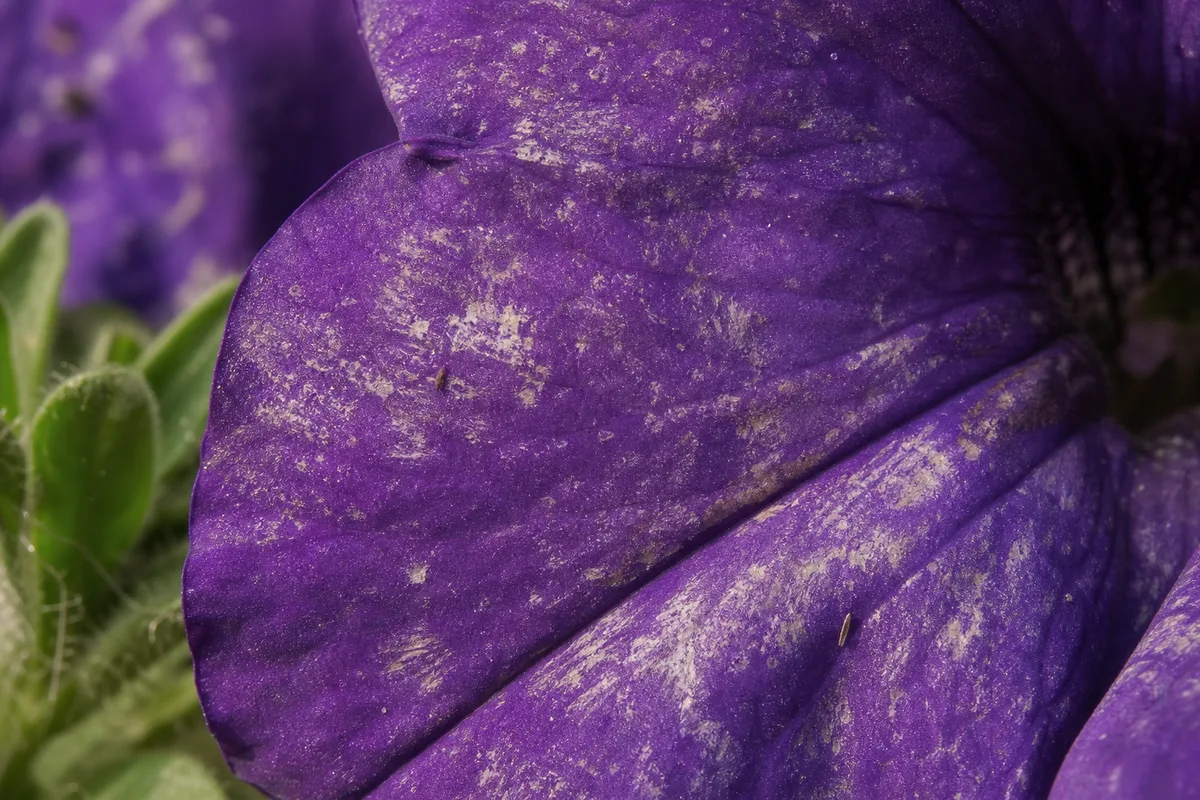
Thrips symptoms on Petunia - compare with healthy tissue on the same plant.
- Silvery or bronze scrape marks on pale pink, white, or lavender petals
- Streaked or distorted flower color on multicolor varieties
- Black varnish-like fecal specks on petals and nearby leaves
- Buds that open partially, look streaked, or abort before full bloom
On foliage:
- Silvery stippling or flecking on upper leaf surfaces
- Distorted or narrow new leaves in heavier infestations
- Premature flower drop when feeding is heavy at the growing tips
Petunia leaves are somewhat sticky by nature, but thrips damage feels dry and scraped-not the shiny honeydew aphids leave behind. Severe scarring on showy blooms is often what prompts the first close look.
How to confirm the cause
Work through these checks in order:
- Tap test - Hold an open bloom or young leaf over white paper and tap sharply. Thrips are about 1/16 inch long, slender, and yellow to brown. Moving specks confirm them; static debris does not.
- Petal scar pattern - Silvery streaks on petals with black specks point to thrips. Fine yellow dots with webbing suggest spider mites instead.
- Blue sticky trap - Hang a blue sticky trap just above the plant canopy for three to five days. Several western flower thrips per card supports active infestation.
- Bud inspection - Peel back a tight bud slightly with a fingernail or gently pull petals apart on a sacrificial bloom. Thrips often cluster in protected flower tissue.
- Virus check - Look for dark ringed lesions around pale feeding scars on leaves. That pattern is a tospovirus warning on petunia, not ordinary thrips silvering alone.
- Neighbor scan - Check other baskets on the same rail. Thrips rarely stay on one plant once flowers are touching.
If the top 2 cm of mix is dry, stems feel firm and turgid at the base, and damage is only on oldest lower leaves with no petal scarring, underwatering or age may explain the symptoms better than thrips. See petunia watering for the container dry-down check.
First fix for Petunia
Tap blooms over white paper to confirm thrips, then hang one blue sticky trap just above the canopy.
That single step separates thrips from lookalike problems and starts monitoring at the same time. Remove the most heavily scarred open flowers and any leaves with dark ringed virus lesions. Bag and discard virus-suspect tissue-do not compost it on a balcony pile.
Do not spray everything on day one. Confirm the pest first, then treat based on severity.
Step-by-step recovery
Once thrips are confirmed, work in this order:
- Isolate if possible - Move the worst basket away from neighbors for one to two weeks while treating. Thrips crawl and fly short distances between touching plants.
- Sanitation - Deadhead scarred blooms every two to three days. Drop debris into a bag, not the soil surface.
- Trap monitoring - Keep blue sticky traps up and note counts weekly. Rising counts mean the population is still building; falling counts mean control is working.
- Insecticidal soap on early infestations - Spray buds, flowers, and foliage thoroughly, including crevices where petals meet stems. Repeat every five to seven days for two to three cycles to catch newly hatched nymphs. Western flower thrips pupate in soil or litter while eggs and nymphs hide in protected buds-one spray rarely clears a basket.
- Target buds deliberately - Thrips hide inside buds. A light spray that only hits open flowers will miss most of the population.
- Soap timing on hot baskets - Apply soap early morning or late evening on heat-stressed balcony petunias. Insecticidal soap can burn foliage when plants are under direct afternoon sun and already drought-stressed.
- Hold fertilizer - Do not push heavy nitrogen while the plant is pest-stressed. Resume balanced feeding after two weeks of clean new blooms.
- Virus protocol - If dark ringed leaf spots appear, remove the entire plant in a sealed bag. There is no cure for INSV or TSWV on an ornamental petunia. Sanitize shears and wash hands before touching other baskets.
When soap is not enough: spinosad escalation
If trap counts stay high after two full soap cycles spaced five to seven days apart, home gardeners can step up to a spinosad product labeled for thrips on ornamentals. Spinosad is generally more effective against thrips than soap alone and can move slightly into sprayed tissue to reach thrips tucked under ruffled petals. Apply in early morning or evening, cover buds and flowers thoroughly, and repeat per label for two to three cycles.
Pollinator caution: Spinosad can harm bees and some natural enemies for about one day after application. Do not spray open petunia blooms during peak pollinator hours on a balcony shared with vegetables or herbs. Treat at dusk, or temporarily move baskets away from bee-attractive neighbors until the spray dries.
For heavy infestations on high-value displays, commercial growers rotate products because western flower thrips develops insecticide resistance easily. Home gardeners should exhaust soap, sanitation, and trapping before reaching for broad-spectrum sprays.
Recovery timeline
Light infestations caught on the first silvery petals often stabilize within one to two weeks of trapping plus soap repeats. New blooms should open with minimal scarring once adult counts on traps drop.
Moderate basket infestations usually need two to three weeks of repeated treatment. Old scarred petals will not revert to solid color-judge success by clean new flowers and fewer insects on tap tests.
If stippling spreads across new growth despite two full soap cycles, reassess whether thrips are still present or a virus has taken hold. Virus-symptomatic plants do not recover and should be removed to protect neighbors.
What not to do
Do not assume silvery petals mean drought stress and respond with extra water. Wet soil plus damaged foliage invites other petunia problems without touching thrips.
Do not use broad-spectrum insecticides as a first move on sunny balcony petunias. Products that wipe out predatory mites and lady beetles often flare spider mites in the same hot, dry conditions thrips already favor.
Do not compost virus-suspect plants or dropped petals from heavily infested baskets. Bag and discard them.
Do not mist flowers overhead to “wash thrips off” in humid weather. Wet petals promote botrytis gray mold on petunias-water at the base instead.
Causes to rule out
| Sign | Likely cause | Quick check |
|---|---|---|
| Silvery petal streaks + black specks | Thrips | Tap test over paper |
| Fine stippling + webbing | Spider mites | Webbing at stem tips |
| Sticky leaves + soft clusters | Aphids | Pear-shaped insects on new growth |
| Brown mushy flowers after rain | Botrytis blight | Water-soaked petals, gray fuzz |
| Mottled leaves + distortion | Mosaic virus | Pattern on multiple stems; may follow thrips or aphids |
How to prevent it next time
Quarantine new petunia baskets for seven to ten days before placing them against established plants. Hang blue sticky traps early in the bloom season-not only after damage appears.
Scout open flowers weekly during peak flowering. Remove spent blooms on schedule; thrips congregate where old and new tissue overlap.
Keep even moisture using the top-2-cm dry check from the petunia watering guide so plants are not drought-stressed, but avoid overhead watering that wets flowers. Preserve beneficial insects by using soap or oil before broad-spectrum chemicals.
On crowded balcony rails, space baskets so flowers are not touching. One infested combo planter can seed thrips across an entire row.
When to worry
Treat as urgent if:
- Dark ringed lesions form around thrips feeding scars on leaves
- Mosaic mottling or distortion spreads on new growth after petal scarring-see mosaic virus on petunia
- Multiple baskets on the same rail show fresh silver streaks within days
- Buds fail to open on an otherwise well-fed, full-sun plant while trap counts climb
Virus-suspect petunias should be removed immediately. For heavy thrips without virus signs, escalate to spinosad after two soap cycles if trap counts stay high-waiting until bloom season ends usually means most flowers are already scarred.
If the same combo planter reinfests two seasons in a row despite quarantine and rotation, contact your local cooperative extension office for help identifying resistant western flower thrips populations and greenhouse-source sanitation.
Related petunia problems
| Symptom pattern | Open this page |
|---|---|
| Stippling + webbing, moving tap-test specks | Spider mites |
| Sticky honeydew, soft insects on tips | Aphids |
| Mottled leaves, color break, ferny new growth | Mosaic virus |
| Mushy brown flowers after wet weather | Blight |
| Afternoon wilt, dry pot, no petal scarring | Underwatering or heat stress |
| Baseline culture and basket care | Overview · Watering |
When to use this page vs other Petunia guides
- Petunia watering guide - Use for routine moisture checks before assuming thrips is the main issue.
- Petunia problems hub - Browse all 40 common issues on this species.
- Brown Tips on Petunia - Different entry point when symptoms overlap with thrips.
- Yellow Leaves on Petunia - Different entry point when symptoms overlap with thrips.