Damping Off on Petunia: Causes, Checks & Fixes
Quick answer
Damping off on petunia kills young seedlings in cool, wet seed-starting mix-Pythium, Rhizoctonia, and Fusarium pinch stems at the soil line. First step: remove collapsed seedlings immediately and stop overhead watering the flat.
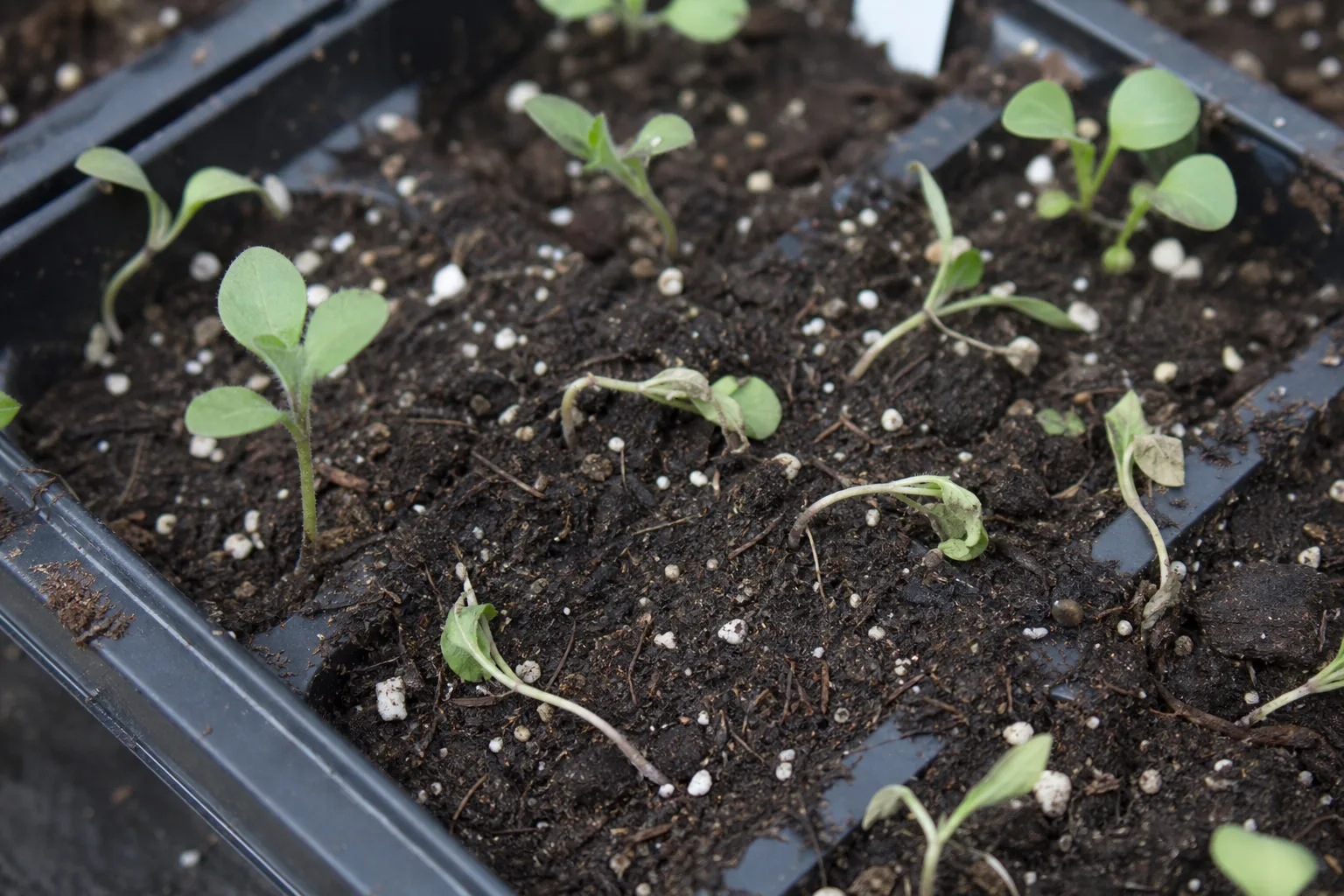
Damping Off on Petunia: Causes, Checks & Fixes
This guide covers damping off on Petunia. See also the general Damping Off guide, watering, and light pages for this plant.
Damping Off on Petunia: Causes, Checks & Fixes
Quick answer
Damping off on petunia (Petunia × hybrida) strikes in the first vulnerable weeks after germination, when cool, wet seed-starting mix lets Pythium, Rhizoctonia, and Fusarium rot stems right at the soil line. PNW handbooks document petunia damping-off with seed rot, seedling collapse, and patchy flat death under those conditions.
First step: remove every collapsed seedling immediately-bag and discard them, do not compost indoors. Infected petunia sprouts cannot recover; your job is to stop spores from moving through the wet flat to healthy neighbors before you adjust watering, heat, or airflow. For full seed-start timing and surface-sow technique, see the petunia propagation guide.
What damping off looks like on Petunia
On petunia flats, damping-off usually appears days after cotyledons open, not on mature basket plants. Watch for these patterns:
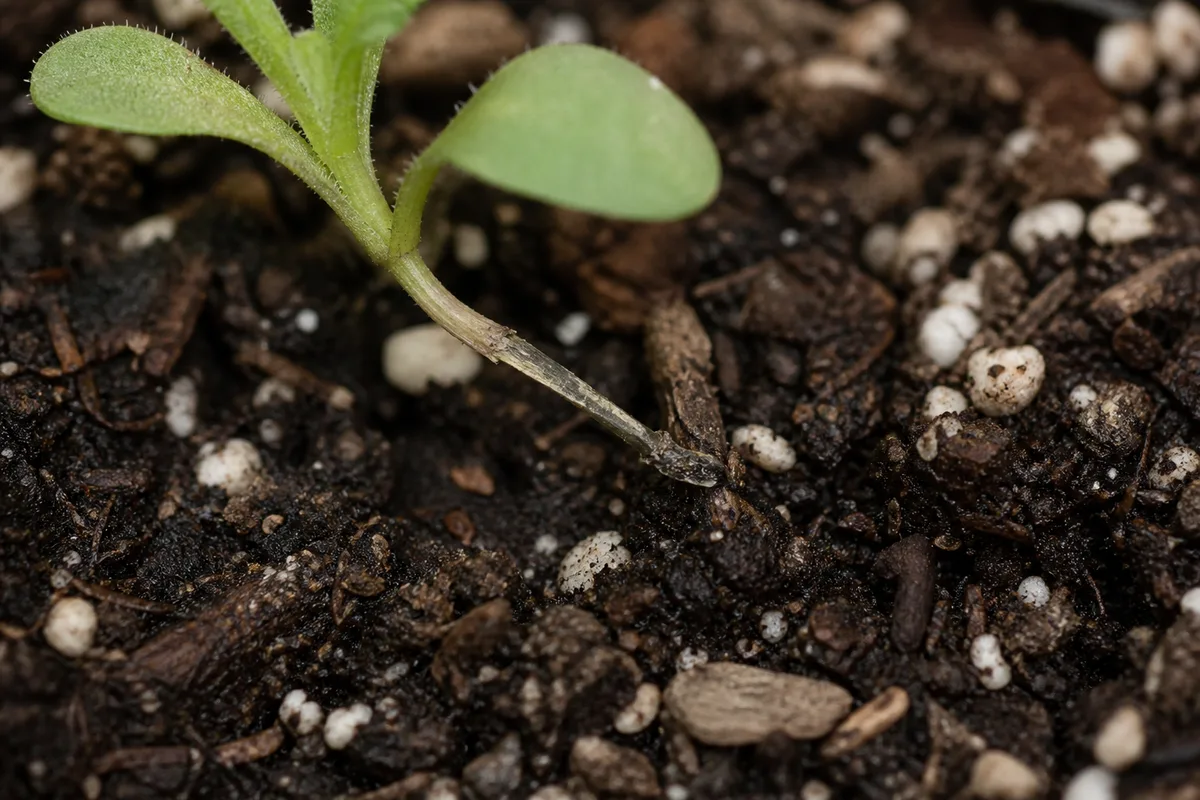
Damping Off symptoms on Petunia - compare with healthy tissue on the same plant.
Collapse at the soil line
- Seedlings that stood upright yesterday suddenly lie flat with stems pinched and water-soaked at the base
- Lower stems turn brown, gray, or thin and thread-like where infected
- Cotyledons wilt and shift from green to dull gray-brown while roots may look stunted or absent when you gently tug
- Gray or cobweb-like mold at the base in advanced cases
Patchy flat death and pre-emergence rot
- Several cells fail within the same 24–48 hour window while neighbors in drier corners still stand
- Adjacent seedlings in shared wet mix show the same pinching, even if they still stand today
- Seeds never break the surface despite warm expectations-seeds rot in the cell before sprouting
- Patchy emergence in one flat while a duplicate tray with drier mix performs fine
Petunia seedlings are commonly started indoors 10–12 weeks before outdoor planting, which lands in late winter when home flats stay cold and damp longest. That long indoor runway means the post-emergence danger window is easy to miss if you check trays only weekly.
Why Petunia gets damping off
Petunias are warm-season bedding annuals started indoors weeks before frost-free planting. Damping-off is not a random petunia trait-it is a seedling-stage disease tied to how the flat is managed.
Indoor seed-start timing and wet flats
University of Minnesota Extension notes petunias need 10 to 12 weeks indoors before planting out-ample time for problems to develop between seeding and transplant. Flats kept on cool windowsills with constantly saturated peaty mix stay in the danger zone longer than fast-growing sprouts should.
Overhead misting, sealed humidity domes left on after germination, and cold room air keep mix saturated while stems stay tender. Pythium moves easily in shared irrigation water and wet media from cell to cell.
Surface-sow and light requirement
Petunia seeds require light to germinate and must not be buried. Surface-sown seeds sit at the mix surface where overhead watering and domes keep them wet longest. Burying seed against that light requirement also blocks emergence-seeds rot in dark, saturated cells and mimic pre-emergence damping-off.
Reused mix, dirty trays, or garden soil import pathogens that survive on pots, tools, and old media. Damping-off fungi thrive in cool, wet conditions and attack newly emerged seedlings before stems harden.
Low light produces weak petunia seedlings. Petunias want bright supplemental light soon after emergence-window sills alone are often insufficient in February and March. Leggy, pale sprouts with thin stems stay vulnerable longer; see leggy seedlings on petunia for stretch vs. collar-rot differentiation.
Fungus gnats signal trouble. Small flies hovering over a petunia flat usually mean the mix stays wet too long. University of Minnesota Extension notes that Fusarium spores can be carried by fungus gnats or splashing water-the gnats are a warning, not the primary cause. Persistent gnats after you dry the surface point to the fungus gnats problem guide and often overlap with mold on soil in domed trays.
Wave and grandiflora types sown densely in 128-cell flats face extra crowding pressure-stems packed in wet pockets collapse faster than widely spaced sowings in deeper cells.
How to confirm the cause
Work through these checks before you treat the whole tray with fungicide:
- Timing - Did collapse begin within a few days of sprouting in a newly watered flat? Mature petunias in baskets with basal stem rot are a different problem-see root rot on petunia for established plants, not classic seedling damping-off.
- Stem location - Pinching and rot exactly at the soil line, with tops still green initially, fits damping-off. Stems cut cleanly above the line overnight suggest cutworms; stretched pale stems with no rot suggest legginess from low light.
- Soil moisture and temperature - Push a finger into the mix. Soggy, cool media strongly supports damping-off. Warm, barely moist mix makes it less likely.
- Neighbor pattern - Are multiple affected cells clustered in one tray section? Shared water and media spread damping-off pathogens cell to cell.
- Root check - Gently lift one leaning seedling. Thread-thin, discolored stems with poor root development confirm infection; firm roots and firm stems point elsewhere.
- Gnats and mold - Flying gnats plus cobwebby white growth at bases increase confidence that fungal conditions-not drought-are involved.
If one petunia leans because it was buried too deep but neighbors are firm and mix is appropriately dry, suspect planting depth or light before assuming a flat-wide epidemic.
First fix for Petunia
Remove and discard every collapsed or pinching seedling the moment you see them.
Use clean scissors or pinch with fingers, then bag the tissue and throw it out-do not compost on a windowsill where spores can spread. Wisconsin Extension is clear: seedlings with damping-off die and cannot be saved; prevention and isolation of the dead are the only useful responses.
After removal:
- Stop overhead misting immediately
- Let the surface of the remaining mix dry slightly before the next drink
- Switch to bottom watering so stem bases stay drier
- Increase airflow with a small fan set on low across the tray
Do not fertilize stressed survivors hoping to push growth-University of Minnesota Extension recommends waiting until several true leaves develop before any diluted feed. Do not repot healthy petunia seedlings on day one unless every cell shares contaminated mix; fixing water and heat first is usually safer.
Step-by-step recovery
Once infected plants are out, protect remaining petunias in this order:
- Bottom-water lightly - Set the tray in a shallow reservoir until the surface just moistens, then drain completely. Avoid leaving flats sitting in standing water.
- Warm the mix - Place a heat mat under the tray to hold soil near 70–75°F (21–24°C). Warm soil speeds petunia growth past the susceptible stage and discourages damping-off activity.
- Add bright light - Provide 12–16 hours of strong grow light or fluorescent light within 4 inches of seedling tops. Good light produces stout stems instead of weak, slow-hardening sprouts.
- Run gentle airflow - A fan reduces humidity around leaves and stem bases without blasting seedlings flat.
- Remove humidity domes - After most petunias have emerged, domes do more harm than good unless your room is extremely dry.
- Sanitize before the next sowing - If more than a few cells failed, assume the tray and tools are contaminated. Wash pots, soak in 10% bleach solution for 30 minutes, rinse thoroughly, and start the next petunia batch with fresh mix rather than reusing this flat.
If losses were heavy, sowing a backup flat with sterile materials is often faster than nursing a sparse, stressed tray-petunias germinate in 7–10 days when warmth and light are correct.
Recovery timeline
Individual collapsed petunia seedlings do not recover-expect zero turnaround on plants that have already toppled. For remaining neighbors, improvement shows over three to seven days when the mix dries slightly, warmth increases, and airflow improves: new leaves look firm, stems stay thick above the line, and no additional cells collapse overnight.
Petunias outgrow the highest damping-off risk once they develop several true leaves and a stronger root system. Seedling susceptibility declines as plants age. Plan on roughly one to two weeks of careful flat management after germination before routine handling feels safe.
If new collapses continue daily after environmental fixes, discard the tray and restart with clean supplies rather than fighting a contaminated batch.
Lookalike symptoms to rule out
Leggy seedlings from low light - Stems stretch tall and pale but stay attached with firm tissue at the soil line. Fix light per the leggy seedlings guide, not fungicide.
Transplant shock on older petunias - Wilting after moving to packs or the garden hits seedlings with true leaves and disturbed roots, not fresh cotyledons pinching at emergence.
Cutworm or slug damage - Stems are chewed or severed, often above the soil line, with slime trails (slugs) or clean cuts (cutworms). The base may still look intact.
Overwatering mature potted petunias - Established plants with stem rot at the base in soggy containers resemble damping-off visually but occur after weeks of growth outdoors or in large baskets, not in seed flats.
Buried seed failure - Seeds covered against the light requirement never emerge; cells look empty or show rotted seed coats at the surface without the patchy topple pattern of post-emergence collapse.
What not to do
Do not try to prop up collapsed petunia seedlings with toothpicks-the stem is rotted internally and will not heal.
Do not overhead mist a flat after you see pinching; you spread pathogens in water droplets.
Do not reuse mix from a failed tray for the next petunia sowing, even if you pick out visible mold.
Do not leave humidity domes on “to help them recover” after germination-domes trap moisture around stem bases.
Do not bury petunia seed to “fix” surface-sown trays; buried seed fails to germinate and rots in wet mix.
Do not start petunias in garden soil to save money; garden soils often harbor damping-off pathogens.
Do not assume fungus gnats are harmless-they signal wet conditions and can move Fusarium spores.
Do not transplant weak survivors into the garden immediately; harden off only sturdy seedlings with several true leaves.
How to prevent damping off next time
Start clean. Use fresh, pasteurized potting mix and trays washed with soapy water, then sanitized with 10% bleach on tools and benches.
Surface-sow correctly. Press tiny petunia seed onto moist mix without covering; a thin dusting of vermiculite that transmits light is acceptable. Follow the full workflow in the petunia propagation guide.
Sow warm, grow cool. Germinate at 75–80°F under plastic, then move seedlings to 60–65°F under lights after emergence per Iowa State guidance.
Water from below. Keep mix moist but not soggy; drainage holes are essential. Warm water is preferable to cold tap water on young seedlings.
Light and airflow from day one. Strong light within 4 inches of tops and a gentle fan mimic greenhouse conditions that discourage fungal growth.
Thin after true leaves. One seedling per cell reduces crowding in wet pockets-especially important for spreading Wave-type habits sown in small cells.
Optional treated seed. If damping-off repeats despite clean culture, captan-treated seed can reduce losses on some crops; follow label directions for ornamentals.
When to worry
Treat the first collapsed petunia as urgent-waiting until half the flat fails makes saving any cell unlikely. Escalate immediately if:
- Multiple seedlings topple overnight in the same tray
- White cobweb-like growth appears on stem bases
- Seeds fail to emerge in large numbers while mix stays wet and cool
- Fungus gnats are dense and collapses continue after you dry the surface slightly
You can stop worrying once petunias have several true leaves, firm stems, and no new pinching for a full week. At that stage, shift focus to light, spacing, and hardening off-not damping-off rescue.
Related Petunia guides
- Leggy seedlings - stretch from weak light vs. collar rot at the soil line
- Petunia propagation - 10–12 week indoor start, surface-sow, and transplant timing
- Fungus gnats - wet-mix warning sign in seed flats
- Mold on soil - domed trays and surface algae
- Root rot - mature container plants, not seedling collar rot
Conclusion
Damping off on petunia is a seedling flat problem, not a mystery curse on the species. Collapsed stems at the soil line in cool wet mix mean remove infected plants now, dry and warm the environment for survivors, and restart with sterile supplies if spread continues. Surface-sow without covering, get sprouts through the fragile first weeks with heat, bright light, and bottom watering, and the disease largely disappears from your season.