Transplant Shock on Petunia: Causes, Checks & Fixes
Quick answer
Petunias wilt after transplant when broken root hairs cannot match water lost to sun and wind. First step: water thoroughly before and after planting, then give light shade for two to three days on hot or windy days.
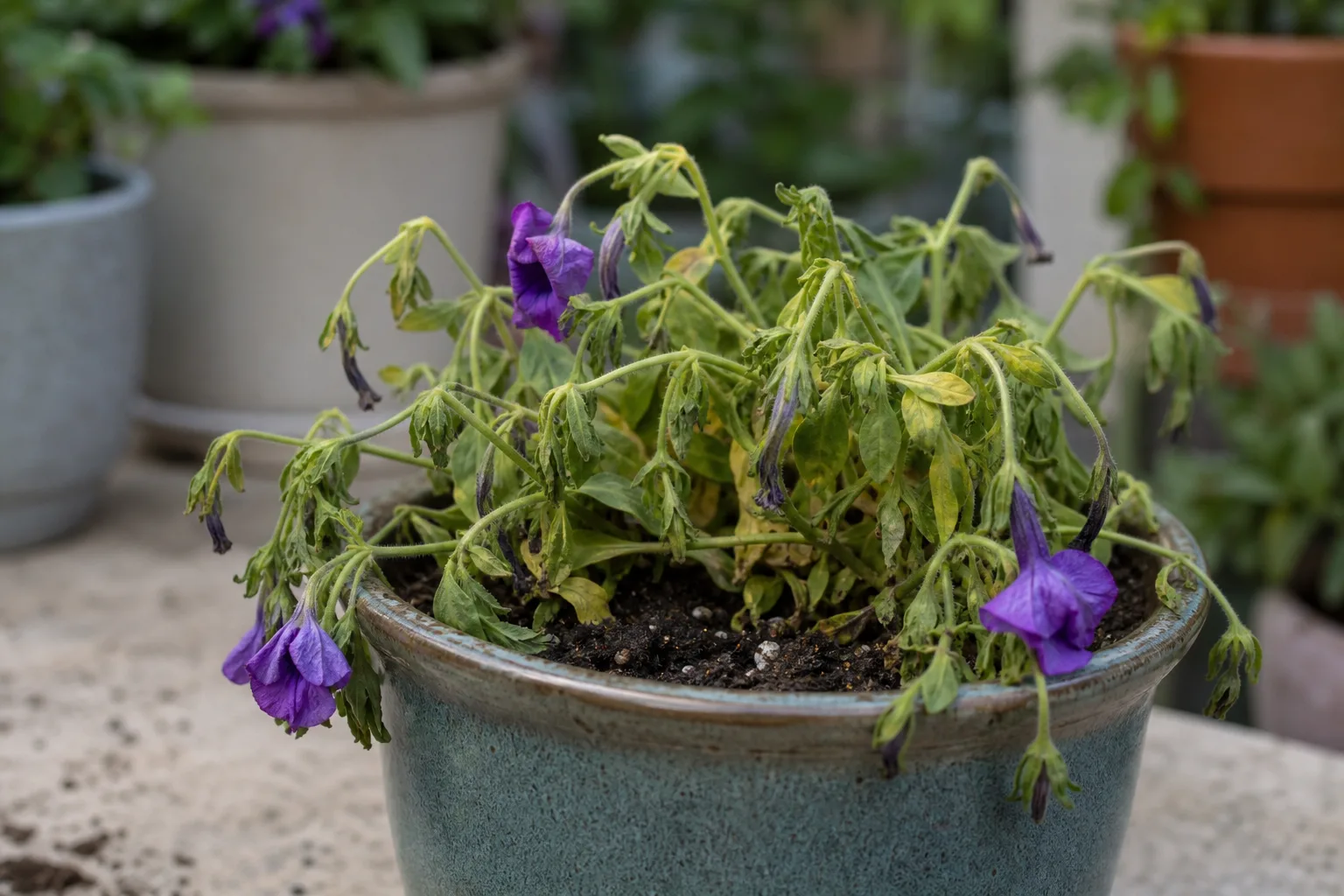
Transplant Shock on Petunia: Causes, Checks & Fixes
This guide covers transplant shock on Petunia. See also the general Transplant Shock guide, watering, and light pages for this plant.
Transplant Shock on Petunia: Causes, Checks & Fixes
Quick answer
Transplant shock on petunia shows up as sudden wilting right after planting or Petunia repotting guide-often within the first day-while stems usually stay firm. The cause is a mismatch between what the roots can supply and what leaves lose to sun and wind. Greenhouse-grown flats and nursery packs go from protected humidity to full sun on a deck or window box in one move; root hairs broken during handling cannot pull water fast enough until new roots grow.
First step: water the plant thoroughly before you move it, water again immediately after planting until it drains from the bottom, and give light shade for two to three days if the weather is hot, windy, or cloudless. Do not fertilize, do not repot again, and do not keep the mix waterlogged while you wait for recovery.
What transplant shock looks like on Petunia
On petunias, shock is usually obvious because timing is tight-you just planted, moved a basket, or repotted into a decorative container.
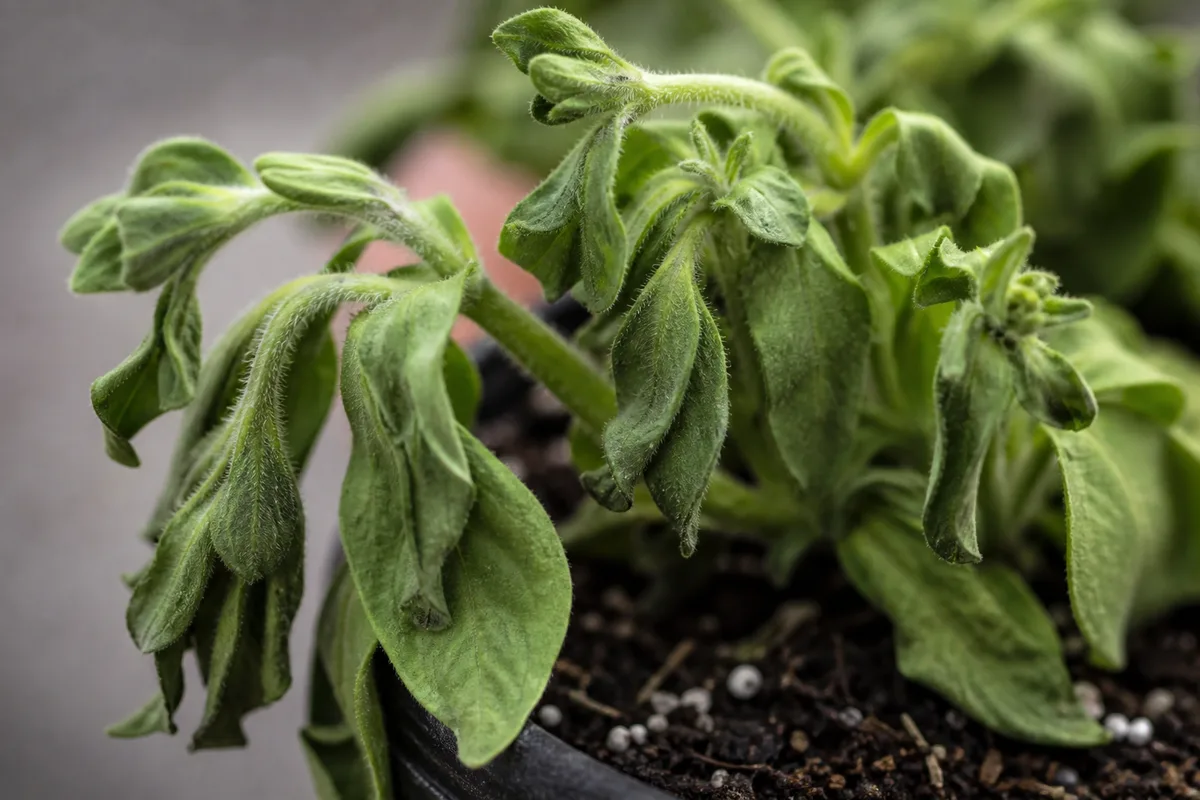
Transplant Shock symptoms on Petunia - compare with healthy tissue on the same plant.
Typical signs:
- Whole plant or trailing stems go limp within hours to two days of transplanting.
- Leaves and open flowers droop but stems feel firm, not mushy at the base.
- Older leaves wilt first; new tips may still look green.
- Mix is moist at 2 cm depth-not bone dry, not swampy.
- Plant perks up partially overnight if shaded, then droops again in midday sun before roots catch up.
What damaged tissue will not do: Wilted leaves rarely return to their pre-transplant posture. Flowers that hang limp often fade faster. Recovery means new firm growth and stopped spread of wilt, not perfect old leaves.
Petunias in hanging baskets and small pots show shock faster than in-ground plantings because roots occupy a tiny volume and containers dry-and stress-more quickly.
Why Petunia gets transplant shock
Petunia (Petunia × atkinsiana, garden petunia) is a fast-growing warm-season annual built for full sun and continuous bloom. That growth rate depends on a dense mat of fine feeder roots-exactly what gets torn when you slide a plant out of a cell pack, tease a root ball, or shift a basket to a sunnier rail.
Root disturbance. Nursery practice of loosening roots encourages branching, but the immediate effect is reduced water uptake. Until new white root tips appear, the plant runs a water deficit even when soil is moist.
Greenhouse-to-outdoor jump. Store-bought petunias often grew under steady temperature, high humidity, and filtered light. Placing them in six or more hours of direct sun and open wind without acclimation forces leaves to transpire faster than damaged roots can replace moisture.
Wrong timing. Planting before soil warms to about 60°F (15°C) or before frost passes adds cold stress on top of root shock. Petunias are tender annuals in most climates and stall when roots are too cold to grow.
Repotting into oversized or heavy mix. Moving a flat petunia into a large decorative pot with dense, water-holding soil can leave roots in a wet outer ring while the old root ball dries-mimicking drought and rot at the same time.
Stacked stress. Pinching, hard pruning, feeding, and transplanting the same afternoon multiplies shock. Petunias recover from one insult at a time more reliably than from four.
How to confirm the cause
Link symptoms to a recent move, then rule out lookalikes:
- Timeline - Did wilt begin within 48 hours of planting, repotting, or moving the pot to a much sunnier spot? Shock fits that window.
- Stem base - Press the crown. Firm tissue supports shock; soft, discolored stems suggest rot or cold damage.
- Soil moisture at 2 cm - Evenly moist with firm stems = shock likely. Bone dry = underwatering on Petunia may dominate. Wet for days with yellow lower leaves = suspect rot, not simple shock.
- Pot weight and drainage - Water should exit drainage holes after a soak. A pot that stays heavy and sour-smelling is a rot check, not a shade fix.
- Pests - No sticky residue, holes, or insect clusters on undersides. Aphids and whiteflies cause wilt-like droop but leave honeydew or visible colonies.
- Weather - Night temperatures below 5°C (41°F) after planting point to cold injury. Midday wilt on a hot sunny day right after transplant fits shock plus heat pull.
If the plant was not moved and soil has not changed, look elsewhere-transplant shock does not appear without a transplant.
First fix for Petunia
Water thoroughly at the base, then provide temporary light shade for two to three days in hot or windy weather.
Morning is best for the recovery soak: wet the root zone until water runs freely from drainage holes, then move the pot or stake a sheet, shade cloth, or leafy branch screen so the plant gets bright light without direct midday sun. University of Minnesota Extension recommends exactly this kind of protection when weather is hot or windy at transplant time.
Hold all fertilizer, pest sprays except plain water rinses, and second repots until you see perky new growth for several days. One stable environment beats a stack of “boosters.”
Step-by-step recovery
Once the first soak and shade are in place, work through these steps in order:
- Keep moisture steady, not soggy - Check the top 2 cm daily. Water at the base when dry; in heat, small baskets may need daily drinks. Never let the pot sit in a full saucer.
- Maintain shade only as long as needed - After two to three days, pull shade back for morning sun, then full sun if stems stay firm. Petunias need at least five or six hours of good sunlight long term-shade is a bridge, not a lifestyle.
- Remove spent blooms, not living tissue - Deadhead limp flowers to redirect energy. Avoid cutting back more than one-quarter of the plant during shock week.
- Optional flower pinch on new transplants - Nebraska Extension notes that removing flowers on newly planted annuals like petunia helps roots establish before bloom. Skip this if the plant is already severely wilted-you want leaves, not more pruning stress.
- Resume feeding after stability - Wait until new growth looks normal for one to two weeks, then use a balanced liquid feed at normal container rates. Feeding stressed roots can burn tender tissue.
- Watch basket weight in heat - Trailing and Wave-type petunias use water quickly in full sun. A shock-recovering plant still dies if the mix goes completely dry one afternoon.
Recovery timeline
First 24 hours: Expect limp appearance. Firm stems and moist-not flooded-soil are good signs.
Days 2–5: Most container petunias show visible perk-up with shade and steady watering. New root tips often form in this window.
Days 5–10: Normal Petunia watering guide returns. Old wilted leaves may stay curled; focus on new buds and side shoots.
Beyond 10 days with continued decline: Shock is unlikely the main problem-inspect for root rot on Petunia, chronic underwatering, or virus mottling.
Damaged flowers and leaves do not “un-wilt.” Success means firm stems, fresh green tips, and resumed blooming within two to three weeks in cool-season growing weather.
Lookalike symptoms
- Underwatering - Pot light, top 2 cm dry, recovery within hours of one deep soak. No recent transplant required.
- overwatering on Petunia / root rot - Wet heavy mix, yellow lower leaves, sour smell, mushy roots when inspected. Wilt worsens after watering.
- Cold damage - Planted too early; blackened, water-soaked tissue after frost. Does not improve with shade alone-may need replacement.
- Heat stress without transplant - Afternoon wilt on established plants with moist soil; firms overnight. No recent root disturbance.
- Aphids or whiteflies - Sticky leaves, visible insects, mottled virus patterns over weeks-not sudden post-planting wilt alone.
What not to do
Do not drench daily on autopilot-soggy mix during shock invites Phytophthora root rot on petunias already weakened by root damage. Do not move the pot sun to shade to sun every day; pick one recovery spot.
Avoid immediate high-nitrogen fertilizer or major pruning during the first week. Skip repotting again unless the original mix is clearly wrong (pure garden clay, no drainage holes).
Do not plant greenhouse flats straight into blazing afternoon sun without hardening off or temporary shade-that is the most common preventable trigger.
How to prevent transplant shock next time
Harden off before planting. Over seven to ten days, move petunias from shade to longer sun exposure and outdoor wind, watering when the surface dries and bringing flats inside if frost threatens.
Plant at the right moment. Wait until frost danger passes and soil warms-about 60°F for garden beds. Set plants out in the evening or on a cloudy day so they settle before harsh midday sun.
Prepare the hole or pot. Use light, well-draining potting mix, tease circling roots gently, plant at the same depth as the nursery pot, and water until drainage runs clear.
Shade hot transplants briefly. Even hardened plants benefit from midday protection for a few days when a heat spike hits right after planting.
Match petunia type to container. Spreading Wave and Supertunia types need more frequent water and feed than upright multifloras-plan basket checks accordingly before shock becomes drought.
When to worry
Escalate if wilt does not improve after five to seven days of steady care, stems soften at the soil line, or yellowing spreads on wet mix. Replace plants with collapsed crowns after freeze exposure.
A petunia that perks only when shaded but collapses in full sun after two weeks may lack root mass-check whether the root ball never spread into surrounding mix (common when teasing was skipped in dense peat).
Conclusion
Transplant shock on petunia is a temporary root–water imbalance, not a mystery disease. Confirm it with recent planting, firm stems, and moist-but-drained soil. Fix it with one thorough soak, short shade in hot weather, and stable moisture while feeder roots rebuild. Harden off next season’s flats, plant on cloudy evenings, and save fertilizer until the plant looks alive again-petunias bounce back fast when the first week stays boring.
When to use this page vs other Petunia guides
- Petunia watering guide - Use for routine moisture checks before assuming transplant shock is the main issue.
- Petunia problems hub - Browse all 40 common issues on this species.
- Wilting on Petunia - Different entry point when symptoms overlap with transplant shock.