Flowers Turning Brown on Petunia: Causes, Checks & Fixes
Quick answer
Brown petunia flowers usually mean Botrytis gray mold on wet petals or spent blooms that were not deadheaded. First step: pick off every brown flower and water at the base only-never overhead.
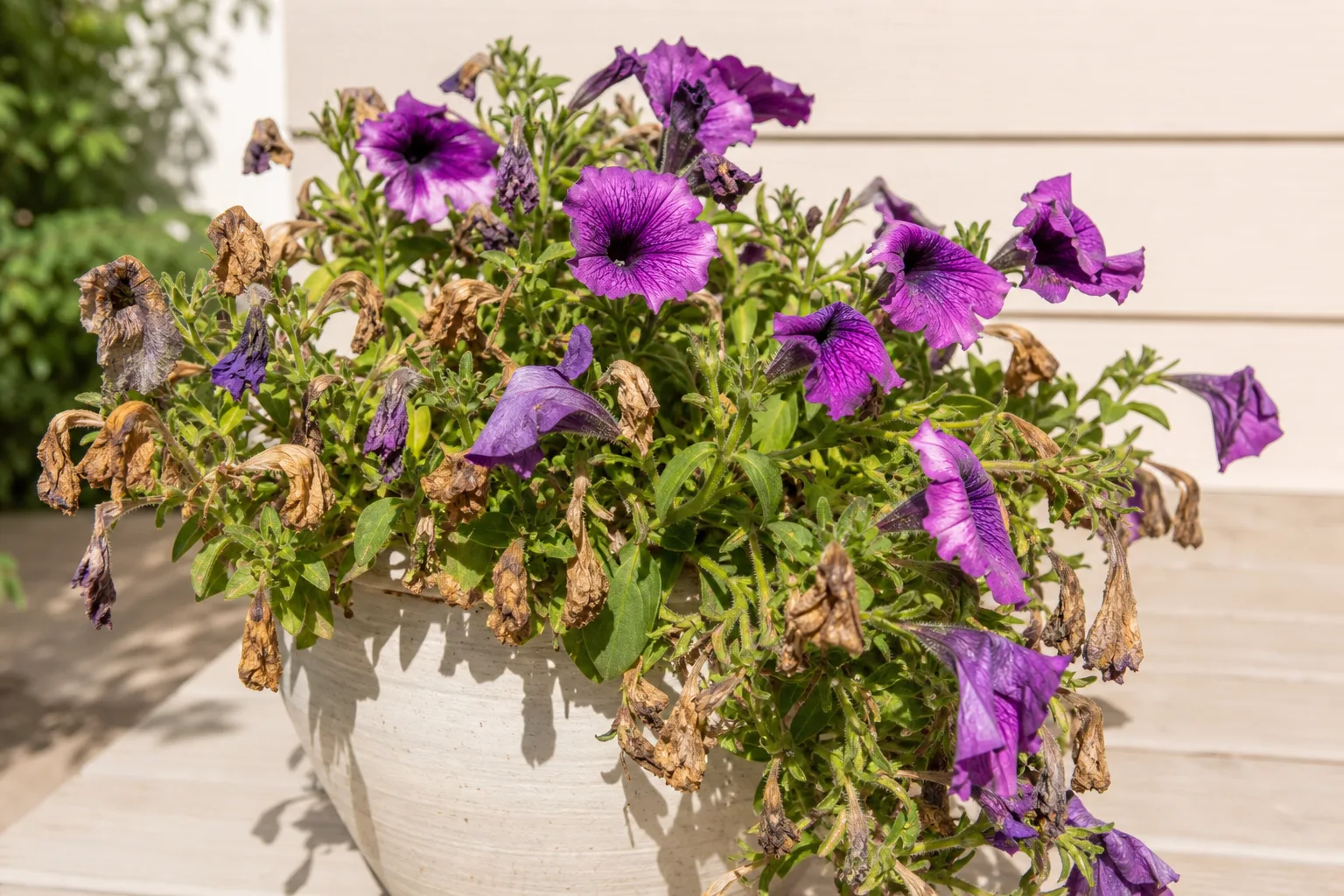
Flowers Turning Brown on Petunia: Causes, Checks & Fixes
This guide covers flowers turning brown on Petunia. See also the general Flowers Turning Brown guide, watering, and light pages for this plant.
Flowers Turning Brown on Petunia: Causes, Checks & Fixes
Quick answer
Brown flowers on petunia are usually Botrytis cinerea gray mold on wet petals or simply spent blooms left on trailing stems. Gray mold shows water-soaked brown tissue and fuzzy olive-gray spores; aging flowers turn dry and papery brown without mold.
First step: pick off every brown flower and any wet, moldy petals touching healthy buds. Do not mist blooms or overhead-water until you know whether the tissue is wet disease or dry senescence.
Petunias hold old flowers on long trailing stems-especially Wave and spreading types-so brown blooms often mean deadheading was skipped, not that the plant is dying. When humidity, rain, or overhead watering keeps petals damp overnight, Botrytis colonizes those senescent flowers first and spreads to fresh tissue below.
What brown flowers look like on Petunia
On petunias, brown flowers fall into three common patterns:
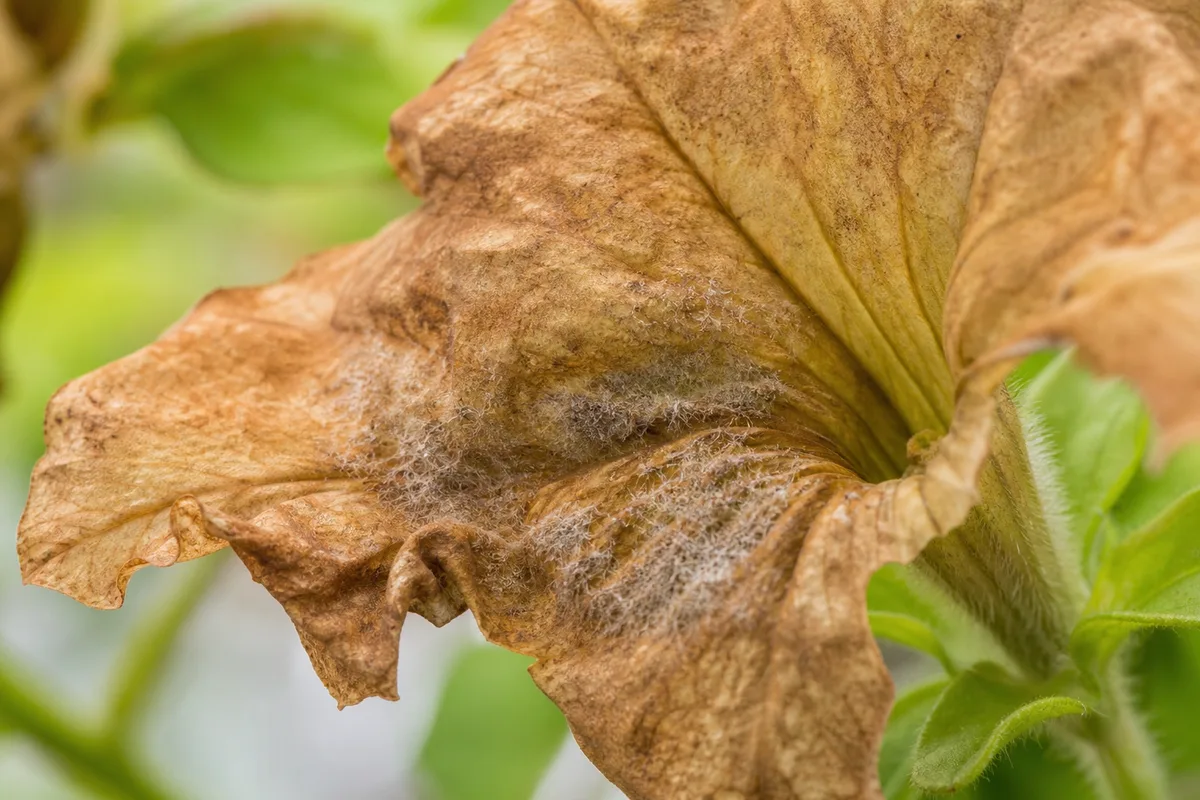
Flowers Turning Brown symptoms on Petunia - compare with healthy tissue on the same plant.
Botrytis gray mold - Senescent flowers develop small translucent or necrotic spots that enlarge into tan or brown patches. Petals feel soft and water-soaked, not crisp. Under humid conditions, olive-brown or gray fuzzy sporulation appears on infected petals and fallen bloom debris. Infected floral tissue that drops onto leaves can start a leaf blight on crowded baskets.
Natural senescence - Individual blooms last a few days to a week depending on heat and cultivar. Old flowers shrink, fade, and turn papery brown while staying dry. You see this on the oldest blooms at stem tips while new buds below still look plump and colored. Large-flowered and double types need deadheading to improve appearance and bloom production; many small-flowered cultivars shed spent blooms on their own.
Budworm and physical damage - Tobacco budworm larvae feed on buds, petals, and developing seed pods. Open flowers look ragged or tattered with irregular brown edges-not uniformly water-soaked. Small holes in buds, dark caterpillar droppings (frass) on leaves near damaged blooms, and buds that fail to open are strong pest clues.
Less common but worth separating: heat and drought fade browns flowers quickly while leaves wilt midday and soil feels light and dry. Petal blight in rainy weather is the field term Clemson uses for Botrytis-type petal spotting when humidity is very high.
Why Petunia flowers turn brown
Petunias bloom heavily from spring until frost on fast-growing trailing or mounded stems. That growth habit creates the conditions brown flowers thrive in.
Wet petals and high humidity - Botrytis cinerea colonizes senescent, dead, and wounded plant parts before attacking healthy tissue. Flower petals are most susceptible at any stage. Overhead watering, evening irrigation, rainy weeks, and crowded hanging baskets keep interior blooms damp-the exact setup NC State describes for gray mold on dead flowers spreading to younger tissue in contact with senescent blooms.
Skipped deadheading on trailing types - Spreading petunias produce flowers along entire stem lengths. Spent brown blooms stay attached, touch buds below, and hold moisture in the canopy. Grandiflora types with large heavy blossoms are especially prone to damage and rot during hot, humid summers when old flowers are not removed.
Overhead culture in humid porches - Petunias need sun and airflow. Covered patios with poor ventilation trap humidity above 85%, the threshold where Botrytis blight develops reliably. Watering foliage and flowers-against standard petunia advice to avoid wetting foliage and flowers when watering-loads petals with free moisture that does not dry before night.
Tobacco budworm pressure - Petunia is a primary host. Larvae tunnel into buds or chew opened petals at night, leaving torn brown tissue that can be mistaken for rot. Two or more generations per year mean damage peaks mid-summer when bloom volume is highest.
Heat-linked fade - Container petunias in Petunia light guide transpire heavily. When soil dries completely on hot afternoons, open flowers brown and collapse within a day-often with wilting and crispy leaf edges. This is stress fade, not fungal mold; petals are dry, and roots are the issue.
How to confirm the cause
Work through these checks before spraying fungicide or Petunia repotting guide:
- Touch the brown petals - Soft and water-soaked suggests Botrytis; dry and papery suggests age or drought fade.
- Look for gray fuzz - Olive-brown or gray mold on petals or fallen bloom debris confirms Botrytis over simple senescence.
- Note bloom position - Only oldest flowers brown while new buds stay clean points to deadheading need. New buds browning before opening suggests active disease or budworm.
- Check recent weather and watering - Several humid or rainy days plus overhead watering strongly favor gray mold.
- Inspect at dusk for budworm - Look for small holes in buds, ragged petal edges, and frass pellets on leaves under damaged flowers.
- Probe soil moisture - Dry, light pots with midday wilt suggest drought fade; heavy wet pots with mold on blooms suggest wet culture feeding Botrytis.
- Smell and stem check - Sour rot smell or tan water-soaked stem lesions mean disease is moving past flowers-escalate beyond deadheading alone.
If brown flowers are dry, limited to old blooms, and new flowers open clean after deadheading, you have confirmed routine senescence-not an infection requiring chemical treatment.
First fix for Petunia
Remove every brown flower, wet moldy petal, and fallen bloom debris from the plant and pot surface.
Pinch or snip spent blooms back to the first leaf below the flower. Bag and discard moldy tissue-do not compost infected petals in humid weather. This single sanitation step cuts the primary Botrytis entry point NC State identifies on dead flowers and stops senescent tissue from touching buds below on trailing stems.
After deadheading, switch to morning base watering only. Aim water at soil, not blooms. Let petals dry before evening. Do not mist flowers to “refresh” baskets on humid porches.
Hold fungicide until you confirm fuzzy mold or spreading wet lesions. Deadheading plus dry culture resolves many home basket cases without sprays.
Step-by-step recovery
Once brown flowers are removed, follow this order based on what you confirmed:
- Sanitize - Clear all brown blooms, moldy petals, and debris on soil and saucers.
- Fix watering - Water at the base when the top 2 cm of mix is dry; never wet petals at night.
- Improve airflow - Space baskets apart, trim dense interior growth that traps moisture, and rotate pots on crowded rails.
- Scout for budworm - At dusk, hand-pick larvae from buds and flowers; check for frass on leaves.
- Address drought if soil was dry - Deep morning water; submerge a dry basket 20–30 minutes if mix repels water, then drain fully.
- Fungicide only if mold persists - After cultural fixes, a labeled garden fungicide may help severe Botrytis on valuable displays; alternate modes of action if you spray repeatedly.
For budworm-confirmed damage, hand removal plus evening Bacillus thuringiensis on surface-feeding young larvae helps early; larvae inside buds need hand-picking or spinosad applied after bee activity ends.
Trim back severely moldy side branches to healthy tissue if lesions sit on stems-sterilize scissors between cuts.
Recovery timeline
Brown petals do not re-green. Judge recovery by new buds and clean open flowers, not repaired old blooms.
After deadheading and dry culture, expect the next wave of blooms within 7–14 days on actively growing summer petunias in full sun. Mild Botrytis limited to spent flowers often stops spreading within a few days once debris is gone and petals stay dry overnight.
Budworm-damaged plants resume full color once larvae are removed; new buds may take one to two weeks to replace chewed flowers. Severe stem Botrytis with water-soaked lesions can stall blooming for several weeks or kill branches-replace plants if mold keeps returning on the same wet basket despite sanitation.
Heat-faded flowers recover after soil is rehydrated; the next morning’s blooms should hold color if wilting stopped.
Causes to rule out
Brown flowers overlap with several other petunia problems:
- Faded flowers (drought) - Blooms lose color before turning brown; soil is dry and pot feels light. No gray mold on petals.
- Bud drop - Buds abort before opening, often from shade, budworm, or stress-not always brown petals on open flowers.
- Powdery mildew - White fungal growth on leaves; flower petals are not the first target.
- Virus (INSV/TMV) - Penn State lists virus etches on leaves with dark halos; flower color break or distortion rather than uniform brown wet rot.
- root rot on Petunia - Whole plant wilts with wet soil; flowers fade as a secondary sign. Unpot to inspect roots if wilting accompanies brown blooms on wet culture.
Uniform dry brown on oldest blooms only, with firm stems and clean new buds, is senescence-not disease.
What not to do
Do not overhead-water or mist blooms while mold is active. Do not leave spent brown flowers on trailing stems “for pollinators” in humid baskets-they fuel Botrytis. Do not compost moldy petals beside healthy beds in rainy weather.
Avoid spraying broad-spectrum insecticides at midday when bees are active on open petunia flowers. Do not assume every brown petal needs fungicide; dry aged blooms need deadheading only.
Do not fertilize heavily on a mold-stressed plant hoping for more flowers-fix moisture and sanitation first. Do not repot on day one unless soil is waterlogged and roots smell sour; brown flowers alone rarely require repotting.
How to prevent brown flowers next time
Deadhead every two to three days during peak bloom-especially large-flowered, double, and trailing types. Remove blooms before they turn brown and touch buds below.
Water at the base in morning so foliage and flowers stay dry. Empty saucers after watering; do not let baskets sit in standing water through humid weeks.
Choose cultivars suited to your climate - Multiflora and spreading Wave-series types are more resistant to petal blight than large grandiflora blossoms in hot humid summers. Rain-tolerant series like Storm, Celebrity, and Madness bounce back faster after wet weather.
Space for airflow - Maintain greenhouse humidity below 90% and increase spacing applies to porch baskets too: pull crowded pots apart so interior flowers dry after rain.
Scout budworm at dusk during July and August when two or more generations per year peak. Hand-pick early before larvae bore deep into buds.
Match watering to heat - Check hanging baskets morning and afternoon in summer; drought fade browns flowers as quickly as mold when soil dries completely.
Petunia care cross-check
Brown flowers often trace to culture that fights the plant’s basic needs. Petunias want full sun, fast-draining mix, and base watering. A shaded, crowded, overhead-watered basket will brown blooms from mold, fade, or both-even with “correct” fertilizer.
If flowers brown while stems stay leggy and sparse, light may be too low-move pots before chasing disease sprays. If mold appears only on the wet side of a dense trailing basket, trim interior stems so lower buds receive air and sun.
High humidity on flowers is the documented petunia risk from plant-care data; low humidity is rarely the culprit for brown petals.
When to worry
Escalate beyond deadheading when:
- New buds brown before opening and show wet lesions or gray fuzz daily
- Stems develop tan water-soaked patches with fuzzy mold-Botrytis is moving into vascular tissue
- Whole branches collapse while soil stays wet (check for crown issues separately)
- Mold returns within days on the same basket after thorough sanitation-replace mix or the plant
- Budworm frass is heavy and most buds fail to open mid-season
Routine dry brown on a few oldest spent blooms on otherwise healthy trailing stems is normal maintenance-not an emergency.
Conclusion
Brown flowers on petunia are diagnosable at the petal: wet and fuzzy means Botrytis; dry and papery on old blooms means deadhead. Pick off every brown flower first, water at the base in morning, and improve airflow on trailing baskets. Scout for budworm frass when petals look torn rather than soaked. Prevent recurrence with regular deadheading, dry petals overnight, and cultivars that tolerate humid summers-so blooms keep opening clean through the season.
When to use this page vs other Petunia guides
- Petunia watering guide - Use for routine moisture checks before assuming flowers turning brown is the main issue.
- Petunia problems hub - Browse all 40 common issues on this species.