Faded Flowers on Petunia: Causes, Checks & Fixes
Quick answer
Faded petunia flowers usually mean normal bloom aging-each trumpet opens vivid, then dulls over several days. First step: remove spent blooms (including the seed pod base on grandiflora types) or groom stuck faded flowers on trailing Wave baskets. Sudden overnight dulling with wilt points to drought; grey fuzzy petals after wet weather point to botrytis.
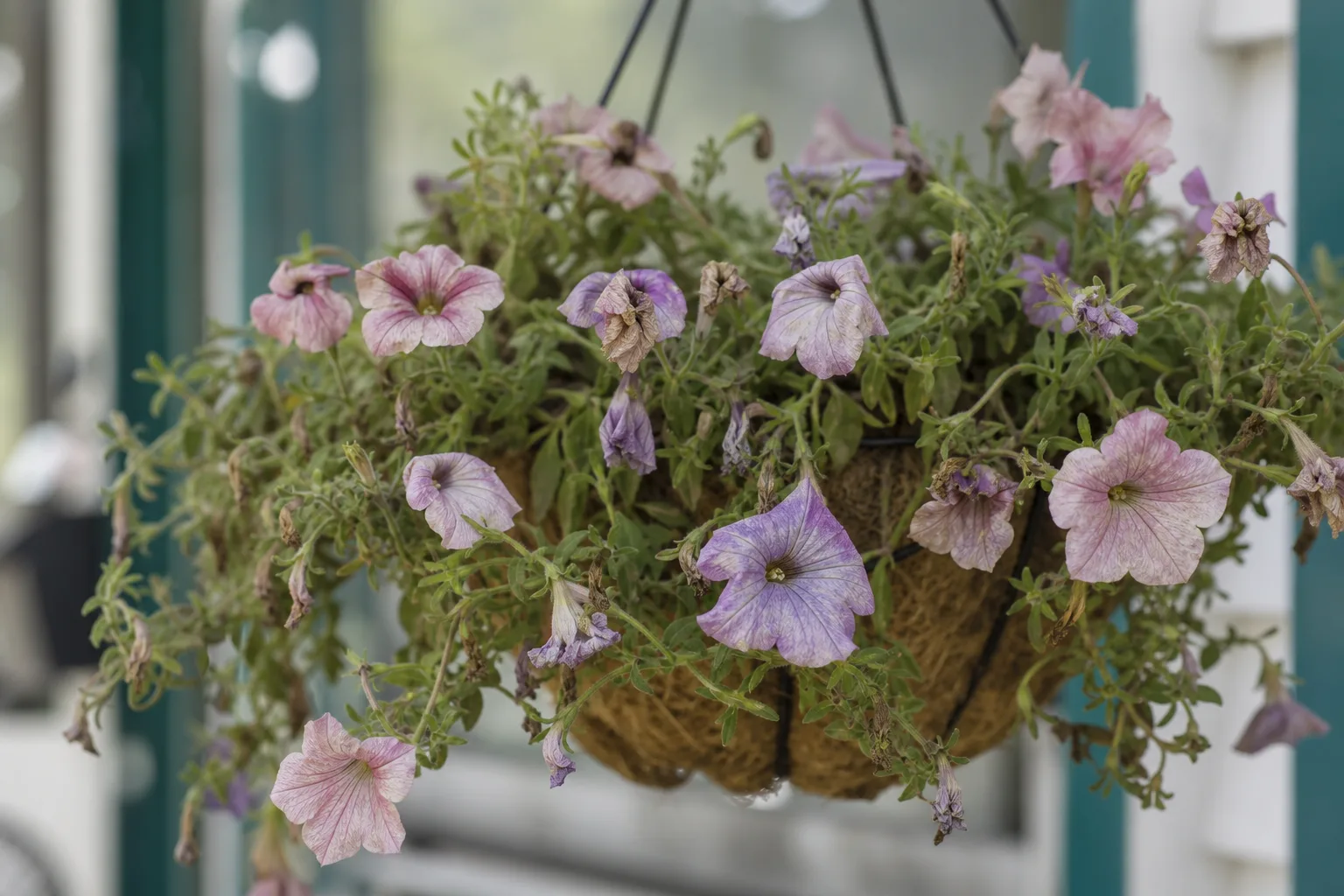
Faded Flowers on Petunia: Causes, Checks & Fixes
This guide covers faded flowers on Petunia. See also the general Faded Flowers guide, watering, and light pages for this plant.
Faded Flowers on Petunia: Causes, Checks & Fixes
Quick answer
Faded flowers on petunia mean dull, washed-out, or pale color-not dry brown papery tissue or wet mushy rot. Each bloom opens vivid, holds for several days depending on heat and cultivar, then loses pigment as it ages. On a healthy plant, only the oldest trumpets at stem tips look faded while newer buds below still show full color. That turnover is how petunias bloom from spring until frost.
First step: identify which fade pattern you have, then groom accordingly. On grandiflora and multiflora types, pinch off spent flowers including the small stem and seed pod below the bloom-seed formation diverts energy from new buds. On Wave, Easy Wave, and Supertunia baskets, deadheading is optional because spreading types are self-cleaning, but removing stuck faded blooms after wet weather keeps trailing displays tidy.
Sudden overnight dulling with limp stems and a light dry pot means drought stress, not routine aging. Grey-brown fuzzy patches on wet petals after humid rain point to botrytis blight on senescent flowers-remove moldy tissue and switch to base watering, not more deadheading alone.
For cultivar deadheading rules and container watering rhythm, start with the petunia overview.
What faded flowers look like on Petunia
Petunias produce trumpet-shaped blooms along upright mounds or long trailing stems. Faded flowers fall into four common patterns on Petunia overview:
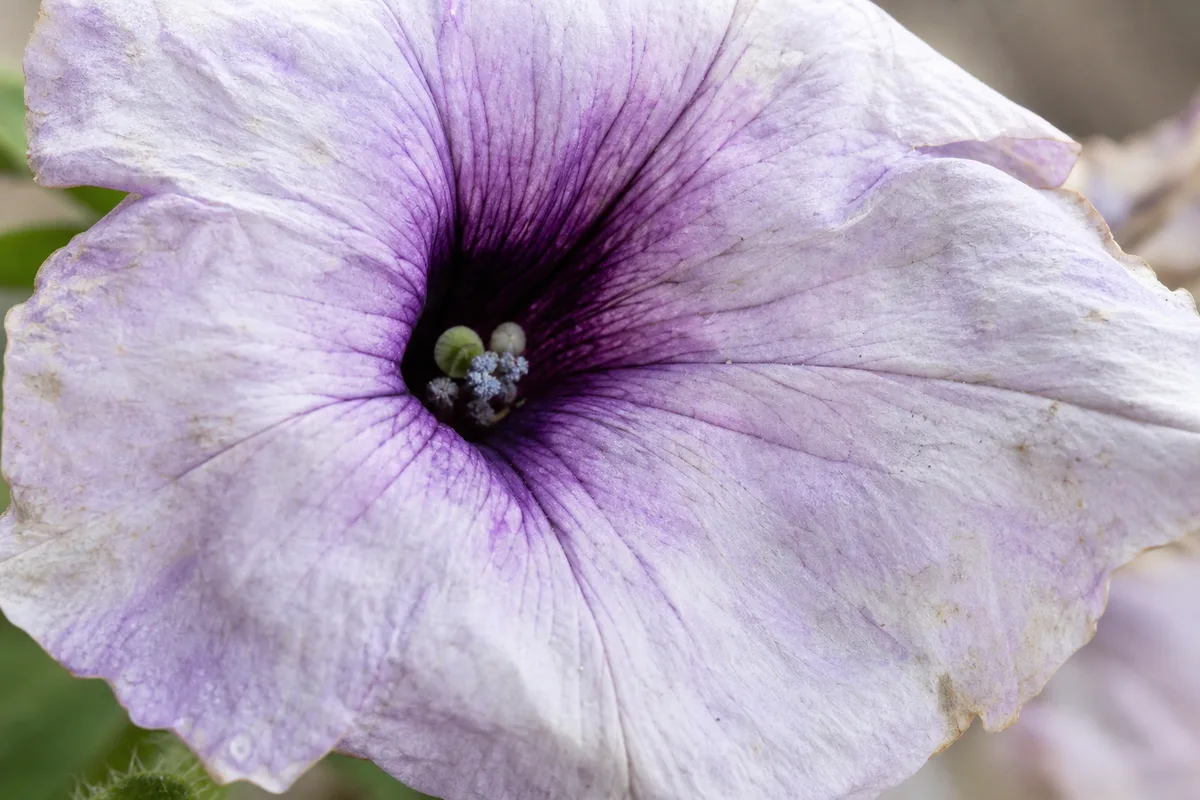
Faded Flowers symptoms on Petunia - compare with healthy tissue on the same plant.
Normal aging (most common):
- Oldest blooms at stem tips dull from vivid color to washed-out pink, purple, white, or bicolor
- Petals thin and feel dry or slightly papery but not water-soaked
- Plant stays turgid; stems firm; new buds below still look plump and brightly colored
- Fading is gradual over several days, not an overnight collapse
Heat and UV cosmetic fade:
- Open trumpets bleach or wash out faster during peak afternoon sun and sustained highs above about 32°C (90°F)
- Plant otherwise healthy-no wilt, no grey mold, no bud abort
- More noticeable on dark-colored cultivars and large-flowered grandiflora types
- New buds opening in morning shade or cooler weather still show full pigment
Drought-linked dulling:
- Flowers fade quickly-often within a day-along with midday wilt and crispy leaf edges
- Pot feels light; top 2–3 cm of mix is bone-dry
- Entire basket may look uniformly dull rather than oldest-only fade
- Recovery after deep watering shows new buds within days if roots are still healthy
Botrytis on wet senescent petals (not simple fade):
- Senescent flowers develop small translucent spots that enlarge into tan or brown patches
- Petals feel soft and water-soaked; olive-brown or grey fuzzy sporulation appears in humid weather
- Often follows rainy spells, overhead evening watering, or crowded baskets with poor airflow
- Spent blooms touching buds below can spread infection-this is disease management, not grooming
Knowing which pattern you see determines whether deadheading, watering, or sanitation is your first move.
Why Petunia flowers fade
Petunias are heavy summer bloomers bred for continuous flower turnover on fast-growing Solanaceae stems. Individual blooms are short-lived by design-each trumpet opens, attracts pollinators, fades, and makes way for the next wave along trailing or mounded growth.
Natural petal senescence. Once a bloom has displayed and pollination proceeds, pigments break down and petals thin. Clemson Extension notes petunias bloom from spring until frost, but each flower lasts only a few days to about a week depending on heat and cultivar. Faded color on the oldest blooms while new buds stay bright is normal success-not plant failure.
Seed-pod formation on non-self-cleaning types. University of Minnesota Extension recommends removing faded flowers including the portion below each bloom where seeds develop. On grandiflora and multiflora bedding petunias, leaving seed pods on the plant slows the next flush. Self-cleaning Wave and Supertunia types shed spent blooms, but stuck flowers after wet weather still clutter trailing stems.
Heat and transpiration stress. Container petunias in Petunia light guide transpire heavily through large bloom surfaces. Intense afternoon UV can bleach open trumpets cosmetically even when soil moisture is adequate. Grandiflora types with large heavy blossoms are especially prone to damage during hot, humid summers-fade accelerates without necessarily meaning drought.
Underwatering in baskets. Hanging baskets and small window boxes dry faster than in-ground beds. When roots cannot supply midday water demand, open flowers dull and wilt before their normal lifespan ends. UMN Extension lists flowers fading quickly alongside mid-morning wilt as drought signs.
Humidity and wet petals. Botrytis cinerea colonizes senescent, dead, and wounded plant parts before attacking healthy tissue. Flower petals are most susceptible at any stage. Overhead watering, evening irrigation, and crowded porch baskets keep senescent petals damp overnight-the setup Clemson describes as petal blight in rainy, humid weather.
Trailing stems holding multiple faded blooms. Wave and spreading types produce flowers along entire stem lengths. Several dull trumpets can hang on long trailers simultaneously before self-cleaning sheds them-baskets look faded overall even when the plant is cycling normally. Midseason stem trimming refreshes the display.
Faded blooms vs lookalike symptoms
Flowers turning brown - Dry papery brown on spent blooms or wet water-soaked brown with grey fuzz means senescence or botrytis, not dull color loss alone. Brown tissue feels crisp (age) or mushy (disease). See flowers turning brown on petunia when brown-not pale-is the main complaint.
Bud drop before open - Green or colored buds abort while still closed, often from heat spikes, boom-bust watering, or budworm. Faded flowers, by definition, opened fully first. Compare bud drop on petunia if unopened buds are falling.
Wilting and drooping - Whole plant collapse with soft stems points to root stress, severe drought, or advanced disease-not cosmetic fade on turgid plants. See wilting on petunia and underwatering when stems go limp with the dull blooms.
Heat stall - During sustained highs, bloom production pauses and open flowers bleach faster even when soil feels moderately moist. That is heat-linked fade, not botrytis. Review heat stress on petunia when baskets stall in July despite regular watering.
Ragged petal edges - Irregular torn brown margins with caterpillar droppings on nearby leaves suggest tobacco budworm chewing-not uniform dulling. Budworm damage is covered in depth on the brown-flowers page.
How to confirm the cause
Work through these checks in order before spraying fungicide or Petunia repotting guide:
- Bloom age pattern - Are only the oldest open trumpets dull while newer buds on the same stem still show vivid color? That confirms normal senescence or heat-accelerated cosmetic fade.
- Cultivar type - Check your plant tag. Large-flowered grandiflora and multiflora types need regular deadheading; many smaller-flowered and spreading cultivars are self-cleaning. Wave, Easy Wave, and Supertunia types may still hold faded blooms on long stems before shedding.
- Stem turgor - Firm green stems with active side buds mean the plant is cycling normally. Limp stems at midday with uniformly dull flowers suggest drought.
- Soil moisture - Push a finger into mix near the basket rim. Bone-dry top 2–3 cm at midday explains premature dulling and wilt. Heavy wet mix with moldy petals suggests wet culture feeding botrytis.
- Petal texture - Dry, thin, evenly dull petals point to age or heat fade. Soft water-soaked tissue with grey fuzz confirms botrytis over simple fading.
- Weather and watering - Several humid or rainy days plus overhead evening watering strongly favor grey mold on senescent petals. Dry hot afternoons accelerate pigment loss without mold.
- Bloom position on trailing types - Faded trumpets clustered at stem tips only, with fresh color at branch points below, is normal turnover on Wave baskets-not whole-plant decline.
If checks one, two, and three pass and new buds still open bright, treat faded heads as routine grooming-not infection.
First fix for Petunia
Match your first action to the fade type you confirmed.
Normal fade on grandiflora or multiflora: Pinch or snip each spent bloom back to the first side branch or leaf set, removing the flower plus the small stem and seed pod below it. UMN Extension calls this deadheading essential for container annuals and useful in beds when practical. One thorough pass on the oldest faded trumpets is enough to start-do not strip every bud on the plant.
Normal fade on Wave or Supertunia baskets: Deadheading is optional. Remove stuck faded blooms that have not dropped after wet weather, and pinch back leggy stems 2.5–5 cm if blooms cluster only at tips. Mississippi State Extension notes spreading types do not require deadheading because blooms drop cleanly-groom for appearance, not survival.
Drought fade: Water deeply at the base until excess drains from the pot. Recheck the next morning-stems should be firm before you deadhead anything. Adjust to the petunia watering rhythm for containers versus in-ground beds.
Botrytis on faded wet petals: Remove every moldy flower and fallen petal debris when plants are dry. Bag and discard infected tissue-do not compost senescent infected petals in humid weather. Switch to morning base watering only so petals dry before evening.
Do not apply fungicide on day one if you have only confirmed normal aging on a turgid plant. Do not fertilize a drought-stressed basket before correcting water.
Step-by-step recovery
After the initial grooming or watering pass:
- Classify every faded trumpet - Sort blooms into normal age, drought, heat cosmetic, or mold before treating the whole basket the same way.
- Deadhead or groom on schedule - Grandiflora and multiflora: every two to three days during peak bloom. Wave types: as needed when stuck faded blooms clutter stems.
- Correct water rhythm - Containers may need water every one to two days in summer heat; in-ground beds often need one deep weekly soak. Use the top 2–3 cm dry test, not a calendar.
- Remove moldy tissue promptly - Cut affected flowers back to healthy stem when dry. Thin crowded interior stems slightly on dense baskets to improve airflow.
- Midseason renewal shear - When trailing displays are mostly faded blooms on long bare stems, trim up to one-third of plant volume and follow with water-soluble fertilizer. Fresh branching and bloom flush follow within about a week.
- Relocate only if light is wrong - Petunias need at least five to six hours of good sunlight; fewer hours produce weak pale new blooms from the start-a placement issue, not spent-head aging.
Recovery timeline
On a healthy plant in full sun, new buds typically open in full color within three to ten days after thorough deadheading or grooming on grandiflora and multiflora types. Wave baskets may show fresh color along trimmed stems within a similar window after a midseason shear.
During extreme heat, individual blooms may still fade quickly after opening-that is normal turnover as long as new trumpets keep forming. Judge recovery by the next generation of buds, not by old petals brightening again.
Botrytis control needs one to two weeks of dry flower surfaces and removed senescent tissue before you see consistently clean new buds. If mold spreads to unopened buds daily despite dry culture, escalate to the brown-flowers disease protocol.
If you groom faithfully but new blooms stay small, pale, or sparse for more than two weeks, the limiting factor is usually sun, drought cycles, heat stall, or an aging leggy stand-not incomplete deadheading.
Mistakes to avoid
Do not panic and spray fungicide when only oldest blooms are fading on an otherwise turgid petunia. Routine grooming solves most cases.
Do not leave seed pods on grandiflora baskets if continuous color is the goal-seed formation diverts energy from new flowers.
Do not overhead-water in humid evenings when faded senescent petals act as botrytis entry points. Clemson recommends avoiding wetting foliage and flowers when watering.
Do not assume every dull bloom on a Wave basket means the plant needs deadheading-self-cleaning types shed on their own unless blooms are stuck after rain.
Do not yank petals and leave long naked stem stubs on multiflora types. Remove the pod base cleanly to the first side branch.
Do not confuse dull pale fade with brown dry papery senescence or wet mold-each needs a different first fix.
How to prevent faded displays from slowing bloom
Groom by cultivar type. Deadhead grandiflora and multiflora every two to three days during peak summer per overview deadheading guidance. Groom Wave and Supertunia baskets when stuck faded blooms accumulate after wet spells; pinch leggy stems per pruning guidance.
Water at the base in morning. Let petals dry before evening. Container baskets in full sun may need daily checks; spreading types transpire heavily and dry faster than upright bedding plantings.
Maintain full sun and airflow. Petunias in shade produce fewer flowers. Space baskets so trailing stems do not trap humidity against walls or railings.
Midseason renewal. When displays are long strings of faded trumpets with little fresh color at branch points, shear one-third of volume and feed-this refreshes bloom flush better than chasing every faded petal individually on a tired July basket.
Choose cultivar for site. Heat-tolerant Wave and Supertunia series hold color better in exposed summer baskets than large-flowered grandiflora types in reflected afternoon heat.
When to worry
Routine dulling on the oldest blooms while new buds open bright is not urgent. Groom and continue.
Escalate when:
- Grey mold spreads through wet flowers daily and touches unopened buds
- Tan water-soaked stem lesions appear below infected blooms
- Drought fade pairs with daily wilt despite your watering attempts-roots may be failing
- Every new trumpet opens dull despite full sun and steady grooming for two or more weeks
- Entire basket branches collapse while soil stays wet-botrytis may have moved past senescent petals
Those patterns mean disease, root stress, or placement problems-not the normal color cycle of a healthy petunia. Remove badly infected tissue when dry, improve base watering and airflow, and consider midseason renewal or replacement rather than waiting for a leggy basket to recover on its own.
Related petunia problems
- Petunia overview - cultivar types, deadheading by series, and container culture
- Petunia watering - basket dry-down rhythm and drought signs
- Petunia pruning - midseason shear and leggy stem renewal
- Flowers turning brown - botrytis, budworm, and dry papery senescence
- Underwatering - when fade pairs with wilt and light pots
- Heat stress - bloom stall and cosmetic bleach in peak summer
- Bud drop - when buds abort before they ever open
Conclusion
Faded petunia flowers are usually the natural end of each trumpet’s short show-not a sign your basket is dying. Scan the plant, note whether only oldest blooms are dull while new buds stay vivid, then groom spent flowers the way your cultivar type requires. Grandiflora and multiflora need pod-base deadheading; Wave types need occasional tidying and midseason trims more than daily pinching. Keep containers on a steady water rhythm, water at the base so petals dry overnight, and separate dull pale aging from wet grey mold or drought collapse. That path keeps petunias replacing yesterday’s faded trumpets with tomorrow’s fresh color through frost.
When to use this page vs other Petunia guides
- Petunia watering guide - Use for routine moisture checks before assuming faded flowers is the main issue.
- Petunia problems hub - Browse all 40 common issues on this species.