Slugs and Snails on Petunia: Causes, Checks & Fixes
Quick answer
On petunia, slugs and snails usually show up as overnight ragged holes plus silvery slime trails. First fix: hand-pick at dusk, then place iron phosphate bait on soil travel routes around baskets or beds.
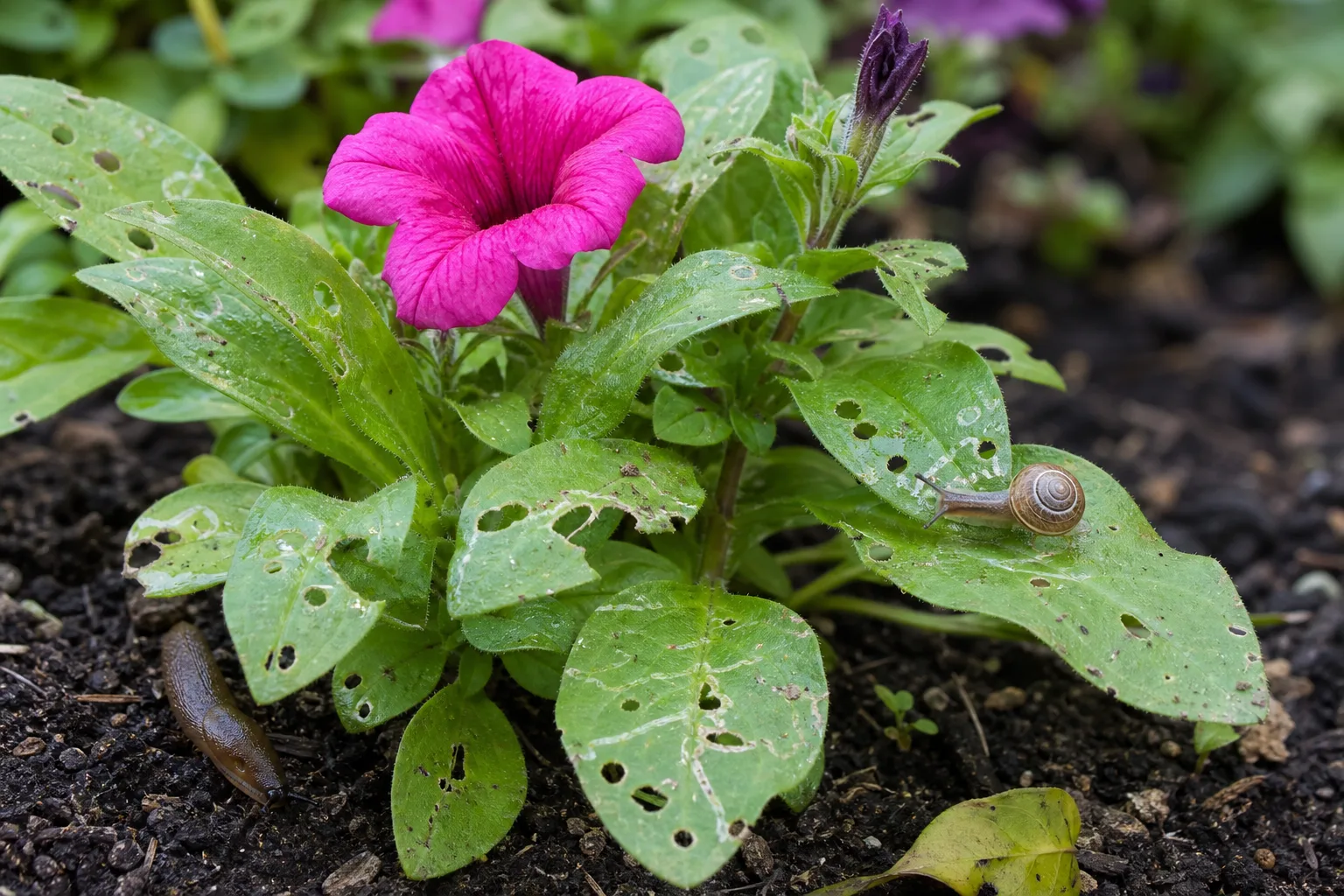
Slugs and Snails on Petunia: Causes, Checks & Fixes
This guide covers slugs and snails on Petunia. See also the general Slugs and Snails guide, watering, and light pages for this plant.
Slugs and Snails on Petunia: Causes, Checks & Fixes
Quick answer
On Petunia x hybrida, slug and snail damage usually appears overnight as ragged flower and leaf holes plus silvery mucus trails on pots, decking, mulch, or pavers. First fix: hand-pick at dusk with a flashlight, then place iron phosphate bait on soil travel routes around containers and bed edges, not on foliage. This sequence confirms the diagnosis and cuts feeding faster than bait alone.
Why petunias get slugs and snails
Petunias attract slugs in the same conditions that help lush spring growth: cool temperatures, steady moisture, and dense low growth. Petunia foliage is soft and somewhat sticky, and trailing stems can rest against damp mulch, saucers, or deck boards, creating easy feeding routes.
Timing also matters. Slugs and snails are active from spring through frost, which overlaps with petunia planting and early bloom flush in many gardens. Damage may ease during hot dry periods, then return in rainy weather.
Window boxes and hanging baskets add microclimate risk. Wet saucers, stacked spare pots, shaded corners near rails, and matted spent blooms all hold moisture long enough for repeated nighttime feeding.
For full growing-condition context, cross-check your setup in the petunia care overview and petunia watering guide.
Common culprits in home landscapes
You do not need perfect species identification to begin control, but in many landscapes the gray garden slug (Deroceras reticulatum) and brown garden snail (Cornu aspersum) are common chewing pests. Knowing this helps explain why damage spikes overnight and clusters in damp shelter zones.
What slug damage looks like on petunia
Slug and snail feeding usually looks sudden and irregular rather than gradual:
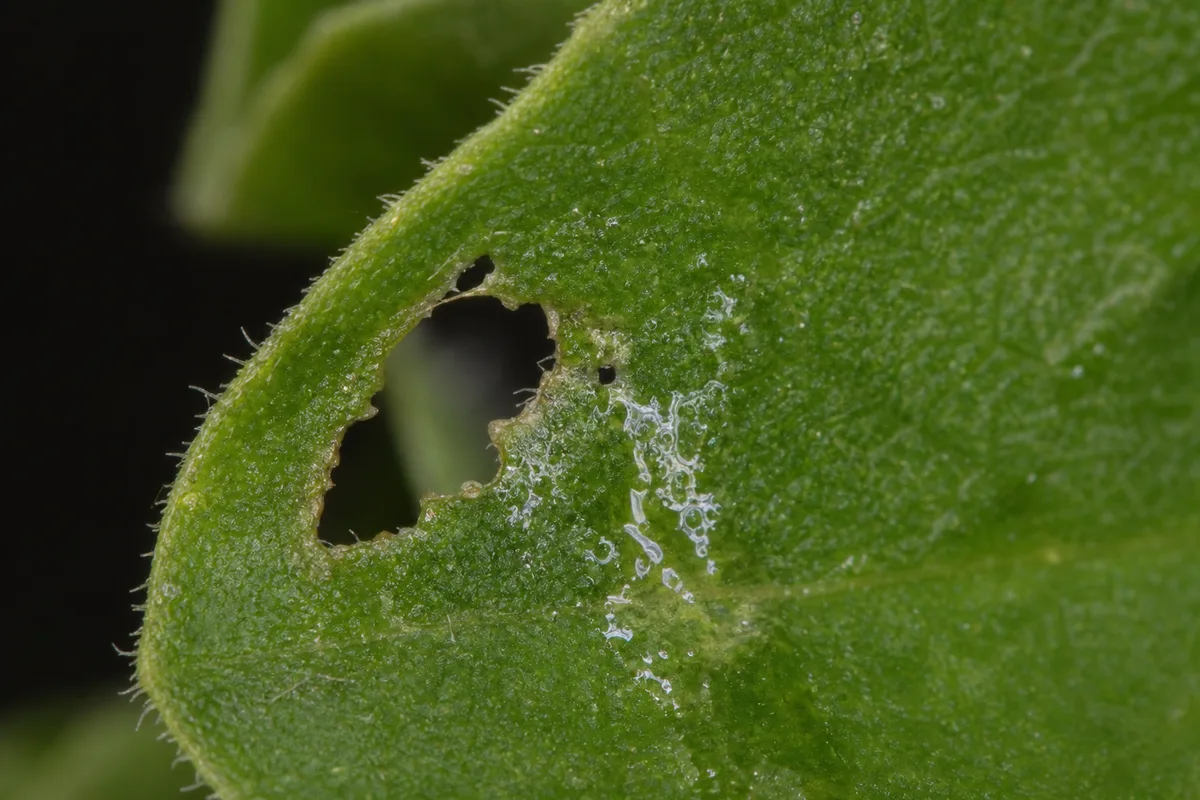
Slugs and Snails symptoms on Petunia - compare with healthy tissue on the same plant.
- Ragged holes in leaves, often on lower or outer stems of trailing plants.
- Chewed petals or buds that open torn.
- Silvery slime trails on plant surfaces, rims, stones, or boards.
- Fresh transplants or seedlings stripped down quickly in severe outbreaks.
- Damage concentrated where stems touch damp mulch or container sides.
Unlike drought stress, this type of chewing can show up in one night on otherwise green plants. Unlike budworm, slugs do not leave black frass pellets in buds.
Confirm slugs vs lookalikes
Use a short diagnostic pass before adding treatments:
- Morning trail check - Follow slime marks from damaged tissue to hiding sites.
- Dusk flashlight check - Slugs and snails feed mostly at night, so active feeding is easiest to catch after sunset.
- Lift shelter - Check under pots, boards, and debris within about 3 feet.
- Open one damaged bud - A larva plus black frass points to tobacco budworm, not slugs.
If diagnosis is still uncertain, compare symptoms in holes in petunia leaves and, when budworm signs are present, move directly to petunia caterpillars.
Lookalike comparison table
| Problem | Typical sign on petunia | Fast differentiator |
|---|---|---|
| Slugs or snails | Ragged holes and slime | Dusk activity plus slime trails |
| Tobacco budworm | Bud and flower chewing | Black frass and larvae in buds |
| Botrytis blight | Brown, water-soaked petals, gray mold | No slime, disease pattern in wet blooms |
| Deer/rabbit browsing | Larger torn tissue or clipped stems | Broader bite pattern and plant height clues |
First fix: hand-pick tonight, then bait routes
Hand-picking first gives immediate reduction and proves active pressure. After that, scatter iron phosphate bait according to label directions around container bases, edging, and travel lines. Keep bait off petals and leaves.
For patio or family spaces, iron phosphate products are generally safer around pets and wildlife than metaldehyde options, but placement and rate must still follow the product label.
On baskets and porch rails, copper barriers can reduce climbing if the strip is continuous and clean. Tarnished or broken sections reduce effectiveness.
Escalation if feeding continues after two weeks
If you still see fresh chewing after about two weeks of hand-picking plus route baiting, assume habitat is sustaining the population:
- Remove constant moisture sources (always-wet saucers, leaks, dense wet mulch against stems).
- Tighten exclusion (clean staging area plus intact copper barrier on high-risk containers).
- Re-check for mixed pests before adding insect products.
Beer traps can catch some slugs, but they attract from only a short range and need frequent refill, so treat them as a minor add-on, not the core plan.
What not to do
Do not place bait on foliage, and do not assume every hole is slug damage. Insecticidal soap, neem, and horticultural oils are for insect targets, not mollusks. Avoid overhead watering to “wash slugs off”; wet flowers increase disease pressure while damp lower zones remain slug-friendly.
If weather is very humid and petals stay wet, also review petunia flower rot and blight guidance so you are not managing only one side of a combined problem.
Recovery timeline
Chewed tissue does not repair itself. Judge progress by clean new growth: fewer fresh holes, cleaner buds, and stable flowering over one to two weeks. Established plants usually recover if crowns and roots remain healthy.
Seedlings or brand-new transplants that are stripped to stubs may fail to rebound. In those cases, replanting with immediate route protection is often faster than waiting.
How to prevent slug and snail damage next season
Prevention works best when you start before visible damage:
- Raise baskets so trailing stems do not lie on damp surfaces.
- Water at the base in the morning to reduce overnight moisture.
- Remove shelter under and behind containers.
- Place iron phosphate along routes when setting out spring petunias.
- Deadhead and trim to prevent dense, wet mats at the base.
Petunias perform best with full sun, generally 6+ hours, and sunnier, drier surfaces usually reduce slug pressure compared with shaded damp edges.
When to worry
Cosmetic holes on a few leaves are frustrating but manageable. Act urgently if seedlings are stripped, stems are severed near the base, or new buds disappear nightly. That level of pressure can stall bloom cycles for weeks.
If two weeks of good execution still leaves active trails and new chewing, escalate by fixing moisture sources first and consulting local extension guidance for persistent outbreaks.
When to use this page vs other Petunia guides
- Petunia watering guide - Use for routine moisture checks before assuming slugs and snails is the main issue.
- Petunia problems hub - Browse all 40 common issues on this species.