Holes in Leaves on Petunia: Causes, Checks & Fixes
Quick answer
Holes in petunia leaves are almost always chew damage from tobacco budworm caterpillars or slugs-not disease. Scout at dusk for frass pellets or slime trails, then hand-pick caterpillars or apply iron phosphate bait around container bases.
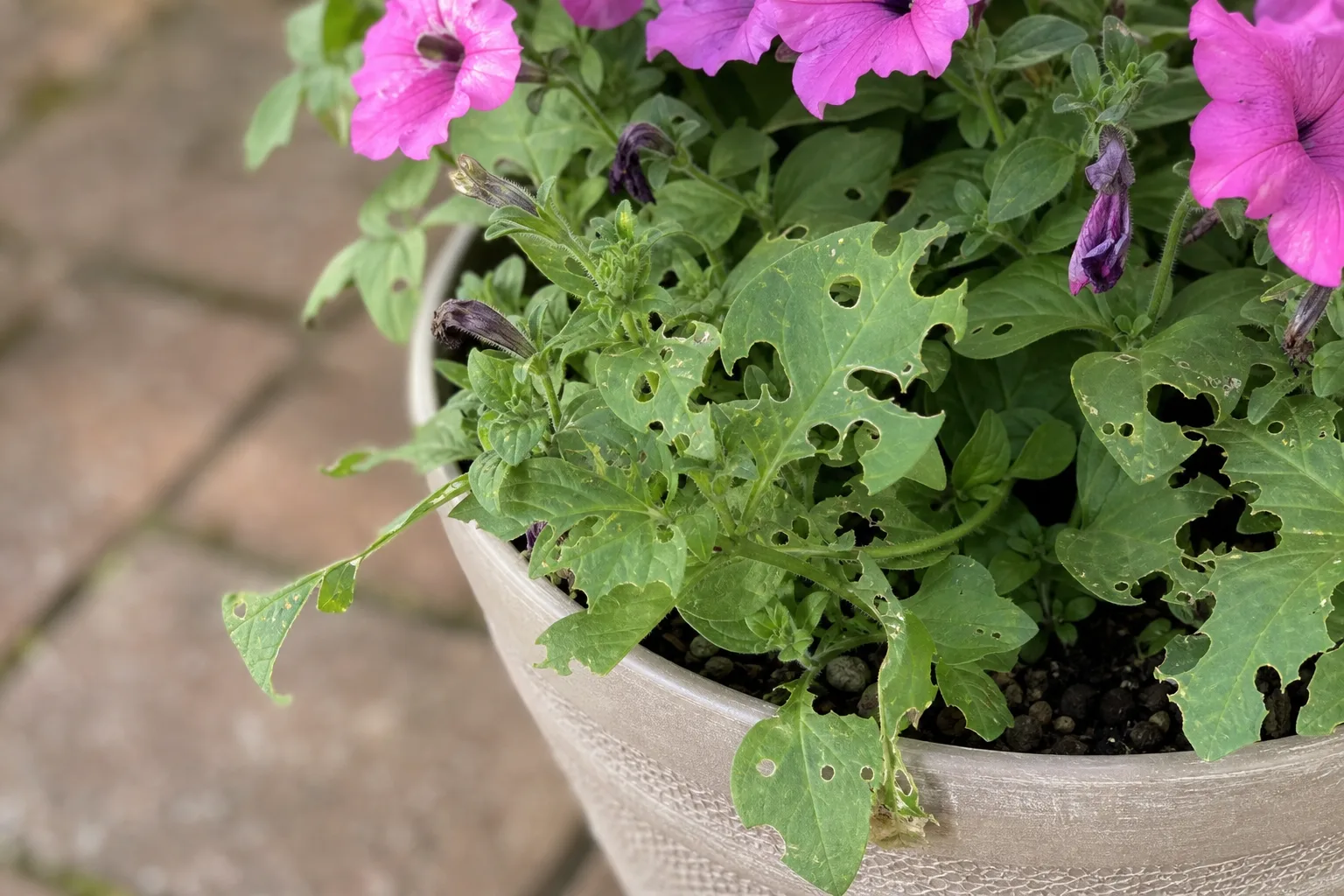
Holes in Leaves on Petunia: Causes, Checks & Fixes
This guide covers holes in leaves on Petunia. See also the general Holes in Leaves guide, watering, and light pages for this plant.
Holes in Leaves on Petunia: Causes, Checks & Fixes
Quick answer
Holes in petunia leaves are chew damage, not fungal or viral disease. On outdoor petunias in baskets, window boxes, and beds, the two most common chewers are tobacco budworm caterpillars and slugs. Both feed at night, so damage often looks sudden even though it built over several evenings.
First step: scout at dusk with a flashlight. Look for black frass pellets below buds (budworm) or silvery slime trails on leaves and pots (slugs). Hand-pick what you find before reaching for sprays. That one inspection usually tells you which pest to treat-and saves you from spraying the wrong thing on flowers bees visit.
What holes in leaves look like on Petunia
Petunia foliage is soft and slightly sticky-easy for night feeders to rasp or bite through. Chew damage differs from disease spots: holes have torn or ragged edges, often crossing leaf veins, and the surrounding tissue stays green unless a separate stress is involved.
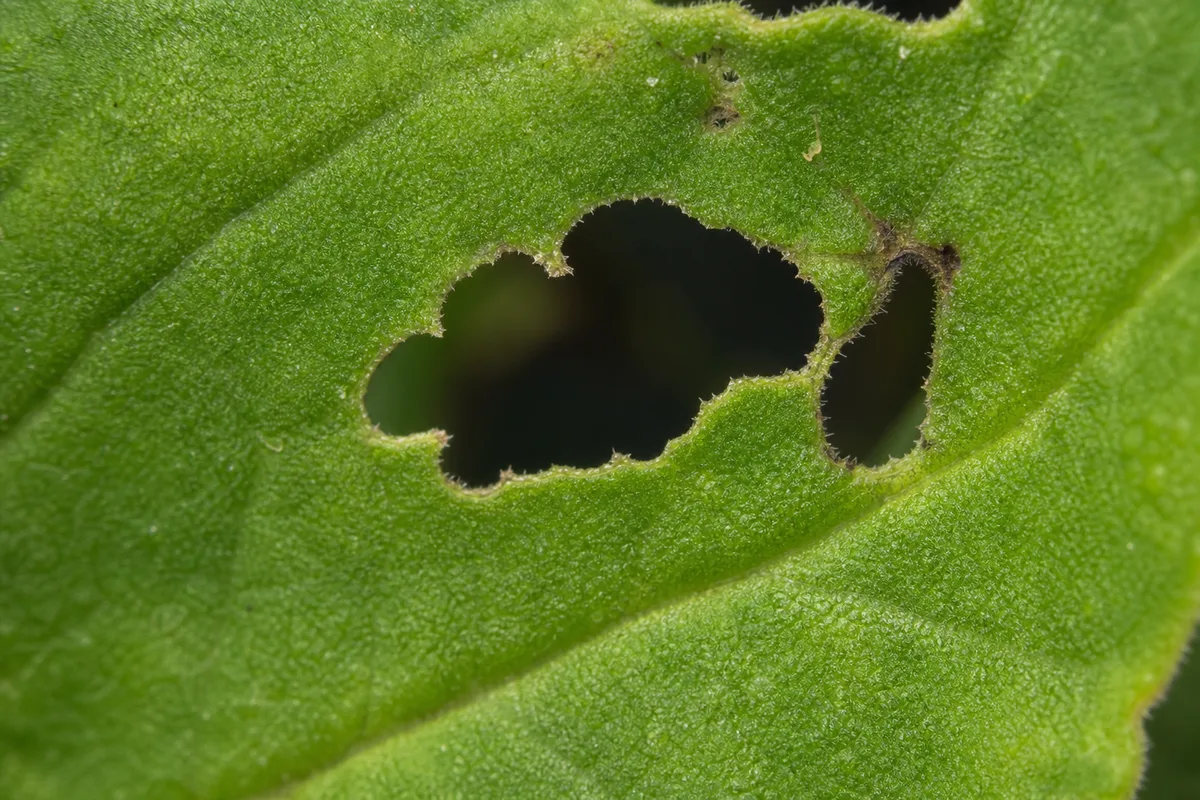
Holes in Leaves symptoms on Petunia - compare with healthy tissue on the same plant.
Typical patterns on petunias:
- Irregular holes in leaves, sometimes with only the veins and midrib left (skeletonized patches).
- Ragged petal edges on open flowers by morning, even when leaves look mostly fine.
- Pinholes or stuck petals on unopened buds that fail to open fully.
- Black frass pellets (caterpillar droppings) on leaves directly below damaged buds.
- Silvery, shiny slime trails winding across leaves, stems, or the outside of containers.
- Damage concentrated low on the plant in ground beds and window boxes (common with slugs).
- Damage centered on buds and upper blooms in hanging baskets at eye level (common with budworm).
Leaf miners and viruses do not produce clean through-holes. Miners leave pale serpentine tunnels inside the leaf; viruses cause mottling and distortion without ragged chew margins. If you only see holes with torn edges, think pests-not disease.
Why Petunia gets holes in leaves
Petunias are seasonal bloomers planted for continuous color from spring through fall. That long flowering window overlaps with multiple pest generations-and petunias are documented hosts for several chewers.
Tobacco budworm
Tobacco budworm (Helicoverpa virescens, also called geranium budworm) is the leading cause of holed buds and tattered petals on petunias. WSU Hortsense notes that larvae attack buds, petals, and seed pods first, but will chew shoot tips and foliage when flower buds are scarce. On petunias they also feed on the petals of opened flowers, which is why you may see ragged blooms while leaves still look mostly intact.
Adult moths lay eggs on blossoms and shoot tips. Young larvae tunnel into buds; older larvae may be green, brown, tan, or reddish with stripes. They hide inside blooms by day and feed at dusk-matching the timing when petunia owners first notice holes. Multiple generations per season mean damage can restart after you thought the problem was gone.
Purple, red, and bi-color petunia cultivars are especially attractive to budworm, though any variety in Petunia light guide can be hit. This is not a sign you are watering wrong-it is a predictable pest on outdoor petunias in warm regions.
Slugs and snails
Slugs rasp irregular holes with smooth, ragged edges using file-like mouthparts. University of Minnesota Extension lists slugs as a primary cause of holed petunia leaves, especially in spring and summer. They feed primarily at night and leave silvery winding trails on foliage.
Petunias in low window boxes, ground-level beds, and shaded patios are most vulnerable. Cool, wet spring weather keeps slug numbers high; damage often drops when summer heat arrives but can resurge in wet autumns. Overhead watering or late-day irrigation that keeps foliage and mulch damp overnight favors slugs.
Less common chewers
UMN Extension also documents variegated cutworm (Peridroma saucia) on petunias-dark caterpillars with pale diamond-shaped spots that chew holes between veins, bore into buds, and curl into a ball when disturbed. Tomato hornworm occasionally defoliates petunias in late summer but is less common on small bedding plants than on tomatoes.
Deer and rabbits remove large sections of leaves overnight, often leaving stems or clean-cut angles-not the small irregular holes typical of slugs and caterpillars. Hail or physical abrasion causes sudden random tearing after storms, with no frass or slime.
How to confirm the cause
Work through these checks in order. You are looking for one primary chewer, not every pest at once.
-
Time your inspection. Go out at dusk or early evening when budworm larvae climb onto plants and slugs emerge. Daytime checks miss most chewers.
-
Check buds first. Peel back one damaged, unopened bud gently. A caterpillar inside confirms budworm. Buds with pinholes and frass below but no slime also point to budworm.
-
Look for frass versus slime. Black pellets on leaves under holed buds = caterpillar. Silvery trails on leaves, pots, or decking = slug or snail. No trails and no frass suggests deer, hail, or cutworm-look at the hole pattern and nearby evidence.
-
Note where damage sits on the plant. Lower leaves and container rims only → slugs. Upper buds and open flowers in baskets → budworm. All leaves stripped on seedlings → slugs or cutworm; act fast.
-
Rule out leaf miners. Hold damaged leaves to the light. Serpentine pale tunnels inside the leaf with no hole through the surface = miner, not a chewer. Pinch off mined leaves; sprays rarely reach larvae inside tissue.
-
Scan for cutworm. A dark caterpillar with yellow diamond spots along the back, curling into a ball when touched, on soil-level stems at night confirms variegated cutworm.
If buds are holed with frass and you find larvae at dusk, treat for budworm. If slime trails cross the leaves and no larvae sit in buds, treat for slugs. Mixed signs on a large planting are possible-address the pest that matches the worst damage (usually buds before cosmetic leaf holes).
First fix for Petunia
Scout at dusk and remove the chewer you find.
For tobacco budworm on small baskets and window boxes, hand-pick larvae from buds and open flowers during your evening inspection. Drop them into soapy water. Remove heavily infested buds so larvae do not migrate to clean flowers. This is the most practical first step when you have only a few plants.
For slugs, hand-pick after dark and scatter iron phosphate bait around the base of containers and along bed edges-not on leaves or edible parts. UC IPM notes that iron phosphate baits are safer around children, pets, and wildlife than older metaldehyde products. Apply in late afternoon or evening when slugs become active. Clear hiding spots the same night: lift pots, remove boards, weeds, and thick wet mulch where slugs shelter by day.
Do not spray open petunia flowers with broad-spectrum insecticides as a first response-pollinators visit blooms, and many products harm bees. Do not assume holes mean your watering is off; check pests before changing your petunia care routine.
Step-by-step recovery
After the first dusk removal or bait application:
-
Repeat scouting every two to three evenings for two weeks. Budworm eggs hatch across the season; slugs recruit from nearby damp spots.
-
If budworm persists on larger plantings, apply Bt (Bacillus thuringiensis) or spinosad to buds and upper foliage in late evening when bees are inactive. CSU Extension notes Bt works best on petunias where caterpillars feed on leaf and petal surfaces-not reliably on larvae deep inside buds. Spinosad has residual activity but is toxic to bees if applied when flowers are actively visited; evening application after bee activity stops is critical.
-
Trim badly skeletonized leaves once feeding stops. They will not fill in; removing them improves airflow and lets you spot new damage faster.
-
Keep watering at the base on your normal schedule-petunias in full sun still need deep drinks when the top 2 cm of mix is dry. Do not overhead-mist to “wash off” pests at night; wet foliage overnight encourages Botrytis on flowers, a separate problem from chew holes.
-
Deadhead spent blooms every few days. Old petals attract budworm and hold hiding larvae.
Recovery timeline and what improvement looks like
Chewed leaf tissue does not regenerate. Recovery is judged by new growth, not old holes closing.
- Within three to seven days: Fresh holes stop appearing on the same leaves; frass or slime evidence drops after successful hand-picking or bait.
- One to two weeks: New buds open without pinholes; new leaves emerge clean from stem tips.
- Two to three weeks: Canopy looks full again if less than a third of foliage was removed; flowering resumes on trailing varieties that were deadheaded.
Signs the problem is worsening: More buds fail to open each morning, seedlings lose all true leaves, or new holes appear on upper growth daily despite repeated evening removal. At that point escalate to labeled evening sprays for budworm or refresh iron phosphate bait and hunt daytime slug shelters more aggressively.
Cosmetic holes on a few open flowers are tolerable. Bud destruction before bloom is not-treat that urgently or flowering can stall for weeks.
Lookalike symptoms to rule out
| What you see | Likely cause | Key difference from chew holes |
|---|---|---|
| Serpentine pale tunnels inside leaf | Leaf miner | No hole through the leaf surface; squiggly trail visible when backlit |
| Mottled, distorted leaves with no ragged holes | Mosaic virus | Pattern spread across plant; no frass or slime |
| Large sections of leaves gone, clean 45° cut | Rabbit | Stem cut cleanly; footprints or droppings nearby |
| Large ragged sections missing overnight | Deer | Higher on plant; browsing across multiple species |
| Sudden torn leaves after a storm | Hail or wind | Random damage on exposed side; no frass, slime, or repeat night damage |
| White powder on leaf surface | Powdery mildew | Fungal coating, not missing tissue |
Mistakes to avoid
- Spraying mid-day on open flowers when bees are foraging-especially pyrethroids and spinosad.
- Treating for disease when the tissue is physically missing and edges are torn. Fungicides will not fix chew holes.
- Applying slug bait on leaves or where pets eat fallen pellets. Scatter at soil level per label.
- Ignoring buds and only watching leaves. Budworm often hits flowers first on petunias.
- Stopping after one hand-pick. Multiple budworm generations and slug migrations from damp neighbors mean repeat evening checks.
- Overhead watering at night to “clean” plants-raises Botrytis risk without controlling hidden larvae in buds.
How to prevent holes next time
Prevention fits petunia culture: full sun, base watering, and regular deadheading.
- Scout weekly at dusk from first bloom through fall-especially on purple and red cultivars budworm prefers.
- Elevate hanging baskets on hooks slugs cannot climb easily; avoid ground-level placement in cool wet springs.
- Remove debris under pots, boards, and dense mulch where slugs hide by day.
- Water in the morning so foliage and soil surface dry before evening slug activity.
- Apply iron phosphate bait preventively in wet springs around bed edges and container bases before holes appear.
- In high budworm pressure areas, start Bt on new bud set in late evening before pinholes show up.
- Rotate container locations if moths concentrate on one railing or window box year after year.
- When overwintering potted petunias or geraniums in mild climates, WSU recommends repotting with fresh mix to reduce overwintering pupae in old soil.
When to worry
Holes in a few older lower leaves while buds and new growth stay clean are manageable-trim and scout. Worry and act the same day when:
- Most unopened buds show pinholes or fail to open.
- Seedlings lose all foliage overnight.
- Fresh damage spreads to new stems daily for more than a week.
- You cannot keep up with hand-picking on a large bed and flowering has stopped.
Petunias are seasonal annuals in many climates. If a basket is more hole than leaf and buds are destroyed late in the season, replacing the plant is sometimes more practical than fighting a heavy infestation-but early dusk scouting usually prevents that outcome.
When to use this page vs other Petunia guides
- Petunia watering guide - Use for routine moisture checks before assuming holes in leaves is the main issue.
- Petunia problems hub - Browse all 40 common issues on this species.